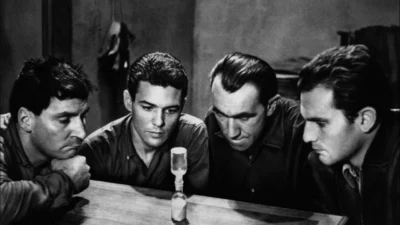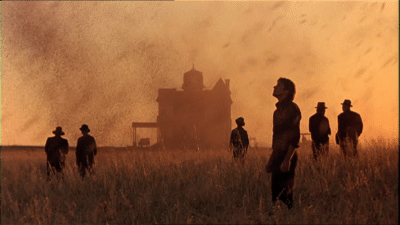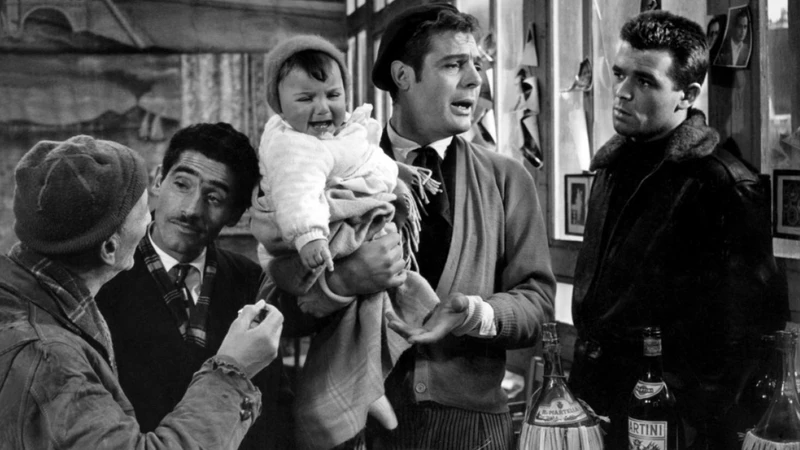
Big Deal on Madonna Street immediately exudes smooth black-and-white neorealist criminal vibes, as this week’s Criterion Tuesday review, pairing that atmosphere
with very interesting city imagery that established the tone for the heist satire before it even begins to get started. The Italian film holds up far better as a visual and dialogue spectacle today than it does as a straightforward storyline or satire, as I found myself here much more enthralled by the beautiful imitation of the old Italian
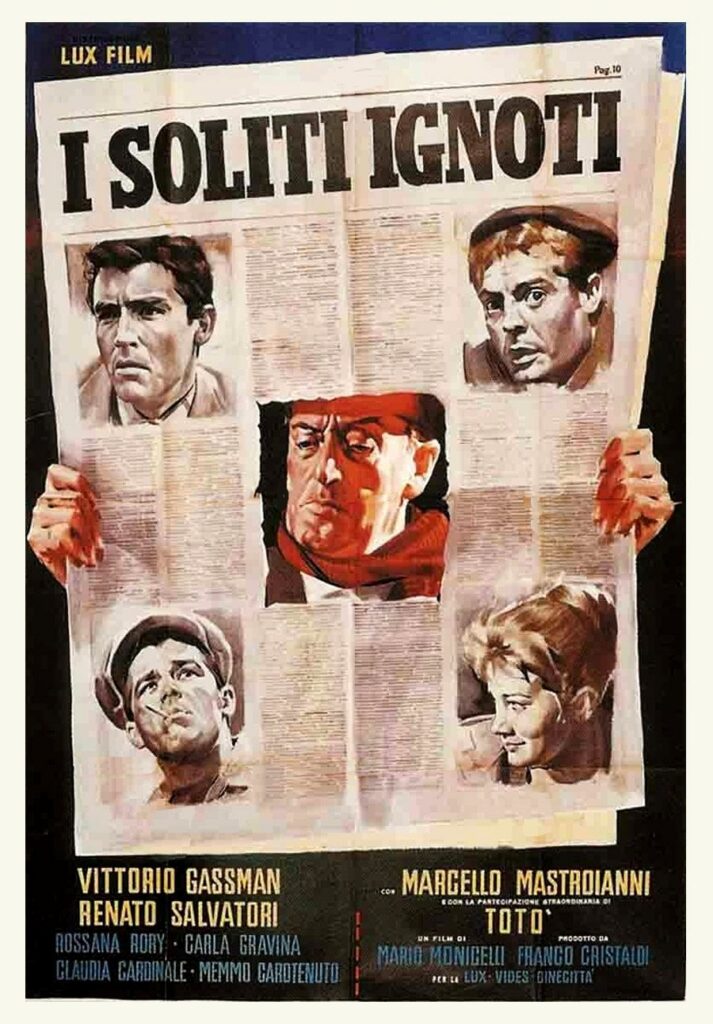
film and by the use of the camera bouncing around close-up in crowded spaces than by the plot mechanics themselves. It plays like a direct inspiration to Breathless, exuding cool in a way few films of its era managed, while its two main roles spend the entire runtime impersonating the very people they claim to be. The film is widely regarded as the best parody of the heist film from the ’50s, simultaneously helping kill off the genre it was mocking while starting an entirely new one of its own. Big Deal on Madonna Street, directed by Mario Monicelli, stands as one of the most influential heist films of all time, a seamless blend of Italian neorealism, 1950s French cinema, and Hollywood noir that has never quite been replicated despite efforts.
The film follows two friends, Peppe and Mario, who claim to be thieves but don’t seem particularly good at it, a gap between reputation and ability that ends up driving nearly every joke across the entire runtime. That motley crew sets out to rob a pawnshop, tripping over themselves at essentially every step of the operation as their carefully constructed plan slowly comes apart at the seams. The comedy here comes almost entirely from watching men who talk a big game fail spectacularly at the fundamentals, a structure that turns the heist genre’s usual competence porn completely on its head. The film’s willingness to let its protagonists be genuinely, irredeemably bad at their jobs is precisely what separates it from the genre it’s parodying, refusing at every turn to give them a redemptive display of skill. That commitment to incompetence is exactly why the parody lands as well as it does, never once winking at the audience but simply letting these characters fail in real time.
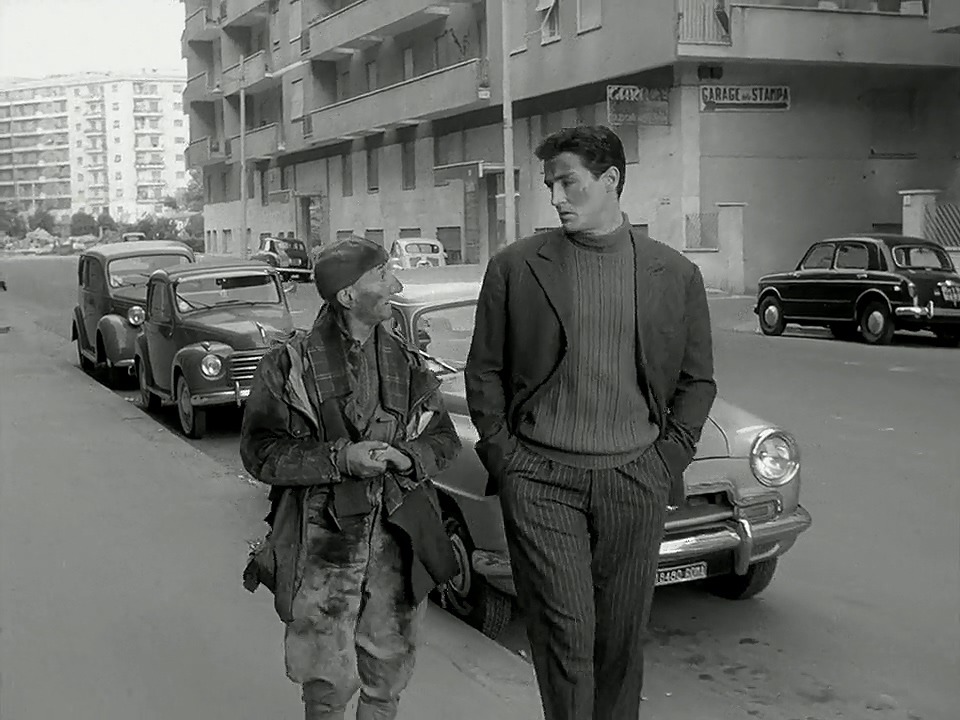
The film’s greatest strength is its camerawork, with close-up shots bouncing around cramped, crowded spaces in ways that create energy and momentum the plot alone never quite generates on its own. The dialogue is equally essential to the film’s success, carrying entire stretches through sheer rhythm and personality rather than any real narrative progression. Shot in Rome’s outlying wastelands, the film’s strongest element may be the way the husks of modernist reconstruction share a landscape with the kind of moralist films made by legendary directors like Vittorio De Sica and Rossellini. That setting gives the comedy a genuine social backbone, grounding the humor in real postwar Italian conditions rather than treating the crew’s poverty as a punchline to be laughed at. The blend of Italian neorealism, 1950s French cinema, and Hollywood noir gives the film a texture that feels genuinely distinct from anything else in the heist canon, before or since.
The final act heist is the clear highlight of the entire film, packed with fun shots and a healthy dose of comedy as the crew stumbles their way through their own carefully laid plan. Every stage of the operation goes sideways in a different, increasingly absurd way, building the film’s comedic momentum at exactly the point where a traditional heist film would be tightening its tension. The crew ultimately finds their way into a neighbor’s kitchen instead of standing in front of the safe, a punchline that lands as the perfect summation of everything the film has been building toward from its opening frames. As they sit eating dinner in that kitchen to close the film, their own apartment gets robbed while they cook, and the ragtag group of four goes their separate ways. That ending is the film’s sharpest joke by a wide margin, closing on total failure rather than triumph in a genre built almost entirely around the satisfaction of a plan finally coming together.
The heist film became internationally famous in the 1950s with Rififi, The Killing, and Bob le Flambeur, and Mario Monicelli’s film is widely regarded as the best parody of that entire wave. The film is considered a defining work of Commedia all’Italiana, a uniquely Italian genre that embedded sharp social commentary within broader popular comedy accessible to everyone. Its cast is full of Italian legends including Vittorio Gassman, Renato Salvatori, Marcello Mastroianni, and Totò, and the film served as a genuine breakthrough for most of the actors involved in it. It was nominated for Best Foreign Language Film at the Oscars and is listed among the top 100 Italian films ever made, while also becoming extremely popular in France with both critics and audiences alike. There have been multiple attempts to remake the film over the decades, including a George Clooney-led version, but none have ever managed to match the original.
Big Deal on Madonna Street succeeds far more on style, camerawork, and dialogue than it does on narrative, and that’s precisely why it has endured as long as it has. The final act heist remains the film’s clearest highlight, a perfectly constructed sequence of escalating failure that pays off every joke the film has been quietly setting up. Its blend of Italian neorealist grit and popular comedy makes it a defining entry in Commedia all’Italiana and embodies genuine social commentary into something entirely accessible. The film’s influence on the heist genre is enormous, having simultaneously mocked the genre into submission while creating a comedic template countless films have chased ever since. This week’s Criterion has been a hit for decades, as Big Deal on Madonna Street is a genuinely influential classic, one whose coolness and comedic instinct have outlasted nearly everything it was making fun of, sitting at a 79/100 rating from TwilightRoom.
TwilightRoom Score: 79.4/100