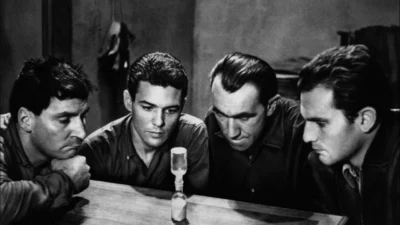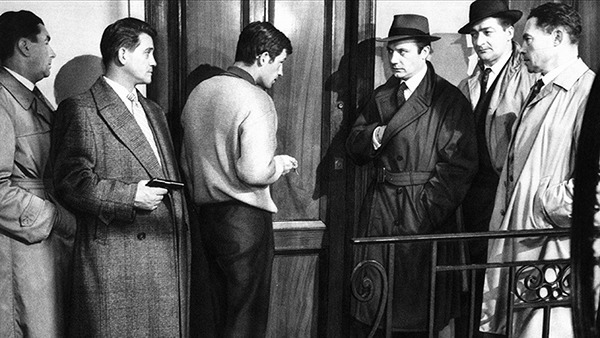
This week’s Criterion Tuesday pick is Classe Tous Risques, a pre-New Wave French crime film that’s since been folded into the gangster canon, opening with
Abel on the run after a heist gone wrong, attempting to flee Italy with his two young sons. Released just a few weeks after Breathless, the film has historically been overshadowed by that movie’s reputation for “discovering” Jean‑Paul Belmondo, even though Belmondo also appears here. This marks the first feature
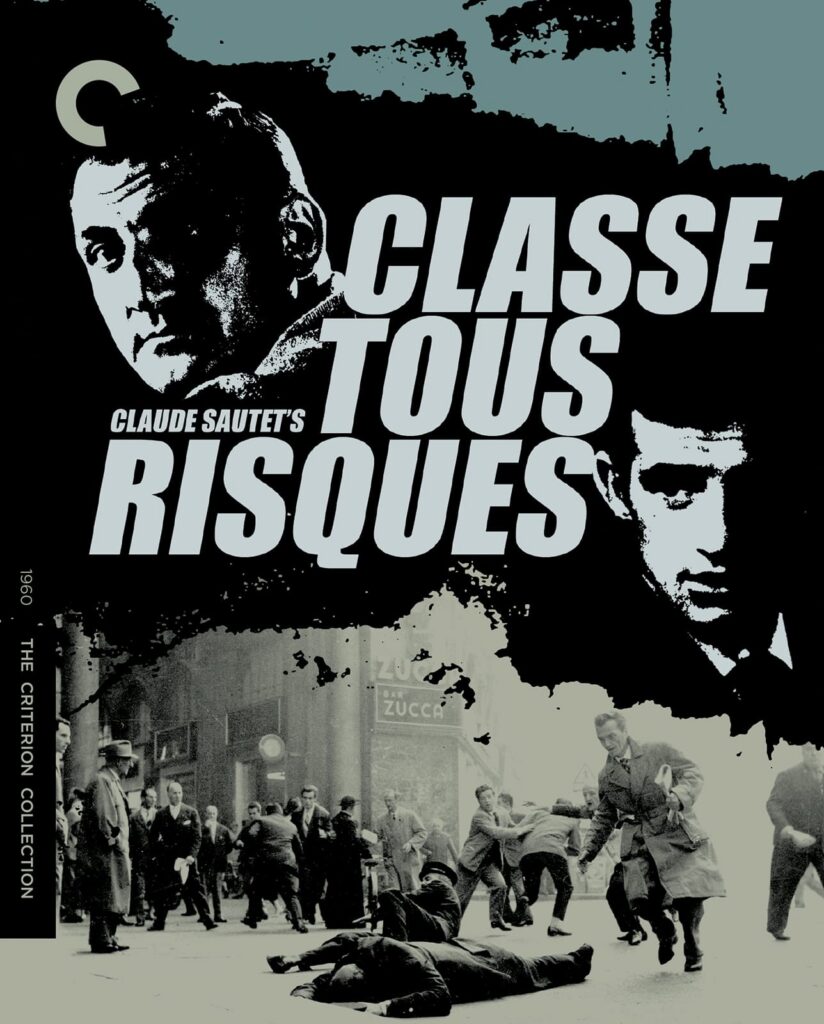
from Jean‑Pierre Melville collaborator and crime auteur Claude Sautet, made in the era of the French New Wave despite never actually being attached to the movement itself. The film plays as a clear reworking of the worn‑out gangster genre while also revealing a strong American Western influence in its pacing and moral framing. Classe Tous Risques ultimately works better as a quietly tense character study than as a traditional thriller, though that same shift in tone and pacing ends up being both the film’s defining choice and its biggest limitation.
The film opens with Abel already on the run after a heist gone wrong, trying to escape Italy alongside his two sons as the walls quickly close in around him. Things go further wrong with his partner and wife as they attempt to cross the border into France, setting up a sequence that immediately raises the stakes of the entire story. A gunfight at the border leaves Abel’s wife dead, leaving him alone with his two sons and forcing him into a far more desperate position than the one he started in. Abel now has to establish himself within the criminal underworld of Marseille while simultaneously trying to function as a single father, a tension that becomes the emotional core of the film. This setup plants Abel as a man stripped of nearly everything in the span of a few scenes, setting the stage for a story far more concerned with survival than spectacle.
The film shifts into something much slower after the heist fiasco, introducing Eric Stark, played by Jean-Paul Belmondo in one of his early roles following his breakout in Breathless. Eric links Abel back into the crime world, representing a new type of criminal entirely: less emotional, more professional, and far more calculated than Abel’s old-school instincts. Abel begins to feel safe for the first time since the opening heist once he and his sons are secured by Eric, giving the film’s middle stretch a deceptive sense of calm. This dynamic becomes the film’s emotional backbone, a relationship built more on necessity and survival than any real warmth between the two men. The shift from heist thriller to quiet character study is deliberate, though it’s a transition that doesn’t always land with the same tension the opening sequence promises.

What was likely conceived as a heist thriller becomes quiet tension instead, a structural choice that takes away from the film’s overall momentum and enjoyment. As the story progresses, Abel becomes more and more tense and exhausted, while Eric begins to treat their relationship as something more professional than personal. This shift again introduces suspicion and a slow progression that ends up being less effective than the film likely hoped to achieve. The film positions itself as a clear reworking of the gangster genre, but its commitment to slowness occasionally undercuts the genre tension it’s trying to build. Even so, the deliberate pacing reinforces the sense that Abel’s world is closing in on him gradually rather than all at once, a choice that rewards patience even when it tests it.
The police slowly close in on Abel as he remains on the run, and the film does an effective job making that pursuit feel less like a chase and more like a tightening net. The whole situation increasingly feels like a trap, with Abel’s options narrowing scene by scene as both the police and his own criminal associates close in around him. Abel loses his sense of safety and begins looking purely for self-preservation rather than loyalty, a shift that reframes his relationship with Eric and everyone else around him. The film’s emotional backbone is captured plainly in one description of its core image: a man walking down the street, ten meters behind him, two children, a simple but devastating distillation of Abel’s entire arc. This stretch of the film makes clear that Classe Tous Risques was never really about the heist at all, but about what happens to a man once every form of loyalty around him starts to erode.
The final shot of Sautet’s last-ever film reportedly ends the same way this one does, with its protagonist having lost everything except, perhaps, an awareness of his own vulnerability, disappearing into a crowd of passersby. That recurring image suggests Sautet’s protagonists are always meant to feel as though they’re among us, ordinary men undone by circumstance rather than larger-than-life criminal figures. The film’s reputation has long been overshadowed by Breathless, despite arriving in theaters within weeks of it and featuring Belmondo in a role just as worth revisiting. Classe Tous Risques reworks a tired genre into something more grounded and Western‑influenced, even if its slower midsection keeps it from fully delivering on the early heist‑thriller tension it sets up. It ultimately lands as a worthwhile, if uneven, entry in the crime canon, less a straight thriller than a quiet character study about a father trying to survive on whatever loyalty he has left, earning a lower score of 69/100 from TwilightRoom.
TwilightRoom Score: 69.4/100