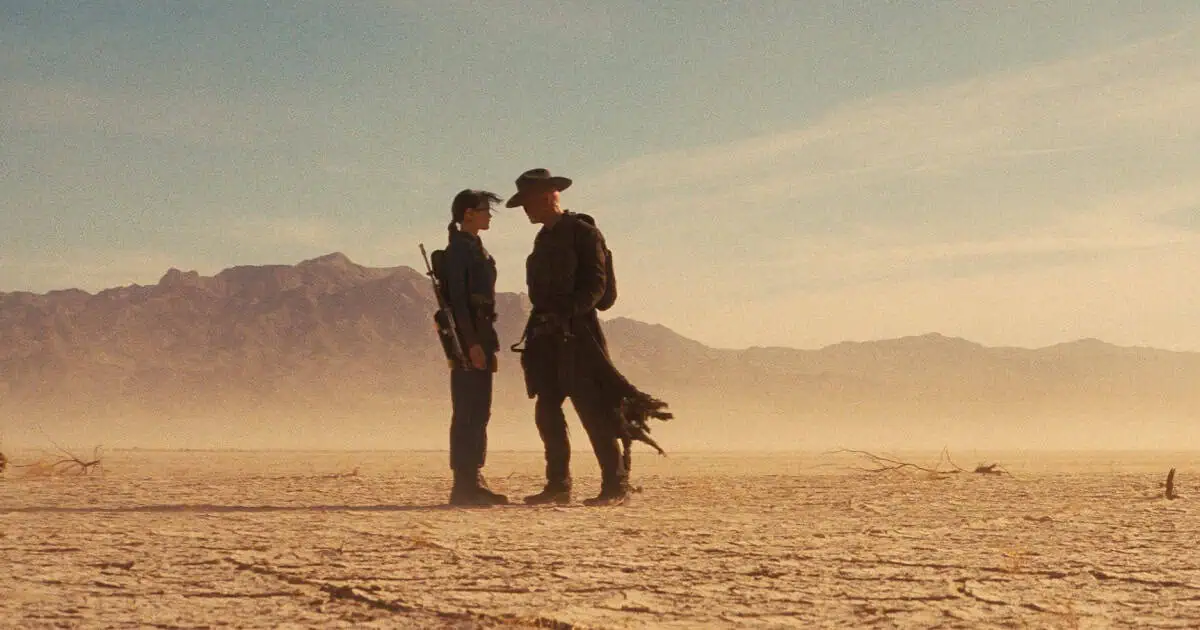
After an incredibly successful first season of the video game–to–TV adaptation Fallout, it felt both greedy and oddly relieving to have such high hopes for Season 2.
Fallout Season 2 not only met the level of quality and excitement from season one, to me, it elevated the show (season 1 rated 85/10) a step above, to a true 5 star must-watch tv show. The new season is more refined in its dialogue and character work, darker and grittier than the first, and overall clearly an example of a show runner gaining traction and confidence from the success of the previous season. The biggest highlight from season 1 was its world building, both inside the vaults and out; and while season 2 lacks the depth of vault politics, its ability to build on the wasteland created is spectacular, while remaining emotionally grounded in its main characters. The second season of Fallout took a step above an already great first season by successfully deepening character conflict and moral ambiguity, despite its expanding subplot structure distracting from the amazing core narrative of the show.
Fallout has a clear path to success after its first two seasons, through its two very well molded main characters in Lucy and The Ghoul. They take the evolved Lucy from Season 1 and make her noticeably more hardened on the surface, forcing her into many tough decisions stacking up her ability to stick to prior morals of the vault life compared to her new way of living. While her ability to remain positive and adhere to many of her key principles remains intact, much of her Season 1 innocence is eroded by the moral weight of killing, betrayal, and the question of what to do with her father, who has become the season’s clear antagonist. Season 2 is at its best when centered around Lucy and its other main developed characters as her internal conflict, relationships, and connection to both worlds the show tells; is what separates the show in the first place.
Walton Goggins, as The Ghoul, delivers a dual performance, embodying both his past and present self, that matches Ella Purnell as another spectral, multi-layered lead. Not only does the relationship between the Ghoul and Lucy provide enough emotion to single-handedly drive the story, but his intertwined backstory and enduring love for his wife, which fuel his determination to fend for himself and no one else, also come to a sharp, affecting point this season. The two strongest moments of the show are The Ghoul’s initial decision to betray Lucy, which leads to his badass impalement cliffhanger, and his eventual return to the action, when he saves her and then lets her decide her father’s fate, a moment that marks the first time he truly allows fate to slip from his control. With the end reveal of The Ghoul’s believed-to-be late wife’s possible appearance in season 3, and Lucy’s decision to face an oncoming army; it is clear the show is determined to stick to its two main characters’ lives in a returning Season 3.
Many of the subplots of the film, including Maximus’ route to refining Lucy, the original vault’s decisions after the discovery of connecting vaults, and the Roman-esque cult, lead by Macaulay Culkin, are important to world building, but take away from the well-made central plot. A lot of the time the audience is so enthralled by what is happening with our main characters that leaving them for a plot, that may be important later, but is not pertinent to what is happening in the current season feels forced and pace killing. While the season is able to manage the chaos it creates well, leading to its high rating and success, the narrative is clearly strongest when streamlined, as the peripheral arcs occasionally dilute the tension.
Season 2 excels at balancing the large-scale wasteland chaos that the IP and Season 1 promised, expanded through an ever-growing roster of creatures and characters populating the world, while also directly confronting the moral ambiguity baked into the premise from the very start. Its emotional stakes are raised and more personal, with a plot that is near perfect in its ability to balance everything the Fallout franchise has to offer. It is an extremely confident second entry that builds on the string foundation created, becoming one of the rare successful video game adaptations.
The emotional core of Lucy and The Ghoul, as they navigate their shared past with Lucy’s father, elevates what was an 85/100 Season 1 to an 86/100 Season 2 for me, making the series a genuine five-star, must-watch entry on Prime Video.