This week’s Criterion Tuesday review spotlights the 1960s visual comedy master Jacques Tati, as his film Playtime stands as one of the most visually ambitious and
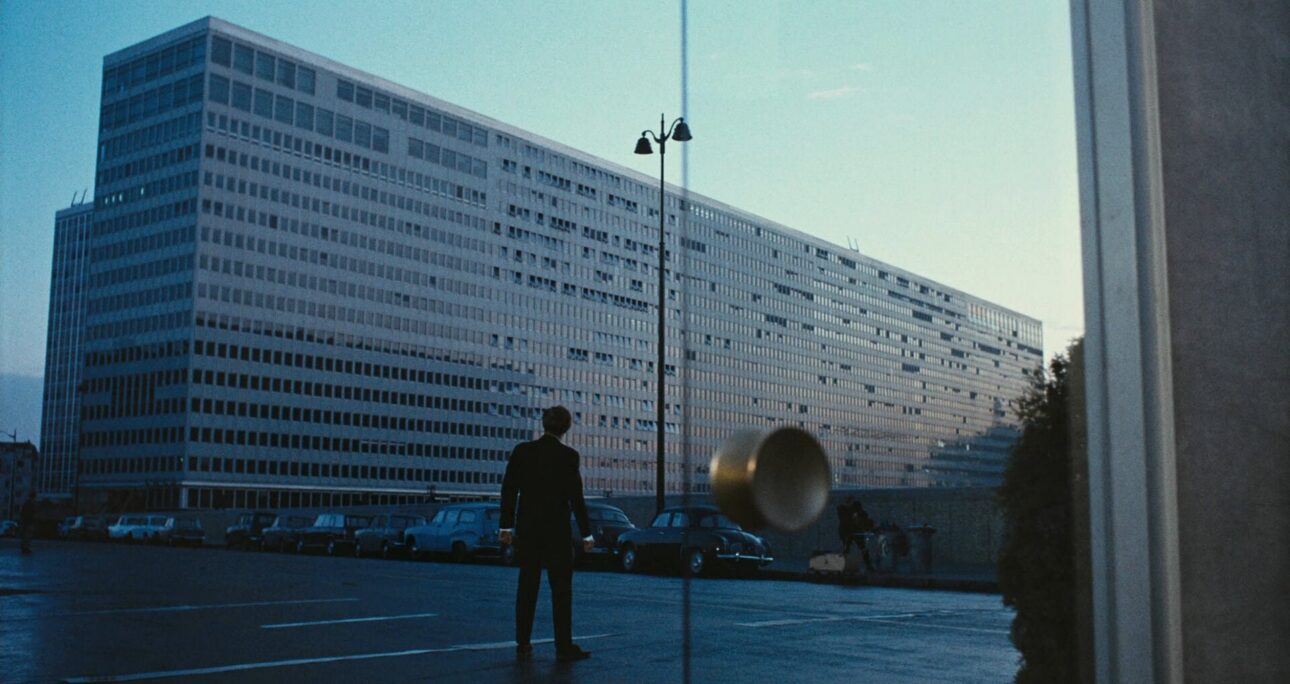
uniquely experimental comedies ever created. Using futuristic architecture, sound, movement, and carefully orchestrated visual chaos, Tati builds comedy almost entirely through observation rather than traditional dialogue. Opening in a very metallic, futuristic version of France, the film immediately establishes a cold modern world filled with glass reflections, confusing architecture, organized spaces, and strange mechanical routines
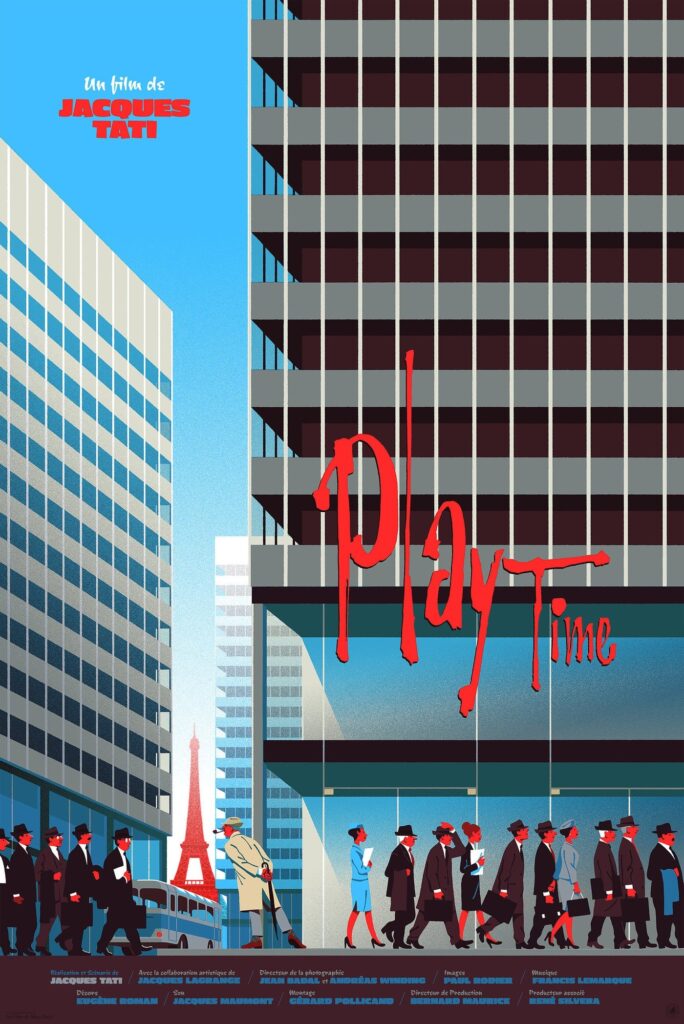
that feel both impressive and deeply alienating. Rather than focusing heavily on plot, typical for comedies before its time and after, Tati finds his specific niche instead building an enormous living world where background movement and his reoccurring filmography character can explore, public spaces, sound design, and small short human interactions that dominate the comedic genre. The comedy is revolutionary, constantly emerging through wandering characters navigating increasingly absurd surreal modern environments, with Tati using technical framing, perspective, reflection, and massive scale shots to create visual jokes that reward close attention and put on a clinic in technical film making. Playtime may be Tati’s best, as it excels as on of cinema’s most visually masterful and conceptually unique comedies because of how full it commits to visual storytelling and public-space observation, transforming modern life itself and a film experience, into a park bench, people-watching joke that is endlessly alive, immersive, and entertaining.
Playtime intentionally rejects a traditional story structure, instead following these loose movements made by Tati through interconnected spaces where characters drift in and out of situations almost accidentally rather than through a narrative progression. Monsieur Hulot once again acts as the audience surrogate for a Tati work, wandering through this futuristic Paris, but even he often feels secondary in Playtime to the city itself, making the main character the modern public life. Much of the film follows new people becoming lost inside the overly designed and impractical modern environments, whether through office buildings, restaurant parties, airports, or tourist attractions, making comedy in navigation. Tati does a masterful job structuring scenes almost like observational people watching, allowing the audience to see multiple joke and interactions occur simultaneously as to make it so no matter where you look the film engages back. The lack of heavy plot can initially feel strange or even empty compared to slapstick comedy expectations, but it ultimately becomes central to the film’s immersive and experimental identity.
Tati’s cinematography is absolutely stunning throughout Playtime, making it one of the most visually beautiful films of all time, using wide compositions, reflections, split perspectives, glass surfaces, and enormous city framing to constantly create its humor and confusion simultaneously. The futuristic office buildings have become iconic in film studies, demonstrating Tati’s mastery of visual comedy and beauty in maximalism, as wandering workers and visitors move awkwardly through cubicles, waiting rooms, lame furniture, and cold organized spaces. Reflections and mirrored surfaces become recurring tools for the bulk of the jokes, often making characters blend together or disappear into the modern architecture surrounding them on all sides, it’s a form of depersonalization in film that is unmatched. Tati constantly places small visual jokes deep in the frame, moments we catch, you may not have, and vice versa, the film provides 100s of different viewing experiences as different eyes wander in different directions. The scale of the city itself becomes visually overwhelming in the best possible way, creating one of the most visually rich comedic environments ever constructed for a film.
Another one of the film’s most unique qualities is its use of sound over direct dialogue, often allowing noises, echoes, footsteps, machinery, chairs, doors, and environmental chores to become the actual rhythm that the scene plays off of. Dialogue frequently feels secondary almost the entire way through the film and if present is muffled, reinforcing that language itself is not the primary storytelling tool within in the film, so much so that Tati made Playtime with the intention that any audience, no matter what language they speak, would be able to to enjoy and see the film equally. The famous restaurant sequence became one of the sternest examples of this, where clattering dishes, jazz music, crowd noise and conversation, and collapsing decor create escalating chaos through pure sound orchestration from Tati. This lack of subtitle dependence reinforces one of the most strongly emphasized reasons the film is studied, humor transcends the language barrier for Tati, it can be seen through expression and sound without verbal explanation.

Tati somehow manages to make every inch of the frame feel alive throughout Playtime, constantly using wandering background characters, reflections, movement, and strange interactions to create comedy that never really stops, no matter where the audience is looking. The film almost feels like organized chaos, with these massive futuristic spaces functioning like giant visual playgrounds where people awkwardly attempt to navigate modern life. Rather than focusing on one singular story, Tati builds comedy through scenery, architecture, public behavior, and observational details, making the actual experience of existing in this world the point of the film. Office buildings, waiting rooms, furniture stores, restaurants, and crowded tourist spaces all become equally important to the comedy because the world itself is what Tati is examining. There’s a weird hypnotic quality to the way Playtime progresses, where the audience slowly settles into this strange futuristic version of Paris and simply watches life unfold through visual gags, movement, and technical brilliance.
The famous restaurant sequence feels like the complete payoff to everything Tati spends the entire film building visually and structurally, beginning as this polished upper-class opening night before collapsing into complete disorder and absurdity. Decorations break apart, glass shatters, waiters panic, jazz music grows louder, and the entire restaurant slowly transforms into one giant chaotic comedy set piece built almost entirely through sound and movement. Tati’s use of environmental noise throughout the sequence is unbelievable, with footsteps, chairs, dishes, conversations, and machinery creating the actual rhythm of the comedy more than dialogue ever does. What makes the sequence so effective is how naturally the comedy escalates, with every small malfunction building into larger public chaos while still somehow feeling completely controlled visually. As the restaurant falls apart, people actually become more social and alive, turning this cold organized environment into one filled with laughter, improvisation, and human connection, which quietly becomes one of the film’s strongest ideas.
By the final section of Playtime, Tati almost fully abandons conventional structure and instead allows the audience to simply exist within this endlessly moving version of modern France alongside tourists, workers, and wandering strangers. The final airport departure and traffic circle sequences reinforce the idea that modern life is repetitive, organized, and constantly moving, but Tati still finds fascination and beauty inside all of its awkwardness. Even with all the satire surrounding modernization, technology, and depersonalized architecture, the film never loses its warmth because Tati clearly loves observing people interact with these bizarre public spaces. Playtime is one of the most technically ambitious and visually creative comedies ever put to film, using cinematography, sound, reflection, movement, and massive scale staging to create a comedy experience that feels completely singular within cinema history. It’s a film that rewards constant observation, becoming more impressive the longer you sit inside its strange world and let your eyes wander naturally through all the tiny details Tati fills the frame with.
Playtime ultimately completely rejects every comedy that comes before and after it with traditional comedy thrown out the window in favor of visual observation, public-space comedy, and environmental interaction. Tati is masterful in his film with his cinematography, perhaps his most ambitious work, allowing reflections, sound design choreography of scenes and this large scale set piece to create something so intentionally overwhelming visually and maximal. It initially comes off strange, plotless or distant, but becomes increasingly immersive and hilarious as the audience adjusts to the unorthodox style and wandering structure. Ultimately, Playtime stands as one of the most experimental, visually masterful, and endlessly fascinating comedies ever made, fully earning its reputation in Criterion’s defining films and an 89/100 from TwilightRoom.
Twilight Room Score: 89.9/100