The Most Influential Horror Movies, Ranked
TwilightRoom’s Spooktober Marathon for 2026 is a journey through horror cinema history from 1910 to 2026, reviewing 31 of the most influential horror movies ever made, with new entries added weekly throughout the month. October isn’t complete without a carefully curated lineup of chills, thrills, and midnight delights, and this one pulls together genre staples, cult oddities, and seasonal essentials across more than a century of filmmaking. From slashers and haunted tales to psychological terrors and pure campy fun, every pick here is chosen to set the mood for crisp autumn nights and candlelit screenings.
The full Spooktober lineup lies in wait on author Devin Esser’s Letterboxd, and with each passing night, another film joins the rankings. Every entry in the original 31 comes back to haunt you twice, in a full video review on our TikTok and a written review right here on the site. Cozy up, dim the lights, and let the scares begin.
October 1 - House on Haunted Hill
78.9/100 - William Castle - 1959
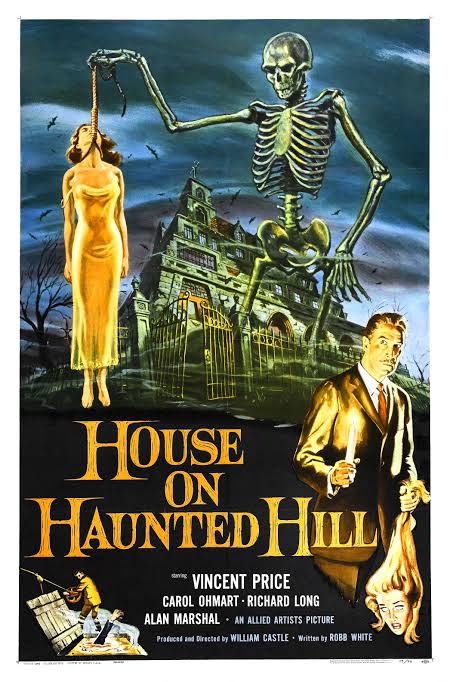
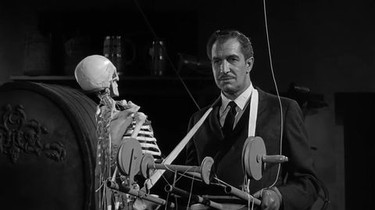
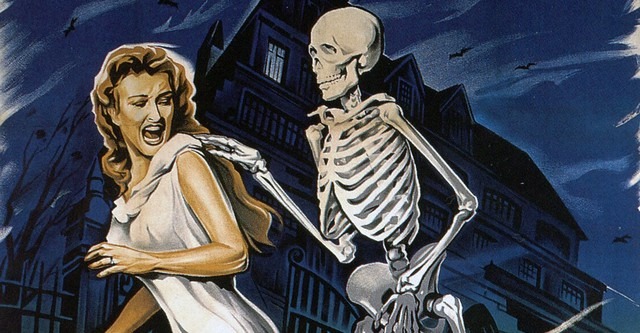
The first film of TwilightRoom’s Spooktober journey, 31 horror films for the 31 days of October, is the original House on Haunted Hill (1959), a ghastly Vincent Price vehicle that appears as straightforward as it gets, and one that doesn’t hold up to today’s standards, until director William Castle moves to his final act. The film constantly attacks you with cheesy tropes, like fourth-wall-breaking introductions, catchy lines like “the only really haunted house in the world,” and some lazy practical-effect ghosts that lack any nuance, leading you to think this is an ordinary horror flick of the ’50s. But once the guests are locked in the house and handed guns to fight ghosts that clearly aren’t the weapons’ real target, the film proves far cleverer than it first appears. Look, House on Haunted Hill didn’t floor us, and aspects of it are truly dated, but much less than you might think, as the way Price’s character finishes this film is a brilliant step out of the haunted house and into spooky season.
Director William Castle was the showman filmmaker of 1950s horror, treating promotion and gimmickry as inseparable from the film itself, and House on Haunted Hill was one of the first pictures to fully commit to that approach. For the theatrical run, Castle created Emergo, rigging a plastic skeleton to fly out over the audience’s heads at the exact moment Vincent Price’s Frederick Loren raises his own skeleton on screen, turning the gimmick into a direct extension of the plot. Audiences responded by pelting it with popcorn boxes and candy, which is both a perfect encapsulation of what 1950s moviegoing could be and a reminder that Castle’s gimmicks were always designed to be participated in rather than simply watched. The film cemented Vincent Price as the defining horror lead of the ’50s and ’60s, with his fourth-wall-breaking performance as Loren pole-vaulting him into a stardom he would hold for two decades. It entered the public domain decades ago, making it one of the most widely distributed horror films ever made and securing its place as an essential entry point into the genre for generations of viewers. House on Haunted Hill stands as the definitive William Castle film and one of the best haunted house films ever made, with a final act that unmasks the schemers behind the fake ghosts and confirms this was always a human and sinister story rather than a ghostly one, earning a 78/100 from TwilightRoom.
October 2 - Dead of Night
80.1/100 - Charles Crichton, Basil Dearden, Alberto Cavalcanti, Robert Hamer - 1945
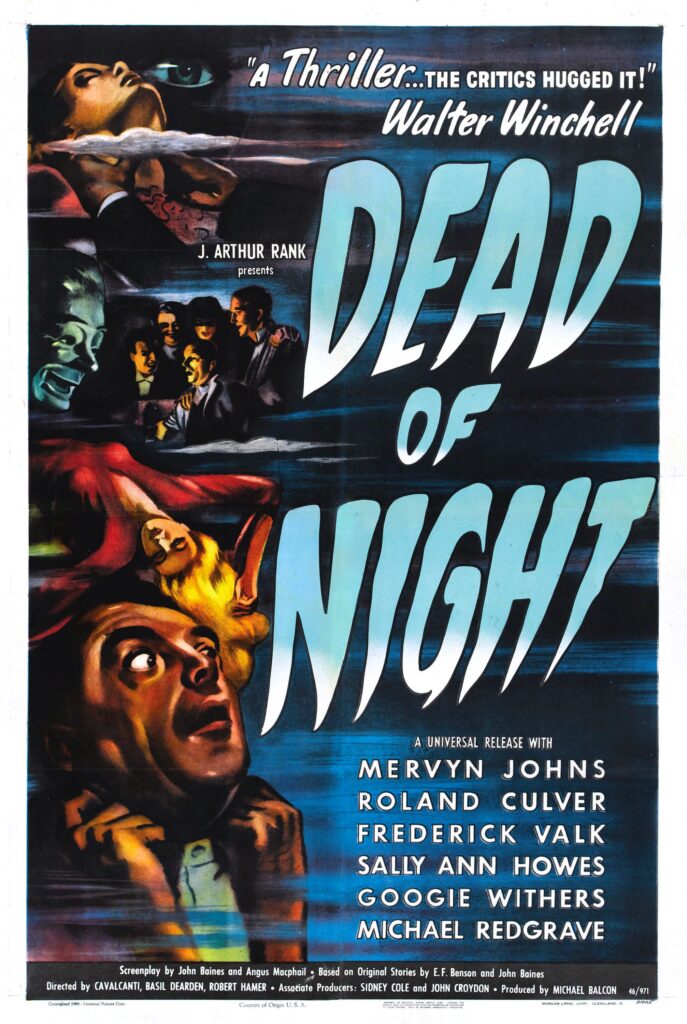
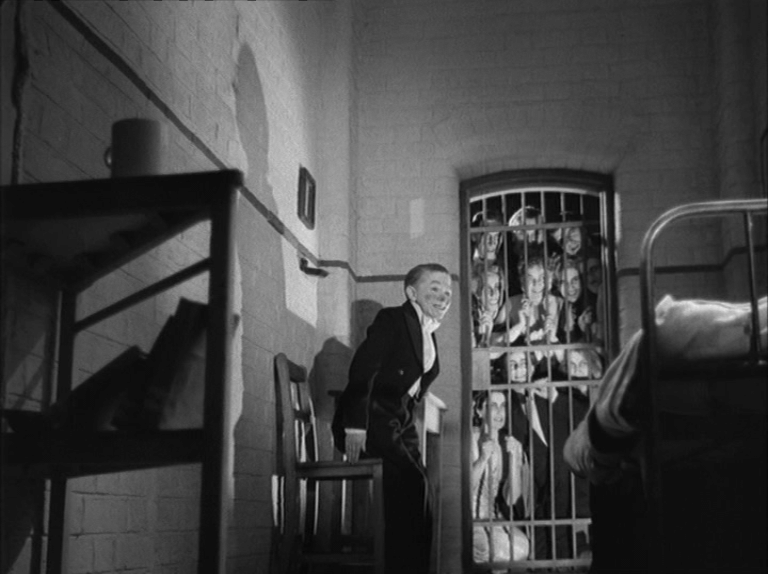
Ealing’s Dead of Night (1945) is a fever-dream nightmare that takes the simple and polite mind of Walter Craig, an architect called to a house in the English countryside, and twists it, showing the audience his sinister recurring nightmare, which happens to include everyone gathered at the house he walks into at the beginning of the film. It’s one of the most influential horror movies of its era and one of the first to resemble a horror anthology, using multiple directors and multiple horror storylines to tell a dream of horrors that are physically unconnected but spiritually all the same. Even an early horror anthology like this has one story that is far better than the rest, and in Dead of Night, that is the ventriloquist segment, as Michael Redgrave delivers a wonderfully creepy performance as Maxwell Frere that leaves you forgetting what even happened in any of the other stories, floored by how unhinged he is able to make his character. Dead of Night is as revolutionary as it is rewatchable, a sharp black-and-white 1940s film that captures one of the most distinctive decades for horror with remarkable accuracy.
Horror films were effectively banned in Britain during World War II as a wartime morale measure, making Dead of Night one of the only British horror films of the decade and a true anomaly in its own national cinema. Ealing assembled four directors for the film’s five segments, with Basil Dearden, Charles Crichton, Robert Hamer, and Alberto Cavalcanti each taking a piece, marking a deliberate pivot away from the wartime realism British studios had been locked into toward something closer to escape. While isolated anthology horror existed as far back as the German silent era, Dead of Night is widely credited with pioneering the modern horror anthology format, establishing the wraparound structure the genre has been returning to for eight decades since. The film’s final and most celebrated segment casts Michael Redgrave as a ventriloquist whose dummy develops a personality entirely independent of its owner, driving him steadily toward madness and murder. Redgrave’s work there is consistently cited as one of the best early psychological horror performances ever given, and it helped establish the evil ventriloquist dummy as a horror totem that filmmakers have been borrowing and adapting for decades. Dead of Night remains far better known among British and international audiences than American ones, which is a strange fate for a film this influential and this inventive, earning an 80/100 from TwilightRoom.
October 3 - Godzilla
86.2/100 - Ishirō Honda - 1954
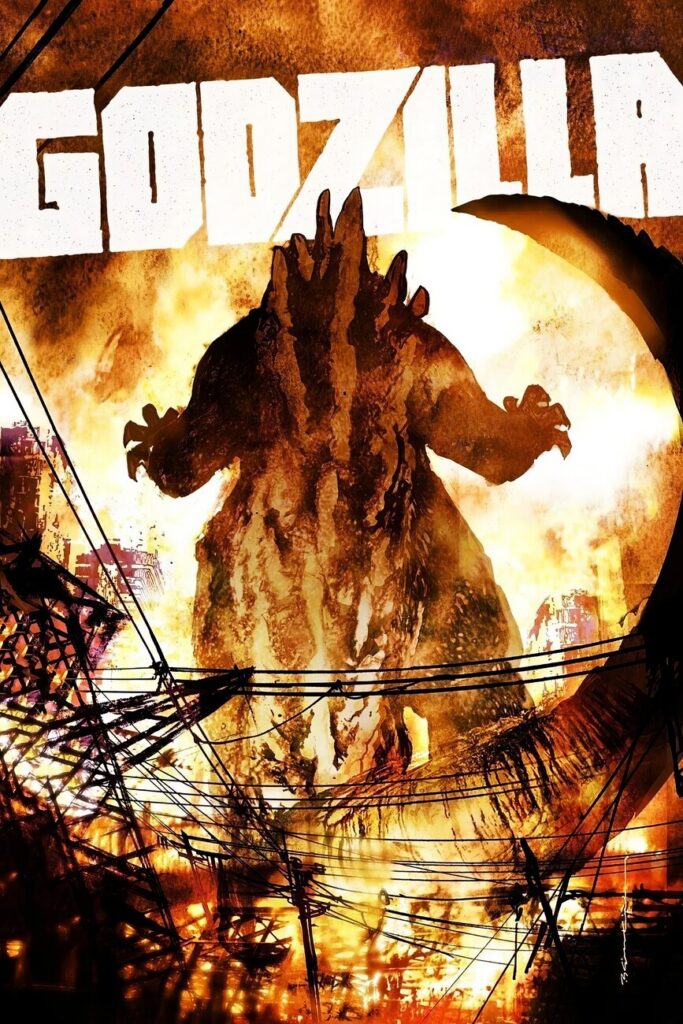
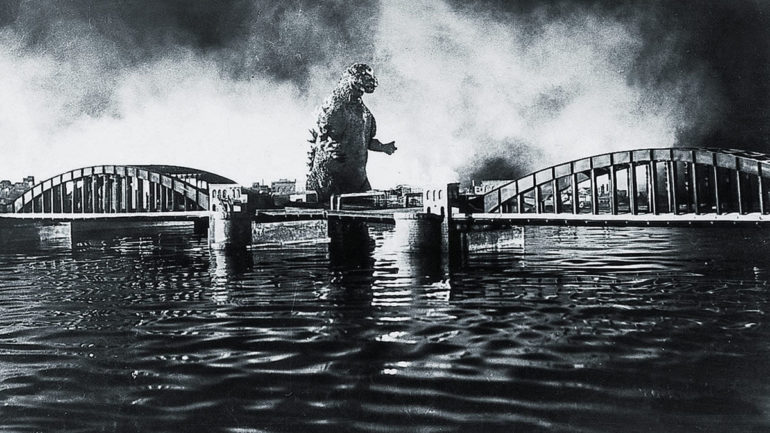
Ishiro Honda’s original Godzilla (1954) is much less a horror film than it is an anti-war film, but it remains one of the most influential horror movies ever made and a masterpiece that monumentally impacted the history of Japanese cinema. The film stars many then-unknown actors who became familiar faces through the Showa-era monster films, but it also stars Takashi Shimura, one of the greatest Japanese actors of all time, as a paleontologist who pushes the film’s central commentary forward and investigates the monster after a string of ships mysteriously sink off the coast of Japan. Where the film succeeds even beyond its monumental impact is in establishing the central conflict and purpose behind the Godzilla concept, with Shimura’s character pleading to study the monster rather than destroy it, a creature clearly awakened by hydrogen bomb testing, and a sense of humanity and anti-war commentary that far surpasses anything anyone expected a monster movie could hold. Godzilla changed how the world viewed Japanese cinema and defined Honda as one of the greatest directors of all time, and to this day, its commentary, practical effects, and lighting make it a masterpiece of the ’50s that is much less a horror film than a pertinent commentary.
Godzilla exists almost by accident, with producer Tomoyuki Tanaka needing something to fill the hole left by a collapsed project and Japanese cinema already being pulled toward the giant monster genre after King Kong found enormous international success, which makes the seriousness of what Honda built out of a commercial stopgap even more remarkable. Casting Takashi Shimura, a regular collaborator of Akira Kurosawa (Honda’s close friend and, to many, the greatest director of all time), as the paleontologist pleading with Japanese officials to study the creature rather than destroy it gave the film immediate dramatic credibility, while the rest of the cast was essentially unknown in 1954 and became notable only through the Showa era’s success that followed. Honda’s single greatest achievement was getting all his actors to take a monster movie entirely seriously, which is the whole reason the film reads as brilliant anti-war commentary rather than genre filler, and it’s a discipline almost nothing in the kaiju space has matched since. The film wanted to imitate King Kong’s stop-motion design, but that process proved far too slow for the production schedule, so Eiji Tsuburaya’s effects team built miniature cities and put two different men in a Godzilla suit to depict the destruction of Japan, a suit so unbearably heavy and hot that it reportedly took a physical toll on both actors who wore it across the shoot. The film opened the doors to the Western world for Japanese cinema while performing enormously at home, an extremely rare double feat in the 1950s, and while Japan is rightly known for its art-house masters, Honda led the way for Japanese sci-fi to become one of the most internationally and commercially successful waves the country’s cinema ever produced, earning an 86/100 from TwilightRoom.
October 4 - Godzilla Minus One
81.9/100 - Takashi Yamazaki - 2023
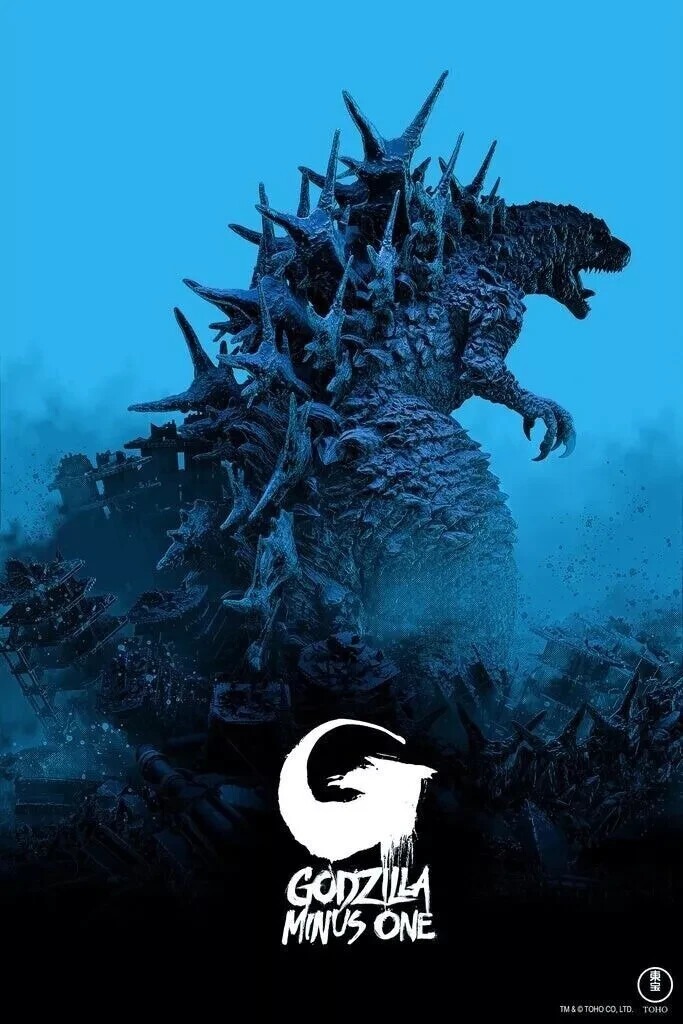
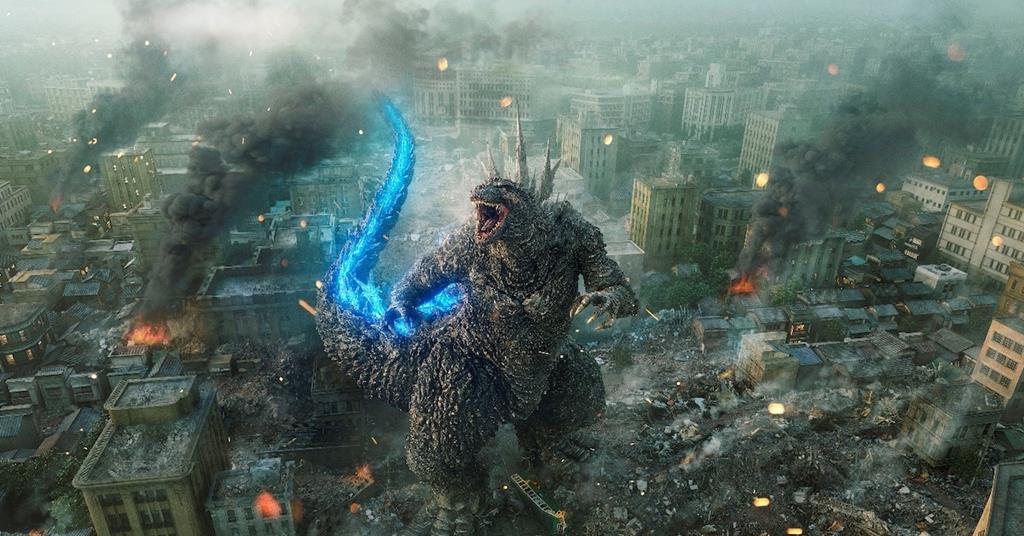
Godzilla Minus One (2023) takes everything done right in both the original Godzilla and the MonsterVerse version and delivers the best modern kaiju adaptation, thanks to its ability to produce well-done sci-fi horror action alongside an emotional morality that connects you to the human characters of the film. While we’re not quite sure we connected with this film as much as most audiences did in the middle acts, which feel more like progression than the meaningful compassion of the first act or the pure action and adrenaline of the last, the film is still well composed and tightly made for a film that could have been just another mediocre blockbuster. As for the horror, Minus One plays much more as horror than Honda’s version from the opening scene, depicting not only the scariest Godzilla attack we have gotten but perhaps the most creative one, which continues into a modern-day Jaws-like sequence that places this film more firmly in the horror genre than any other kaiju film. Godzilla Minus One played better with other audiences than it did for us, but its style and honest exploration of Japanese life during and after the war, while maintaining an enthralling kaiju story, are undeniable and make this the strongest modern-day Godzilla film by a considerable margin.
Takashi Yamazaki is the foremost visual effects filmmaker in Japan, a longtime member of the VFX studio Shirogumi who directed a long run of domestic blockbusters, but it wasn’t until Godzilla Minus One, where he served as director, writer, and visual effects supervisor all at once, that he finally gained real international recognition. The film won the Academy Award for Best Visual Effects on a budget of under $15 million, becoming the first Japanese film ever to win in that category and the first Godzilla film to take home an Academy Award of any kind, which says everything about how much Yamazaki squeezed out of a fraction of what any American blockbuster spends. Setting the story in post-World War II Japan, with a failed kamikaze pilot at rock bottom and a country sitting at zero, reframes Godzilla entirely as a punishment arriving after Japan had already lost everything, and that framing is why the emotional material carries weight no MonsterVerse entry has come close to. Building into the kaiju fight rather than throwing us directly into it makes the stakes far more valuable throughout, and the plan eventually devised to stop the monster is considerably more logical than anything the modern MonsterVerse has bothered to construct. Godzilla Minus One stands as the highest-grossing Japanese Godzilla film ever made and one of the most influential horror movies of the 2020s, with a black-and-white version, Minus Color, released in theaters in 2024 as a direct tribute to Honda’s 1954 original. With Yamazaki’s follow-up, Godzilla Minus Zero, arriving in just one month, this film blends tribute and new franchise well, earning an 81/100 from TwilightRoom.
October 5 - Sinners
93.5/100 - Ryan Coogler - 2025
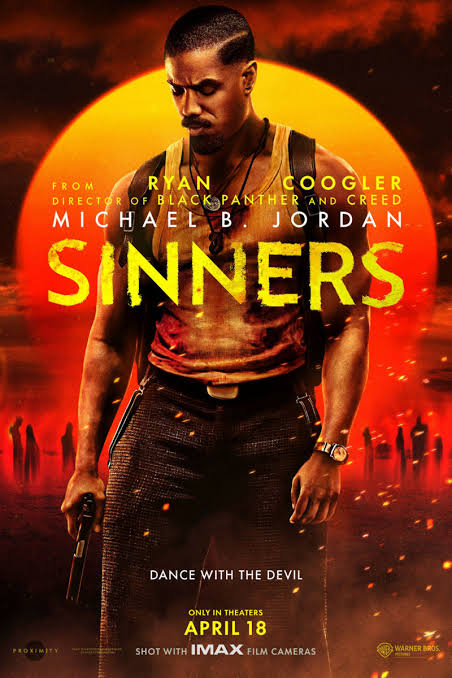
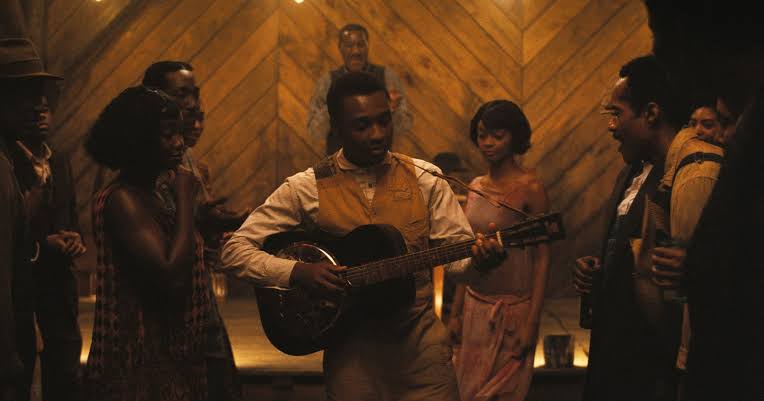
Sinners represents the most recent film on our Spooktober list for this year and perhaps the most talked about as well, and Coogler’s magnum opus delivers even more on rewatch as one of the most complex, culturally in-touch blends of genres, music, and concepts ever made. There is plenty to talk about with Sinners, from the record for most nominations in Oscar history to Michael B. Jordan’s Best Actor win in one of the closest races for the award ever, but what audiences don’t quite talk about enough is Sinners’ ability to change its tone and voice constantly while still feeling uniquely coherent, maintaining an undertone of horror that never leaves you. The film plays even better when you know it holds one of the best musical performance scenes of the 21st century, vampires endlessly pursuing the main characters at the juke joint, and a Jordan action sequence that will have you on the edge of your seat and unable to look away. At first, I was under the impression that Sinners was a solid but slightly overrated film, but now I am firmly convinced it is not only the best horror film of recent years but one of the top 25 horror films of all time, representing an iconic moment in time. Sinners is a magnificent film from Ryan Coogler, defining itself through culture, beat switches, rock and blues, vampires, and horror-action in a way that may never be matched. It is one of the more unique masterpieces of all time and the best film of Spooktober so far.
Coogler’s decision to follow a billion-dollar Black Panther and its sequel with an original, mid-budget Southern Gothic horror film set in 1932 Jim Crow Mississippi was the biggest creative risk of his career, developed through his own Proximity Media with a screenplay he wrote entirely independently and has called the most personal work he has ever done, the film he would have made at any point in his career if anyone had let him. The foundation is the Mississippi Delta blues, a tradition born under extreme racial violence and economic exploitation, and Coogler worked extensively with blues historians and musicians to build the supernatural premise directly out of that mythology, with Ludwig Göransson’s Oscar-winning score functioning as both period recreation and a genuine thematic argument about the relationship between Black American music and survival.
Michael B. Jordan’s turn as Smoke and Stack demanded both physical and psychological separation between twins across one continuous narrative, and the practical and digital work required to put both of them in the same frame was among the most discussed production achievements of 2025, making his Best Actor win a fitting recognition of one of the most technically and emotionally demanding dual performances in modern cinema. Autumn Durald Arkapaw swept nearly every cinematography award of the season for her natural lighting, period-accurate palettes, and the visual grammar she built to separate the film’s temporal layers, becoming the first woman ever to win the Academy Award in that category. The 16 nominations broke a record held jointly by All About Eve, Titanic, and La La Land, and the four wins alongside a $370 million worldwide gross make this the most commercially and institutionally validated American horror film in decades, though the Best Picture loss restarted every conversation about the Academy’s inability to honor horror at the highest level, even if awarding One Battle After Another was the right call in our opinion. Sinners earns a 93/100 from TwilightRoom.
October 6 - IT
84.0/100 - Andy Muschietti - 2017
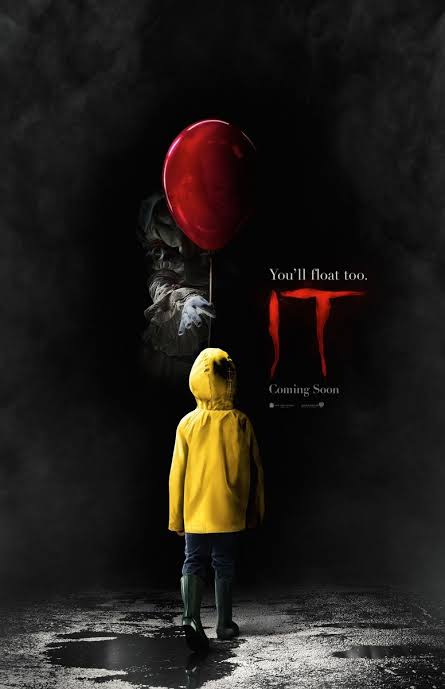
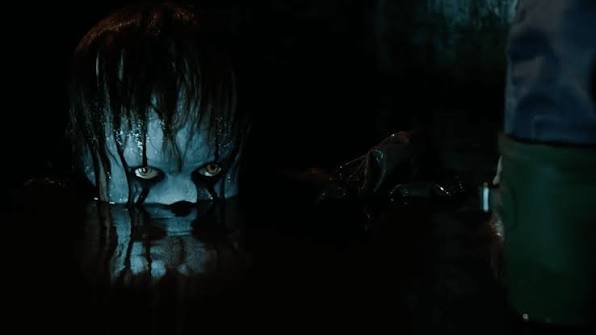
IT will always bring me so much nostalgia, as my friends and I snuck into the theater during our freshman year of high school to watch it without an adult. Skarsgård’s iconic Pennywise performance will forever be amazing, but what I did not quite recognize was just how outstanding this film was at reflecting the fears of its 2017 audience in just the right way. It is one thing to produce a creature and have it deliver jump scare after jump scare, resulting in a modern horror film that feels rather basic, but it is another thing to have the creature tailor every scare to each kid’s biggest fear as uniquely as it does here. This film is a clinic in how to make a modern horror franchise blockbuster so much more than a surface-level scare.
The IT project sat in development at Warner Bros. and New Line for years, with a rotating cast of directors and writers, before Cary Joji Fukunaga took over and made the story so dark that clashes over creative control led to his rather public departure. Andy Muschietti then came in with a more coming-of-age concept that took the story in a much different direction. The new film prioritized the Losers’ Club over the pure horror that King originally embedded into the plot, taking inspiration from Stand by Me as much as it did from the horror films of the decades before it. Skarsgård was handed the task of replacing Tim Curry, whose Pennywise had culturally shaped the image of the character in the 90s, and he could not have been more of a success, as his intricate new portrayal of the character as more crazed than ever has been universally praised ever since. The film was made for $40 million and grossed $719.8 million worldwide, becoming the highest-grossing horror film in history at the time. To this day, it is thought of as the most commercially successful horror blockbuster of all time, setting a precedent and legacy that likely changed the genre’s landscape forever. The child ensemble became an immediate standout, a group as endlessly praised as the Stranger Things kids of the same era, and one that reframed the Stephen King novel as something horrifying, comedic, coming-of-age, and brilliant all at once. IT earns an 84/100 from TwilightRoom.
October 7 - IT Chapter Two
68.7/100 - Andy Muschietti- 2019
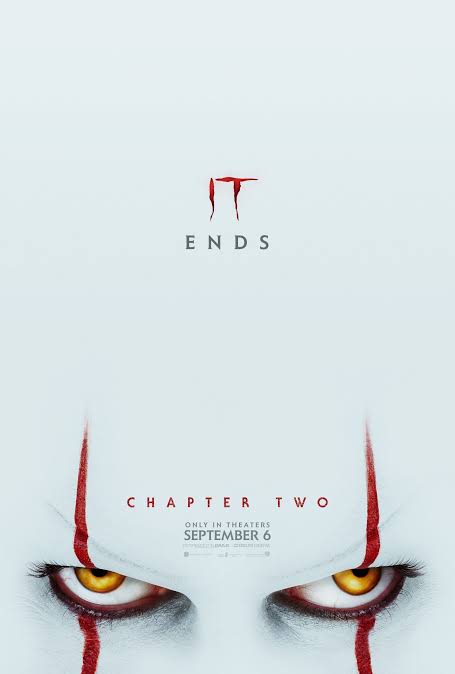
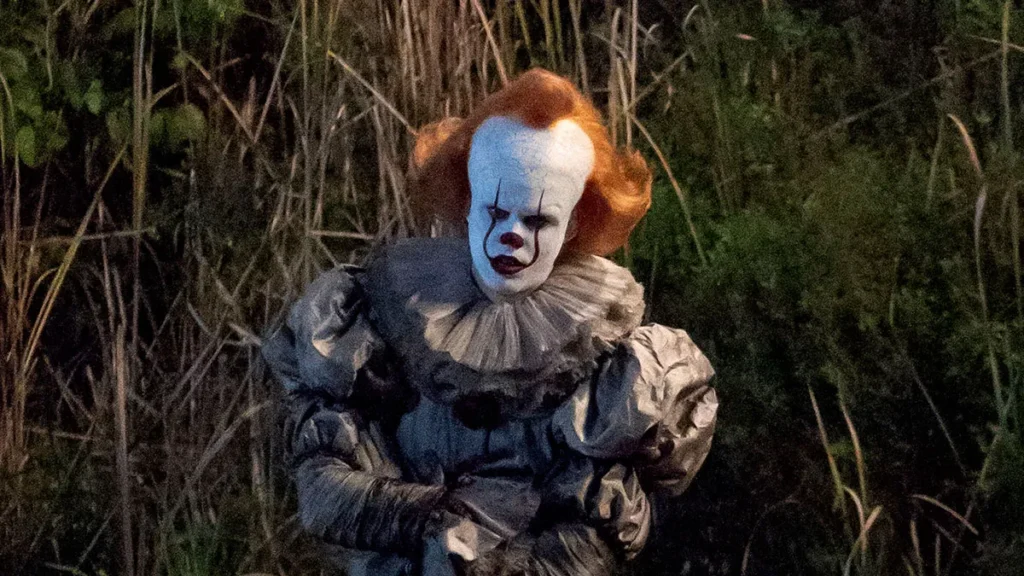
The seventh film of Spooktober, and the first sequel I have watched so far, was quite the opposite experience from the original. While IT (2017) turned out to be a uniquely great 2010s horror entry, IT Chapter Two falls into the category of messy blockbuster, favoring jump scares and callbacks over substance. It is clear this film strayed far from Stephen King’s original novel, while the producers and director still didn’t want to let go of how well the first film performed, bringing back the original child actors alongside new adult actors to play their older selves, a decision that made the film far too cluttered, with too much going on for its scares to land. Pennywise is effective when bringing out the characters’ worst fears, or when Skarsgård has free rein to deliver a fully horrific performance, but the CGI and giant blockbuster-esque scenes mostly strip him of that opportunity. However, this film is seven years old and already feels nostalgic, a horror film that paved the way for getting audiences to the theater for R-rated films, and while it is not the best film out there by any means, it is serviceable enough to be endlessly memorable.
IT Chapter Two faced a structural problem from the day the two-film approach was decided, because King’s novel braids the Losers’ childhoods and adulthoods together across its 1,100 pages, while this film was handed only the adult half, and the solution of cutting back to extended flashbacks with the original kid cast only made the imbalance more obvious than it already was. The result runs 169 minutes, making it the longest mainstream horror film of the decade, and almost nobody came out of it believing that runtime was earned, which is a large part of why it grossed $473.1 million worldwide against the first film’s $719.8 million and drew mixed reviews in a way Chapter One never did. The adult cast still worked, with James McAvoy, Jessica Chastain, and Isaiah Mustafa all getting good notices, but Bill Hader’s Richie and James Ransone’s Eddie are the two everybody actually remembers, a comic partnership carrying the chemistry and warmth the rest of the film never found and delivering the one emotional payoff here that genuinely lands. The biggest problem was the enormous jump in digital effects used to build Pennywise’s worst manifestations, a complete departure from the grounded, practical horror of the first film that stripped Skarsgård of the quiet dread he was so good at, with the Mrs. Kersh sequence and the Paul Bunyan statue scene catching the most criticism for choosing scale over tension. King himself shows up in a cameo as an antiques dealer selling Bill a bicycle, and he later declared publicly that he thought Chapter Two was the better of the two films, a take so far outside the consensus that it started its own conversation. The film has since settled into exactly the place it belongs: a satisfying but clearly weaker conclusion to something the first film built far more elegantly. IT Chapter Two earns a 68/100 from TwilightRoom.
October 8 - Scream
96.3/100 - Wes Craven - 1996
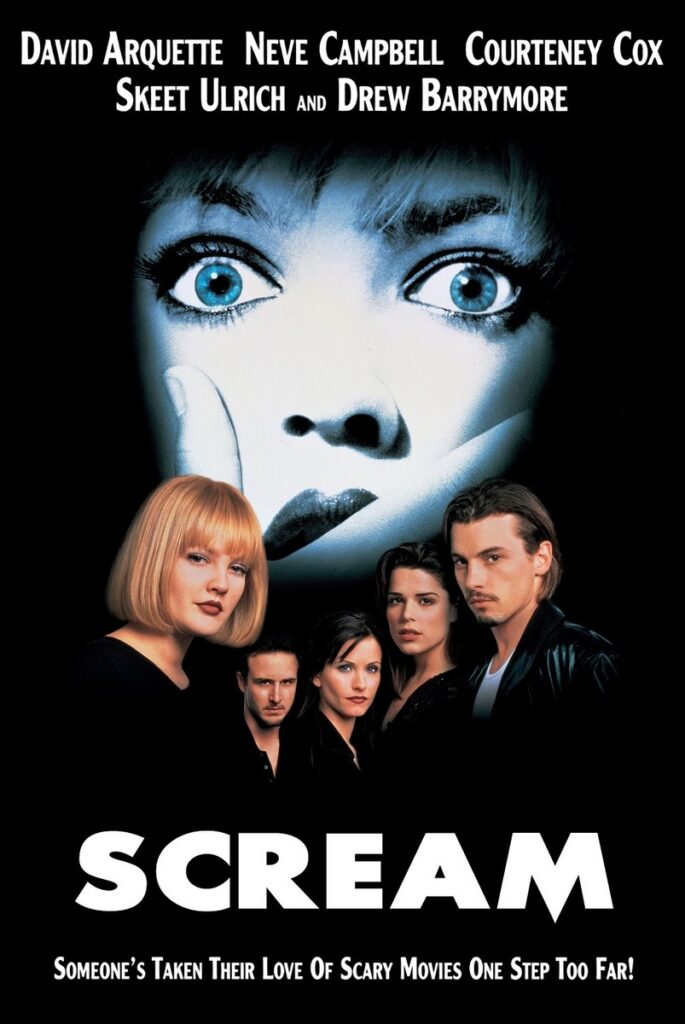
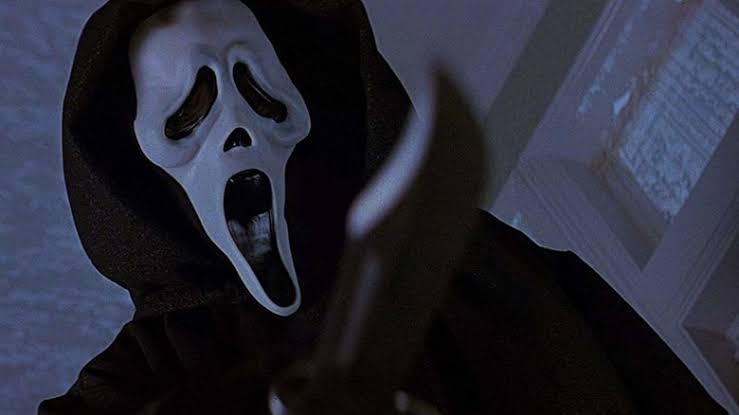
Wes Craven’s original 1996 Scream delivers the first masterpiece of my Spooktober journey for 2026, as the classic slasher perfectly blends constant homage to and inspiration from the horror greats with fantastic young acting and iconic sequences that are as monumental to the horror genre as they are endlessly entertaining. Loomis and Macher embody the constant thought evoked by the horror greats that came before Scream, the idea that two kids could become so obsessed with the horror icons they see on the screen that it’s all they need to go on a semi-calculated murder spree as the iconic Ghostface, and it’s delivered by the boys in the most chaotically juvenile way possible, exactly how it needed to be. The Scream franchise has taken some interesting turns in the last 30 years, but its original is a horror great, one of the ten best of all time, inspired by the films that came before it and forever influencing every horror film that came after it.
Wes Craven turned the Scream project down multiple times before he ever read its script, as the director was actively trying to distance himself from horror in the 90s, making it all the more remarkable that when he finally agreed to make the film, it became the one that resurrected the genre for decades to come. The film faced far too many obstacles on its way to the big screen despite its reception in early screenings, as Craven was forced to cut down certain scenes to secure an R rating over the NC-17 that would have hurt the film’s chances of success. The famous opening sequence reflects the single most carefully considered decision in the entire production, as Drew Barrymore was originally cast as Sidney before switching to Casey, simply because killing the film’s biggest-billed star would be the bold statement Craven was so eager to start with, and it remains one of the greatest decisions a horror director has ever made. Scream was released, oddly, in December 1996, yet it still grossed $173 million worldwide against its $15 million budget, becoming the highest-grossing slasher until 2018. It borrowed the rules and settings of every horror film before it and built an entirely new franchise out of them. Scream now sits alongside the horror greats that inspired it as one of the most important slasher and horror films ever, launching a franchise that now spans more than seven films and a TV series, and it remains the most lasting work the late Wes Craven ever made. Scream earns a 96/100 from TwilightRoom.
October 9 - Scream 3
72.9/100 - Wes Craven - 2000
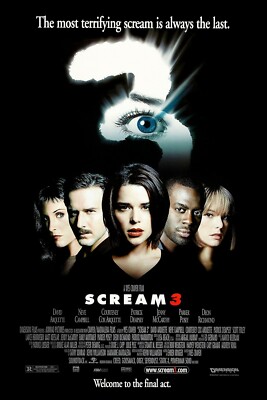
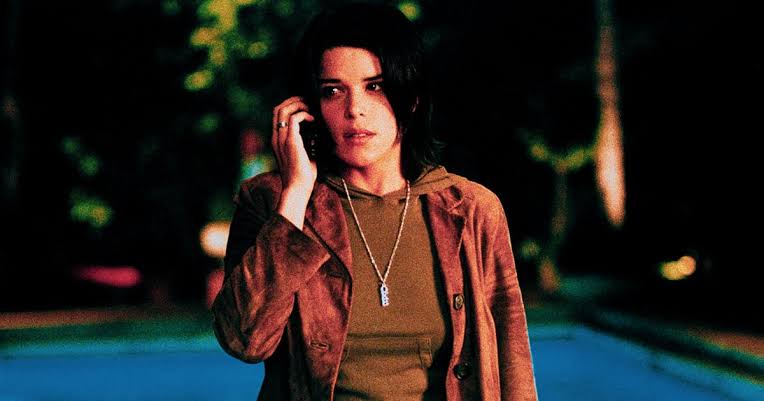
After I watched the original Scream yesterday, with its nostalgic horror homage setting the bar through the roof, Scream 3 comes off as a bit underwhelming, but so over the top in its final act that it has slowly developed its own unique sense of charm over the last 26 years. The film does well to bring the original cast back, and even better to comment on itself in an almost fourth-wall-breaking take on the trilogy tropes of horror films. However, the concept was simply better than the writing, acting, and character choices used to execute it. There was a way to make this film that left the original alone and developed something creative without undermining the brilliant motivation and horror film culture that made Billy Loomis and Stu Macher so unique, which ends up being the most frustrating aspect of a film that is much more entertaining than it is nuanced. Nevertheless, Scream 3 defines what the franchise has become: a bit cheesy, with some absurd twists that the audience sees coming only about half the time. It may not be the most intelligent horror out there, but it does a great job representing a moment in time within the legacy of the slasher subgenre that has been built up since the 80s.
Scream 3 is the first of the franchise to release without the brilliant voice of Kevin Williamson, the first two films writer who was occupied with his series Wasteland, now replaced by Ethan Kruger who was only given two weeks to write the script while the rest was made on set during shooting, the effect clearly evident in the film. The film also was severely clouded by the Columbine Shooting that had largely contributed to the film’s fear of violence, an idea Craven fought heavily against but still caused the final product to be the least violent of the franchise by a considerable margin. While this film was 25 million dollars higher in its budget it was largely the messiest and most chaotic yet , which led to largely mixed opinions that led critics to criticize the film while audiences now appreciate the film for its chaos now more than in 99. The biggest success from the film was the entry of Parker Posey’s Jennifer Jolie, playing an actress who plays Gale Weathers in the film, as here performance perfectly blended the campy fun this film was trying to achieve with the slasher horror homage the franchise was known for at the time, one of her most iconic performances leading to an intensely successful career for Posey. The film is considered the weakest entry in the franchise, but we don’t think its actual delivery reflects that per say as the nostalgic camp that surrounds Scream 3 is far more effective now than it was at the turn of the century, earning a 72/100 from the TwilightRoom.
October 10 - Cure
82.4/100 - Kiyoshi Kurosawa - 1997
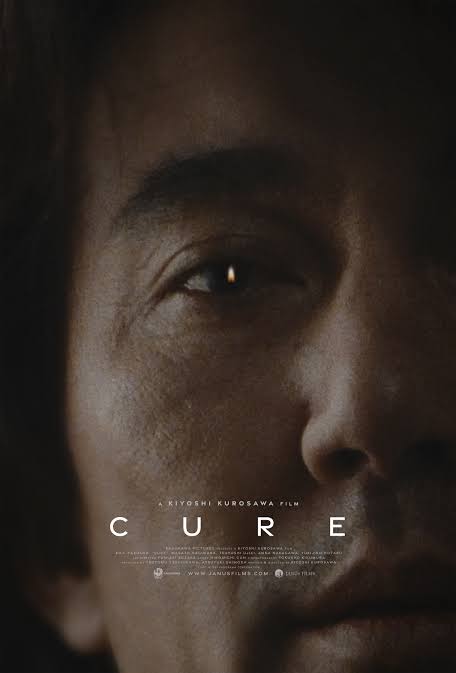
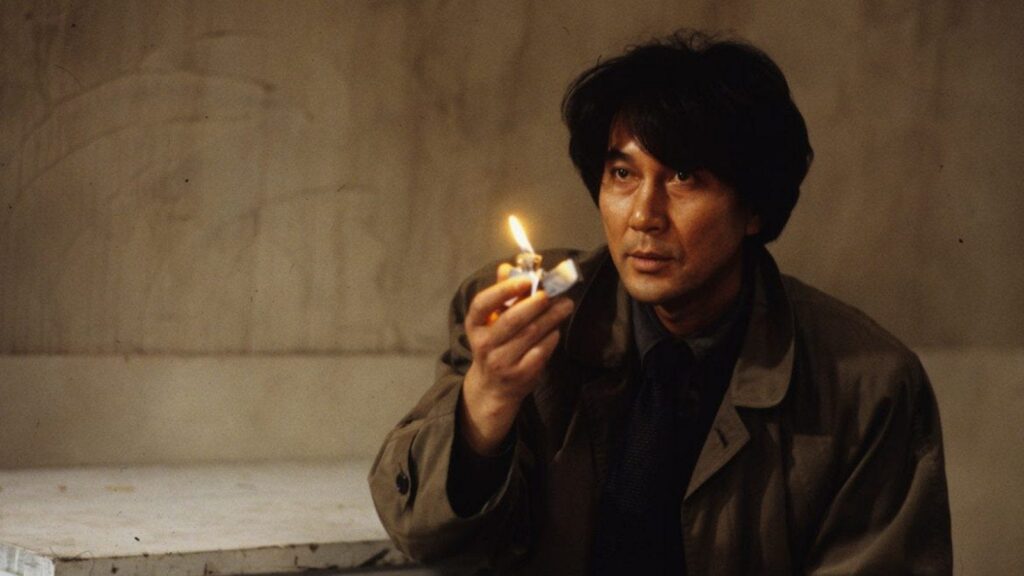
Many of the films spoken about as the most beautiful ever made maintain a sense of beauty in their narrative that provokes that reaction, but the tenth film in my Spooktober journey does quite the opposite. Cure is one of the most beautifully shot films I have ever seen, purely for its ability to bring a sinister look and feel to every waking second of its runtime. It’s a film about mesmerization that mesmerizes its audience as a mystery thriller, baking the horror less into the plot and more into the viewing experience, which may be the most unique angle a film has taken this entire month. I cannot say the film is an absolute masterpiece, as the middle-to-late sequences ahead of the final act move at a pace that can pull you away from the otherwise tantalizing plot, yet Cure also proves that Kiyoshi Kurosawa’s ability to make a film the right way stands among the finest in modern cinema. While Kurosawa’s Cure doesn’t come without its flaws in storytelling and pacing, the film is a clinic in the idea that one of the most well-made and beautifully composed films ever can also be one that unsettles you at every turn, a near-impossible feat.
Kiyoshi Kurosawa spent the entire decade before Cure grinding out low-budget, straight-to-video genre pictures in Japan’s V-Cinema market, earning him credibility at home but virtually no international recognition, until this film, which came to him in one hour in a coffee shop after he watched The Silence of the Lambs and imagined translating its story to Japanese culture. The film was conceived and produced directly in the shadow of the March 1995 Tokyo subway sarin attack, in which Aum Shinrikyo members released nerve agent during the morning rush hour, killing thirteen and injuring thousands. Kurosawa has acknowledged that what disturbed him most about it was the demonstration that ordinary people could be talked into mass violence by a charismatic and authoritative figure, which is precisely the premise of a hypnotist with no fixed identity compelling strangers to kill. Kurosawa collaborated with Koji Yakusho on this film and would go on to work with him on some of his most popular works, including Pulse. Yakusho’s portrayal of Detective Takabe is regarded as one of the finest performances in Japanese genre cinema of the decade and the best character the director has ever created. The film represents the pinnacle of J-Horror alongside Hideo Nakata’s Ring, this time delivering sustained dread, philosophical implication, and an ending that refuses resolution, triggering debate over its meaning. Alongside Kurosawa’s Pulse, Cure sits at the top of a great filmography as one of the most philosophically sophisticated horror films ever made. Cure earns an 82/100 from TwilightRoom.
October 11 - Silence of the Lambs
98.0/100 - Jonathan Demme - 1991
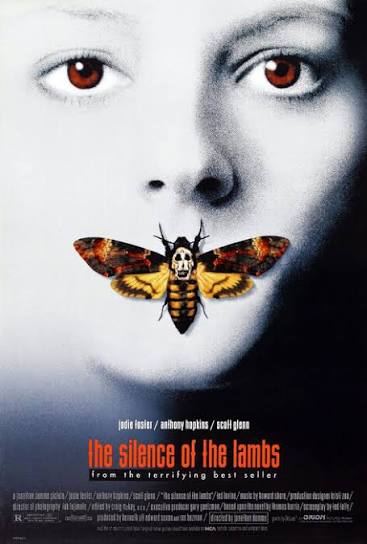
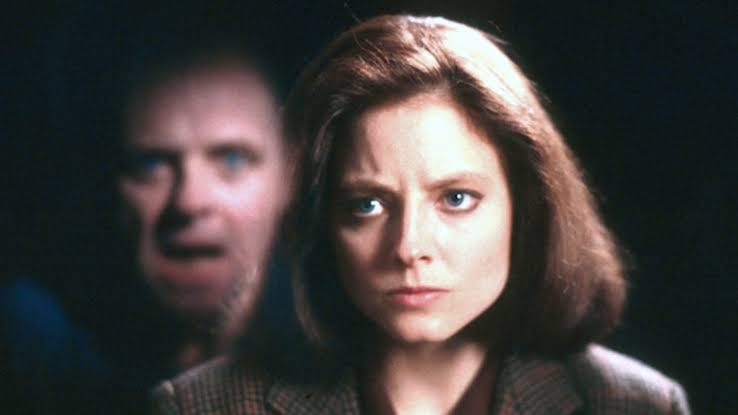
It has been quite a while since I last checked out my personal favorite horror film of all time, and this watch confirmed not only that sentiment for The Silence of the Lambs but also that this film is, without a doubt, as representative of the horror genre as it is of the crime thriller. Since the film’s release in 1991, much has been said about Anthony Hopkins’ Hannibal in the best crime thriller of the 90s, but not as much has been said about Jodie Foster’s equally amazing performance, as she handles both Lecter and Buffalo Bill with excellent composure and nerve in a role that defined her severely underappreciated career. No matter what your personal favorite thriller is from the 90s into the 2000s, an era when the crime thriller boomed like cinema had never seen, it was likely influenced by the storytelling techniques employed here, whether it is the dual-location trickery or the intricately edited sequences that tell the audience just what they need to know but not an ounce too much. The best of the best in horror is made up mostly of the same directors, and while I tend to love those filmmakers’ work too, Demme, who likely had little interest in the genre beyond this film, still sits atop the mountain, as The Silence of the Lambs stands as not only the best horror film ever but one of the top 25 films in history.
The Silence of the Lambs swept all five major Academy Awards (Best Picture, Director, Actor, Actress, and Adapted Screenplay), making it only the third film ever to pull this off after It Happened One Night and One Flew Over the Cuckoo’s Nest, a feat nothing has matched since. It also remains the only horror film to ever win Best Picture, a monumental achievement for the film. Jonathan Demme was an unlikely choice to direct, coming off films that were hit or miss, the best of which was the concert film Stop Making Sense, but his choice to have the film live with Clarice Starling instead of Hannibal Lecter turned out to be one of the greatest decisions in horror cinema history.His casting of Anthony Hopkins was a gamble that paid off, as was the decision to pick Jodie Foster over some larger Hollywood names. The film features Hopkins’ Lecter for only 16 minutes of screen time, which caused widespread debate over his Best Actor win, with some claiming it should have been a supporting role, though critics and Demme himself maintain the role was as leading as it gets. The film drew significant protest from LGBTQ advocacy groups of the time for its depiction of Buffalo Bill as a serial killer with gender dysphoria, a conversation that continues today, tied to the real-life murders and story of Ed Gein that partly inspired the character. The film is credited as one of the best literary adaptations ever, if not the best, making Hannibal the most famous fictional serial killer of all time and the film a staple of American horror culture ever since. The Silence of the Lambs earns a 98/100 from TwilightRoom as my personal favorite of the genre.