This week’s Criterion Tuesday hits during a huge kick of Akira Kurosawa for me as Stray Dog stands as one of the earliest films from one of the best directors of all
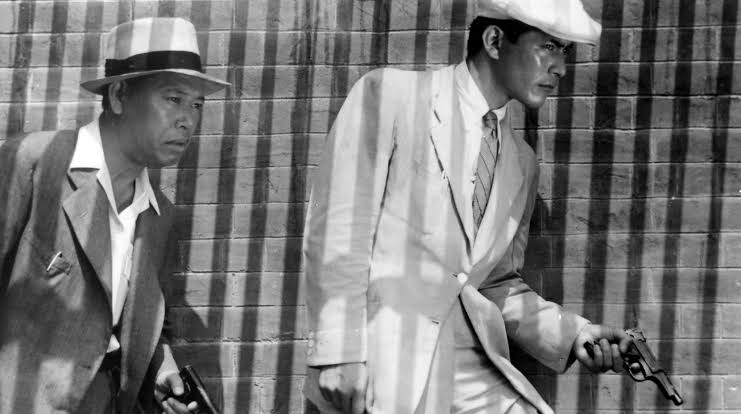
time, a film that fully demonstrates his mastery of editing, cutting through a scene and transitioning between sequences with a fluidity most directors never achieve across an entire career. The film, like many of Kurosawa’s best, is anchored by a fantastic interaction between two of Japanese cinema’s most famous actors in Toshiro Mifune and Takashi Shimura, with Mifune’s rookie
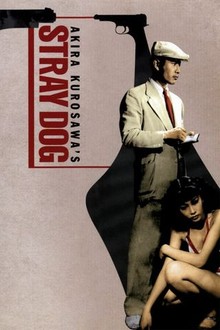
policeman Murakami carrying an anxiety and desperation only tempered by Shimura’s veteran detective Sato. Kurosawa perfectly designs the film to feel overheated and sweaty, building a sense of pressure that never lets up from the opening theft through to the final confrontation in the woods and fields. Stray Dog is an early but genuine masterwork from the director and one of the most complete demonstrations of his craft using rain, heat, sweat, the camera, fourth wall breaks and some of the best actors in history to deliver a fantastic cat and mouse chase, that is up there with some of his best most notable works.
The story begins with rookie policeman Murakami having his pistol stolen from him on a crowded bus, an event shown in an extremely fun sequence reminiscent of how Kurosawa would later go on to shoot High and Low. His search leads him to Harumi Namiki, played by Keiko Awaji, whom he pursues for help in tracking down his missing gun, setting up one of the film’s most compelling and quietly uncomfortable dynamics. Murakami’s original solution is to find the gun itself using an old bullet to identify it, essentially treating ballistics like a fingerprint, a genuinely clever bit of procedural thinking that grounds the entire investigation in something tangible. Once he realizes his gun has caused real harm in the hands of whoever stole it, the guilt becomes unbearable enough that Murakami attempts to resign from the force entirely, a decision that reframes the whole film as a story about responsibility rather than police work. That’s when he turns to Detective Sato, played by the legendary Takashi Shimura, who guides him on the journey to go undercover and find the man they come to call the stray dog.
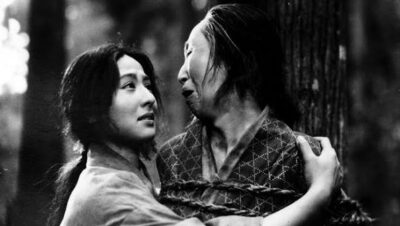
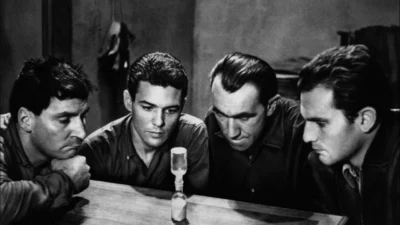
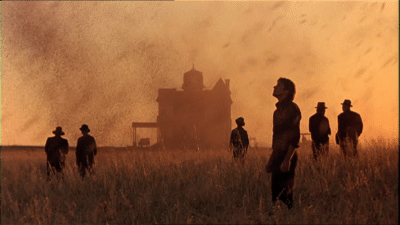
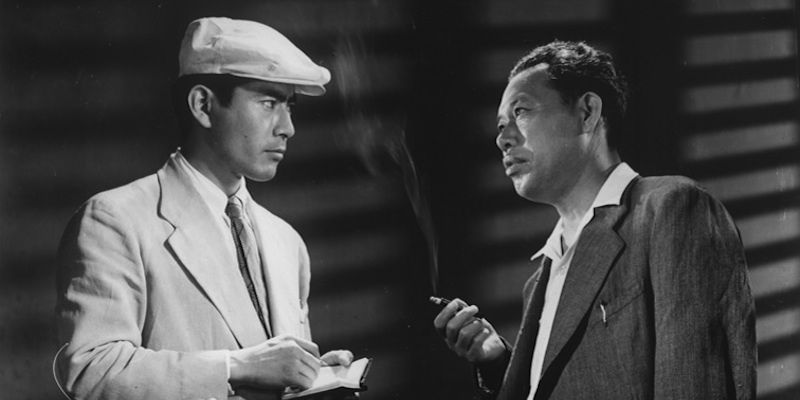
The shot of Murakami and Sato as he runs through his emotions over the loss of his gun, with the storm building in the background, is one of the most beautiful and stunning images in the entire film. That rain sequence is the first great example of how amazingly Kurosawa uses weather as a plot device for sound, aesthetic, and atmosphere all at once, a technique he would go on to deploy across Rashomon, Ikiru, Seven Samurai, and Dreams. The baseball game sequence is another standout, with a mysterious man in disguise emerging at the game and forcing the two detectives to carefully plan their approach, a genuinely tense set piece built entirely on observation rather than action. When that pursuit proves unsuccessful and the two continue asking around, they slowly become a certified duo of young rookie and experienced detectives, a dynamic Kurosawa lets develop naturally rather than forcing into place. Sato completely steals the show in the final act as they close in on the stray dog, and the film’s decision to build so much of its closing stretch around him pays off enormously.
The final sequence opens onto muddy shoes and paths before cutting to Murakami’s realization that he has finally found the stray dog, a moment that is wonderfully, almost unbearably tense. What follows is a final chase into the woods as the gun runs out of bullets, stripping both men down to nothing but exhaustion, mud, and raw desperation. The stray dog looking directly into the camera in fear is the film’s most haunting image, breaking the barrier between audience and subject in a way that recontextualizes everything that came before it. That final confrontation refuses to grant either man any dignity, collapsing the distinction between hunter and hunted the entire film has been quietly building toward. It’s a genuinely perfect closing stretch, tense, muddy, exhausted, and morally ambiguous in exactly the way the story requires.
Kurosawa spoke about Stray Dog as feeling like he needed to explain his intention despite his own sentiment that “if what I have said in my film is true, someone will understand,” a tension that runs right through the finished work. He took the issue he was conveying but failed to land in his earlier film A Quiet Duel and reshot it, essentially, far better here, treating Stray Dog as a second attempt at material he hadn’t gotten right the first time. Kurosawa wrote the story as a novel himself first and then wrote the screenplay from it, an extremely unique and difficult process that few directors have ever attempted before or since. He was also threatened with a lawsuit over his use of a panting dog in the opening shot, presumed to be because of his supposed unwillingness to avoid abusing the animal, an accusation later proven to be entirely false. The Criterion edition includes, instead of a standard review essay, the story of making the film written by Kurosawa himself, written as beautifully as can be, and it’s one of the best features Criterion has ever included with a release, making this one of our biggest pickup recommendations for physical media.
Stray Dog is Kurosawa at an early peak, a film that demonstrates his editing mastery, his atmospheric command, and his instinct for using weather as narrative device all in a single, tightly wound package. Toshiro Mifune and Takashi Shimura together create one of the great detective pairings in film history, with Shimura’s Sato ultimately stealing the middle back half of the movie as one of the best acting performances of his career. The film’s use of heat, sweat, mud, and rain builds an atmosphere of oppressive intensity that few procedurals before or since have managed to sustain. Ishiro Honda was credited specifically with his ability in this film as chief assistant director to depict postwar Japan perfectly, and that documentary-adjacent authenticity remains one of the film’s most enduring qualities. Kurosawa’s own words capture it best, that pleasure in the work can’t be achieved unless you know you’ve put all your strength into it and done your best to make it come alive, and that is exactly what happened in this film, earning a 94/100 from TwilightRoom
TwilightRoom. Score: 94.9/100