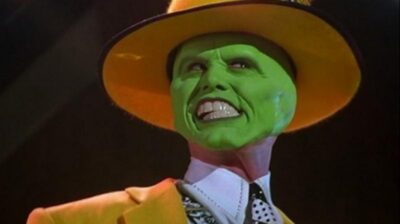
Twilight Room Score: 80.4/100, 52.4/100, 51.4/100
For the first Throwback Thursday on TwilightRoom, we jump 36 years back to 1990s New York, for the campy, satire, original Teenage Mutant Ninja Turtles Trilogy.
Through three vastly different directors, the films jump from absolute 90s relic classics, to a time traveling mess of genres that loses the plot. Highlighting the issue with many throwback franchises: the inability to maintain a direction, director, or even the same actors over time. Nonetheless, the Trilogy still manages to deliver a nostalgia, culture, and creativity that allows it to hold up today amongst the franchise’s other newer adaptations.
Teenage Mutant Ninja Turtles
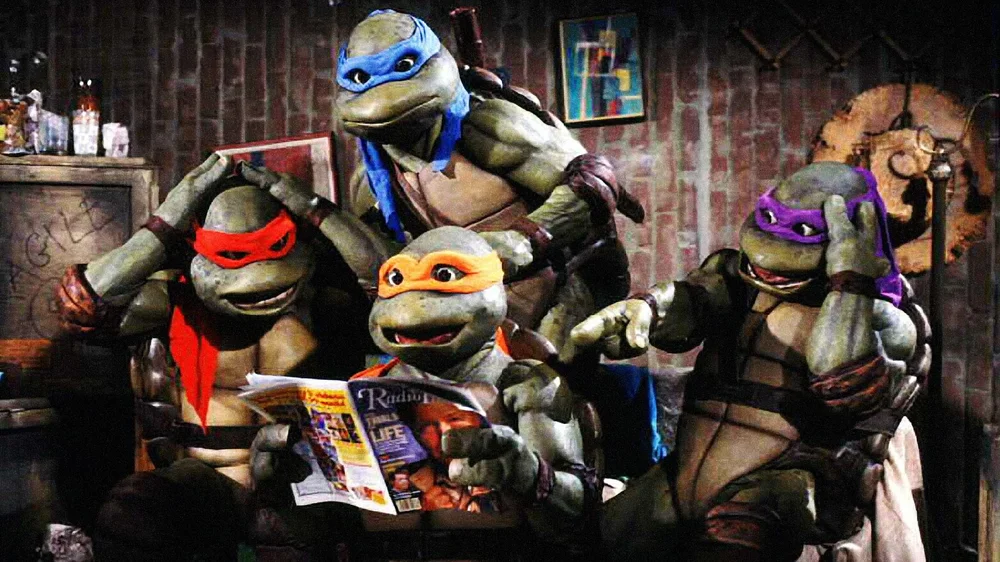
The star of the show and the film that gives the franchise its unforgettable pedestal, is its first film. The original 1990 Teenage Mutant Ninja Turtles is a classic balance of New York sleaze, clearly taking inspiration from the 1985 After Hours, and many of the gangster films of the 70s and 80s. But the standout trait is the film’s campy, relic, comic book come to life vibe that keeps audiences coming back over 30 years later. The Turtles with their animatronic like costume designs feel clunky and outdated, there is no denying that, but they alongside the brilliant voice acting and score bring the nostalgia that defines the film. An older version of the characters is used to fit the tone with quick introductions to Casey Jones and April O’Neil, who combines with Raphael playing more of a lead role then other adaptations, carry the film for the first act. Then comes the bread and butter, the 4 Turtles with their rodent master, made a living off of fighting the generic ninjas that are ordered by their villain Shredder to attack. The film provides uniqueness riddled throughout, whether that’s an action figure told backstory for Shredder, or an action sequence that’s a combo between Japanese action flicks and original Adam West Batman attacks. It’s a faithful comic book adaptation by Steve Barron, but it is also the most traditional New York Homage we will ever get in a TMNT story, one that will live on through its camp action, through time.
Teenage Mutant Ninja Turtles II: The Secret of the Ooze
A year later we return to New York but in a much more colorful setting as the turtles settle into life above ground, a choice that is as interesting as it is telling that there has been a clear director switch. With a new found vibe that I am personally not sure I agree with, but a recast of the beloved April O’Neil that I do agree with, the film begins on unsettled, but hopeful ground. The first main choice and one that seems to always be successful is pitting the Turtles up against the mutagen that turned them into the pizza-loving ninjas they are in the present, while maintaining Shredder as their antagonist mainstay for this 90s group. With all this set-up it is tough to say whether this film was set up for success or not, but it was clear from the steady decline in campy charm in place of sloppier dialogue and editing, The Secret of the Ooze never got its feet under it. The popularity of a Japanese-style action flick mixed with the comic style story writing simply to me was not the place to leave, especially not for a finale where a dance circle was more important than its final battle. However, a large step down from the original does not equal a complete failure of a film. The Secret of the Ooze certainly has its comedic and action packed moments that make this film a classic for many fans of the franchise and 90s New York flicks, enough so it warrants a re- release into AMC Theaters in the current year; a decision clearly reflecting that the flawed film has its following nonetheless.
Teenage Mutant Ninja Turtles III
A giant risk will always get an optimistic eye from me as it’s the key to what makes films great. With a new direction in directing for a second time in the franchise, a departure from the group’s largest villain, and a jump in time in homage to the Turtles and the franchise’s inspiration, the final film of the 90s TMNT trilogy was definitely a giant risk. Inspired by Seven Samurai and many of Kurosawa’s best works, the film was clearly being steered in a new direction. The question is did they execute? And unfortunately, a unique premise simply wasn’t enough to make up for the New York pizza-loving charm of the original two, making the final film the worst of the three. The film is a time traveling dilemma as the Turtles swap places with Japanese warriors during the English invasion of Japan, a story where we see the two groups adapt to their new environment, through love, war, arcade games and pizza. A film that was jammed with more jokes and moments than it was with substance in a way that almost leaves a sour taste in your mouth for these original characters. Nonetheless, there have been worse examples of a bad final film in a franchise, and a big swing is a big swing; even when it is a miss.
Conclusion
An original 1990s comic book franchise will always bring high highs and low lows and the Teenage Mutant Ninja Turtle Trilogy is no exception. With one of the greatest satire and campy representations of the sewers, night life and New York, the Trilogy cemented itself as a certified unforgettable classic. But, with a steep fall-off in quality, along with many problems with creative direction at every turn, the landing was much more wonky than the take- off, in more of a childhood memorable type of view, than a critically acclaimed one.
Twilight Room Score: 80.4/100, 52.4/100, 51.4/100