Cyber Protocol is an interesting, ambitious piece of new independent science fiction that knows exactly what it wants to be from the
opening frame, a dark dystopian vision about a man who has turned himself into the test subject for his own ambition. The story is centered entirely around David Bianchi, who stars as Grimm and also co-wrote and produced the film, and you can feel that this is his passion project built around the ideas he most wanted to explore rather than a studio product assembled by committee. The film’s commentary on a darker
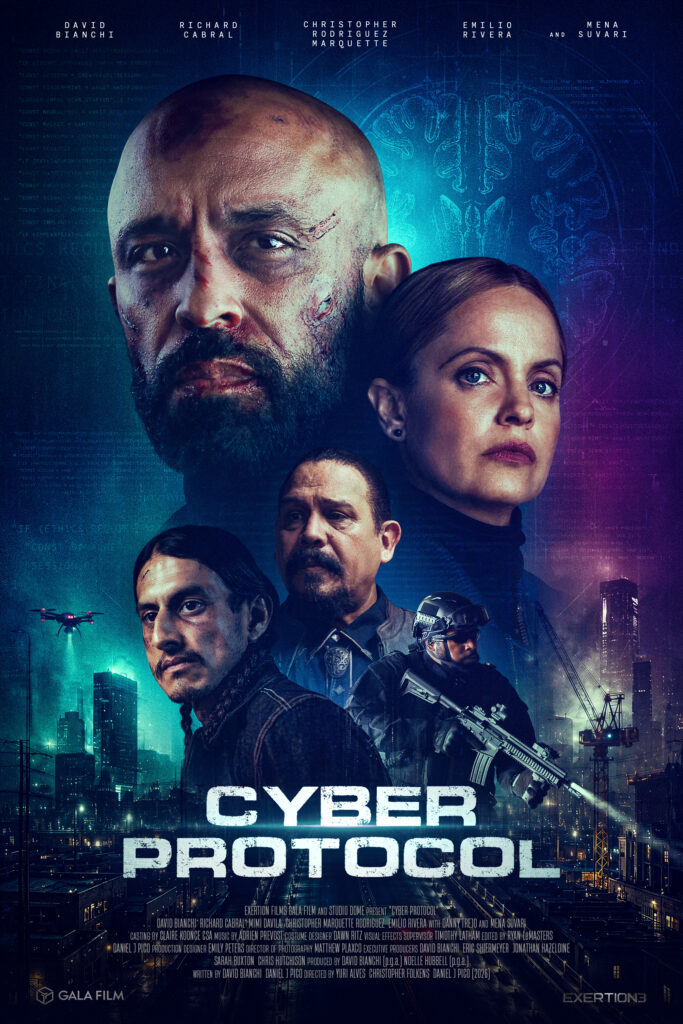
future shaped by AI, technology and dystopia connects well, and it does a better job than most bigger-budget films at making the dangers of that future feel personal rather than abstract. What holds it back is a blend of nuance and entertainment that does not always come together as well as it should, along with a handful of familiar genre tropes and lighting choices that keep it from reaching the next level. Cyber Protocol is an inspired, underrated new sci-fi film that is very much worth your time, and with a bit more refinement, its concept and dystopian atmosphere deserve a bigger world built around them.
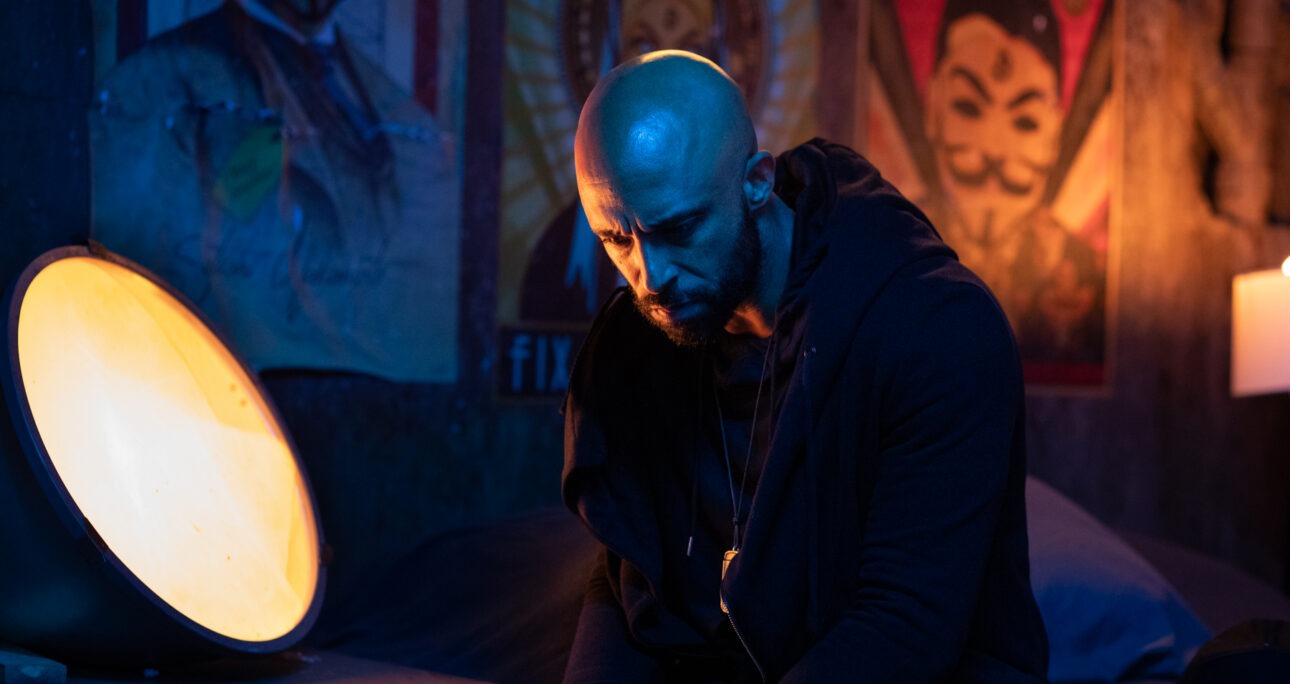
The film opens in darkness as Grimm, a man living in a dystopian future, tests his own neural implant technology on himself and documents everything that happens to him afterward, a framing that gives the entire film its confessional, diary-like tone. It truly works. The implant is the “Acumen,” a device that allows him to download and cognitively process data instantaneously, but the film is far more interested in what that power costs him than in what it lets him do. As we watch Grimm struggle with both the implant and his PTSD, the story flashes back a year before the opening to show the alcohol- and drug-troubled man who made the decision to go through with it in the first place. That structure is the smartest choice in the screenplay, turning what could have been a straightforward cyberpunk thriller into a story about self-destruction, with the technology simply the newest way Grimm finds to punish himself. The world surrounding him is a dystopian Los Angeles overrun by black-market crime and fueled by cryptocurrency, and the film builds it convincingly enough that it never once feels like a backdrop.
Visually, it is dark and soaked in neon by design, reflecting the bleakness of its dystopian story, but the lighting gets too dark at times, and some scenes become hard to read in a way that works against the atmosphere rather than building it. The score is very solid throughout and does a lot of the work holding the tone together when the visuals start to slip, giving the film a pulse it would otherwise lack in its quieter stretches. The standout achievement is an action set piece that feels downright impressive for an independent production, a sequence that delivers real spectacle on a budget that should not have been able to support it. That set piece is the clearest proof of what this team is capable of, and it makes the moments where the craft falls short feel even more frustrating by comparison. With David Bianchi, Mena Suvari, Richard Cabral and Danny Trejo leading the cast, the film also has recognizable faces lending weight to a world that rests mostly on Bianchi’s shoulders.

Cyber Protocol spends its second act building an emotional attachment to Grimm and the friends he holds closest, showing us how he got to where he is and what he still stands to lose. It is a strong story in its own right, and Bianchi is at his best in these scenes, but that stretch pulls you out of the science fiction for longer than the film can really afford. An early altercation becomes the main antagonistic thread of the story, and while it is an intriguing engine for the plot, it never becomes a threat that truly grabs you. The emotional material and the genre material feel like two different films at times, and the transitions between them are where the pacing struggles most. When the two halves do line up, though, the film is genuinely affecting, which makes it clear that the blend works whenever the editing gives it room to breathe.
The final act finishes on a more open-ended note than expected, anchoring Grimm’s new identity to Razor in a way that feels more like the start of something than a conclusion. That ending suits a story about a man who has rebuilt himself from the inside out, and it is the clearest signal that this world was built to hold more than one chapter. The film’s two driving forces, its nuance and its entertainment, are both its biggest strength and its biggest problem, failing at times to blend as well as anticipated while really succeeding at others. It leans on a few familiar genre tropes along the way, particularly in its crime underworld, and those moments make the film feel more ordinary than its central idea deserves. Still, the sci-fi concept at its heart is a genuinely interesting one, and it is the reason the film stays with you after the uneven stretches fade.
Cyber Protocol is clearly a labor of love for Bianchi, and his commitment to the material in front of and behind the camera is the reason the film works as well as it does. More consistency in how it blends its emotional story with its genre spectacle would have made a significant difference, as would editing that let the film flow more fluidly between its two halves. A few lighting tweaks could also have sharpened the visual identity, which comes so close to being striking that the moments where it falls into murk stand out. Even with those critiques, the film truly delivers more ambition and more spectacle than most independent sci-fi ever attempts, and its view of an AI-driven future feels timely without ever becoming preachy. Cyber Protocol is an inspired, underrated sci-fi film with a world strong enough to support more stories, earning a 72/100 from TwilightRoom.
TwilightRoom Score: 72.7/100