Josephine is quietly, absurdly powerful and unforgettable, a film that makes you think hard while refusing to ever be comfortable,
and the starkness from director Beth de Araújo becomes entirely the purpose, not the side effect. The director wants her audience uncomfortable from the beginning traumatic moment and then pushes it even further than that feeling, and the film delivers on that intention in essentially every new scene and circumstance, making it one of the hardest watches of the year and one of the most worthwhile

at the same time. The premise here, especially since it’s based on a true story that happened to the director herself with additional creative liberties, is among the darkest any film has ever attempted, built on a child witnessing something she has no framework to process and with two parents forced into one of the most difficult scenarios they never thought they would have to face. The film is disciplined enough to stay with the aftermath rather than the event itself. Mason Reeves is staggering in the lead child acting role as Josephine, and Channing Tatum plays a flawed and trying father opposite her in one of the best performances of the decade. The two of them, along with Gemma Chan, carry a film that would collapse instantly without their clear commitment to this narrative. Josephine may push the boundaries of what an audience may want to get out of a modern film, but Beth de Araújo orchestrates this film with a level of precision that makes it necessary, strong and uniquely important.
The film opens as Josephine spends a day at the park with her father, Damien, and witnesses a sexual assault, staged as one of the most harrowing sequences ever put in a film without once tipping into exploitation. What makes it land is that de Araújo keeps the camera tied to Josephine’s understanding rather than to the assault itself, so the horror registers first as a child’s confusion and only later as anything else. Once the sequence ends, the film becomes entirely about what it left behind, as Josephine is visibly altered by what she saw and turns more violent, more fearful and more withdrawn without the vocabulary to explain any of it. That structural choice is the whole reason the film works, because it refuses the easy catharsis of a crime story and instead sits inside the far less dramatic business of a child who is simply not okay anymore. It is a brutal opening stretch, and it sets a bar for discomfort that the rest of the film never once drops below.
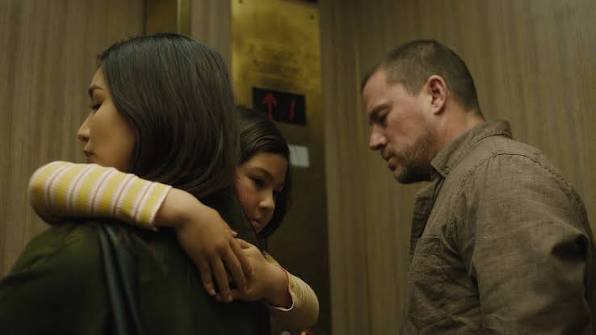
Josephine’s mother, Claire, pushes for her daughter to see a psychologist, and when Josephine runs from it, Damien tries self-defense classes instead. Neither approach is right because neither parent has any real idea of what they are doing. The film is remarkably generous toward both of them, presenting two people who cannot navigate this situation properly but are visibly and exhaustingly trying, which is far more honest than turning one of them into the villain. As Josephine is pressed toward testifying, the parents grow more and more argumentative with each other, and watching a marriage buckle under something they didn’t cause becomes one of the strongest threads in the film. It gives the story a second tragedy running underneath the first, because the assault keeps claiming people who were never anywhere near it. De Araújo refuses to let a single argument between them resolve cleanly, which is uncomfortable to sit with and exactly the right instinct.
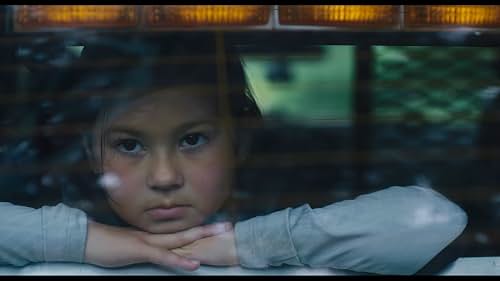
Mason Reeves gives one of the most remarkable child performances in recent memory. She plays Josephine without a trace of precocity, which is the hardest thing a young actor can do, so that her outbursts and her silences both read as entirely real rather than written. Channing Tatum is excellent as Damien, giving him a helplessness he keeps trying to convert into action, which is exactly how a father like this would respond and exactly why it never works. Gemma Chan is the quieter anchor of the family, and her Claire carries a fear that is just as heavy as her husband’s but far more contained, which makes the moments it finally breaks through hit that much harder. The three of them together give the film a specificity that most movies about trauma never come close to, and their scenes feel lived-in rather than performed. It is the kind of film where you spend the runtime worrying about the actors as much as the characters, which says everything about how committed they are.
Josephine is the only witness to the assault and is called to testify, which binds her more tightly to something she should have been allowed to leave behind, and the film treats that as a violence all its own. As the trial approaches, she begins seeing imagined men throughout her life, an extremely dark choice from de Araújo that externalizes the fear without ever explaining it away. The scene in which Josephine punches her mother’s pregnant stomach is where the film pushes a step too far for us, and the score swelling underneath it makes an already intense moment feel like it is straining for effect. The courtroom sequence, with Josephine questioned by lawyers from both sides, tests the limit of what an audience can comfortably sit through and is the most effective stretch in the entire film. The contrast between a child’s answers and the legal machinery grinding around her is devastating without a single line of editorializing.
After the courtroom, Josephine and Damien sit together on the beach and talk about his fears and her heart, and the scene does remarkable work framing both the end of the film and the relationship between father and daughter after everything that came before it. Ending on that conversation rather than on a verdict is the best decision de Araújo makes, because it quietly argues that nothing institutional was ever going to fix this. Josephine draws on de Araújo’s own memory of witnessing a sexual assault at Golden Gate Park as a child and the years of anxiety that followed. In her real case, though, it was her father who spoke in court rather than her, and knowing that turns the courtroom material into a kind of counterfactual about the version of her life where she was the one on the stand. It is no surprise Josephine arrived in theaters as the Sundance Grand Jury and Audience Award winner, because very few releases this year have combined this much discipline with this much feeling. Josephine is a quietly devastating, enormously well-acted film that strains slightly past its own limits in the third act but never stops being essential, earning an 84/100 from TwilightRoom.
TwilightRoom Score: 84.9/100