Lanterns is the best live-action DC show ever made and the most convincing argument yet that the new DCU actually knows what it’s doing, taking the most cosmically absurd
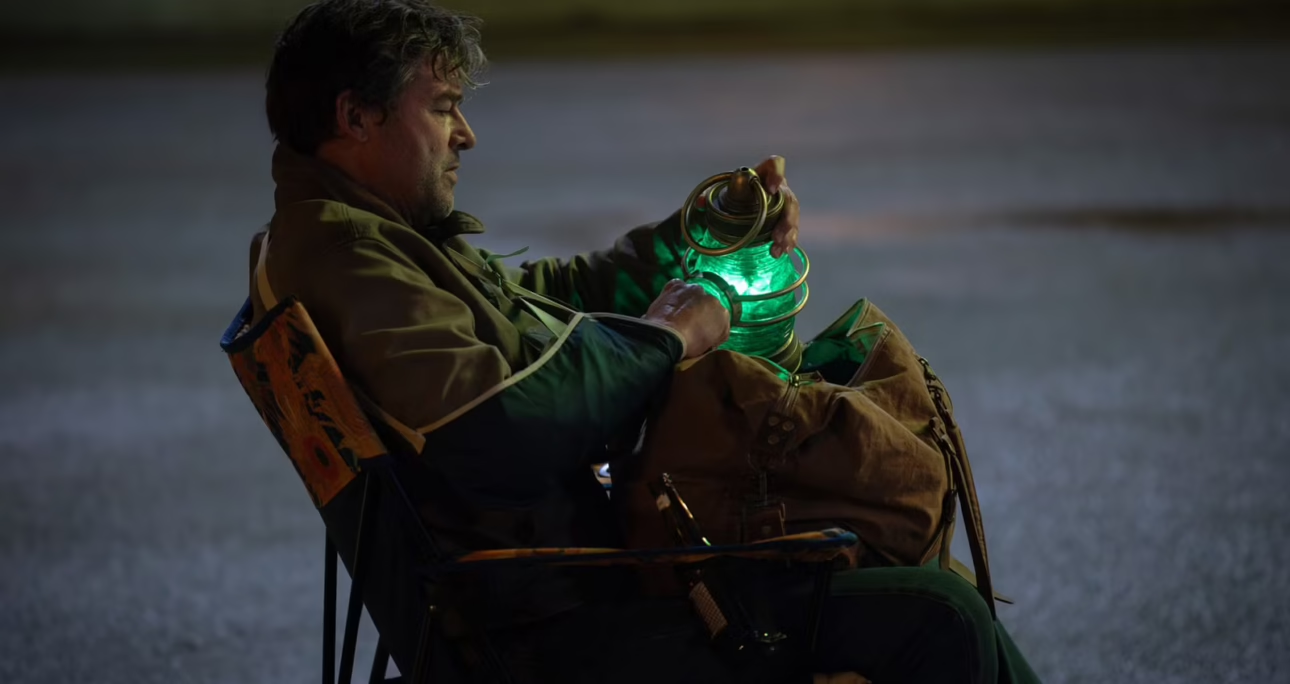
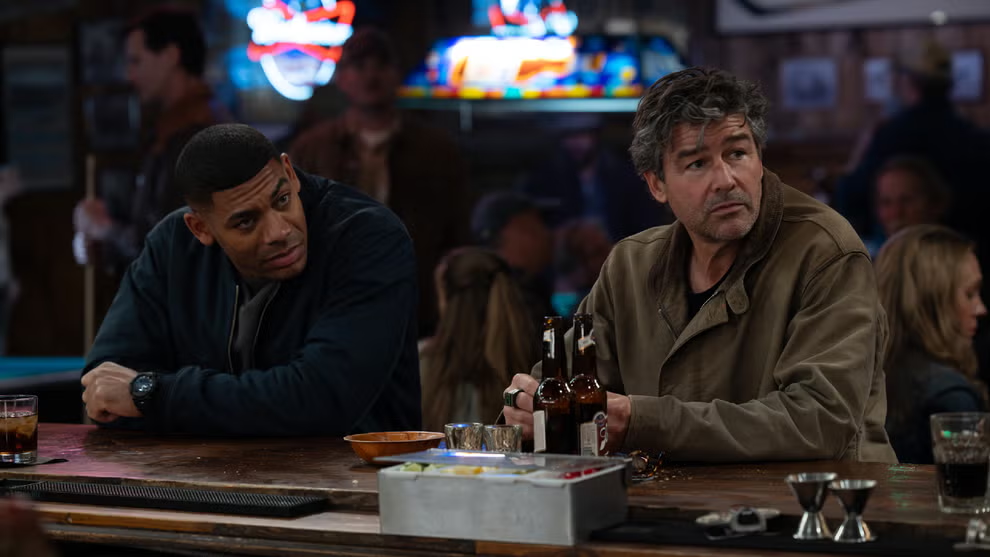
corner of the entire catalog and grounding it in a murder investigation in the American heartland. The decision to build eight episodes around a detective thriller rather than a superhero serial is the whole reason it works, letting the cosmic scale sit underneath everything as pressure rather than spectacle, and nothing else on television this year found a texture quite like it. Kyle Chandler’s Hal Jordan and Aaron Pierre’s

John Stewart feel authentic to both characters from their very first scene together, with a partnership dynamic that never once reads as manufactured for the format. These end up being two of the best-written characters superhero television has ever produced, men who feel like actual people making impossible choices rather than costumed archetypes moving through a plot. The verdict for our Lanterns season 1 review is simple: across eight episodes, the show never missed once, which is a remarkable thing to say about any series but is even more stunning for a comic book adaptation that nobody knew would be this fantastic.
The premiere opens with veteran Green Lantern Hal Jordan partnered with rookie John Stewart as they investigate a murder that very quickly points toward something considerably larger than a local killing. That setup establishes the show’s register immediately: a grounded procedural where the ring functions as a tool rather than a solution and most of the real work happens through conversation, legwork, and two men disagreeing about how any of it should be handled. The friction between them builds naturally across the opening stretch, with neither willing to concede ground, and the show is patient enough to let that simmer rather than resolving it for the sake of comfort. The premiere closes on a genuinely crazy cliffhanger that sets the season up beautifully, promising the cosmic scale without ever abandoning the small-town investigation driving it. Any worry that the series wouldn’t lean far enough into its space sci-fi side was put to rest entirely by episode two, which balanced grounded detective work against cosmic stakes better than anything else airing alongside it.
Episode three is the peak of the entire season and delivers an amazing John Stewart origin story that is emotional, exceptionally well told, and paced perfectly across its runtime. The way it builds toward the man he becomes, the one genuinely worthy of the ring, is obscenely good and stands as some of the best character building in any superhero project we have ever seen. It also retroactively strengthens everything around it, with the bird’s appearance in the previous episode suddenly landing as a far more significant moment than it appeared to be at the time, which is the kind of construction most shows never even attempt. Episode four then resolves the friction between Hal and John into something genuinely earned rather than manufactured, giving real clarity on how these two will treat each other going forward. Aaron Pierre’s work across the full run is the show’s foundation, and the closing stretch of episode five, where John’s decisions bring real chills, is the moment the character fully arrives.
The Manhunter storyline is yet another highlight across the early run, and bringing Sinestro into the picture as early as episode two was about as entertaining as this show could possibly get that quickly. Episode four finally reveals who the Manhunter actually is, a turn that lands with real weight and immediately raises the stakes on everything still to come, before episode five cashes in on four weeks of patient building with answers arriving and the action running rampant across the back half without sacrificing a single beat of character focus. The ten-year jump to 2026 in episode six is the season’s boldest structural swing, finding John out of the ring entirely and running an architecture firm with his brother Marcus, designing panic rooms and underground arks, which is a genuinely fascinating place to leave a man who once wore that ring. Hal’s frozen body turning up with a gunshot wound in the Rushville High bleachers keeps the central mystery alive, and the café confrontation where Hal and John speak after ten years is the best scene of that hour. The mystery of how Hal’s death came about, framed through John’s worry about how it will come back on him, gives the final stretch of the show a fantastic hook.
“The Jordan Boys Legacy” is a total return to form, opening in 1975 with young Hal and his father, Martin, as the baseball fight and the key to the safe land perfectly before Martin’s test-flight crash and the funeral that shapes everything afterward. Pairing that with John teaming up with the Halogram, a twenty-year-old backup of Hal stored inside his ring, to chase down the vault and determine who killed Hal produced the most enthralling television of its week by a wide margin. The tension between the version of Hal who survived and the version who did not gives the mystery real emotional weight, while Sheriff Kerry Kane and John Stewart Sr. both remaining in play and Maggie blackmailing John over that punch keep the investigation tightening without a single wasted scene. Sinestro being mysteriously freed from his space prison by an unidentified figure is a wild reveal to end on, and the finale pays every piece of it off. The ending closes out John’s origin and the mystery of Hal’s death simultaneously, making his answers about who he is inseparable from the answers about what happened, with the handoff into Earth’s Green Lanterns feeling earned rather than tacked on.
Lanterns spent eight episodes treating a Green Lantern story as a murder investigation and never once wavered from that commitment, which is precisely why it worked when so many attempts at this material have not. Kyle Chandler and Aaron Pierre deliver two of the best-written and best-performed characters superhero television has ever produced, with a partnership that felt genuine from the first scene to the last. The John Stewart origin in episode three and the back half of episode five are the season’s clear peaks and among the best hours of television this year in any genre. The ten-year jump was a real risk that paid off completely, giving the back half a melancholy and a mystery that most shows of this type would never attempt in the first place. Earning an 88/100 from TwilightRoom, Lanterns is one of the best shows of the year, comfortably the best DC live-action show ever made, and the strongest evidence yet that the new DCU is finally on the right track.
TwilightRoom Score: 88.8/100