Episode one of the new Netflix season of Little House on the Prairie—a story that hasn’t gotten a proper treatment in decades belongs to a show we didn’t
initially think would warrant its own independent review, a series that initially arrives with a question mark hanging over how necessary this adaptation truly is, but whose first episode immediately proves it a wise addition to the service’s release slate. The series establishes the great family atmosphere it is known for from the start, a father, his wife, and two of his little girls finding home in the western frontier, meeting new neighbors on the
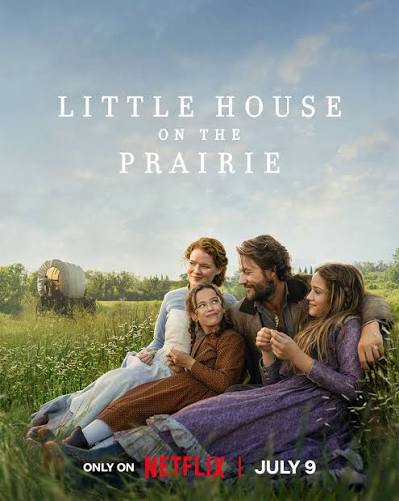
prairie including the well adapted Mr. Edwards, a character that defines the series, unsure, slightly broken but building something in the unknown. The show is shockingly quite good and compelling at every turn, with nice acting across the board from child acting to lesser known adult actors and the cinematography genuinely gorgeous and earning praise on its presentation alone, using on-set filming with great ambient sound to create a wholesome and beautiful western atmosphere. The series as expected is very melodramatic and definitely requires a suspension of disbelief for its over-dramatics, but that’s exactly the charm that the Little House novel brings, and the show does a great job of leaning into it knowingly rather than fighting against it. Little House on the Prairie is one of the most pleasant and wholesome surprises of the year, a sweet family western novel adaptation that is a bit surface level yet so well shot, acted, and delivered that it proves exactly why it was necessary, landing as one of the better news shows of the year so far.
Episode one immediately establishes the show’s quality, building a warm family atmosphere as the Ingalls meet their new neighbor, Mr. Edwards, a broken, guarded man who, after an early altercation, commits himself to helping build their house. In episode two, Charles and Edwards begin to truly bond, talking about the land, the war, and past trauma, grounding their friendship in shared historical experience rather than simple frontier convenience, and keying the audience into the deep heart this show beats with. As the girls grow closer to Mr. Edwards, we are introduced to Mrs. James, yet another key presence, who begins her reign of passive‑aggressive antagonism by warning the Ingalls about Edwards’s drinking habits and ill manners, leaving both the family and the audience unsure of who he really is, with a clear alcohol addiction hanging over his troubled character. Laura, the more adventurous daughter, begins to settle into her role as the clear standout of the season when she accompanies her father to check on Edwards after time away, firmly establishing her as the young, curious lens through which the audience experiences frontier life. After the first few episodes, it becomes clear just how much loss shapes everyone’s lives in this time period, and how differently each person carries it, while the Ingalls family’s navigation of that world serves as the main lens through which the audience experiences these intersecting stories.
Where the show first proves it has real dramatic teeth is in its handling of frontier dangers, best captured when Laura and her sister wander off looking for Edwards and stumble into a group that is not safe, only for Edwards himself to rescue them, a sequence that plays with genuine tension and shows the series is more than willing to let real danger creep into its wholesome frame. It’s also here that the show begins developing its most delicate storyline: the clear distance and tension between the settlers and the Native Americans. To its credit, the series treats this with more care than expected, letting Laura’s intrigue and her budding friendship with the Osage girl Good Eagle play against the rest of the family’s unease rather than flattening the conflict into something one‑sided. What impresses most in this stretch is how the show layers its smaller plotlines, Caroline lacking support from her family about the move west, the women being robbed while Charles is away working, the growing coldness Caroline carries because of it and lets them all quietly build into a larger western story rather than resolving each in an episode and moving on. The writing is also unafraid to get genuinely tough when it matters, with Charles’s conversation with the Osage family about the harsh reality of land invasion delivering some of the hardest‑hitting lines of the season, and the revelation that the Ingalls’ house sits on Osage land reframing the entire premise of the show in a single scene. It’s an impressive balancing act for a family series, and the fact that Caroline and Charles fighting about their future feels as weighty as any of the frontier danger speaks to how well the character work is landing.
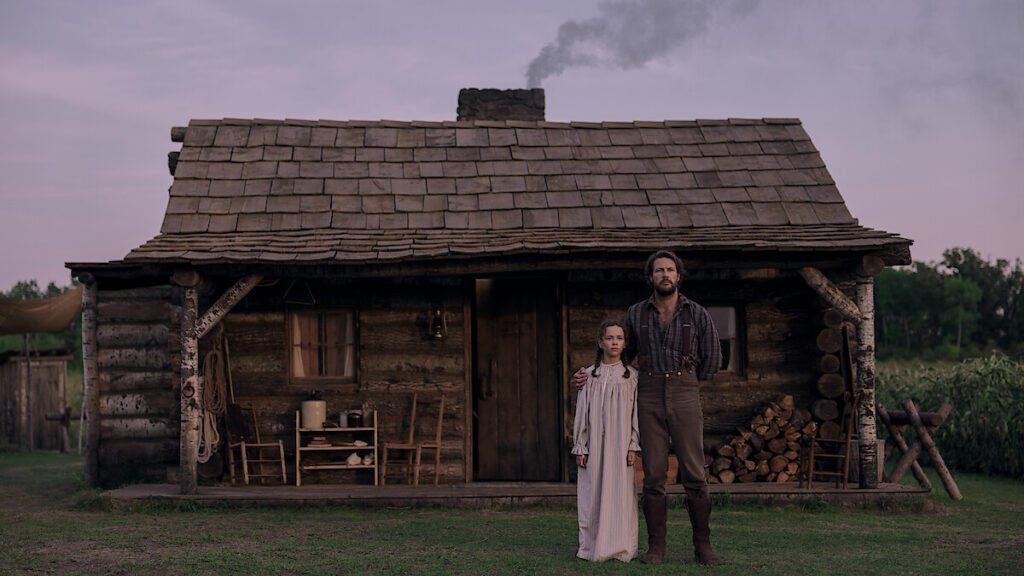
Episode 4 is the season’s best hour and the clearest proof of what this show can be, stripping everything down to Laura alone as Charles, Caroline, and Mary all fall sick with a fever and trusting its youngest lead to carry an entire episode on her back. It’s a gamble that pays off completely: Laura turns to their Osage friends, William’s family, for help, only to find White Sun and Good Eagle sick as well, which not only raises the stakes but forces her into a version of frontier adulthood the show has been carefully building her toward. The image of her finally collapsing in the middle of a field is the most quietly devastating moment of the whole season. What makes this arc land isn’t just its tension but what it leaves behind, with the bond between Laura and White Sun growing directly out of their shared ordeal and deepening the Osage–Ingalls connection in a way that feels genuinely earned rather than written in for convenience. The episode is also a showcase for the child acting the series leans on so heavily, with Laura’s performance in particular selling every beat of fear, determination, and exhaustion without ever tipping into the overly precious register these shows usually fall into. Even as the surrounding episodes juggle busier plotting, Mrs. James continuing her passive, non‑inclusive antagonism, Edwards’ arrest sending William, Charles, and the French woman to the Osage to prove his innocence, it’s this quieter, more focused storytelling where Little House on the Prairie is at its absolute best.
The back half of the season is where the show’s few flaws start to show, with Episode 5 marking the first real sign of wheel-spinning, a solid but noticeably repetitive hour where Caroline’s stand against Mrs. James and Edwards’ return to the Ingalls home provide the emotional highlights while other stretches drift toward filler. Even at its most repetitive, though, the show’s charm holds, and the sight of Edwards and Laura fixing the house together stands as one of the most wholesome moments of the entire premiere season, a reminder that this series’ greatest strength has always been its smaller human beats rather than its plot mechanics. Episode 6 wisely changes the scenery rather than the formula, delivering the same western drama in a cold winter Christmas setting and using the found‑family warmth of a new child in the house to give the season its coziest and most charming hour. From there, the show builds confidently toward its finale, with the finalized Osage agreement bringing the railroad, and a problem far bigger than the Ingalls, into frame. Independence Day celebrations quickly curdle as the deal falls through, Charles refuses to help the men trying to run off the Osage people, and a prairie fire breaks out at the peak of the tension, pulling the townsfolk together in fear rather than celebration. It’s a genuinely strong final stretch that earns its bittersweet ending, with the family forced to move on from the town and home they built, and Mr. Edwards choosing to join them as they set their sights on Minnesota, a closing note that works as both a faithful nod to the source material and a legitimately exciting setup for a season we’re already looking forward to.
Little House on the Prairie is one of the pleasant, wholesome surprises of the year, a sweet family western that is admittedly surface level, but so well shot, acted, and delivered that it proves exactly why this revival was necessary and an improvement. The story is a familiar and clearly more simplified, censored telling of the time period, but having just rewatched Killers of the Flower Moon the other day, it plays as a welcome complement and counterpoint to the more brutally negative stories of the era. Its impact is in the writing and the beautiful imagery, which elevate the familiar material considerably. The show’s willingness to lay out many small plot lines, Caroline’s doubts, Edward’s addiction, the Osage tension, and constantly build them into a larger western plot gives the season real momentum beneath its surface. Netflix shows have felt increasingly unoriginal and mass‑produced lately, prioritizing quantity over quality, but this one is an outlier, the first new series of the second half of the year to crack our top‑ten ratings. Season one of Little House on the Prairie ultimately lands as one of the better new shows of the year, and with the family setting their sights on Minnesota, we are genuinely looking forward to where the second season takes them, as this premiere run earns an 83/100 from Twilight Room.
TwilightRoom Score: 83.0/100