After spending the week going back through the entire Toy Story franchise, the fifth entry arrived in theaters this week, and weaves together three separate
storylines into one cohesive adventure and centering for the first time around the beloved character Jessie, a decision that pays off beautifully throughout the runtime. The film follows Jessie on a new journey as she and her trusty horse Bullseye set out to find a true friend for Bonnie, navigating the technology age, a new wave of Buzz Lightyears who crash-land seeking what they believe is “Star Command,” and a Buzz-and-Woody reunion full of classic banter that sends them on a journey to find Jessie. The new film
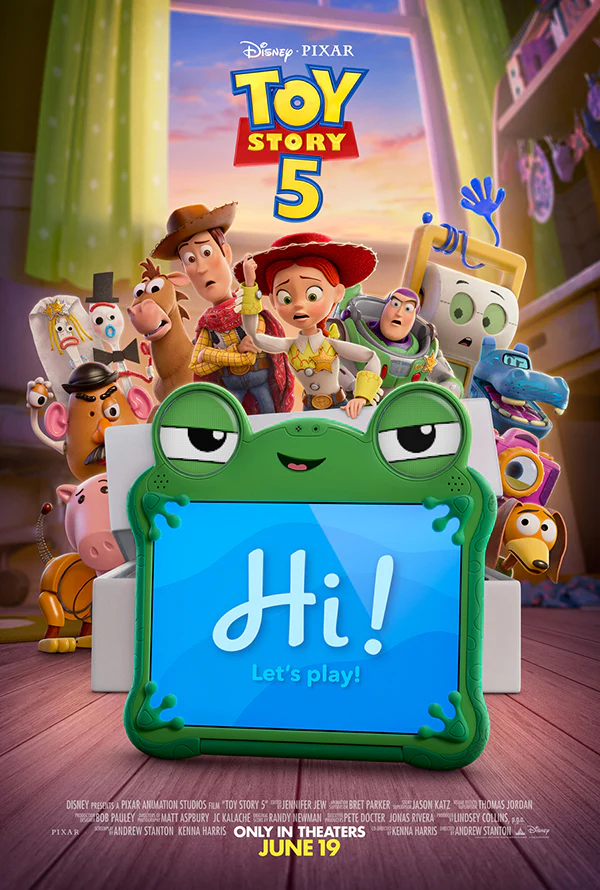
functions as both a continuation of the franchise’s emotional legacy and a showcase for its comedic strengths, a reminder of Pixar at its pinnacle, balancing genuine sentiment with the sharp, layered, timely humor that has defined the Toy Story franchise from the start. While it does not quite reach the overall heights of the first three films, several individual moments stand among the franchise’s best, elevated by a willingness to lean into nostalgia rather than shy away from it. Toy Story 5 succeeds massively through its choice to center Jessie, its returning Buzz-and-Woody dynamic, and a thoughtful commentary on technology, making it a top-three film of the year so far and an early frontrunner for best animated film of the year.
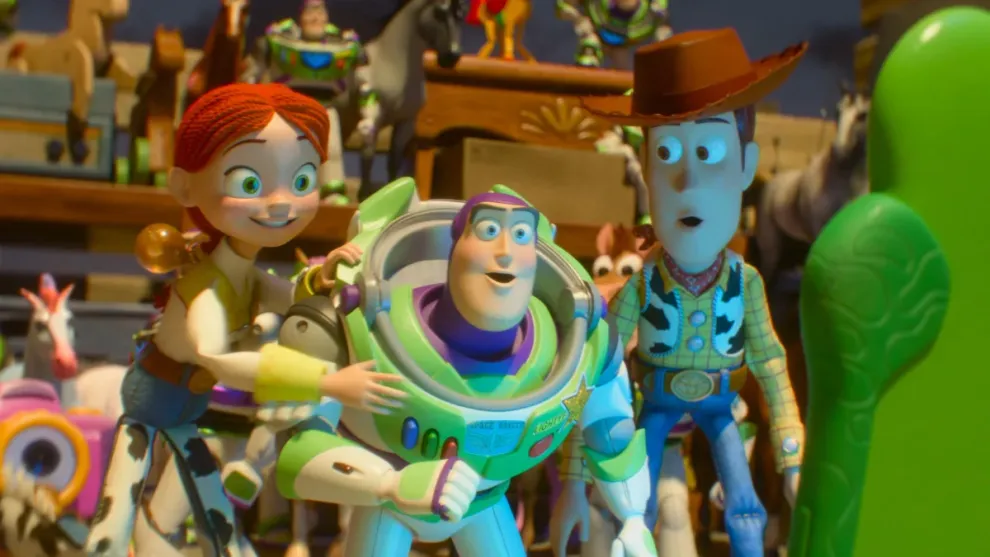
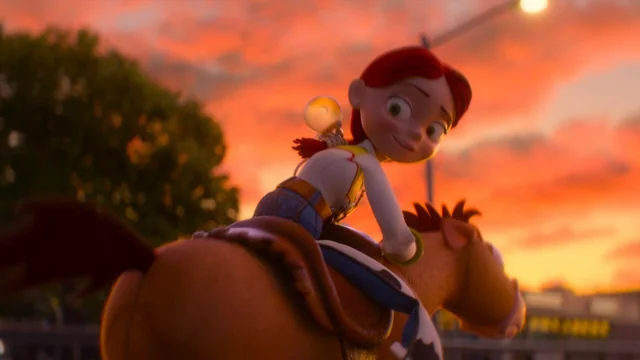
Jessie’s journey takes center stage as she sets out, Bullseye in tow, to find a true friend for Bonnie, a search that doubles as her own reckoning with how much the world has changed in the technology age. That path eventually leads her back to her original home, where she discovers toys left behind by a kid named Blaze, the perfect friend for Bonnie, tying her present search to a piece of her own past. Running alongside her story is a new wave of wireless Bluetooth Buzz Lightyears who crash-land and set out to find Jessie, mistakenly convinced she is “Star Command”, a mix-up that fuels much of the film’s comedic energy. The third thread follows Buzz and Woody reuniting for a journey filled with the kind of easy, lived-in banter the franchise has built over two decades, setting out both to stop the film’s antagonist, Lilypad, from hurting Bonnie and to track down Jessie after she sets off on her own. Splitting the film across three threads can feel messy at times and has been a point of criticism, but it gives each storyline room to breathe, letting Jessie’s arc stand on its own without sacrificing the Woody and Buzz dynamic the franchise has always leaned on.
The decision to finally center the story around Jessie is the film’s smartest choice, and it is executed beautifully, giving her an emotional arc substantial enough to carry much of the film’s weight on its own and adding to her backstory in a way that will certainly make you cry by the end. The Buzz-and-Woody dynamic returns in full force alongside her, giving longtime fans exactly the kind of pairing they’ve wanted to see explored further after years of the franchise pulling them in different directions. The new ensemble of Buzz Lightyears adds a welcome comedic layer, their mistaken belief about “Star Command” fueling some of the film’s funniest stretches without ever feeling like a retread of old jokes. Some characters are noticeably sidelined to make room for this tighter focus, a trade-off that will likely frustrate fans attached to the franchise’s larger ensemble cast. Even so, narrowing the spotlight onto Jessie, Bullseye, Woody, and Buzz pays off, giving the film a sharper emotional throughline than a full-ensemble approach probably could have managed.
The comedy throughout, powered largely by the new Buzz ensemble, hits that same clever, layered tone that has made the franchise so beloved, with subtle adult jokes sprinkled in for the parents in the audience. The writing leans on the franchise’s signature wit without depending entirely on nostalgia for its laughs, finding fresh comedic angles through the characters it introduces rather than simply recycling what has worked before. The animation does excellent work revamping the cast’s look while staying true to the franchise’s visual identity, striking a careful balance between updated detail and the familiarity longtime fans expect. The dream art style used for the “play” scenes stands out as gorgeous and extremely well executed, arguably the film’s strongest visual achievement. Lilypad makes for a decent antagonist overall, though the character shifts a fair amount over the runtime, and a slightly higher escalation in the stakes tied to her could have sharpened the threat even further.
The stakes never quite reach the heights of Toy Story 2 and 3, and the film rarely feels truly dangerous, which holds back some of the tension it is clearly reaching for. The story runs a bit all over the place through its first seventy minutes, juggling its three threads with some early unevenness before settling into a more focused rhythm as it goes. Even so, the film stays consistently entertaining throughout, regardless of that structural looseness in its first two acts. The choice to weave commentary on technology through the story is handled with real care, giving the film a thematic relevance that feels organic rather than tacked on. The payoff for Jessie and Buzz across the franchise is outstanding, and the Woody balding bit lands as an unexpectedly nostalgic touch that hits harder than anticipated.
While Toy Story 4 served as a goodbye to Woody as the franchise’s central figure and his life as a toy, Toy Story 5 pivots toward how the toys have evolved without him, with Jessie stepping up as the new sheriff, working as a heartfelt homage to the franchise’s most beloved female character. The film is not perfect and sits fourth in the franchise in our opinion, with its loose early pacing and sidelining of certain characters standing as clear flaws, but it remains consistently fantastic and entertaining despite the unevenness. The franchise’s signature blend of humor, heart, and craftsmanship is fully intact and as clever as ever, reinforcing why these films continue to be the pinnacle of Pixar and resonate across generations of viewers. Where the story ultimately lands, the conclusion rounds out the three threads in a way that reinforces the film’s emotional and thematic groundwork, delivering some genuinely great full-circle moments for all of the characters, especially surrounding Jessie, and wraps up beautifully, making Toy Story 5 the best animated film of the year so far and the third best overall, earning an 85/100 from TwilightRoom as a worthy, though imperfect, continuation of one of the best franchises ever made.
TwilightRoom Score: 85.9/100