East of Eden delivers a very great adaptation of the Steinbeck novel carried by an Emmy-worth performance from Florence Pugh, a
show that doesn’t quite reach the peaks of the best television of the year but absolutely stars as one of the strongest and most compelling limited series of the decade. From the opening scene of the series of two men stumbling upon a bloodied girl found to be Cathy, the cinematography, the core, and the overall look of the show feels top notch, establishing a visual and technical confidence never lost
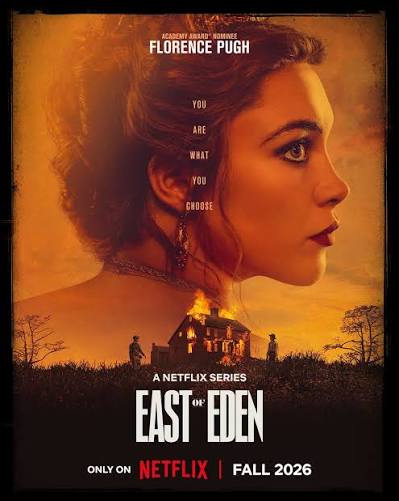
through all seven of the episodes. The acting from Pugh but also the rest of the main cast is superb across the board, which matters enormously for material that is dependent on people wounding each other slowly across decades rather than in any single explosive moment. The show is consistently compelling although the numerous quick time jumps do affect the pacing a bit on sections, and the energy of the show dips considerably when Cathy isn’t driving the intrigue as opposed to Adam Trask, which becomes a real structural issue in some middle stretches that limits a great show form being one of the best of all time. East of Eden is one of the most compelling and elegantly brutal stories ever written, and Florence Pugh’s Cathy is the reason to watch this wonderful adaptation, a performance along with the show as a whole that will be highly praised, representing one of the most complex characters television has given us in a long time.
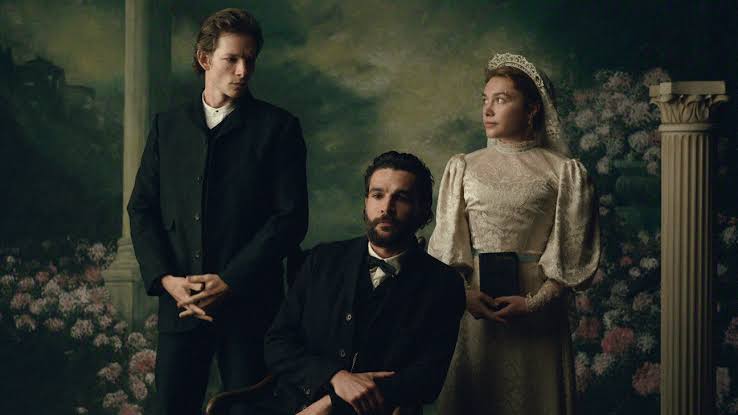
The premiere does more in forty minutes than most streaming shows manage across an entire season, laying out the story of two brothers whose complex and poisonous relationship stems entirely from a father who mistreated them both in different ways. Christopher Abbott’s Adam and Mike Faist’s Charles establish that dynamic immediately, and the show understands something essential about the Cain and Abel structure Steinbeck built the novel on, which is that it only works if both brothers feel equally wounded by the same man. From there the series circles back to the point of that opening scene, with the brothers finding Cathy, who is then handed an entire episode of her own in the second hour. That episode is a considerably darker story that speaks directly to Cathy’s pain while weaving in a connection with Adam in the present that complicates everything further, and it’s easily the smartest structural choice the series makes. As the relationship between Cathy and the two brothers develops, she and Adam marry and set out for California, leaving Charles behind and opening the Salinas Valley half of the story.
Steinbeck considered the 1952 novel his magnum opus and said everything he had written before it was practice, and the book’s sprawl across two families and multiple generations has always made it close to impossible to adapt in full. Elia Kazan’s 1955 film is the version most people know, and it adapted only the final quarter of the novel, cutting Cathy’s backstory and the Trask brothers’ early years entirely in order to build everything around James Dean’s Cal in what became his first starring role and the only one of his three films released while he was alive. Jo Van Fleet won Best Supporting Actress for playing Kate in that film on roughly twenty minutes of screen time, which makes Pugh’s full-series reclamation of the same character feel like a genuine answer rather than a repetition. Zoe Kazan serving as showrunner is the detail that reframes the entire project, since she is Elia Kazan’s granddaughter and has deliberately built the version her grandfather didn’t, centering Cathy and restoring everything the 1955 film left on the floor. The 1981 ABC miniseries with Jane Seymour was the last serious attempt at the whole novel, and this version improves on it in nearly every measurable way while proving the book needs television rather than film to breathe at all.
After Cathy gives birth to two boys the marriage with Adam sours almost immediately, with their neighbor Lee growing steadily more suspicious of what is actually happening inside that house. Cathy shooting Adam, leaving him bleeding beside the babies, and running is the turning point of the entire series and the moment it stops being the Trask family’s story and becomes hers. She lands in a whorehouse working for Kate, a setting that draws out the sinister undertow in her that gets triggered by alcohol when she sees the will for a house worth $60,000, and from there she begins systematically manipulating the woman at night. Episode four ends with Cathy killing her new mother and destroying the evidence, a sequence that confirms exactly how far this character will go and how little interest the show has in softening her. Pugh plays every stretch of it with a control that never tips into camp, which is precisely why Cathy reads as genuinely frightening rather than merely villainous, and it stands as the most complete realization of the character any adaptation has produced.
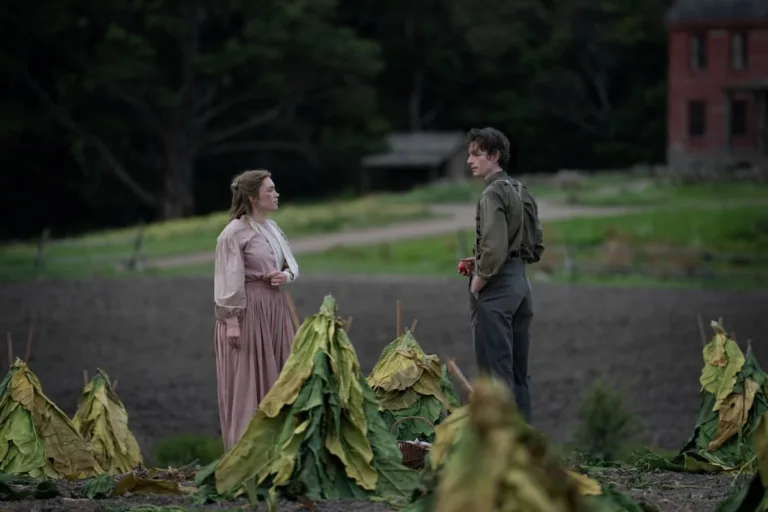
Episode five carries the most weight of anything in the series, as a thoroughly checked-out Adam finally tracks Cathy down, running the whorehouse and exploiting the men who come through it, and walks away with something approaching closure and freedom. As the boys grow up and Lee returns, Adam and his family become more and more successful in the farm business while Cathy torments herself despite her own operation thriving, which is Steinbeck’s central irony rendered with real precision. The episode builds toward Cal finding his mother and speaking to her, the collision the whole series has been constructing, and it lands because four hours were spent making both of them real. After a disaster in the company Aron pursues more as Adam falls back into sadness, and a college acceptance briefly pulls them together while pushing Cal further out until a final incident takes him over completely. Cathy keeps spiraling, seeing Charles tormenting her inside her own mind before killing herself in her room, and Pugh absolutely nails the end of that saga in a stretch that ranks with the best work of her career.
The pacing is the show’s clearest issue, with the numerous quick time jumps creating distance from characters the series has otherwise worked hard to build. Episode three suffers most from this, losing real momentum after leaving Charles behind and never fully recovering the intimacy of those first two hours. Cathy drives the intrigue so heavily that every stretch centered on Adam instead feels noticeably thinner, which is a structural problem a seven-episode limited series should have solved long before production. The Trask family material is strong and well acted but simply never as magnetic as what Pugh is doing, leaving the show unbalanced in a way the novel itself never is. None of it undoes the craft on display, but it is the difference between a very good series and one of the best of all time.
East of Eden is as good of a Steinbeck adaptation as it gets with an Emmy-worth performance leading the way by Florence Pugh, that makes this one of the strongest limited series of the decade. The cinematography, score, and overall look of the show are excellent from the opening scene and never let up across the entire 7 hour runtime. Zoe Kazan restored everything her grandfather’s 1955 film left out, and built the whole series around Cathy rather than Cal, the single best decision anyone involved in the project made. Cathy is delivered as one of the most complex characters of the decade and the clear reason this show is a must watch, with her final spiral among the most harrowing stretches of television in recent memory. East of Eden’s pace is a bit off and noticeably thinner whenever Cathy is absent, but it certainly stands out as one of the strongest limited series of the decade regardless earning an 84/100 from the TwilightRoom.
TwilightRoom Score: 84.2/100