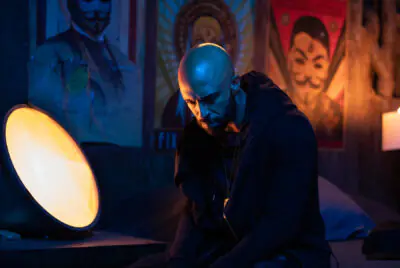
Biopics have settled into a lackluster routine of greatest-hits recreations and surface-level impressions, which makes Peter Farrelly’s
I Play Rocky such a pleasant surprise. The film is a biopic, about an underdog writing the ultimate underdog story, that does far more than most of its recent peers by genuinely inspiring its audience. Directed by Farrelly, who won an Oscar for the Green Book earlier this decade, the film follows a young Sylvester Stallone through the stretch of his life when he was broke and hopeless, and it charts the fight that turned him into both the writer and star of one of the most beloved sports
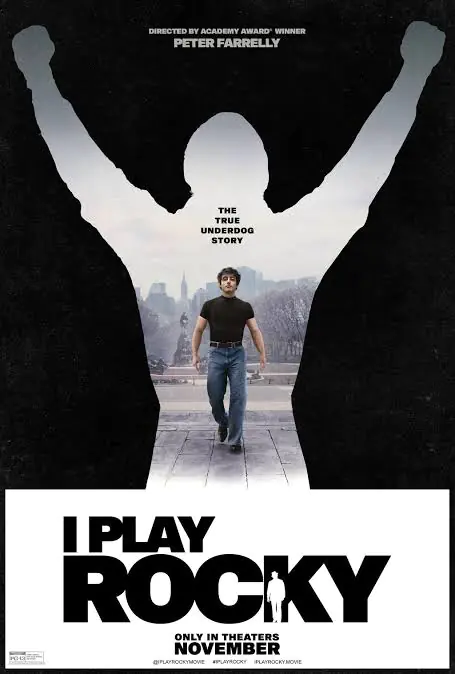
films ever made. The film is not especially timely, and beyond a release that coincides with the 50th anniversary of the original Rocky, there isn’t much of a reason it was made at all. Yet it almost forces its own intrigue and purpose into existence through sheer conviction, leaving the impression that this is a film that simply should have happened. At the center of it all is Anthony Ippolito, whose turn as Stallone never once slips into the biopic cosplay that defines so many films like this one, and whose fully immersive work carries the film even when the material around him struggles to keep pace. I Play Rocky is an unashamed awards play that doesn’t always know what to do with the people orbiting its subject, but behind a shockingly memorable lead performance from Ippolito it becomes a strong and inspiring biopic that does exactly what Rocky did 50 years ago, pumping you up to chase your own dream and never take no for an answer.
Stallone’s story starts at his lowest point. He is a homeless, hopeless actor scraping by in an industry that has already decided what he is and what he will never be, and Farrelly makes that desperation feel lived-in rather than staged for easy sympathy. His journey is so compelling because it reframes Stallone as far more than a struggling actor, presenting him as a sharp and intelligent screenwriter whose mind comes through in every page he writes, even as the people around him judge him by his appearance and background rather than his talent. That constant judgment drives the film, with every dismissal and closed door only hardening his resolve, so that writing Rocky becomes a mirror of the character himself and gives the story a layered underdog quality that is genuinely moving to watch unfold. When the Rocky script is finally picked up, the film wisely declines to treat it as a victory lap and pivots into its most gripping stretch, as Stallone refuses to let the role he wrote for himself slip away and forces his way into the lead in a fight that feels every bit as hard-earned as anything that happens in the ring. The writing keeps the focus locked on Stallone throughout this rise, and the film is at its absolute best when it simply lets us sit with a man who flatly refuses to accept that his dream is out of reach.
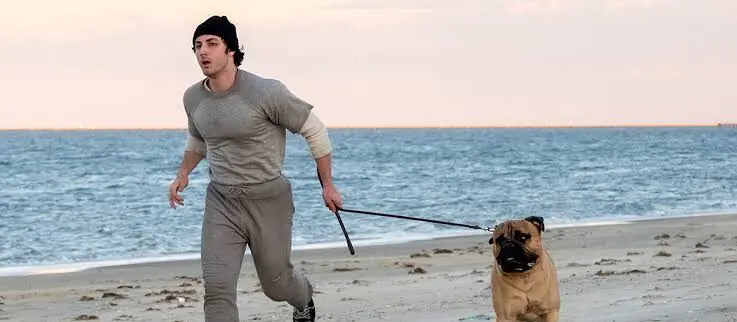
Anthony Ippolito is the reason I Play Rocky works as well as it does, delivering an amazing performance that stands as the single best part of it and far exceeds anything you could reasonably expect walking into the theater. Rather than leaning on a rehearsed impression, Ippolito builds a fully realized person whose ambition and frustration live in every scene, and he never lets the famous voice or physique become the whole performance. He truly disappears in the role, capturing the cadence and stubborn swagger of a young Stallone without ever letting any of it bury the human being underneath. He is especially strong in the quieter writing scenes, where the film asks him to convey intelligence and creative hunger through little more than the pages in front of him, and his ability to make those moments as gripping as his confrontations with the people doubting him lifts the film above a standard rags-to-riches story. This is an awards-worthy turn in every sense, the kind of immersive work that can single-handedly carry a film through its weaker stretches, and it should put Ippolito firmly in the conversation as one of the year’s true breakout stars.

There is no hiding that I Play Rocky is a clear Oscar play, as the film shows off its Academy credentials at nearly every turn, right down to the simple fact that it tells the story of a film that went on to earn ten Academy Award nominations. That ambition feels more like a natural step than a cynical one, since a film about the making of Rocky was always going to carry the weight of awards history, and the film makes its intentions known from the very first scene. Luckily, the film is quite good as a whole apart from those aspirations, because Farrelly keeps the emotional core of Stallone’s journey front and center rather than letting the campaign dictate every creative choice, which keeps it from feeling like a hollow trophy chase. When its moving parts click into place, I Play Rocky is inspiring, emotional and genuinely well produced, and the moments where Stallone pushes through rejection after rejection hit with real weight. Those are the moments where the film earns its ambitions rather than just announcing them, and they come often enough to make the awards push feel deserved rather than presumptuous.
The weakest area of I Play Rocky is the handling of its supporting characters, as the film struggles to give the people surrounding Stallone anything close to the depth and life Ippolito brings to the lead, leaving many of their scenes feeling thin by comparison. The clear exception is Stallone’s wife, Sasha Czack. AnnaSophia Robb plays her well and brings a grounded warmth to the film, giving Stallone an emotional anchor during the years when almost nobody else believed in him. The film crew and producers, however, are saddled with flat lines that are predictable and ordinary, the kind of dialogue that announces exactly where a scene is headed before it gets there and drains the behind-the-scenes drama of the tension it should carry. Because of that, the scenes not focused on Stallone, of which there thankfully aren’t many, feel dull and uninviting, stalling the film’s momentum every time it steps away from its leading man to check in on the business side of the story. Ultimately, it is a film with too many moving parts that don’t contribute to what it achieves at its best, and while those parts never sink the experience, they keep I Play Rocky from landing as cleanly and powerfully as its central performance deserves.
I Play Rocky is a strong biopic from Peter Farrelly that rises well above the lackluster wave of recent entries in the genre, led by a towering Anthony Ippolito performance that gives the film a beating heart even when its supporting pieces falter. It is clearly making an awards play and never tries to hide it, but that ambition never smothers what makes the story work, which is the simple and timeless image of a man refusing to let anyone else decide what he is worth. Most impressively, the film does an insanely good job of recreating exactly what Rocky did, pumping you up to better yourself and reach for your dream, and it turns Stallone’s stubborn refusal to give up the role he wrote for himself into a rallying cry that is just as inspiring as Rocky Balboa’s own story. It is nearly impossible to walk out of the theater without feeling some of that fire, and the film’s message of never taking no for an answer lands with real force long after the credits roll. For anyone looking for an uplifting film to see in theaters this holiday season, I Play Rocky is an easy recommendation, an underdog story about the most iconic underdog story ever put on screen that knows exactly how to make you want to go the distance, earning an 85/100 from TwilightRoom.
TwilightRoom Score 85.2/100