Introduction
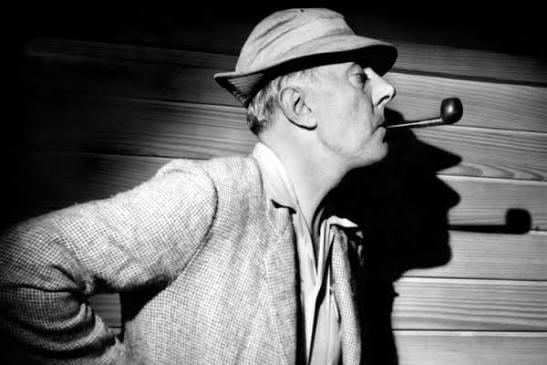
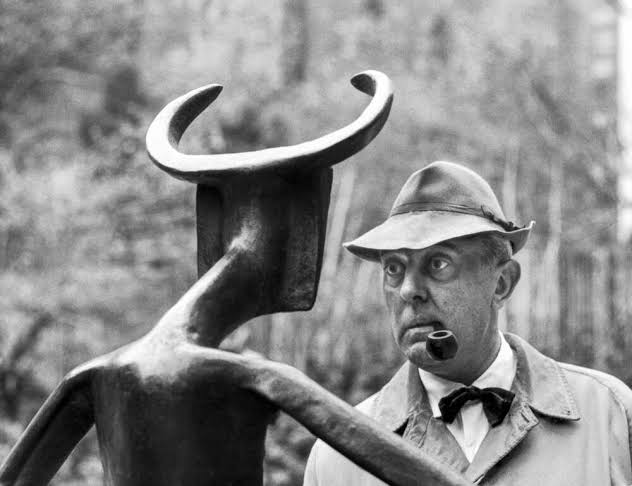
Jacques Tati made only six feature films across a career spanning nearly three decades, and yet almost no filmmaker in the history of the medium has left behind a more complete or more singular body of work. Born Jacques Tatischeff in 1907 to a family of Russian descent, he spent his twenties as a rugby player before pantomime routines in the locker room convinced him there was a career waiting on the music hall stage, and that background in physical performance never once left his filmmaking. What separates Tati from every other comic filmmaker is that he understood comedy as a matter of architecture rather than personality, building enormous worlds out of ambient noise, meticulous framing, and the smallest possible human gestures placed against the largest possible spaces. His most famous creation, the pipe-smoking, endlessly apologetic Monsieur Hulot, drifts through four of his six films as a man permanently out of step with a France modernizing faster than anyone can keep up with, and that tension between fascination and horror at the modern world became the throughline of everything Tati made.
He chased perfection so relentlessly that it eventually destroyed him financially, with Playtime bankrupting him entirely and costing him ownership of his own masterpiece, and yet the films he left behind have only grown more influential with time, inspiring everyone from Wes Anderson to a generation of directors still trying to figure out how he did it. This is our full ranking and examination of Jacques Tati’s filmography, from the early shorts through the final circus, alongside the ideas that defined all of it.
Tati’s Shorts and Early Life
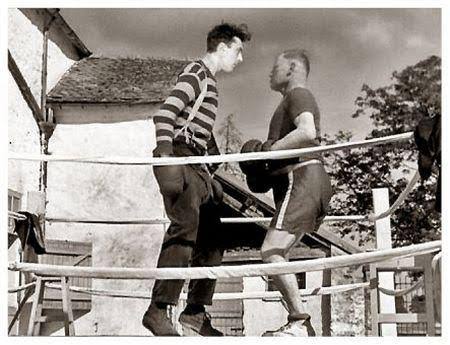
Jacques Tati was born Jacques Tatischeff in Le Pecq in 1907, the son of an art framer and restorer who was reportedly disappointed his son never entered the family business, and though he learned of his Russian roots, he declined to let them define him, instead fleeing to the Paris suburbs to take up a life of artistry rather than the trade waiting for him at home. He played rugby for the Racing Club de Paris from 1925 to 1930, and it was reportedly in the locker room that pantomimic recreations of his own sporting achievements impressed his teammates enough that they pushed him toward show business entirely. From there he learned to let sports have a serious impact on his slapstick comedy, spending the 1930s mimicking prominent athletes of the day on the music-hall stage while touring European halls and circuses, refining his craft the same way Chaplin, Keaton, and Lloyd had before him. His earliest filmed routines include Oscar, champion de tennis in 1932, On demande une brute in 1934, Gai dimanche in 1935, and Soigne ton gauche in 1936, the last a boxing sketch directed by René Clément, and all of them already anticipate his later features through their use of natural and mechanical sound over dialogue. Tati’s comedy operates along two distinct paths of connection, one running back to the silent era and Buster Keaton, the other forward into modern spatial innovation alongside filmmakers like Bresson and Godard, and both are visible in embryonic form across these shorts.
After serving in the French Army during the war, Tati appeared as a supporting actor in two Claude Autant-Lara films, Sylvie et le fantôme and Le Diable au corps, before finally turning to direction himself. He formed the production company Cady Films with Fred Orain, giving him the creative independence he would go on to guard obsessively for the rest of his life, shooting in small towns and privately constructed sets rather than studio backlots, and refusing entry to reporters and publicity agents. His first short as director was L’École des facteurs in 1947, a fifteen-minute film casting him as a postman drilled on delivering mail as fast as humanly possible, filled with bicycle sight gags that would be lifted almost wholesale into Jour de fête two years later. The small township of Sainte-Sévère, where Tati had taken refuge during the German occupation, served as the direct inspiration for both the short and the feature it grew into, and the short won the Max Linder Prize in France. What separates Tati even at this early stage is that he projected France in a far more positive light than most other filmmakers of his time, treating his country’s small towns as places worth looking at closely rather than escaping from.
Jour de Fête
84.8/100 - 1949
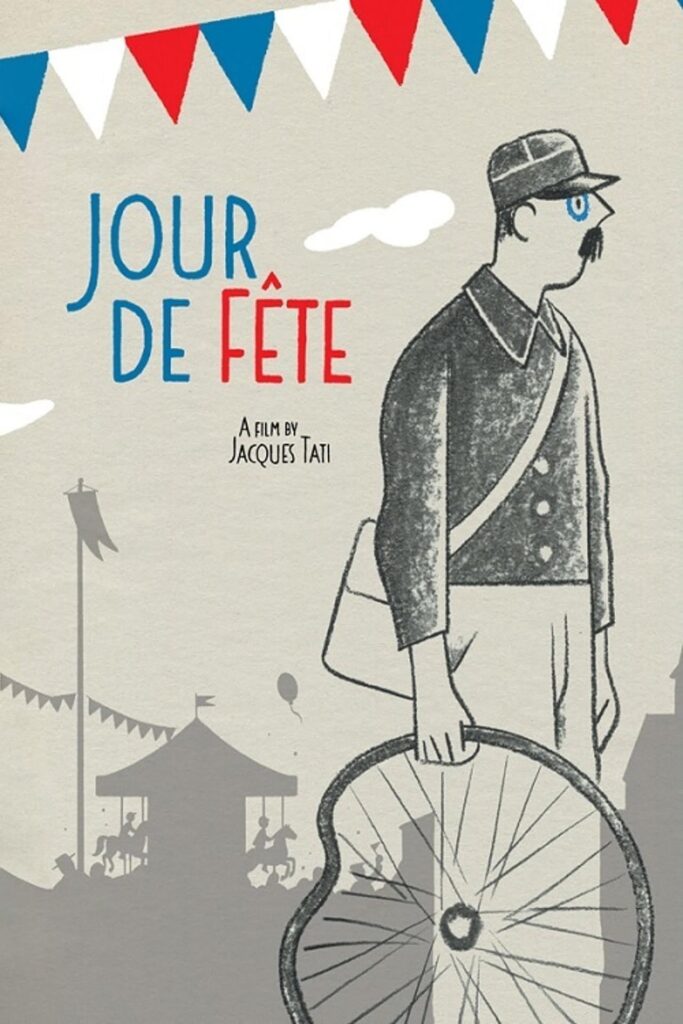

In Jacques Tati’s debut film, he immediately reveals an affinity for finding beauty in scenes dominated entirely by score rather than dialogue and a desire to perfect the complex comedy, establishing a sensibility in Jour de fête that would define his entire career from his very first feature. The film begins by bouncing us between different characters in a small French town, setting a laid-back comedic tone before Tati himself enters as François, the cyclist postman who, after seeing an American ad posting on delivery speed, becomes newly motivated but easily distracted, drawing clear physical comedy inspiration from the likes of Buster Keaton and Charlie Chaplin. The film truly finds its groove as François stumbles through the streets on side quests, the best of which unfolds across a prolonged town-wide carnival that lets Tati’s gift for staging chaos fully take over the screen. The oddly quiet nighttime stretch that follows, with François still riding his bike through the now-empty streets, is quite effective as a change of pace after the hectic nature of everything preceding it. The second day does feel a bit repetitive as he passes the same townsfolk on his route, but the fun police chase and his decision to deliver the mail “American style,” zooming through in a few hours what took him all day previously, land as genuinely funny and mark the moment Tati’s satire of modernization first fully arrives.
Jour de fête was derived directly from Tati’s successful 1947 short L’École des facteurs, with the feature reusing several of the best jokes and bicycle gags from that original, and both projects shot on location in the village of Sainte-Sévère-sur-Indre, the small township where Tati had taken refuge during the German occupation. The production proved genuinely strenuous and difficult to pull off in that familiar landscape, with only 26 of the actors shown actually employed by the film, a decision that created enormous variety across the extra performances and gave the town an authenticity no studio backlot could have replicated. Tati shot the film simultaneously in color and black and white, risking two entirely separate timelines on the project, with animator Paul Grimault later hand-painting splashes of color into a 1964 re-edit, but only the black and white version was ever released, and it wasn’t until the 1990s that audiences could finally see the film the way he originally intended it. Beneath the comedy, the film functions as pointed satirical commentary on postwar France’s anxious relationship with American modernization and the Marshall Plan’s push for European productivity, a theme that would run through every film Tati made afterward. It became the biggest commercial success of his entire career, seen by 6.8 million French viewers, and after significant honors at Venice and France’s own Grand Prix du cinéma français, it established him as a fantastic French comic and marked the beginning of a brilliant, if turbulent, directorial career.
The Character of Monsieur Hulot
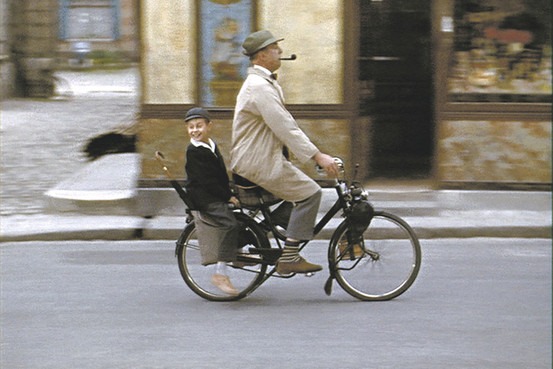
After Jour de fête, Tati created the clumsy Monsieur Hulot to be the lead character across the next four films of his career, effectively abandoning François and starting over with a figure who could carry considerably more weight across an entire filmography. Hulot is defined by a handful of instantly readable traits: the pipe, the too-short trousers, the loping walk, the perpetual apologetic politeness, and an absolute genius for producing unintentional chaos in every room he enters, and what makes him work is that he is never really the joke himself but rather the instrument that reveals how absurd everything around him already was. When we enter Hulot’s world, it’s always sunny and set for him to explore, while still never clueing the audience in on much of who he actually is beneath the surface, making him a genuinely curious lead role rather than a conventional protagonist. That deliberate opacity is exactly why his films come with so little narrative and such immense use of ambience and sound design, since Tati never wanted Hulot’s interiority to compete with the environment he was walking through. He is a man moving at an older rhythm through spaces built for a faster one, and that mismatch is the entire engine of four films.
Hulot appears in Monsieur Hulot’s Holiday, Mon Oncle, Playtime, and Trafic, and each film places him in a progressively more modernized world that has less and less room for him. In Hulot’s Holiday he’s the center of the film entirely, in Mon Oncle he bounces between the old neighborhood and the modernist suburb, in Playtime he nearly disappears into an ensemble, and in Trafic he’s given a job title and an office for the first time, a trajectory that is really the story of the character himself. He begins as the disruptive force in a sleepy resort town and ends up absorbed by the very consumer machinery he once simply stumbled through, and it was in Playtime itself, out of contempt as much as ambition, that Tati first tried to write him out of his own films, only for the picture’s financial collapse to force Hulot’s reluctant return in Trafic, the character’s true and final on-screen appearance, after which Tati never made another Hulot film. Hulot became one of the most beloved comic creations in the history of European cinema, and his influence runs directly through Wes Anderson, Roy Andersson, and virtually every filmmaker since who has built comedy out of a person standing slightly wrong inside a beautifully composed frame. That he never fully explains himself across four films is precisely why he endures.
Monsieur Hulot's Holiday
83.5/100 -1953
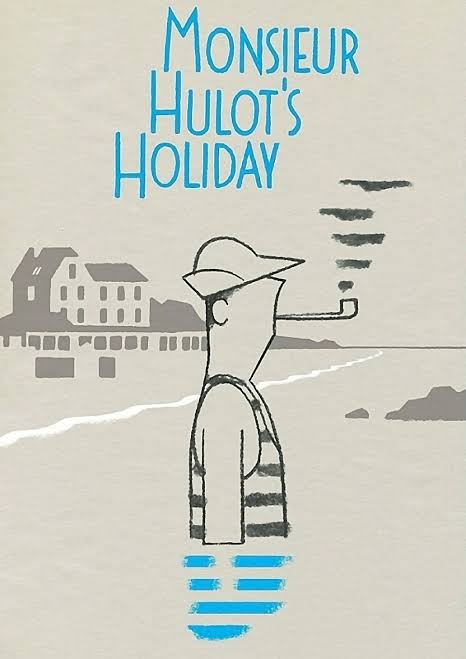
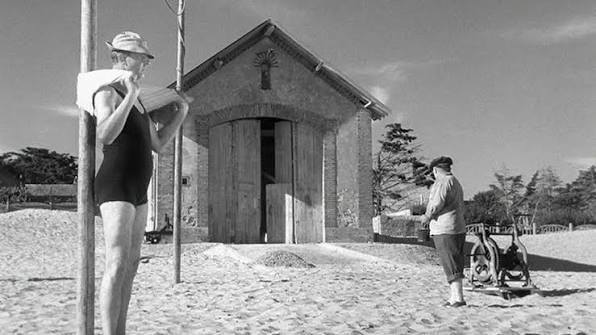
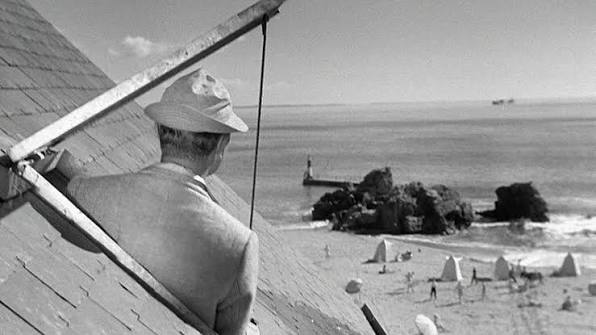
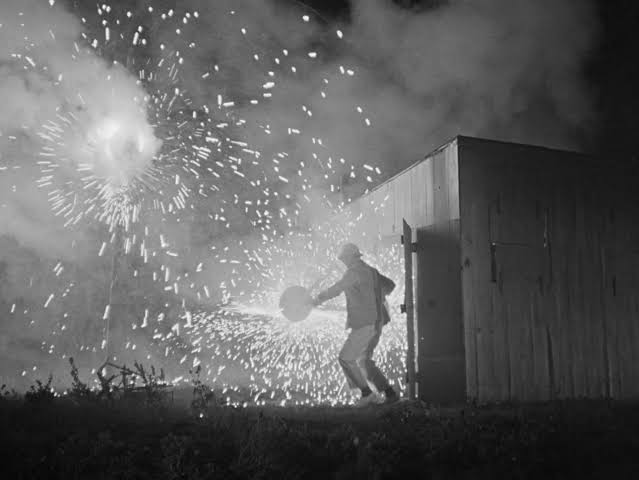
After Jour de fête, Tati moves forward with his newfound character in his second film, Monsieur Hulot’s Holiday, with his use of sound remaining ever so intelligent here, using surrounding ambience sounds mixed with quirky scores to enhance the film in a way where every gap in the soundtrack feels completely intentional and perfected. The film represents atmospheric postcards and mime artistry far more than a traditional narrative, a mainstay in Tati’s ideology, with Hulot rolling into a beautiful ocean town on the loudest old vehicle he could get his hands on, the first of many constant physical comedy bits. The film relies even more heavily on imagery and miming over dialogue than Jour de fête does, marking this as Tati’s huge deep dive into the nuanced comedy style that he pursues as more of a universal language through cinema than anything else, needing no translation. The film is a much quicker and more reflective piece of comedy than his debut, and while the first film was fun in many traditional ways, Hulot’s Holiday is fun in the most unique of ways, with Hulot living an almost peaceful, clumsy life until chaos inevitably finds him at every turn. Hulot’s fireworks debacle is extremely well done and a star aspect of the film in terms of sound, imagery, and commentary, a really comedic and well-shot scene that makes the film’s final twenty minutes stand out as strong Tati at his absolute best, not matched till his magnum opus.
Monsieur Hulot’s Holiday introduced its title character for the very first time, the pipe-smoking, loping, perpetually apologetic bachelor producing constant unintentional chaos wherever he goes, a creation that became one of the most beloved comic figures in the entire history of European cinema. Tati refused to make a sequel surrounding his Jour de fête character François in favor of building Hulot from scratch, and he found the ocean beach city setting to be the perfect open-air film set, shooting on location at the Breton seaside resort of Saint-Marc-sur-Mer while again using mainly non-professional leads in supporting roles. Much like his first feature, Tati released three separate versions of the film, across 1953, a 1962 re-edit, and a 1978 final version that now stands as the definitive cut, another symptom of a man who could never quite stop working on something. The film grossed over 5 million tickets in France and launched Tati into genuine stardom, winning the Louis Delluc Prize and earning an Oscar nomination for Original Screenplay, a reflection of how seriously critics were beginning to take his comedies as something genuinely special rather than simply funny. Film scholars have since identified it as one of the best uses of sound in the history of cinema, with ambient noise, incongruous musical cues, and overlapping environmental sounds replacing conventional dialogue as the primary comedic tool, and it now sits ranked among the greatest comedies ever made and a direct acknowledged influence on directors including Wes Anderson.
Tati’s Sound Design and Universal Language
Tati once said that “comedy is the summit of logic,” and he employed constant film experimentation specifically to enhance slapstick comedy rather than simply reproduce what came before him. He loathed subtitles outright, wanting his films to function as pure abstract slapstick with sound itself operating as the language, a philosophy that made his comedies genuinely universal in a way almost no other filmmaker has managed. His films consequently come with very little narrative and an immense usage of ambience and sound design, where ambient noise, incongruous musical cues, and overlapping environmental sounds all replace conventional dialogue as the primary comedic tool. Every gap between the soundtrack and the surrounding noise in his films is entirely intentional, and film scholars have consistently identified Monsieur Hulot’s Holiday in particular as one of the greatest uses of sound in the entire history of cinema. The absence of subtitles in Playtime emphasizes exactly that point: that language is never a barrier for Tati’s work but simply another material to build with, part of the environment rather than a means of communication between characters.
That approach traces directly back to his music hall origins, where pantomime and physical mimicry of famous athletes taught him early that a gesture reads across every language while a punchline almost never does. His earliest shorts already anticipated the later features in their use of natural and mechanical sound, meaning the sensibility was fully formed well before he ever directed a feature film. The score of the men opening and closing car trunks in perfect sequence in Trafic is a flawless distillation of the method, turning purely mechanical noise into rhythm, joke, and character simultaneously. Tati’s sound work ultimately turns the very acts of seeing and hearing into a form of drawing, with life and history unfolding through a plethora of small, almost indiscernible details, an approach he drew directly from Bruegel. The result is a filmography where comedy is architectural rather than verbal, built entirely out of what a space sounds like when a person moves through it badly.
Mon Oncle
88.9/100 - 1958
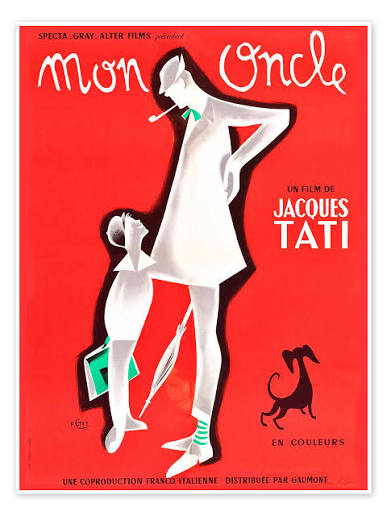
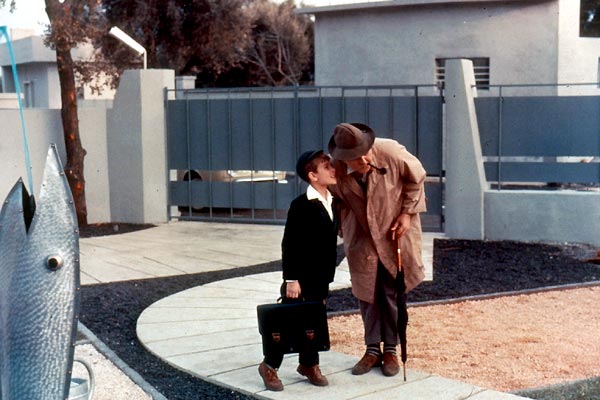
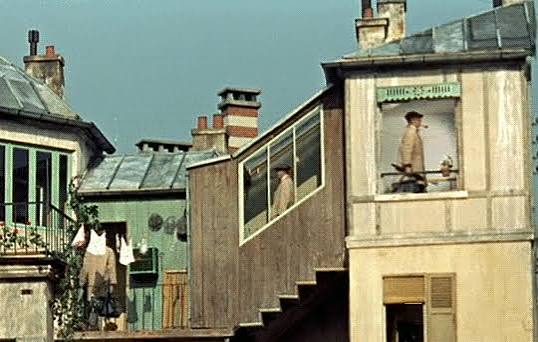
Mon Oncle is the first true masterpiece of Tati’s filmography, opening with incredibly creative credits and magnificent set design, marking the first time Tati directs his satire squarely toward modern technology, a key point of his career going forward. This is Tati framing like he never has before, with a beautiful house shot showing Hulot walking around the modern home from a full-view angle, truly one of the coolest shots we have ever seen. His framing in every single sequence is perfect in a way that clearly and directly inspired Wes Anderson, and it’s here that his visual precision fully arrives with each scene feeling like perfection. The film shows the drastic difference between the crowded city and the modernization of the suburbs with dramatic tonal shifts that comment on class exceptionally well, making it a great blend of his earlier two films and his next work and greatest film, Playtime. Hulot’s visits to the modern house are always the most destabilizing moments, the night scene using a spotlight is so inspired and well crafted, and the ending of the film is one of the most comedic acts of the entire director’s career, really showing just how fantastic of a nuanced comic Tati was and really beginning to establish what was later called that Tatiesque way of filmmaking.
Mon Oncle was the second Hulot film and Tati’s first shot in color, built around Villa Arpel, a gadget-obsessed modernist home deliberately contrasted against Hulot’s own chaotic old neighborhood, color-coded and architecturally opposed as distinct visual commentary on postwar consumer society delivered without a word of explanation. The film was shot in both English and French versions to increase its commercial range, a fairly rare move for a French comedy of that era and a clear sign of Tati’s growing international profile following the success of Hulot’s Holiday. François Truffaut, the famous French director and critic who had previously praised Tati’s work, notably did not think well of Mon Oncle, while Buster Keaton, on meeting Tati around this same period, offered the opposite verdict with heavy praise for his work, a striking split between two of the most important figures in comic cinema. It stands as the film in which Tati’s satire of modernity is stated most clearly rather than most obliquely, making it by far the most accessible entry point into his broader critique of postwar industrialization. Mon Oncle went on to win Best Foreign Language Film at the Oscars, cementing Tati’s international reputation and standing as the most decorated film of his career, the moment where he seemingly had absolutely everything despite remaining a man relentlessly chasing perfection at all times.
Playtime
96.1/100 - 1967
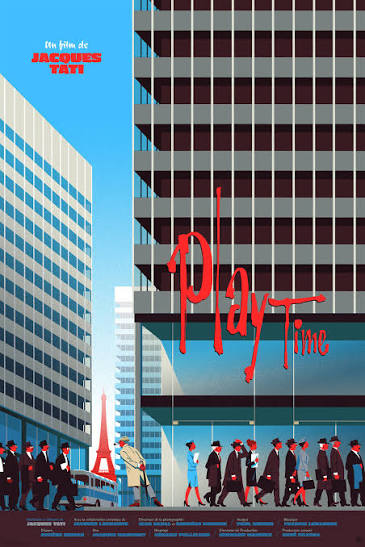
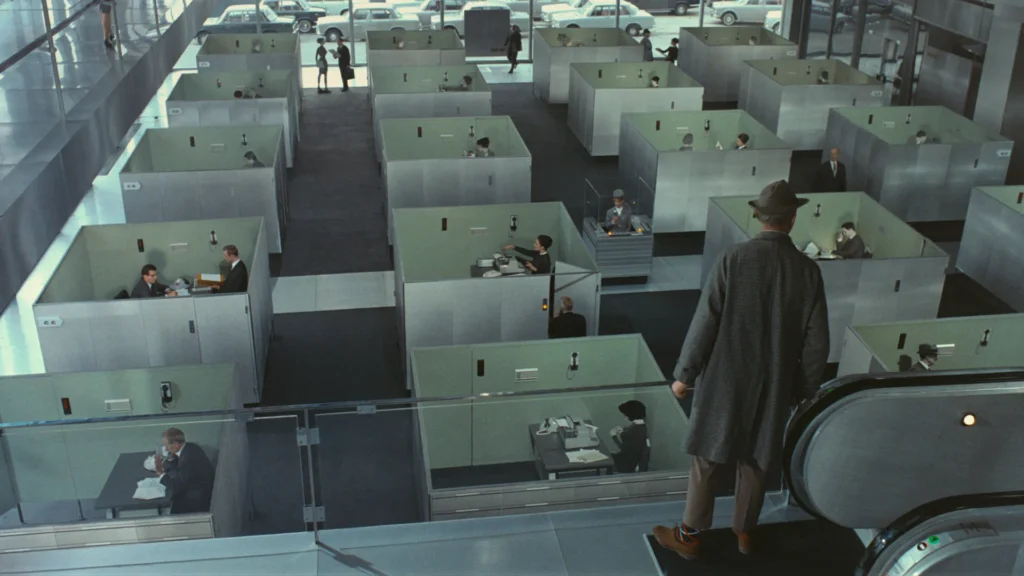
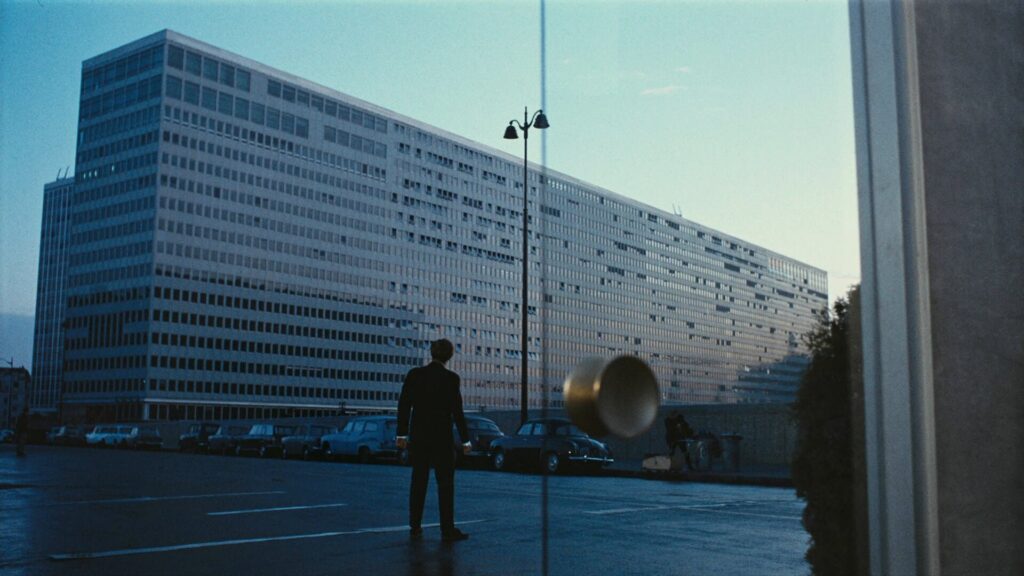
Playtime opens in a metallic, futuristic France where Tati’s visually stunning cinematography combines once again with sound over dialogue to build his comedy entirely out of environment rather than character. The office building sequence, full of useless furniture, oddly organized rooms, and soundproofed cubicles that swallow the people inside them, highlights Tati’s use of visual imagery for comedy better than anything he had attempted to that point in his career. His use of reflection and split shots to show perspective and build visual appeal is genuinely masterful here, with this massive world and city pitted so well against our two main characters simply wandering through it, dwarfed at every turn. The beautiful lighting and Eastmancolor create an extreme focus on visuals with far less focus on plot, feeling reminiscent of weird experimental cinema transplanted directly into the comedy genre, while the dinner scene at the restaurant with its dancing and funky jazz is visually chaotic and amazing in equal measure. Tati delivers his magnum opus, his one true masterpiece above the rest of his work, setting up an entire ensemble to act around central background action within the unique world he built so well, and for better, it feels like the skeleton of a world, with comedy, score, and cinematography all constructed around no plot at all to perfection, mastering the art of comedy as a language of its own, brilliant and unique in every way possible.
Playtime was designed explicitly for a tourist, built on Tati’s belief that “like it or not we are all tourists nowadays,” with the French man and the American visitor equally alienated within the film’s glass and steel world, offering what reads as a euphoric form of re-engagement with public space rather than a rejection of it. Truffaut famously called it “a film that comes from another planet, where they make films differently,” and it remains a film that genuinely cannot be experienced once and fully understood, since everywhere your eyes and attention travel there is something new, giving the whole thing a strange four-dimensional quality. Tati drew his central inspiration from Bruegel, unfolding life and history through a plethora of small, almost indiscernible details, and the finished film was so endlessly perfect and innovative that it caused other filmmakers to openly question their own methods, another example of his relentless pursuit of perfection. That perfection came at a devastating cost, as the film failed to recoup its immense budget, as the most expensive French film ever made at the time, forcing Tati to sell his family home while his career fell like a landslide and stripping him of ownership of the film entirely. The catastrophe forced Hulot’s reluctant return in Trafic, his very next film, undercutting the contemptuous exit Tati had wanted for the character, and though Playtime is now near-universally regarded as his magnum opus, it permanently altered the trajectory of everything that followed it.
Postwar Modern Industrialization
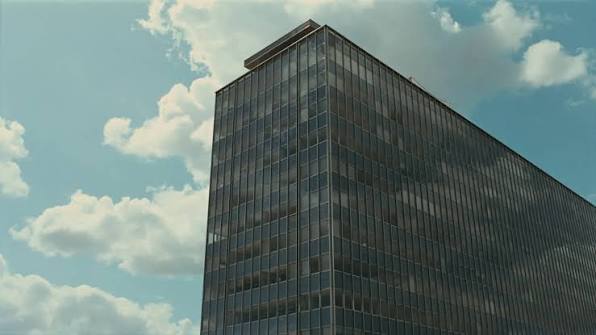
Tati was equally entranced by the look of modern advancement and opposed to it forcing its way onto France at the same time, and that unresolved contradiction is the engine driving nearly every film he ever made. The tension begins as early as Jour de fête, where François’s decision to deliver mail “American style” satirizes postwar France’s anxious relationship with American modernization and the Marshall Plan’s aggressive push for European productivity. Mon Oncle sharpens it considerably, with the gadget-obsessed Villa Arpel color-coded and architecturally opposed to Hulot’s chaotic old neighborhood as distinct commentary on postwar consumer society, delivered entirely through imagery rather than a single line of explanation. Playtime pushes the idea to its absolute limit, constructing an entire glass and steel city where the French man and the American tourist are equally alienated, and where nobody can find anyone else inside a building designed explicitly for efficiency. In Trafic he takes his constant obsession with vehicles and places them at the forefront entirely, choosing a title that doubles as car traffic and commerce, the exchange of goods, to make a pointed linguistic argument about car culture before the film even starts.
What separates Tati’s critique from simple nostalgia is that he never treats the old world as morally superior, only as more legible, more human-scaled, and considerably funnier to move through. Films like Trafic and Playtime were so deeply embedded in the future of consumer society that people at the time considered them scripts for what was coming rather than films about the present moment. Through these films Tati became the gold standard for abstract comedy, transforming how we view urban space and architecture entirely, boldly aware of the growing importance of humanity’s relationship to the built environment surrounding it. His work anticipated decades of thinking about how modern architecture shapes behavior, and it did so without ever needing a single line of explanatory dialogue to make the point land. That’s ultimately why the satire endures, since Tati never argues against modernity so much as he simply films it accurately enough that its absurdity becomes entirely self-evident.
Trafic
81.5/100 - 1971
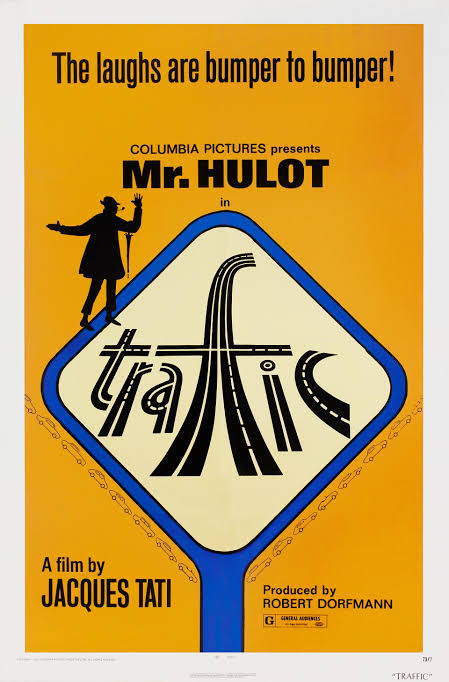
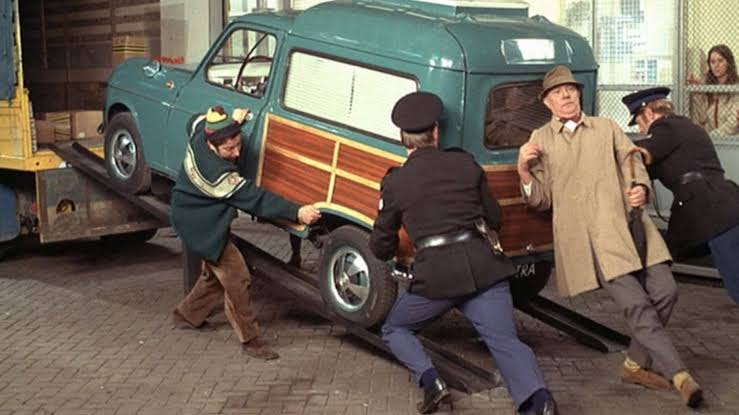
Tati returns with Monsieur Hulot one last time in Trafic, which immediately opens on a bleed of color and industrial work, clearly the updated visual atmosphere Tati had always wanted for his films after years of fighting technical and budget limitations. He continues his pursuit of perfection despite his clear lack of money, as the sound and soundtrack deliver a quirky, odd experience that feels incredibly accurate to the film’s tone and establishes the perfect vibe, with the score of the men opening and closing car trunks in sequence standing as pure Tati. Hulot designs an impractical camping car that he must get to an auto show in Amsterdam as the premise of the film, which itself is absurdly over-the-top comedically, whirring with its crazy contraptions, offering another example of Tati’s mix of languages that makes his comedies consistently universal. He has always been a fan of the impractical vehicle ever since his first two films and shorts, and he really takes advantage of that here in Trafic, which excels at projecting the car through lighting, blending nighttime colors with greens and pops of yellow and blue that are genuinely fantastic. As this film comes later in Tati’s career, many moments feel pieced together from his previous works and a bit more reflective in tone, which loses some of the chaotic energy that works so well elsewhere, a film that, while still very nuanced, becomes the weakest he has made so far in his career, with an umbrella-filled scene bidding farewell to Hulot, a character strong enough to make you shed a tear in the process.
Trafic marked the final appearance of Monsieur Hulot and arrived as a collaboration with Dutch documentarian Bert Haanstra, with films like this and Playtime so deeply embedded in the future of consumer society that people at the time considered this one closer to a script for what was coming than a film about the present. Playtime‘s commercial catastrophe had stripped Tati of that film’s ownership entirely, which made Trafic a far smaller-scope production by necessity, essentially a road trip film and directly opposite to Playtime in nearly every aspect of its design. The title itself was chosen for its double meaning of car traffic and commerce, the exchange of goods, allowing Tati to make a pointed linguistic argument about car culture before the film even begins. Its reception was mixed, generally liked as another good Tati work but seen more as a step back down for the director, and that divide persists to this day, with some calling it transcendent and others finding it repetitive. It’s now regarded as a melancholy farewell to Hulot and to the overall scattered project of Tati’s career, with the final scene of Hulot disappearing into the umbrella-filled crowd serving as a visual goodbye to the character from Tati himself, making the ending quietly and unexpectedly moving.
Parade
68.8/100 - 1974
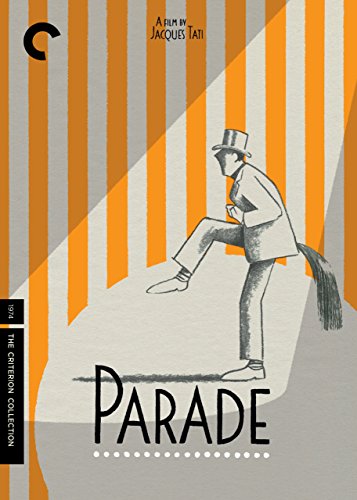
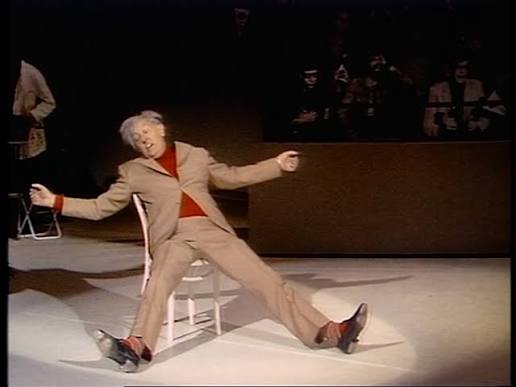
Tati’s final film has him playing a master of ceremonies focusing on various different acts of the circus as well as the audience members who are there to attend the show, a very Fellini-like premise on paper that never quite delivers in execution. The film is a bit more of a basic concept overall, taking his ideas and focusing far more on audiences and comedy than on the visual art that earned Tati his fame in the first place. That shift means it lacks the layered environmental construction that made all of his previous work so distinctive, trading his meticulous world-building and architectural precision for something considerably more direct and less rewarding. The circus setting does allow for genuine moments of the physical comedy Tati built his entire career on, drawing a clear line back to the music hall stages he was performing on decades earlier, and there’s something fitting about him ending where he began. Still, this is the weakest Tati by a fair margin and just feels a bit one-dimensional when so many of his other films are genuinely transcendent, a film that works better as a career epilogue than as a standalone piece of work.
Parade was commissioned by Swedish television and shot over just three days at Stockholm’s Cirkus in 1973, using a mix of video, 16mm, and 35mm formats that gives the finished product a rough, immediate texture unlike anything else in his filmography. Tati had major help from renowned cinematographers and editors on the project, which demonstrates that even though his career was in steep decline following Playtime‘s financial collapse, other directors and industry professionals still deeply loved and respected his work enough to lend their names to it. The film screened out of competition at Cannes, and its Paris release later that year drew a muted critical and public reception, a divide that remains immense to this day, with some viewing it as a fitting coda and others as evidence of how far he had fallen. It’s most commonly read as Tati’s most explicit statement of his lifelong belief that the boundary between performer and audience was always an artificial one worth dissolving, a philosophy that had been quietly operating beneath all five of his previous features. As his final film, it serves as a fitting if uneven capstone to a career built entirely on collapsing the distance between what’s onscreen and who happens to be watching it.
Conclusion
Six features across twenty-five years is a small filmography by any measure, and yet Jacques Tati’s influence has outlasted directors who made ten times as many films. What he built was never really a body of work about characters or stories, but a way of looking at the world, one where a man walking wrong through a room designed by someone who had never lived in it tells you more about a country than any amount of dialogue could. The tragedy of his career is inseparable from its brilliance, since the same obsessive pursuit of perfection that produced Playtime, a film so meticulous that other filmmakers questioned their own methods after seeing it, also bankrupted him, cost him his family home, stripped him of ownership of his own masterpiece, and undercut his own attempt to kill off Monsieur Hulot out of contempt, forcing the character’s reluctant return instead. He never made a bad film, though he clearly made a final one that couldn’t match what came before, and the melancholy of that decline sits right there on screen in Hulot disappearing into a crowd of umbrellas at the end of Trafic. What remains is a filmmaker who understood before almost anyone that modern life would be defined by the spaces we build and the noise they make, and who found a way to make that observation genuinely, endlessly funny without ever once needing to explain the joke. Tati chased perfection his entire life and it destroyed him, but the films he left behind are as close as anyone has ever gotten.