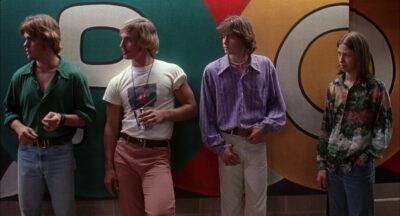
Ira Sachs has spent nearly thirty years as one of American cinema’s most realistic and determined chroniclers of queer life in film, and today for our Criterion Tuesday review we will be pairing reviews of his 1996 debut The Delta with his recent hit Peter Hujar’s Day to reveal and speak on just how consistent his mission has stayed and reformed across Sachs’s entire career.
Both films are built on the same core belief which makes this review better to do combine than separate, as his idea that the most revealing thing you can film is two people sitting in a room or intersecting together and often failing to communicate something essential to each other. Sachs consistently creates unique settings and structures to speak on what he deems crucial, whether that’s a single day’s conversation or a chance encounter across an unbridgeable class and racial divide. Neither film provides easy answers, which is precisely what has kept Sachs adjacent to rather than inside the New Queer Cinema movement, since his commitment to realism and truth of intersection in the LGBTQ+ community always outweighs any impulse towards resolution. Peter Hujar’s Day shines as the best work of his we’ve seen and its rating reflects that, whereas The Delta represents the intensity and commitment Sachs began his career with, so determined, in fact, that two films separated by nearly three decades nonetheless feel like they’re in direct conversation with each other.
We begin from the most recent entry, a decision that will be illuminated on later, with the 2025 film Peter Hujar’s Day, as the entire premise is an interview in which
he recaps his previous day for a woman conducting a project, which is quite literally what the film itself is projecting back at the audience in real time. Hujar is well spoken and highly descriptive as he begins his story, and the film becomes a demonstration of how beautifully a photographer can describe what he sees and

experiences when finally given the space and patience to actually do it. The film is simplistic in its design, just a full day’s conversation about what Peter Hujar did the day before, but it’s organized and lit so well that the simplicity and raw conversation becomes the entire point rather than any kind of limitation. The camera moving and cutting through the conversation is really well done, and it’s genuinely daunting how good the transitions are across a film with essentially no plot mechanics to lean on whatsoever. That level of craft is exactly what elevates the material from a filmed monologue into something genuinely cinematic and worth returning to.
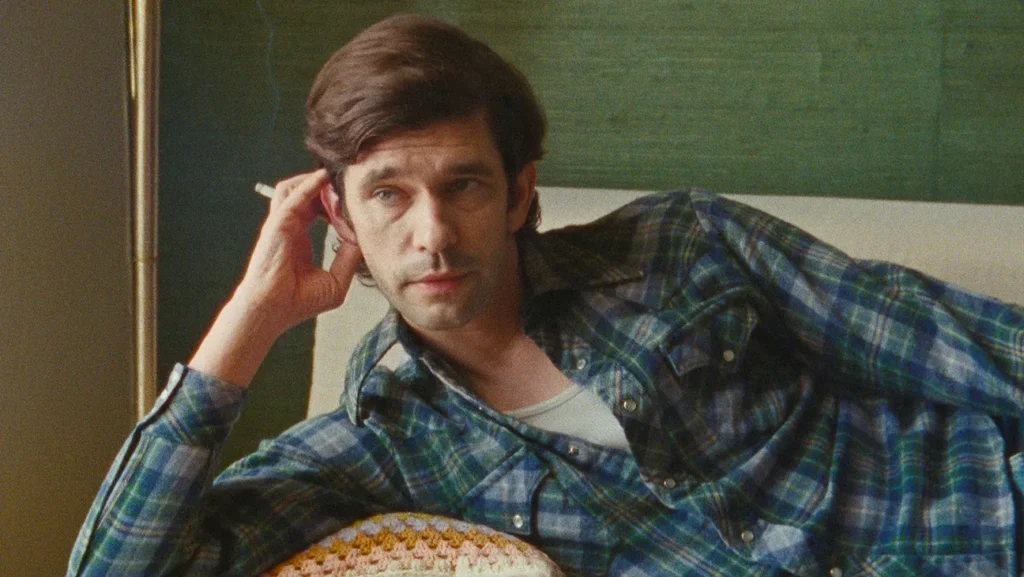
Ira Sachs evokes Peter Hujar’s love for time and detail through this reflective piece, using the structure itself to mirror the way Hujar approached photography as a discipline. Linda Rosenkrantz conducted this interview with Hujar nearly thirteen years before he died of AIDS, which casts everything he describes across the film in a light he could not possibly have anticipated at the time. The film takes place beautifully within the New York art world, laid out with real precision by Sachs, who understands the specific texture of that world well enough to recreate it without ever over-explaining a single thing about it. Hujar recounts an entirely ordinary day, but in the present tense of the film it’s Hujar and Rosenkrantz together experiencing a connection across that single day, which is arguably even more crucial than anything he’s actually recounting. That double structure, a day existing inside another day, is the film’s most elegant idea and easily the thing that lingers longest after it ends.
Now to The Delta from 1996, a film that entered the fray right as New Queer Cinema begin to make an impact, and we speak on it second because although his
newest film has the beauty to wow an audience upon first watch, it becomes awe-inspiring once you take a step back and understand the intense realism roots Sachs came from. The film begins with two men driving to the same location, one of whom is in his car talking on his mobile with a sound that immediately creates a

before a single thing has actually happened. Our main character, Lincoln Bloom, is trying to fit in with his typical young adult friend group but simply can’t connect clearly, hiding his emotions in a way that ends up defining his entire arc across the film. The driving and night scenes really have a great reflective tone to them as Lincoln begins meeting up with men to explore his sexual curiosities while deeply struggling with expression and comfort throughout. Everything shifts once he meets Minh, played by Thang Chan, and the two seem to have an instant unspoken connection of some sort, producing exactly the intensity Sachs has created so precisely across his entire career. The film doesn’t quite draw us in as much later on, but it’s well crafted throughout with Minh’s story standing as the clear standout element of the whole thing.
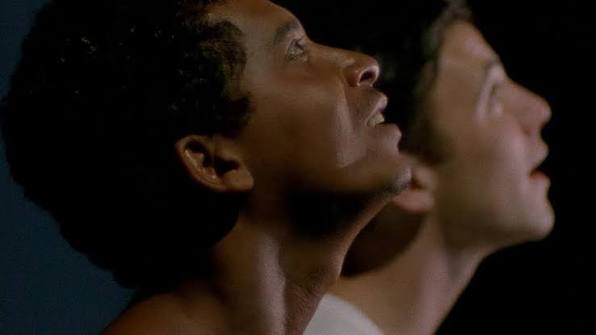
The film lays out the split in race and class in Memphis deeply through Minh and Lincoln’s daily lifestyles, using their contrast rather than any dialogue to make the point land. Sachs cast Thang Chan through open casting in Memphis, then revised the character of Minh to incorporate details from Chan’s own life, producing a realism based on genuine real-life experience that you can absolutely feel throughout every scene he’s in. Most Queer Cinema at the time starred white men, so Sachs deliberately switched the poster to reveal that Shayne Gray’s Lincoln Bloom was only ever half the story being told here. When Lincoln leaves the boat and returns to his privileged life, it affects Minh, who initially tries to act as though it’s all normal, leading directly into the film’s final shocking act of violence. That closing sequence is aggressive and brutal, cut with crickets and silence, ending the film on the same extremely intense and tension-filled emotion it began with.
Both films speak around homosexuality against the backdrop of the AIDS crisis, one directly through Hujar’s own devastating proximity to it and one through the atmosphere hanging quietly over The Delta’s Memphis. The Delta speaks on the reality of everyone presenting their sexuality differently and needing to try to intersect, with race, diversity, and class all playing major roles in their sexuality, while Peter Hujar’s Day approaches identity from the exact opposite direction, through total verbal openness rather than silence and repression. Sachs has always tackled homosexuality well, from The Delta in 1996 straight through to today, and these two films effectively bookend that commitment across nearly thirty years of consistent work. Neither film is a mainstream part of New Queer Cinema, largely because of Sachs’s persistent refusal to provide answers, opting instead for realism at every available opportunity. What connects them most is the shared belief that intimacy is built entirely out of specificity, whether that’s a photographer describing a single day in exhaustive detail or two men from opposite worlds finding something wordless in a car.
Peter Hujar’s Day and The Delta are separated by twenty-nine years but feel like two halves of the same artistic argument about connection, class, and the cost of not being able to say what you mean. Peter Hujar’s Day succeeds almost entirely in craft alone, with camera movement, transitions, conversations, and lighting turning a single moment, a single day, into something genuinely cinematic, earning an 80/100 from TwilightRoom. The Delta is much more raw and brutal and a bit less consistently gripping, but Minh’s story and Thang Chan’s presence give it a realism that most queer cinema of its era never came close to, earning a 72/100 from TwilightRoom. Sachs’s refusal to resolve either of them is exactly what makes them stick, and enter into the collection, trusting audiences to sit in ambiguity rather than handing them a conclusion. Watched together in succession, they make a strong case for Sachs as one of the most quietly consistent and important American filmmakers of the last three decades.
TwilightRoom Scores: Peter Hujar’s Day 80.0/100 , The Delta 72.4/100