Introduction
The ancient world epic is the oldest continuous genre in film, older than the western, older than the gangster picture, older than sound itself, and it has spent 112 years refusing to die. What follows is TwilightRoom’s timeline of fifteen entries, stretching from Giovanni Pastrone’s Cabiria in 1914 to Christopher Nolan’s The Odyssey in 2026, and covering silent Italian spectacle, pre-Code Hollywood excess, the Golden Age boom, European co-productions, art-house rejection, satire, and the modern IMAX blockbuster. Each film receives two paragraphs: the first carries our opinion alongside what the film draws from ancient Roman or Greek history, while the second covers its influence on the film world, its accolades, and its place in the genre’s long timeline. What becomes clear across all fifteen is that no single ingredient separates the best of these from the worst, because budget, historical faithfulness, and star power all appear on both sides of the ledger; the most expensive film ever made at the time sits here alongside a Monty Python comedy and a deliberately incoherent Fellini fever dream, and all three earned their place. What actually separates them is a unique attack on the genre, whether that means inventing cinematic scale outright, rejecting historical reconstruction entirely, or betting an entire production on practical effects and 70mm film. Few genres have been this volatile, having nearly bankrupted one studio, rescued another twice over, gone dormant for almost four decades, and returned to dominance on two separate occasions, and that volatility is exactly what makes it worth tracing from beginning to end. Let’s find the why.
Beyond Rome and Greece
Rome and Greece have dominated this genre for over a century, but they never fully monopolized it, and the appetite for antiquity on screen has always been broader than two civilizations. Egypt is the most obvious neighbor, appearing on this list through Cleopatra but anchoring its own substantial tradition in The Ten Commandments and The Egyptian, sharing the same DNA of scale, spectacle, and moral framing that defines everything here. Carthage already sits inside this list through Cabiria’s Second Punic War setting, a useful reminder that the genre’s origin film was as much about Rome’s enemies as about Rome itself, while Babylon enters through Intolerance, itself directly influenced by Cabiria, looping the broader ancient-world epic straight back to this list’s own starting point. Persia appears almost exclusively as an antagonist through 300, which raises the fair question of how much this genre is defined less by its settings than by whose perspective gets handed the camera. And for anyone who finishes these fifteen still wanting more of the same world, HBO’s Rome stands as the television analog to everything here, a natural companion piece that does in twenty-two episodes what these films spent four hours attempting.
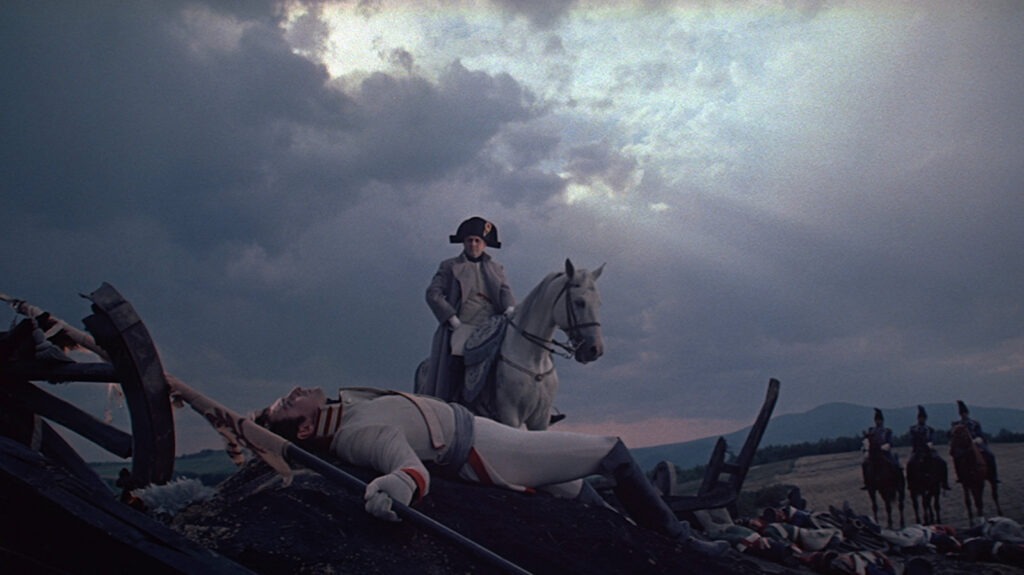
But the genre’s reach extends well past antiquity, because everything Pastrone invented in 1914 became the operating manual for the historical epic in every period it touched. Lawrence of Arabia is the clearest inheritor, an episodic desert journey built on location at impossible scale, and it is no accident that it remains the film The Odyssey is most often measured against; David Lean was working from the same playbook Camerini and Wyler had been refining a decade earlier, and the international co-production model that produced Ulysses is the same one that produced Lawrence and El Cid. Sergei Bondarchuk’s War and Peace pushed the form to its absolute financial and logistical limit in the Soviet Union, marshalling armies of extras in a way only Ben-Hur and Spartacus had previously attempted, and Bondarchuk’s Waterloo and Abel Gance’s silent Napoléon belong to the same lineage of directors treating history as something to be physically rebuilt rather than suggested. What connects all of them to this list is not the century they depict but the conviction underneath them: that a story worth telling at this size deserves real sets, real crowds, and real landscapes. That conviction traces directly back to a temple of Moloch built in Turin in 1914, so if the interest doesn’t stop here at the end of this timeline, we have great news: there is much more to cover on the epic film through history, but for now we will focus on Ancient Greece and Rome.
I. Cabiria
89.3/100 - Giovanni Pastrone - 1914
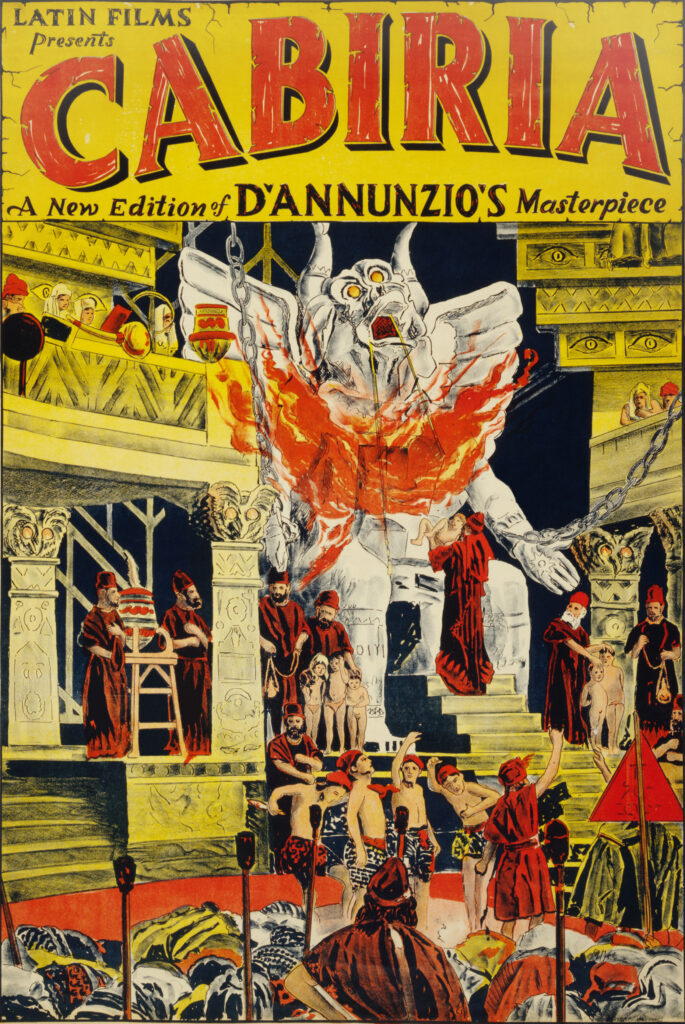
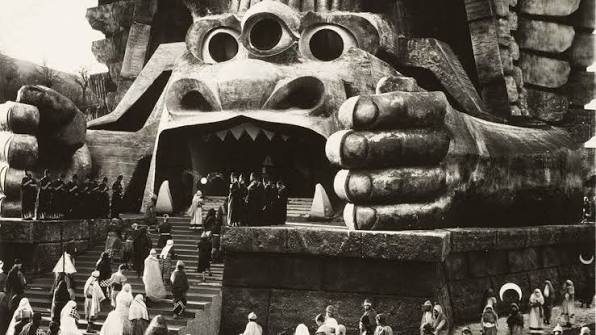
Cabiria is the first film on our timeline and the origin point of everything we will talk about here, and watching it now over a century later, the remarkable thing is that it not only held up for its time but continues to excel by present-day standards, arriving fully formed with an ambition no film had attempted before and has barely matched since. The premise is simple enough, as a few of these entries are: a young girl and daughter of the wealthy Batto is separated from her family when Mount Etna erupts, sold into servitude, and nearly sacrificed to the god Moloch before being rescued as the war between Carthage and Rome commences, but the story is really a vehicle for scale here. The film centers on a giant sacrificial throne room, and it becomes the moment the entire genre this article is about is born, with a set so massive and so confidently staged that every epic that followed is in some way answering to it. Further, the set design in Cabiria stays consistently fantastic regardless of setting, with shots of hundreds of extras that make clear this film was operating on a level no other production of the era, or even the one after it, was attempting. The film also introduced a newfound character to Italian cinema, as its large and bulky slave figure Maciste becomes a real discovery, a character built so well in this silent epic that the limitations never once get in his character’s way, and the performance reads as professional rather than dated. What makes Cabiria work beyond spectacle is how deliberately it grounds itself in real history, weaving Hannibal’s crossing of the Alps into a beautiful scene during the Second Punic War and Archimedes’ mirrors at the Siege of Syracuse into the melodrama in the earliest serious attempt to dramatize classical antiquity with genuine specificity.
The film, directed by Giovanni Pastrone, the forgotten pioneer of the film epic and produced by Itala Film, Cabiria was the most expensive film ever made at the time of its release, with a full-scale recreation of the Carthaginian temple of Moloch and hundreds of extras. Its most lasting technical contribution is the moving camera, as Pastrone pioneered not just the epic but the use of a wheeled dolly for tracking shots that liberated film from the static gaze and gave the medium its first genuinely immersive quality. Even Martin Scorsese has stated outright that the director invented the epic movie with this film, one that we hold very highly at Twilight Room, and that the credit routinely handed to D.W. Griffith and Cecil B. DeMille belongs here instead, with both Intolerance and Fritz Lang’s best works bearing Cabiria’s fingerprints directly. The title for the silent film was written by celebrated Italian poet Gabriele D’Annunzio, whose framing of Rome as a civilizing force of purity against monstrous Carthaginians later influenced Mussolini and gave the film a negative connotation as a template for Fascist-era cinema and political propaganda. On a more positive note, the film introduced the character of Maciste, played by Bartolomeo Pagano, who became Italian cinema’s first recurring action hero and whose popularity ran into the 1960s, directly seeding the sword-and-sandal peplum genre so many films on this timeline are a part of. The film was eventually preserved in the Museo Nazionale del Cinema in Turin, and it stands as the founding text of the epic film genre and one of film’s first masterpieces, starting this timeline with a rating of 89/100 from Twilight Room.
II. The Sign of the Cross
72.3/100 - Cecil B. DeMille - 1932
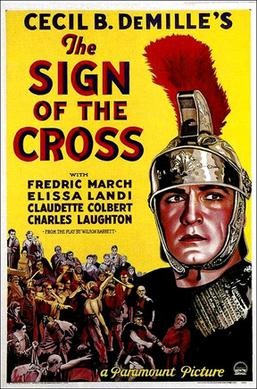
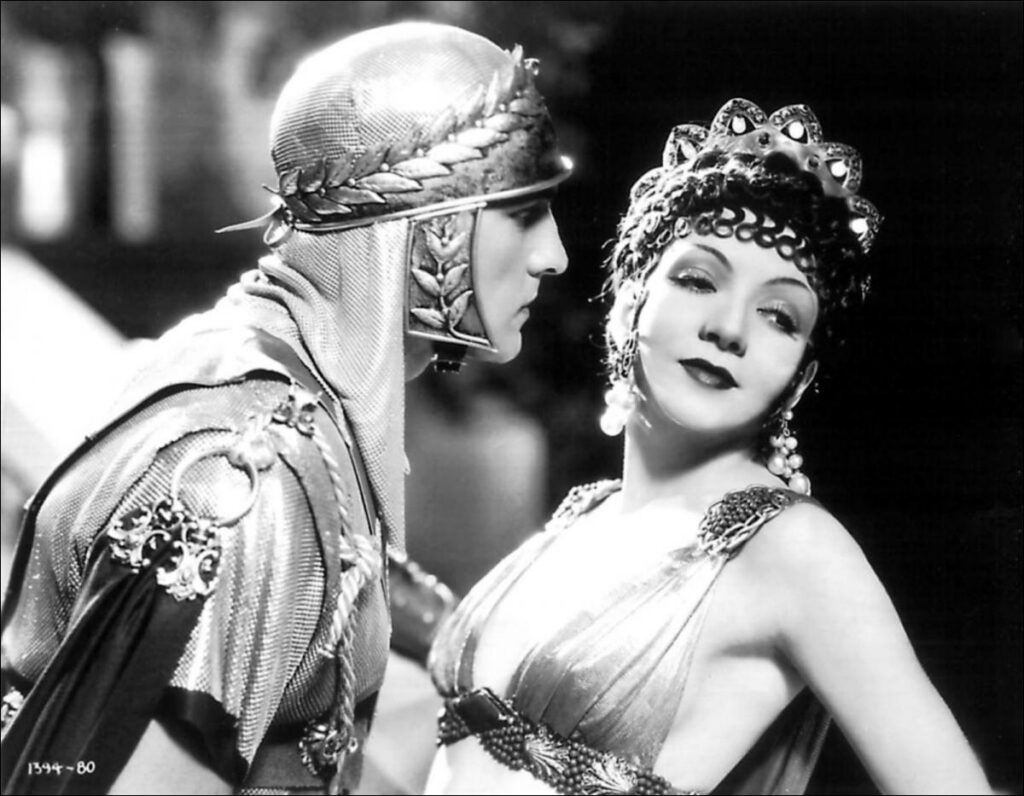
Eighteen years after the release of the first Roman epic, Cecil B. DeMille released the genre’s first compromise in The Sign of the Cross, a film that wants to be a moral epic and a spectacle of excess at the same time, and it never fully reconciles the two, though its legacy remains. It opens with Nero, perhaps the most common character on the list, burning Rome and blaming the Christians, centering on the Great Fire of 64 AD, though the film, as many after it do, compresses those events and exaggerates them heavily to present the executions that followed as a pure entertainment spectacle. The film’s shining star is Claudette Colbert, one of the most famous Hollywood actresses in history, as she stuns and pushes the limits of explicit imagery in this pre-Code epic, giving the film its most reliable source of energy whenever the pacing threatens to sag. Taking inspiration from Cabiria and being labeled one of the founding fathers of the epic, director DeMille has a well-earned reputation for slower and more tedious films that don’t hold up as well by today’s standards, and this one certainly fits the bill; compared with the 1914 hit, the budget and scale simply don’t match the actual execution. The romance between Marcus and the Christian servant Mercia is the central aspect of the plot and the clear driving force, as she gradually persuades him against Nero, which is an original visual telling of this material for film and should sound familiar to you, as a far more famous film based on the same plot will arise later on this list. However, The Sign of the Cross plays more like a bare-bones version of the story later entries tell far better, with only Charles Laughton, a mainstay in the genre, as Nero becoming the reason to check this film out, one of the greatest hammy performances in Hollywood history, despite this being the lowest-rated film on our timeline.
The film was the third and final entry in DeMille’s famous biblical trilogy, following The Ten Commandments in 1923 and The King of Kings in 1927, and it fully exploited the pre-Hays Code Hollywood window of 1930 to 1934. It did this by using its ancient Roman setting as a legal shield, allowing nudity, homosexuality, lesbianism, orgies, and arena violence to be justified under the banner of historical accuracy for the period. Made for $694,000 and grossing $2.7 million, the film had a remarkable return even at the depths of the Great Depression, and DeMille justified making a Roman film at that exact moment by drawing an explicit analogy between conditions in the United States and his Roman Empire before its fall, describing multitudes oppressed by distressing laws, overtaxation, and rule by a chosen few. Though it was a huge commercial success and made by a renowned director, the pre-Code content made the film a direct target of religious groups upon release, and reformers whose outcry helped bring about the Hays Code in 1934 cited this film and a few other directors such as Ernst Lubitsch and Josef von Sternberg at Paramount. Further, fifteen minutes of explicit material was subsequently cut from the film, including arena sequences and a lesbian dance scene, in the 1944 re-release, and these scenes were not widely seen again until the film’s Blu-ray release decades later. The Sign of the Cross today is discussed in two main contexts: as the most audacious example of pre-Code Hollywood excess and as the direct template for the Roman-Christian epic formula that Quo Vadis, Ben-Hur, and Spartacus would refine in the decade-later boom, making it the first sound film to portray Rome as a place of spectacular debauchery and spiritual redemption, earning a lower 72/100 from TwilightRoom.
III. Quo Vadis
85.9/100 - Mervyn LeRoy - 1951
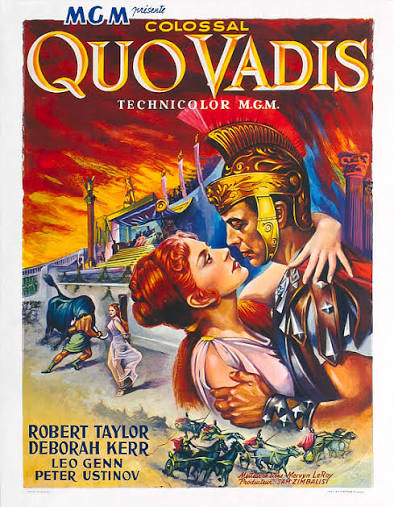
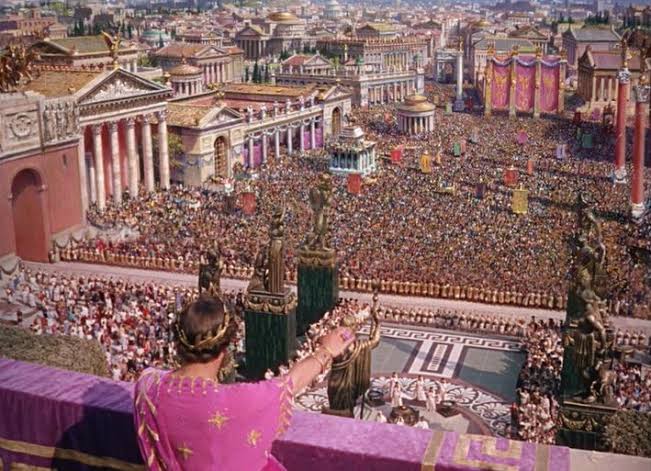
Jumping another 19 years into the 1950s, we are introduced to an entirely new style of Roman epic that triggered the biggest boom in the genre’s history: Quo Vadis, now in color and built from the same story as DeMille’s work, but reaching heights the 1930s could only begin to approach. The film centers again on Marcus Vinicius, an ambiguous general who comes to oppose a putrid and abusive Nero against the rise of Christianity in an Imperial Rome full of corruption, adapting the reign of the cruel emperor from 54 to 68 AD and the Great Fire. It follows Tacitus’ historical account of the fire while choosing to blame Nero directly, something history has never confirmed but heavily hints at, and it depicts Peter’s crucifixion and the fall of the Julio-Claudian dynasty in a heavily accelerated timeline that fits the three-hour epic being presented. The addition of color, especially in gorgeous Technicolor, is beautiful to say the least, and the cinematography and set design are better than anything the genre had ever seen, a huge step up from The Sign of the Cross, though still lacking a bit in pacing and in the slow-moving narrative that has always been a critique of the genre. Quo Vadis is the film that establishes the precedent for length in the true epic film, and that length argument works in some portrayals and not in others, allowing for long monologues, gigantic set pieces, and slow-building stories of entire lives to be fully described in their totality. Quo Vadis’ back half is where the film truly shines, as Nero, masterfully acted, burns Rome during his power trip and delivers the iconic lyre scene that has defined the character, turning against the Christians and placing Marcus in the middle of the coliseum to spark the insurrection that Roman audiences know and love, catapulting the film’s rating and our opinion of its execution up to the standard this timeline demands.
Produced by MGM and directed by Mervyn LeRoy, Quo Vadis was a massive production costing $7.6 million and using 32,000 costumes across its running time, and it was a last-ditch effort for the studio. It starred Robert Taylor, Deborah Kerr, Leo Genn, and Peter Ustinov, the most notable of the bunch, and features a number of future stars in the huge uncredited extras ensemble, including a younger Bud Spencer. Among those names, the true standout is Peter Ustinov as Nero, an actor who would not stop at this magnificent performance in the epic genre, as his portrayal is considered the definitive screen version of the famous antagonist, winning him a Golden Globe and an Oscar nomination while shaping the character’s screen image ever since. The film was such an enormous surprise success that it single-handedly rescued MGM from bankruptcy and revived the ancient world epic, becoming the studio’s highest-grossing film since Gone with the Wind and setting the precedent for the next two decades. It received eight Academy Award nominations but won none, one of the biggest Oscar failures on this list, as An American in Paris and familiar face Marlon Brando, with A Streetcar Named Desire, swept the majority of the year’s awards. In total, Quo Vadis was a huge step in the correct direction for the history of the genre and is credited with launching the historical epic craze of 1950s and 1960s Hollywood, establishing the template for the films that follow it, with its gladiator sequences serving as a direct influence and blueprint for perhaps the most famous contemporary film on this list 50 years later, earning an 85/100 from TwilightRoom.
IV. Ulysses
84.4/100 - Mario Camerini - 1954
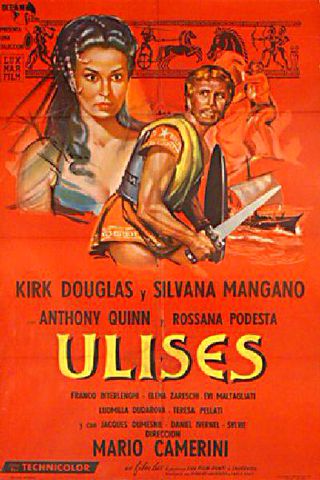
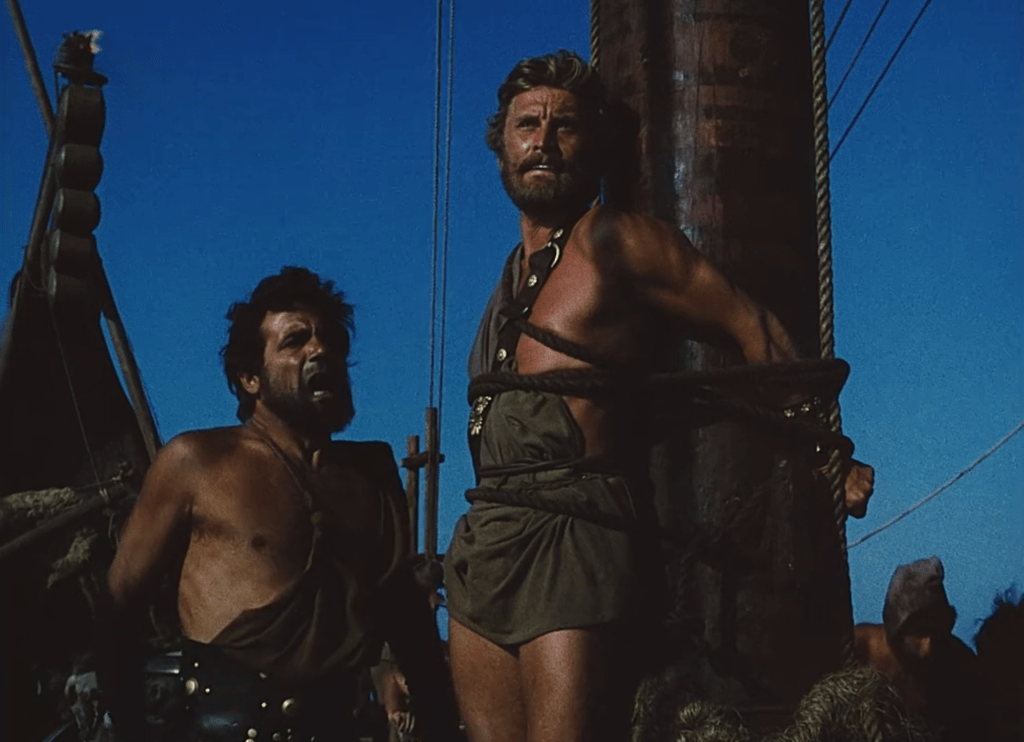
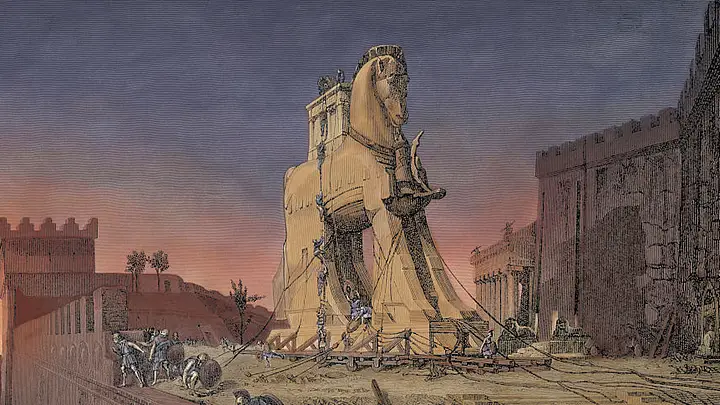
Moving three years ahead, we arrive at perhaps the most relevant film from this period on the list: Ulysses, the first sword-and-sandal peplum film here and the original widely accepted film version of The Odyssey. A peplum, or sword-and-sandals film, is a production made mostly in Italy, usually in Italian, about a historical, mythological, or biblical ancient story that is designed to resemble a big-budget Hollywood production, and it was most popular during the 1950s and 1960s. Adapted from Homer’s foundational eighth-century BC poem, the film narrates the ten-year journey home from Troy, a story that, while fantasticized, reflects genuine Bronze Age conflicts in the Aegean world around the twelfth century BCE. The film knows exactly which scenes matter from The Odyssey and focuses on them, executing the Trojan Horse sequence very well while the Cyclops cave is also remarkably done for the time, making easy comparisons to the new film and standing as one of the highlights of the Italian adaptation. What is now unmistakable is that Nolan’s Odyssey did not only adapt the source material but was also inspired by this rendition, as sequences like the Sirens show real similarities executed well in both films, showing just how effectively these films built on each other to move the genre forward. Kirk Douglas plays Ulysses as a man who becomes crucially involved in the next few films’ success: more arrogant, proud, and aloof to the gods’ influence on the world, smart and cunning but often stumbling through the journey rather than fully calculating it, though the performance as the hero remains solid throughout. Ulysses lacks the presence of Telemachus, something the newer film possesses and clearly benefits from, but the return to Ithaca is portrayed very well regardless, and the one-set scenes end up much more effective here than the massive-scale epic ones, a sharp switch from the previous films on this list. The film emphasizes that Odysseus was given immortality not by the gods but by Homer himself, a line that stands out as unique to this rendition, and while it is not the best adaptation of the story in film now, it was crucial to introducing a new angle to the timeline.
Directed by Mario Camerini and produced by Dino De Laurentiis and Carlo Ponti, Ulysses was a major Italian-American co-production from Paramount Pictures and the first transatlantic peplum collaboration, helping define European cinema through the 1950s and 1960s. The screenplay required seven writers, and portions of the film were shot on location in the Mediterranean along the actual coastlines described in Homer’s poem, yet another parallel to the new film that gives the adaptation a level of authenticity studio-bound epics could not match and that inspired Nolan’s ambitious rendition seventy years later. Kirk Douglas arrived at the role on the back of Champion, Ace in the Hole, and The Bad and the Beautiful, establishing himself as one of the more intense and physically commanding leading men in Hollywood and making him a perfect cast for the cunning, defiant Homeric hero. Silvana Mangano, producer Dino De Laurentiis’ wife, plays both Penelope and Circe, a choice unique to this film and one of the standout highlights of the temptation the story aims to portray, while Anthony Quinn plays Antinous, the most powerful suitor, placing two future Oscar winners directly opposite each other and giving the film star power unusual for an Italian co-production and a peplum film. Ulysses stands as the first significant screen adaptation of The Odyssey in the sound era and its most faithful, establishing conventions used for decades and serving as the prototype for the international co-production model later used in some of the greatest epics of all time, earning an 84/100 from TwilightRoom.
V. Ben-Hur
86.4/100 - William Wyler - 1959
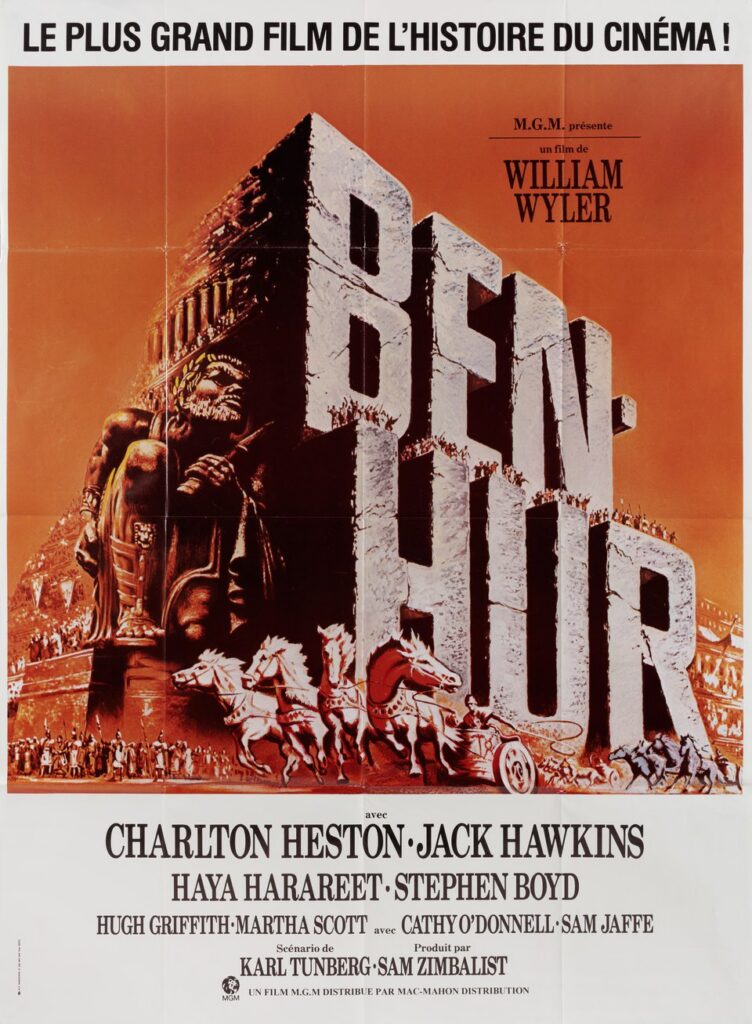
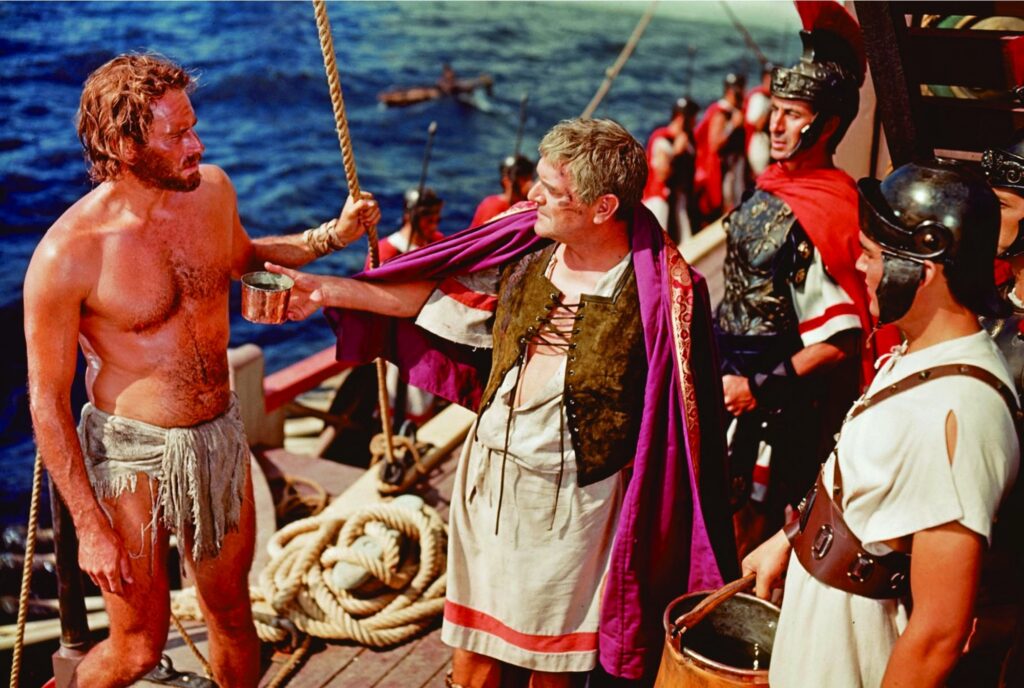
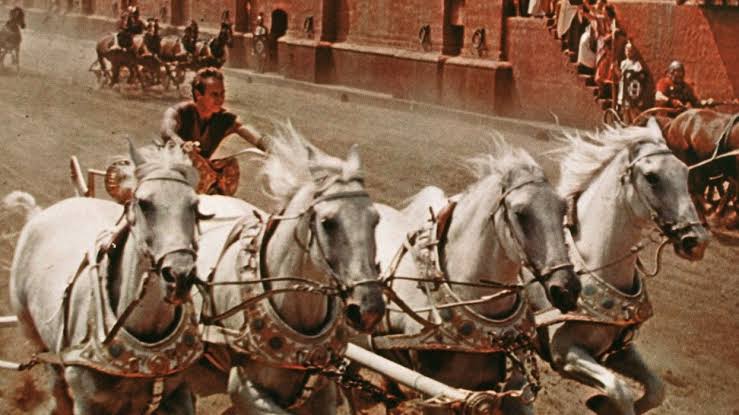
From the moment Ben-Hur starts, its massive scale, booming sound, and music are felt immediately, delivering what may be the perfect epic opening and the definitive Roman epic. Set in Judea around 26 AD during the Roman occupation under Tiberius, the film weaves together Roman military administration, the emergence of early Christianity, and the political instability that would culminate in the Jewish Revolt of 66 AD. Ben-Hur’s engine is the friendship between Judah Ben-Hur and Messala, but more importantly, how it shapes Judah’s decision-making later in the nearly four-hour runtime, the two lifelong friends now on opposite sides, whose argument over religion and Rome’s colonizing impulse ends with the exchange, “You are either for me or against me… Then I am against you,” the start of one of the greatest journeys in film history. Wyler’s masterpiece is a very melodramatic and emotional film from start to finish that breaks up its long monologues with large set pieces, and the galley slave sequence stands out among them, with so much movement and a score that blends seamlessly with the epic proportions of the sequence. Most notably, and perhaps the most famous scene of the century for films of this scale, the chariot race highlights the film and is what contributes to our higher rating of one of the most famous epics of all time. An absolutely massive set with great design and absurd logistics, it is executed to near-perfection and may never be topped in scale or importance. Ben-Hur’s ending, with the crucifixion of Jesus Christ as Judah watches alongside Esther, his mother, and sister, and the miracle of absolving sins, feels like the perfect end to a masterful tale, even if it is not executed visually as well as the narrative deserves; however, the film’s endless influence on the genre’s legacy is untouchable.
Yet another saving grace for MGM, director William Wyler had in his hands the largest budgeted film in history at the time, $15.7 million, and used the largest sets ever built for a film. Filming took a full year, with days lasting twelve to fourteen hours, and the famous chariot race alone required 15,000 extras, 300 sets, and 40,000 tons of imported sand, making it one of the most technically demanding sequences in practical filmmaking history. Many stars declined the lead for different reasons before Charlton Heston, then earlier in his career after The Ten Commandments, was cast, and the choice for Judah Ben-Hur could not have been more perfect, as he went on to win the Academy Award for the performance, one of the clearest winners in the award’s history and just the surface of the film’s massive success. Ben-Hur won 11 Oscars that year, including the big three, Best Picture, Best Director, and Best Actor, a record that stood for decades as the most dominant performance in Academy Awards history and has yet to be surpassed, only matched by The Lord of the Rings and Titanic, making it one of the most accolade-acclaimed films of all time. The film is the prototypical epic: it is the first film people think of for this genre, and one that will never be forgotten, though a few films on this list may have surpassed Ben-Hur in fame or notoriety, none will surpass it in its enduring effect and legacy. The film again saved MGM, and its chariot sequence became the single most cited action sequence in the history of the genre, while the film itself directly influenced both sides of its own coin, the gladiator and biblical epic, earning an 86/100 from TwilightRoom.
VI. Spartacus
90.7/100 - Stanley Kubrick - 1960
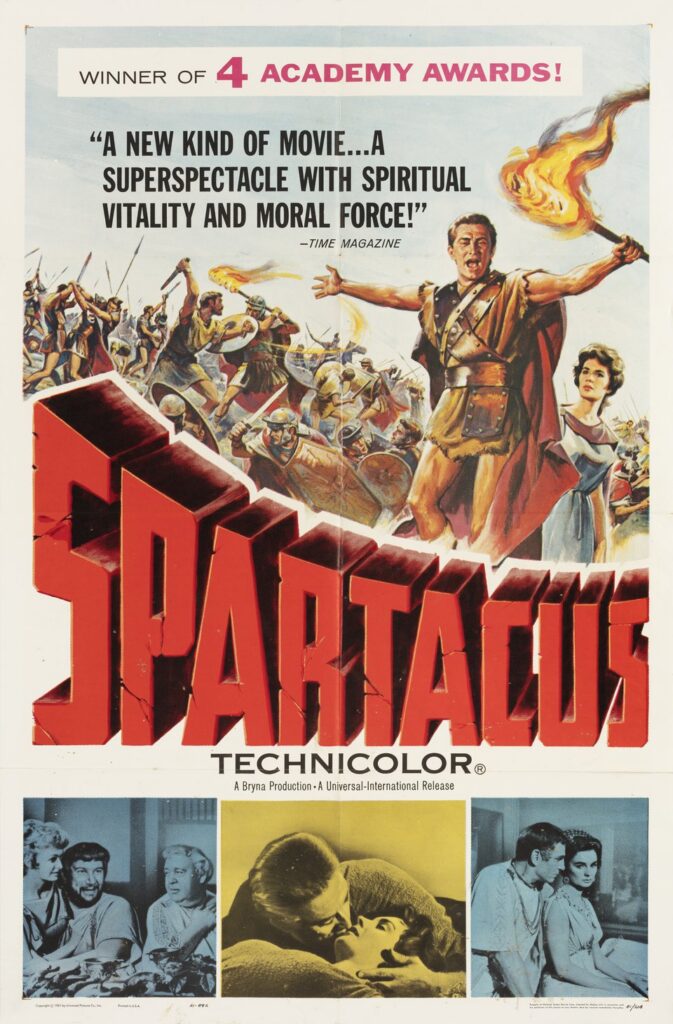
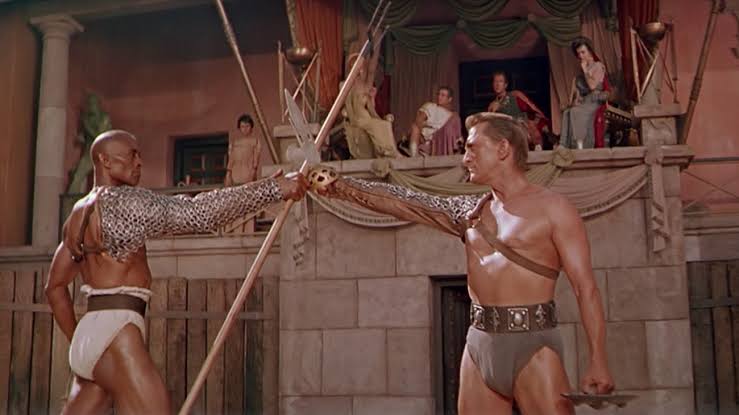
Spartacus is the most complete film of the Golden Age run, and on my second watch it struck me sharply with its quality, its homage to past Roman epics, and its editing, proving that Kubrick is simply in a league of his own, even when he himself did not think this film was. Based on the Third Servile War of 73 to 71 BC, the film follows the Thracian gladiator who escaped his gladiator school at Capua with seventy other slaves and built an army of roughly 120,000 escaped slaves in a revolt against the Roman Empire before he was defeated by Crassus. The film provides a unique score that stands out from the rest of the epic films, still orchestral but much more intentional in emotion, and it is best displayed in the training-combat sequence that begins to show the quality and fantastic execution Spartacus arrived with in 1960. From the first intense gladiator fight, where Spartacus is almost killed and the revolt begins, the tone is set for the film from start to finish, and Kubrick takes us through the story of one man more seamlessly than any director in the genre ever has before. The main role is acted spectacularly throughout by Kirk Douglas, and Varinia, his romantic counterpart, is the best example of an authentic romantic love story turned tragedy in the entire Roman epic genre, something that has immense effect on the film’s impact. However, the film does fully embrace the genre that raised it to existence and feels like a direct precursor to Kubrick’s much more critically accepted epic, perhaps the most beautiful film ever made, Barry Lyndon. Spartacus is fantastic from Crassus’ speeches to Rome and Spartacus’ speech to his slave army at the start of the final act, to the massive war scene that follows, representing the scale we look for in this legendary timeline, as it stands as our personal highest-ranked Roman epic listed in this article so far.
After David Lean, one of the world’s most famous directors, turned down the film and Anthony Mann was fired a week into shooting, Stanley Kubrick replaced him in a deeply contentious arrangement he never wanted because of Kirk Douglas’ creative control, and he distanced himself from the film after its release. The film was written by Dalton Trumbo, one of the Hollywood Ten blacklisted during the McCarthy era and forced to work under assumed names for years, but this time he worked out in the open, a public decision by Douglas that was reinforced by JFK and helped turn opinion against McCarthyism and end the blacklist, a major positive effect of the film’s release. Spartacus assembled one of the most extraordinary ensembles in Hollywood history, an all-star game for the epic film with Laurence Olivier, Charles Laughton (The Sign of the Cross), Peter Ustinov (Quo Vadis), Tony Curtis, and Jean Simmons, with Olivier and Laughton reportedly clashing sharply on set during filming. The star among stars here became Peter Ustinov, who again dominated in a supporting role, winning an Oscar for his mostly improvised performance as Spartacus’ slave owner, solidifying him as one of the true legends of Roman epic film after his Nero in Quo Vadis. The film itself went on to win four Academy Awards and a Golden Globe for Best Picture Drama, and it was one of the most expensive films ever produced for the time, with a budget exceeding $12 million, a trait that was quite frequent in these films. It employed 10,000 people, with one scene requiring 8,000 infantrymen borrowed from the Spanish Army, which caused the film to remain banned in Spain until after Franco’s death. The “I am Spartacus” scene became one of the most referenced and parodied moments in all of pop culture, leading the way for the more satirical era of Roman film after the 1960s, and the film holds a spot in the Criterion Collection as the definitive rendering of the Roman slave revolt, earning a 90/100 from TwilightRoom.
VII. Cleopatra
87.1/100 - Joseph L. Mankiewicz - 1963
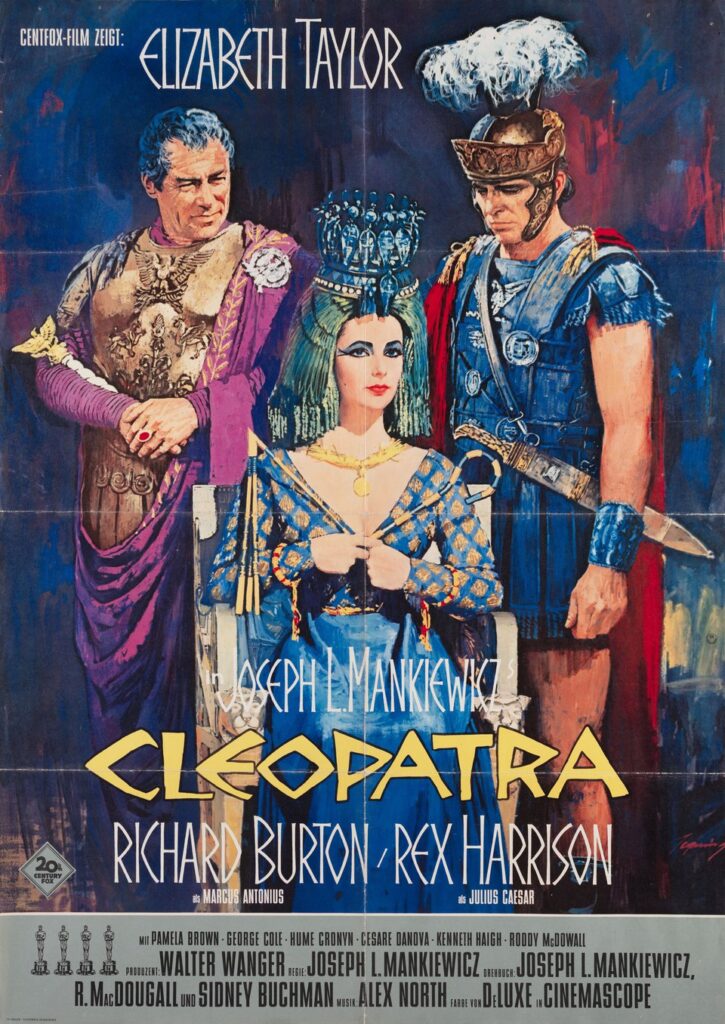
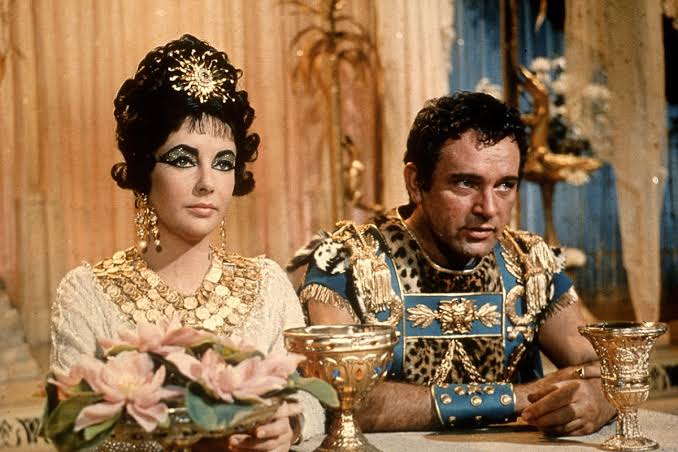
Cleopatra carries one of the worst reputations of any film on this list, and we could not disagree more, because the first half of this four-hour epic is as good as this genre gets. The film covers the most dramatically consequential decades in the ancient Mediterranean world, running from the assassination of Julius Caesar in 44 BC through the power struggle between Mark Antony and Octavian to the final collapse of the Ptolemaic dynasty of Egypt in 30 BC. Cleopatra is introduced negotiating with Caesar as an equal rather than a supplicant, asking outright to be made queen, in wonderfully written dialogue that stands as one of the best-entrenched introductions in the history of the epic. She believes herself to be the goddess Isis, a conviction that shapes her entire characterization and makes her the most complex and best-designed lead role on this list by a considerable margin. The massive scale feels like the epics that inspired it but with an even broader narrative reach, and it is a great example of a film moving entirely at its own pace while staying genuinely intriguing, with her arrival by ship a gorgeous and legendary sequence and the dance parade following Caesar’s return to Rome a grand-scale standout. The Antony half is admittedly the weaker of the two, pettier and more toxic as it charts a self-conscious man desperate to be Caesar and unable to become him, but even at its slowest the film remains far better than its reputation has ever allowed, closing on Cleopatra’s death as an up-and-down epic that genuinely defined this era of the genre.
The story of the film’s production is every bit as dramatic as the film itself, budgeted initially at $2 million before spiraling to a final cost of $31.1 million, roughly $300 million in today’s terms. Filming began in London under original director Rouben Mamoulian before Elizabeth Taylor contracted pneumonia and nearly died, forcing Joseph L. Mankiewicz to be brought in with Rex Harrison and Richard Burton to lead a production that had already consumed a fortune. What followed was consumed by the real-life romance between Taylor and Burton, both married to others at the time, exposed by Italian paparazzi and generating incomprehensibly large global headlines that ended with the actress being condemned by the Vatican itself. That very controversy turned what nearly bankrupted 20th Century Fox into the highest-grossing film of the year, and Taylor became the first actress in history to receive $1 million for a single performance, permanently reshaping Hollywood’s star compensation model in the process. The film was originally intended as two separate features totaling five hours of material before studio interference cut it down to four, a decision that goes a long way toward explaining the imbalance between its halves, and it won four Production and Effects Academy Awards for its recreation of Alexandria and Rome, with Rex Harrison’s Julius Caesar widely considered his finest performance. Cleopatra is now regarded as both a genuine cinematic achievement and Hollywood’s most instructive cautionary tale about production excess, a film that permanently changed the names behind the scenes of the industry and ended Hollywood’s appetite for the Roman epic for almost four decades, leaving satirical and international takes to fill the void until Gladiator arrived, earning an 87/100 rating from TwilightRoom.
VIII. Jason and the Argonauts
84.0/100 - Don Chaffey - 1963
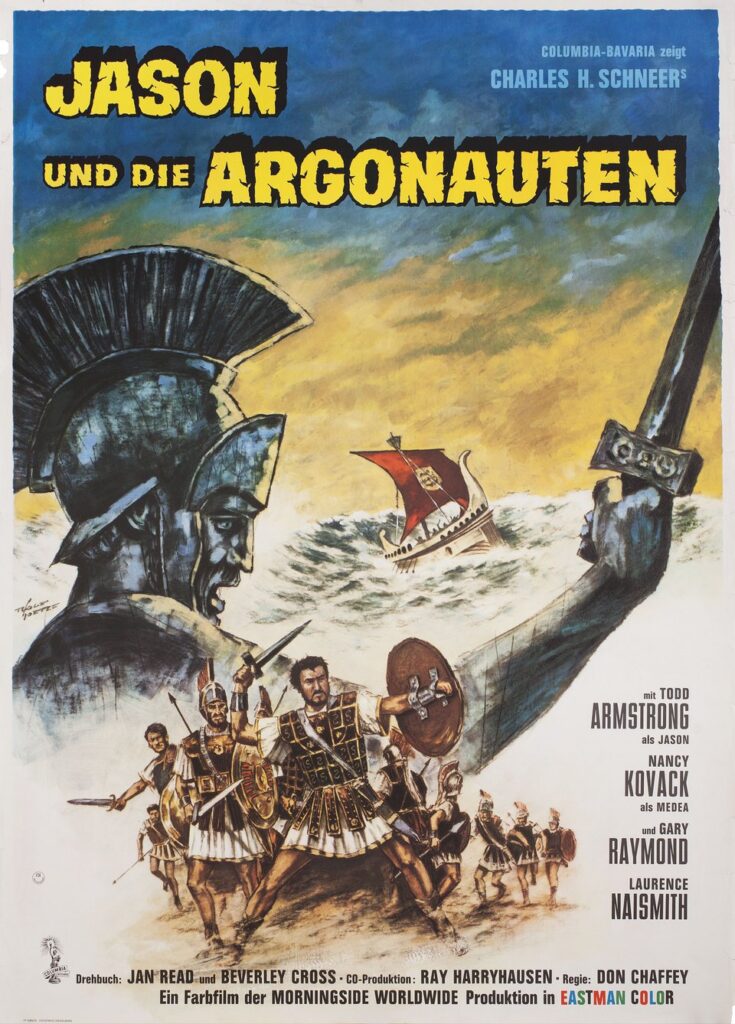
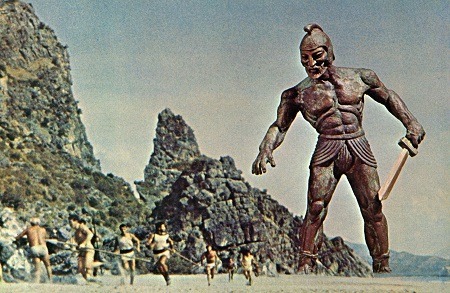
Jason and the Argonauts arrived the same year as Cleopatra and could not be a more different film, trading the political intrigue and religious weight that had defined the genre for gods, monsters, and open-sea adventure. It draws on the myth of Jason and the Golden Fleece, one of the oldest stories in Greek mythology, predating Homer and rooted in a Bronze Age world of roughly 1300 to 1200 BC, opening as Zeus grants Hera the ability to intervene on Jason’s behalf exactly five times in his pursuit to overthrow Pelias. Jason unknowingly saves Pelias himself, who then sends him after the Fleece to reclaim the kingdom of Thessaly, and the old man he seeks help from turns out to be Hermes in disguise. The film relies far more on visual effects and heroic set pieces than any other entry here, feeling less like a straight epic than an extension of one, and its crew of Polydeuces, Castor, Acastus, Phalerus, Euphemus, Hercules, and Hylas gives it far less dialogue and a much stronger focus on entertainment and adventure, making it a clear inspiration for something like One Piece. Talos the giant metal soldier and the creature work throughout are very dated but campy fun, less spectacle than genuine marvel, though the pacing does drag in the stretch after Hercules’ greed costs Hylas his life. The film still carries that epic set-design creativity on a slightly smaller scale, with the battle sequence in the final half-hour standing out as a real highlight before a final act that feels rushed but lands as a wonderful tale regardless.
Jason and the Argonauts is loosely based on the Argonautica by Apollonius Rhodius while also drawing on older oral renditions of the voyage from Argo to Colchis, a kingdom on the Black Sea believed to be modern-day Georgia, with the Golden Fleece itself interpreted by historians as a literal reference to the sheepskins used to pan for gold in Colchian rivers. It is less a showcase for its human cast than for Ray Harryhausen’s stop-motion technique called Dynamation, which combined split-screen photography, rear projection, and painstakingly hand-animated models to place creatures in the same frame as live actors, with the famous skeleton sequence taking four months of work to produce three minutes of film and remaining one of the most celebrated sequences in the history of stop-motion. Directed by Don Chaffey and starring Todd Armstrong, Laurence Naismith, and Niall MacGinnis, the film was a box-office failure but was critically well received, finding its real life through television repeat screenings across the 1960s and 1970s, where it became a fixture, and Tom Hanks has called it his favorite film ever made over both Casablanca and Citizen Kane. Peter Jackson, George Lucas, Steven Spielberg, Tim Burton, and Guillermo del Toro have all cited it as a direct inspiration, laying the groundwork for creature filmmaking that runs from Star Wars through Jurassic Park to The Lord of the Rings, with an archive of the original figures still maintained to this day. It is regarded as the apex of Harryhausen’s career with an incalculable effect on visual-effects filmmaking, and its real contribution to this list is proving that the ancient world could be brought to life entirely through one craftsman’s imagination rather than the sheer scale and expense every other entry here depended on, earning an 85/100 rating from TwilightRoom.
IX. Satyricon
86.4/100 - Federico Fellini - 1969
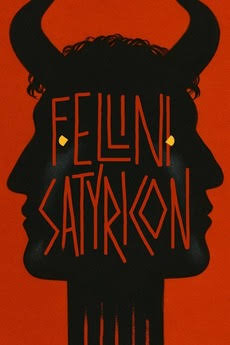
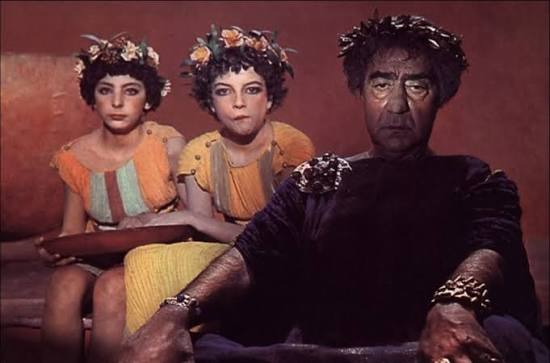
Satyricon is the most unique film on this list by a wide margin, incoherent at many moments in a way that is entirely Fellini’s style and entirely the point of the film itself. Encolpio is introduced angry and upset because his lover Gitone has been stolen by another man, and what follows is less a narrative than an extended descent through the mysterious walls of ancient Rome that feels more unique than anything else this genre has produced. The cinematography, set design, and character design are weird and unsettling throughout, playing like a more sinister and unsettling version of After Hours relocated to ancient Rome, with the two wandering through streets full of strange interactions and humans preying on one another in what feels like a lost time in the city. The satirical reign of Nero brings the film to its most extravagant point in the massive Red Room feast sequence in the baths, where its queer presence is felt heavily, a feature in ancient Rome that no epic before it was willing to commit to. Encolpio is later captured and taken as a slave by a tyrant, and the film continues to show Roman traditions in scenes lifted from other epics, but rendered in a portrayal only Fellini’s mind could interpret. What holds the whole thing together is the legendary director’s use of lighting, shadow, and reflection, deployed with real creativity through the halls of a great estate the two men infiltrate and again in the extravagant desert set piece that closes the film.
The film is loosely based on the Satyricon, a fragmentary Latin prose narrative written by Gaius Petronius Arbuter, whom Tacitus described as the arbiter of elegance at Nero’s court before he was forced to commit suicide in 66 AD. It is one of the earliest surviving examples of a prose novel in Western literature, and its fragmentary state, with large sections lost leaving direct gaps in the narrative, directly shapes a film that is deliberately discontinuous with corresponding gaps in its plot. The source work satirizes Roman society during the reign of Nero with a frankness about sexuality, class, and moral corruption that no epic before it had dared to tackle. Fellini explicitly described his film as not historical and more about Martians, a vision of ancient Rome so alien and defamiliarized that it functions as science fiction, giving what he called the eerie sensation of being spied on by ghosts or aliens. The Cinecitta sets bear no resemblance to the marble-and-toga Rome of Ben-Hur or Spartacus, instead presenting a hallucinatory dreamscape of red skies and grotesque faces, made at the height of 1960s counterculture and using the moral dissolution of Neronian Rome as a direct allegory for Fellini’s own opinion on the impending collapse of contemporary Western civilization. Coming off 81/2 and a few other works, Fellini was at the height of international prestige with complete creative freedom, earning his fourth Academy Award nomination for Best Director here, and the film stands as the most formally radical entry in the entire ancient-world canon, blatantly rejecting historical reconstruction in a favor of pure imaginative vision and making the argument for what this genre can be when freed from Hollywood restraints, earning it an 86/100 from TwilightRoom.
X. I, Claudius
84.4/100- Herbert Wise - 1976
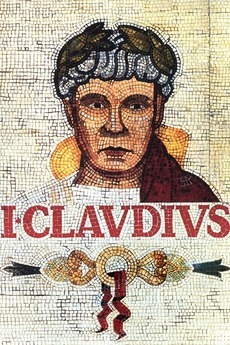
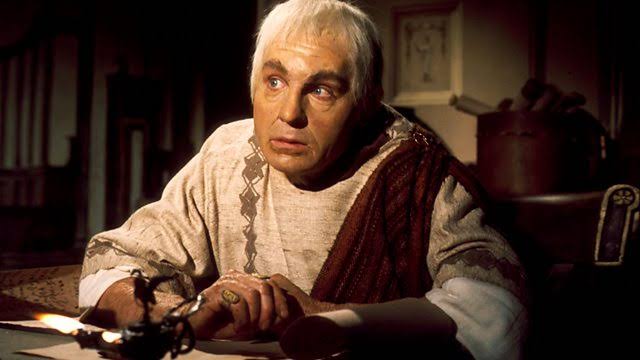
I, Claudius is the one entry on this list that isn’t a film, and it earns its place by filling the exact gap the genre left behind, arriving in the long dead zone between Cleopatra and Gladiator as the alternative-media route to tackling Roman epics when Hollywood had abandoned them entirely. It is a very dialogue-focused, episodic version of Roman history led by an elder Claudius telling his own stories, a conceit converted perfectly for the television format and landing in a far more laid-back, patient register than anything else here. Covering the reigns of Augustus, Tiberius, Caligula, and Claudius across roughly 24 BC to 54 AD, the series is less interested in telling one full, encompassing story than in doing what shows like The Gilded Age would later do: following one group living through the events of a period of Roman history with genuine influence over it. Claudius is an outcast because of his twitch yet remains the most observant man in every room, constantly attempting to fit into Roman society and failing, which adds real comedy to the fray while quietly setting up the entire arc. The show truly finds its stride when Claudius is visited by Apollo and told he has been spared to record the truth about the Julio-Claudian family, that his greatest achievement will be providing an honest account of what really happened, a huge reinforcement of just how badly everyone around him underestimates him. From there the highlights come constantly, from Caligula killing his own wife after endless talk of the two being immortal gods, pushing the limits of old Roman ideals in one of the best scenes of the series, to the panic at the end of episode nine when Claudius is proposed and appointed the new emperor of Rome in the show’s biggest twist and best episode, fittingly titled “Fool’s Luck,” before the final stretch charts how he becomes wise as an emperor but is taken advantage of all the same, seeing the gods on the brink of death before his niece and Nero kill him in a wonderful final episode.
The series draws primarily on Robert Graves’s twin novels I, Claudius (1934) and Claudius the God (1935), which themselves synthesize Suetonius’s The Twelve Caesars, Tacitus’s Annals, and Cassius Dio’s Roman History into a coherent first-person narrative, meaning many of its most lurid moments come directly from the ancient record even as those historians wrote decades later with their own agendas. Graves wrote the first novel largely as a commercial venture to pay his bills, completing it in a matter of months in Majorca, and it won both the James Tait Black Memorial Prize and the Hawthornden Prize on its way to becoming one of the great historical novels of the twentieth century, while an aborted 1937 film adaptation directed by Josef von Sternberg and starring Charles Laughton was never completed, documented in the BBC’s The Epic That Never Was. Produced on a deliberately modest budget at BBC Television Centre and filmed entirely in studio without a single location shoot, the series forced its drama inward onto performance and dialogue, and the casting was extraordinarily competitive, with Charlton Heston considered for the title role before Derek Jacobi was chosen, John Hurt initially declining Caligula before asking to be reconsidered after meeting the cast, and Brian Blessed persuaded away from Tiberius to play Augustus as an ordinary man so the reactions around him would convey his power. Jacobi’s Claudius is widely regarded as one of the greatest television performances in British history, Siân Phillips’s Livia is the series’ most purely terrifying creation, and Hurt’s Caligula remains one of the most disturbing characterizations the medium has produced, with Patrick Stewart, John Rhys-Davies, and a young Helen Mirren filling out the ensemble. It won four BAFTA Awards across 1977 and 1978 along with an Emmy for Outstanding Art Direction, averaged 2.5 million viewers per episode on BBC Two before reaching a vastly larger audience through PBS’s Masterpiece Theatre, and was named the 12th Greatest British Television Programme of all time by the BFI in 2000. As one of the first period-piece shows ever made and the most influential, it is the foundational text of prestige ancient-world television and the direct ancestor of everything that followed, most obviously HBO’s Rome and Game of Thrones, whose creators have cited it as a primary model for sustaining dynastic drama across a vast ensemble, proof that the ancient world could carry long-form storytelling on writing and performance alone, without a single one of the massive sets every film on this list depended on, earning an 84/100 rating from TwilightRoom.
XI. Life of Brian
98.0/100- Terry Jones - 1979
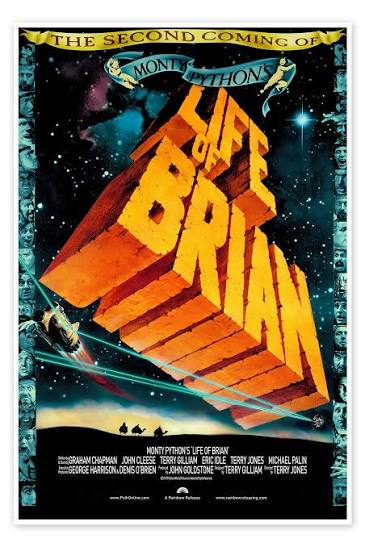
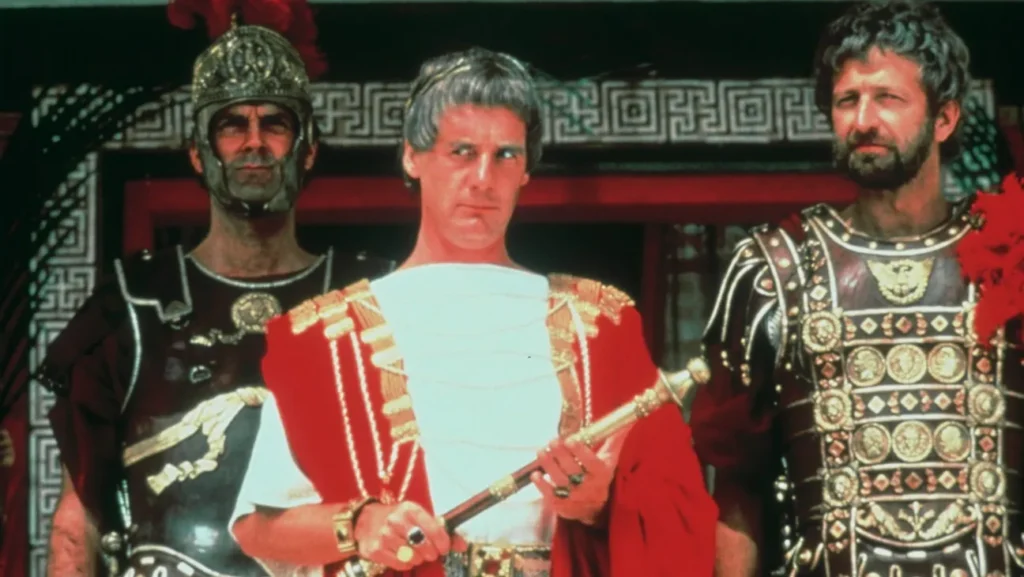
Monty Python and the Holy Grail sits among our absolute favorite films ever made, and the group behind it remains a personal favorite of this publication, which makes Life of Brian one of the more unorthodox entries in the satirical era of the Roman epic and simultaneously one of the absolute best films on this entire list. The film opens with all the Monty Python boys blessing a boy named Brian in their traditional comedy format, complete with a fantastic title drop that announces exactly what kind of picture this is going to be. Brian, now grown, finds out he is the son of a Roman and has a higher destiny but denies his fate outright, vandalizing Roman statues at night in defiance before being caught by soldiers and saved by a rebel group he then joins. The writing is unbelievably funny and clever in a way that stands out as unique in the very best sense, and while hiding from Roman troops Brian incidentally stumbles into becoming the messiah for the people and starting a full revolution he never wanted any part of. Monty Python may be the best group ever at making skits that stay endlessly funny on every single rewatch, and Life of Brian is one of their very best, closing with the famous crucifixion bit and the notoriously funny musical number “Always Look on the Bright Side of Life” after his rebel group delays saving him with everything except actual action.
Graham Chapman, John Cleese, and Eric Idle met as students at Cambridge while Terry Jones and Michael Palin met at Oxford, forming the group whose sensibility defines everything on screen here. Life of Brian feels like a more grown-up effort for them than what came before, with the jokes aimed not at Christ himself but at blind prophets and rebels who have no real motive behind their cause, a distinction that has been consistently lost on its critics. The film took enormous scrutiny from American churches, almost as much as The Last Temptation of Christ would receive nearly a decade later, with certain countries forbidding screenings of it outright. It never takes itself too seriously, an ethos best captured in the notion that a bad day in Latin class is worse than an act of terrorism against the Roman Empire, and it was made with a much larger budget and considerably more ambition than Holy Grail while still maintaining the core spirit that made the group what it was. Its most important critique is of an aimless and overly complicated rebellion, one that bickers endlessly over process instead of taking meaningful action, a satire that lands as sharply on the bloated epics preceding it as on the politics it was actually aiming at. Arriving in the long dormancy after Cleopatra, when Hollywood had abandoned the straight Roman epic entirely, Life of Brian proved the ancient world remained fertile ground even when the genre that built it had gone quiet, earning a 98/100 rating from TwilightRoom.
XII. Gladiator
91.3/100- Ridley Scott - 2000
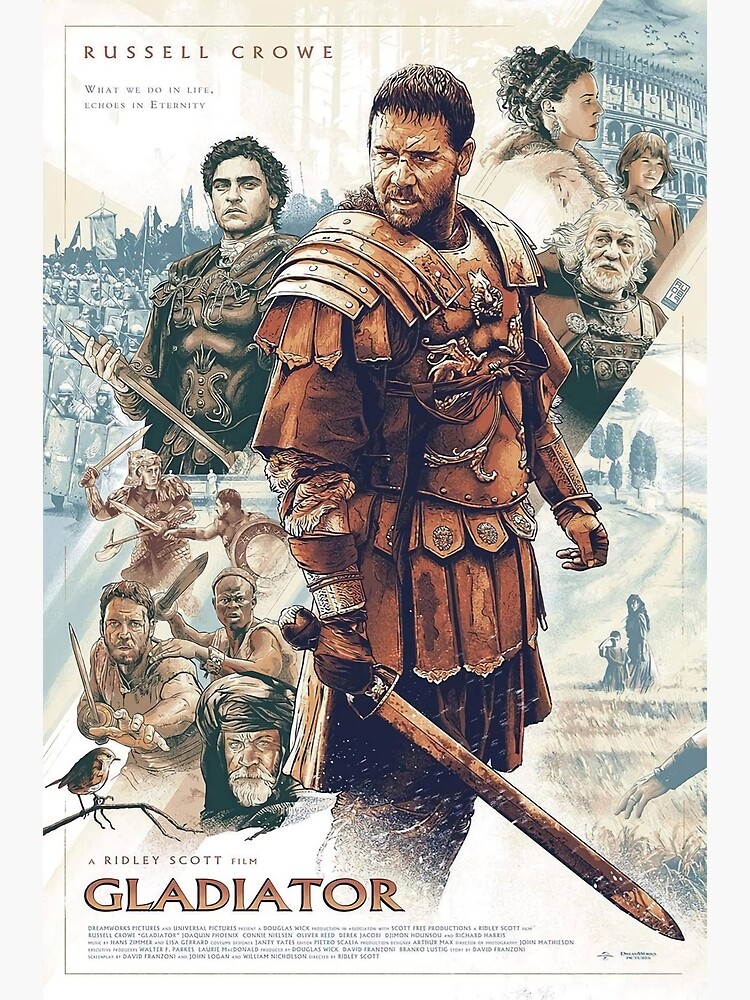
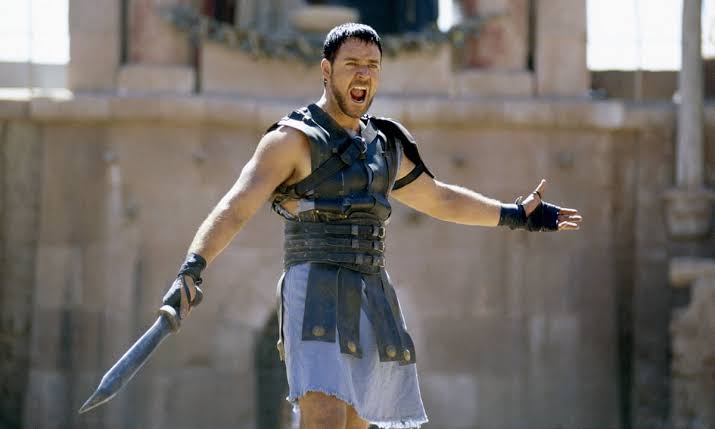
Russell Crowe is perhaps one of the most famous names in Roman epic film on this list and of the 2000s, having dominated the early 2000s as one of Hollywood’s most talented and versatile actors, and he delivers a monumental performance in Ridley Scott’s Roman Colosseum epic Gladiator, a film that is a homage to all the great epics that came before it. The film follows Maximus, demoted from Roman general to gladiator after Commodus seizes power in the wake of his father Marcus Aurelius’s death, a premise loosely rooted in the real transition of 180 AD that historians frequently cite as the beginning of Rome’s long decline. Shot through practical effects and enormous fight sequences, it is packed with moments that cannot help but entertain and amaze general audiences and critics alike, and it does so without ever feeling like it is coasting on the genre’s past. One thing we at TwilightRoom have learned through this list is that there isn’t a single quality you can pinpoint in common between all these films, but rather a unique attack on the genre — something that makes a film stand out is the best way to separate the deserving from the not-so-deserving. Scott’s Gladiator is a monumental change in the Roman battle concept and one of the most carefully constructed entertainment-focused films of all time, its character development, antagonistic dialogue, and pure action earning it a place among the very best this genre has ever produced.
Gladiator arrived in 2000 on a budget of roughly $103 million and grossed over $460 million worldwide, single-handedly reviving the ancient-world epic in Hollywood after nearly four decades of dormancy and breaking the curse that Cleopatra’s runaway costs had placed on the genre since 1963. It won five Academy Awards, including Best Picture and Best Actor for Crowe, becoming the genre’s first Best Picture winner since Ben-Hur and proving the ancient world could still be genuinely awards-viable territory rather than pure spectacle. Its arena sequences draw a direct line back through this very list to Quo Vadis, whose gladiatorial scenes were an acknowledged influence on how Scott staged the Colosseum nearly fifty years later. The film directly triggered the 2000s epic wave that followed here in Troy and 300, alongside Kingdom of Heaven and Alexander, restoring the setting to bankability for the first time since the 1960s. A belated sequel more than two decades later only cemented its position as the bridge between the classical Hollywood epic and the 21st-century blockbuster revival that leads all the way to Nolan’s Odyssey, earning a 91/100 rating from TwilightRoom.
XIII. Troy
83.9/100- Wolfgang Peterson - 2004
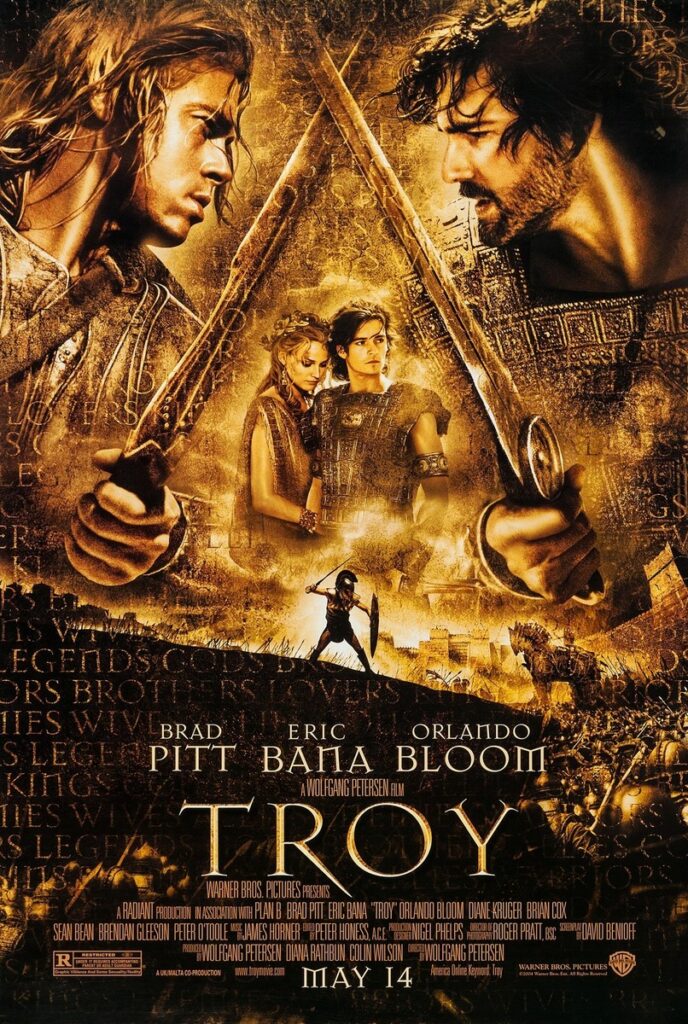
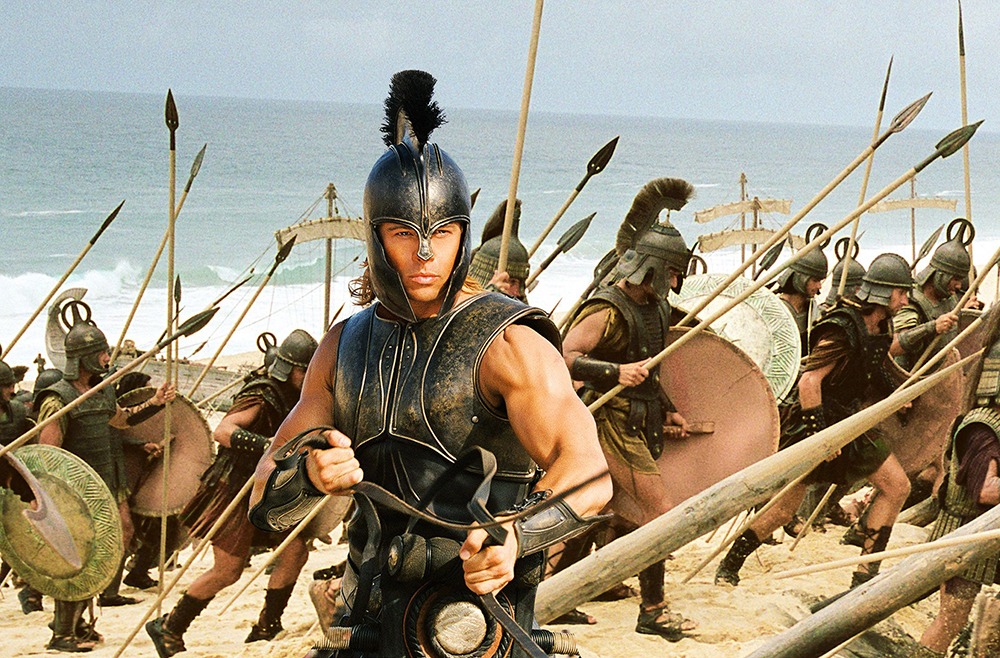
Troy is the true introduction to the 21st-century blockbuster resurgence of the ancient epic, a telling of the Iliad starring Brad Pitt as Achilles that arrives four years after Gladiator reopened a door Hollywood had kept shut for forty years. Based on Homer’s foundational eighth-century BC poem depicting the late Bronze Age Trojan War of roughly 1250 to 1180 BC, the film picks up as the prince of Troy runs away with Helen after a peace is struck with Sparta, igniting the war that consumes everything after it. The film is far more action-focused than the epics of old, and its dialogue struggles noticeably as a result, feeling bloated in stretches and tossing aside much of the established epic standard in order to appeal to a new audience, a trade that likely worked for commercial success but cost it dearly in critical estimation. What saves it is the second half, as Achilles’ cousin Patroclus goes into battle disguised as him and is killed by Hector, giving the final hour a genuine emotional engine the first two acts never manage to build. The duel between Achilles and Hector is the most intriguing aspect of the film by far, with Eric Bana’s Hector standing as the clear standout performance, and the subsequent scene between Priam and Achilles is the best-written material in the entire picture, salvaging our rating of this new blockbuster.
The film’s most consequential decision was removing the gods entirely from the narrative, stripping away the theological framework that gives the poem its meaning and drawing sustained criticism from classicists as a fundamental misunderstanding of the source. Directed by Wolfgang Petersen on a budget of roughly $180 million that ballooned after Hurricane Marty disrupted the Malta shoot, the production also delivered one of film history’s better ironies when Brad Pitt tore his Achilles tendon while shooting as Achilles. The casting history is its own tangle of near-misses, as Nolan wanted this project while Petersen wanted Batman before Warner Bros. switched them, and Pitt was originally set to play Leonidas in Snyder’s 300 before passing on the role, while the Trojan Horse prop itself has been preserved in Turkey and can still be seen near the ruins of ancient Troy where it once stood. It grossed roughly $500 million worldwide for a massive commercial success without ever entering the awards conversation, and both Petersen and Pitt have voiced open disappointment in the finished film despite that success, though the director’s cut released thirty minutes longer is widely considered a substantial improvement that restores crucial character development. Troy occupies a genuinely complicated position in the ancient-world canon, a revitalized concept after Gladiator that was commercially dominant, critically middling, and increasingly reassessed in the years since as far more entertaining than its reputation suggests, remaining most audiences’ widely seen rendition of Homer until The Odyssey took his later story to heights far beyond anything here, earning an 83/100 rating from TwilightRoom.
XIV. 300
79.9/100 - Zack Snyder - 2006
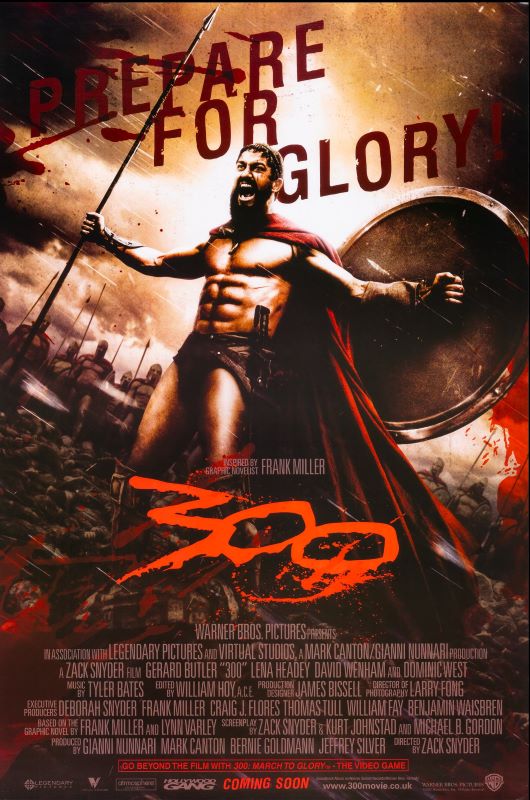
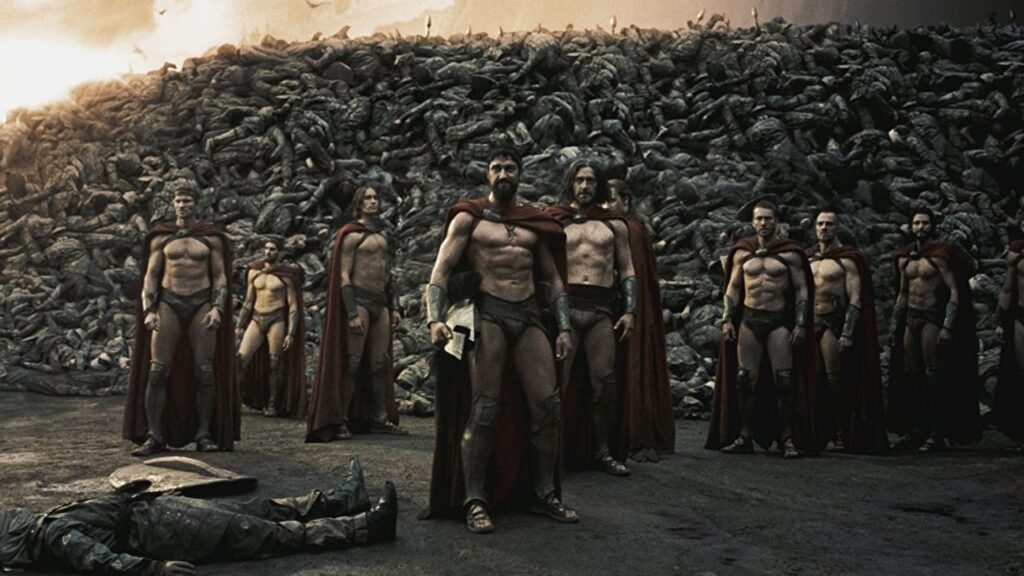
300 is a dark, CGI-heavy telling of Spartan tradition by Zack Snyder, and once again a creative and thoroughly modernized version of the ancient epic rather than any kind of continuation of it. Depicting the Battle of Thermopylae in 480 BC, in which King Leonidas led a vastly outnumbered Greek force against the Persian army of Xerxes I, the film has no interest in the historical record beyond the shape of the last stand itself. The cinematography is very dark throughout, mixing CGI animation with live action and immersing its characters in shadow in a way nothing else in this genre attempts, while the film’s entire focus sits on hype moments, with “This is Sparta!” placing that intention at the very forefront of everything it does. This is pure ancient war action, and Michael Fassbender delivers a genuinely awesome performance in extremely serious action acting that grounds the stylization surrounding him. The war and battle sequences are Snyder at his absolute best, with the Immortal versus Spartan scene shining through with real heavy-metal power, though the stakes never quite feel high enough and the narrator hinders the film heavily throughout, right up to the final stand that leads to the unification of the Greeks and the eventual defeat of Persia.
The film is adapted not from Herodotus but from Frank Miller’s 1998 graphic novel, itself a fictionalized retelling heavily influenced by the 1962 film The 300 Spartans, which explains just how far the finished product drifts from the historical account of Leonidas, his 7,000 Greeks, and the shepherd Ephialtes who betrayed them. Snyder filmed almost entirely on green-screen sets using superimposition and chroma key before digitally painting in the backgrounds, pairing that with extreme slow-motion violence and hyper-stylized bodies in what he himself described as an opera rather than a documentary, something far different from the practical wonders defining this article. Gerard Butler, a relatively unknown Scottish actor cast as Leonidas instead of Brad Pitt, delivered a performance that made him an international star overnight, and the film was made on a $65 million budget against $468.8 million worldwide, one of the most extraordinary returns on investment in the entire history of the ancient-world genre. Its depiction of Persians as monstrous, deformed, and sexualized against Spartans as the embodiment of Western masculinity generated significant academic and political controversy, with Iranian government officials formally protesting the film as anti-Persian propaganda. Yet for all those inaccuracies, 300 caused the single highest spike in public interest in Thermopylae in recorded history, and it stands as the definitive statement of Zack Snyder’s visual aesthetic, one of the most formally distinctive Greek epics ever made, and one of the last genuinely successful ancient-world films until The Odyssey arrived twenty years later, earning a 79/100 rating from TwilightRoom.
XV. The Odyssey
99.3/100 - Christopher Nolan - 2026
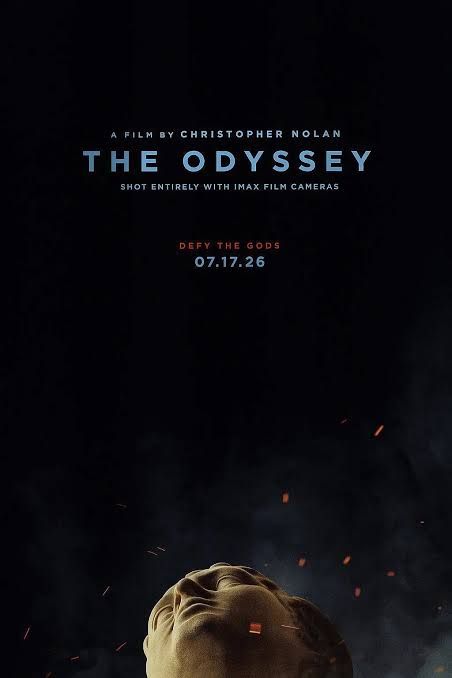
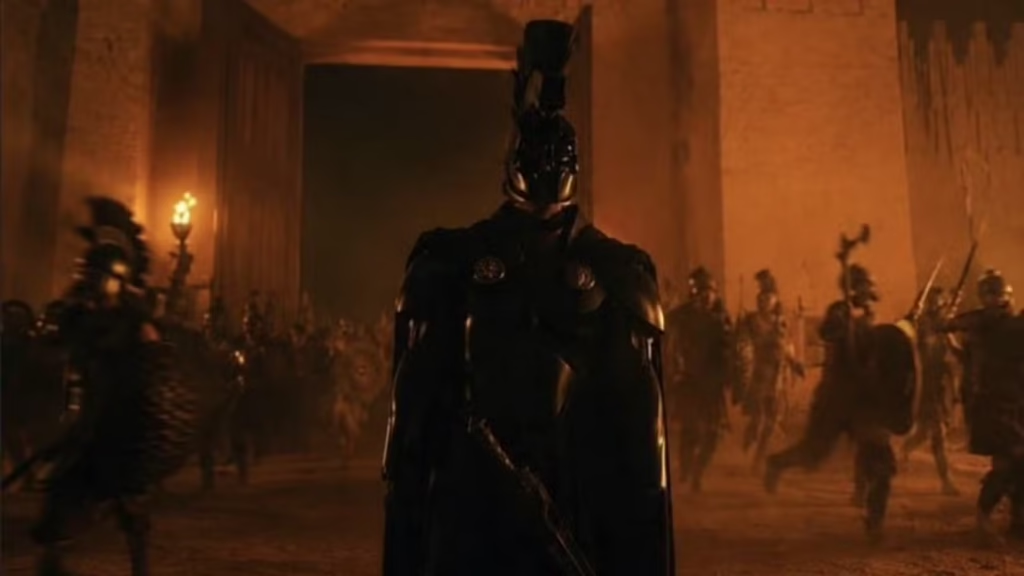
Everything on this list has been building toward something like this, and Christopher Nolan’s Odyssey is the rare film that actually justifies a century of anticipation behind it. Shot entirely on IMAX cameras, it is a modern-day Lawrence of Arabia and an epic of all epics, opening with the Trojan Horse in a quiet beach rendition that starts the film far softer than expected and grounds the theater in the aftermath of the war before unleashing the journey home. Where Camerini’s 1954 Ulysses handled Homer as melodrama and Troy stripped the gods out of the Iliad entirely, Nolan restores the full mythological weight of the material without ever losing the human being at its center, with Matt Damon excellent throughout as a man gradually worn down under the weight of his own legend. Tom Holland’s Telemachus anchors the Ithaca thread while Anne Hathaway may deliver her finest work yet as Penelope, and Robert Pattinson’s suitors give the home front genuine menace, though it is Odysseus’s journey across the seas that carries the film, moving between traditional horror, body horror, adventure, and fantasy at an unprecedented practical scale. Nolan stages the Cyclops as horror in every sense, closer to a monster movie than a mythology lesson, while Circe’s island deploys visceral body horror through practical effects and makeup in one of the most haunting scenes of the decade. Only the Ithaca storyline in the opening keeps it from absolute perfection, sitting a half-step behind the spectacle surrounding it, though the film circles back to deliver one of Nolan’s best-ever final acts in that same setting.
What makes The Odyssey the fitting endpoint for this list is how directly it answers the genre’s founding question, the one Pastrone first asked in 1914 with a temple full of extras: how much of the ancient world can actually be built rather than suggested. This is the first film shot entirely on IMAX, and every frame justifies it, from the masterful ocean shots to the storm sequences, with a sound design so overwhelmingly loud that it will likely be the film’s most divisive element, even as it feels like a bold swing that connects cleanly. It is also the entry that most understands what it is adapting, honoring a poem carried through generations as an oral epic before it was ever written down and positioning itself as the next link in that lineage rather than merely the latest version of it. Its structural choices and editing are quietly as brilliant as its scale, with the Sirens sequence executed with precision and the crescendo of Telemachus realizing the beggar is his father landing with full force, producing a three-hour film driven by constant momentum. The film opened to $264 million worldwide, proof that the ancient-world epic still commands mainstream audiences more than a century after Cabiria first demonstrated it could, and arriving after two decades in which 300 stood as the genre’s last real success. It immediately enters the conversation among the greatest epics ever put to film, a movie that demands the biggest screen on the planet and, like its source, feels destined to be passed down, earning a 99/100 rating from TwilightRoom.
The Length of the Epic
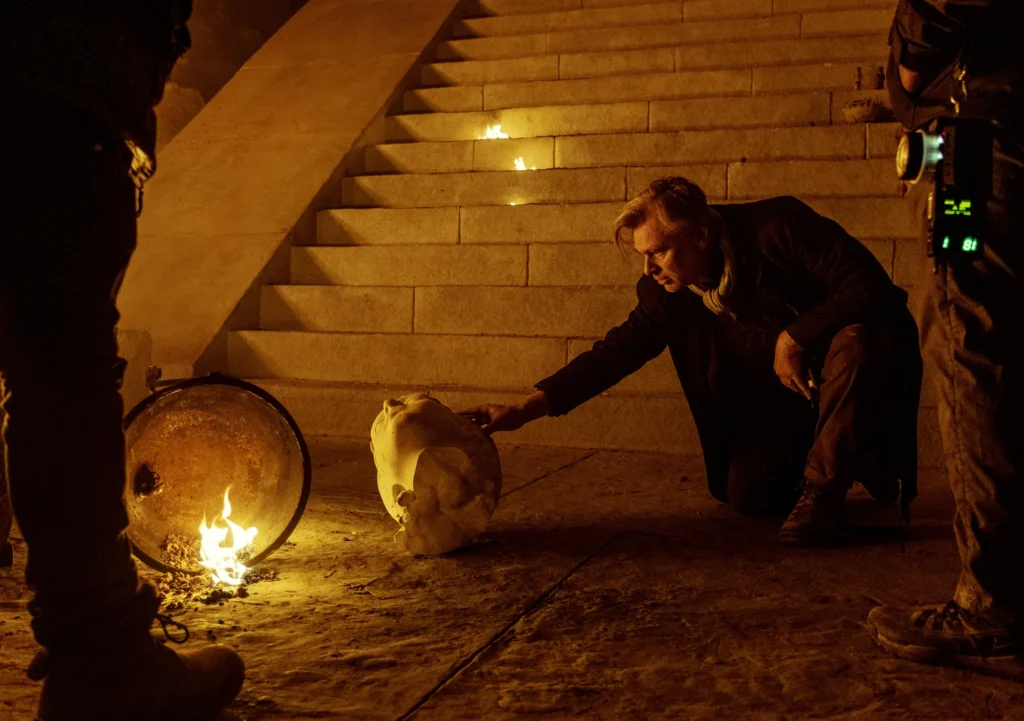
No genre has ever been this preoccupied with its own runtime, and Quo Vadis is where that starts, standing as one of the longest films of its period and setting an expectation the epic carried for decades afterward. Length was functional rather than indulgent in those early entries, giving the long monologues and slow builds these stories require the room they need while large set pieces broke them up at regular intervals. But Ben-Hur runs three and a half hours and its ending still doesn’t feel like the earned progression that runtime promises, proving that length alone guarantees nothing about payoff. Cleopatra is the extreme case at four hours, originally intended as two separate films totaling five hours of material before studio interference cut it down, and the imbalance between its excellent first half and its dragging second is the direct result of that decision. Troy offers the reverse case, its director’s cut running thirty minutes longer than the theatrical version and widely considered a substantial improvement that restores character development the studio removed. And then there is The Odyssey, which moves at a near-perfect pace across three hours despite operating at the largest scale any of these films have attempted, while shorter entries like Jason and the Argonauts and Life of Brian sit comfortably among the best here at a fraction of the length, proof that runtime should scale with ambition and was never a measure of quality in itself.
Conclusion
The arc runs from Cabiria inventing the genre in 1914 to The Odyssey standing as its newest peak in 2026, spanning 112 years, four countries, and every major format shift in the history of film, and what strikes us most in assembling it is how little these fifteen films have in common beyond their setting. No formula defines greatness here, which is why this list holds the most expensive production of its era, a self-consciously incoherent art film, a Monty Python comedy, and a stop-motion creature showcase all on genuinely equal footing. Many of these were commercial gambles that reshaped the industry entirely, saving MGM twice, nearly destroying Fox, ending a genre for forty years and then reviving it, and the financial history of these films is nearly as dramatic as anything happening on screen. What keeps the genre alive is that it returns endlessly to the same handful of stories — Nero, the Trojan War, the journey home to Ithaca — and somehow keeps finding something genuinely new in them, whether that is Ustinov’s definitive Nero, Fellini’s Rome as an alien planet, or Nolan’s Cyclops staged as outright horror. The Odyssey’s success suggests there is real life ahead here after decades in which the ancient epic seemed permanently retired to the past, and if a $264 million opening weekend proves anything, it is that audiences never stopped wanting these stories, only waiting for someone to tell them properly. A century of watching Rome and Greece on screen ultimately proves the simplest thing about them: these stories refuse to die, and every generation finds its own way of telling them.