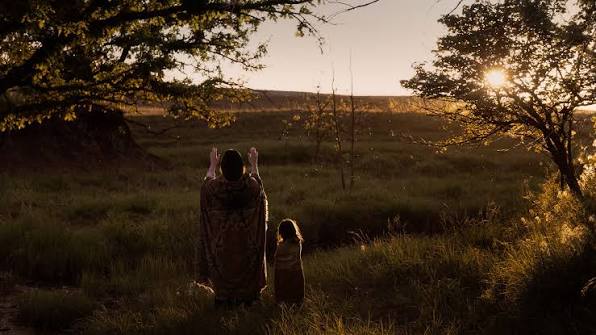
This week’s Criterion Tuesday is Martin Scorsese’s Killers of the Flower Moon, and what strikes us most is how completely a director in his eighties refuses to coast or
phone it in the direction here is masterful, evidently very reliant on decades of instinct, and the film looks incredible in the remastered 4K format, a visual and dramatic achievement that few filmmakers half his age could manage. The dialogue is Scorsese-esque in its quality, tantalizing and complex without ever feeling showy, and it’s the kind of writing that trusts its audience to sit with
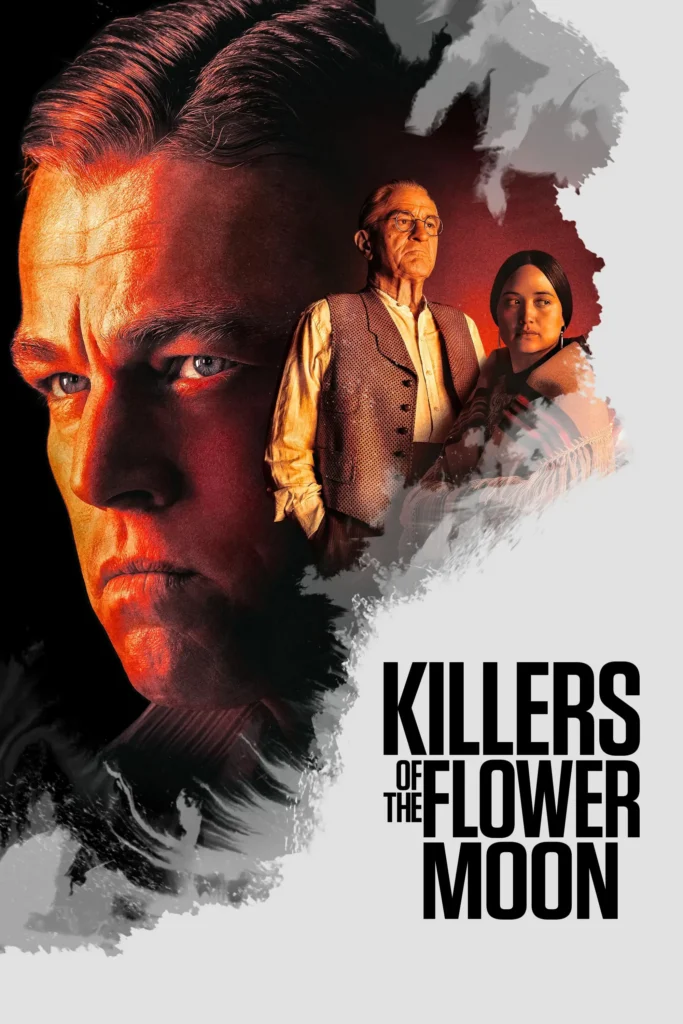
discomfort rather than resolve it quickly. What I find most compelling is how patient the film is willing to be with its horror: this is a story about greed disguised as kinship, and Scorsese lets that betrayal creep rather than strike, which is a much harder and more effective choice than a conventional crime thriller would have made. What I find most compelling is how patient the film is willing to be with its horror, this is a story about greed disguised as kinship, and Scorsese lets that betrayal creep rather than strike, which is a much harder and more effective choice than a conventional crime thriller would have made. The film does meander a bit in its second hour as comments about the long runtime become slightly valid, as the pacing is the one real knock against an otherwise masterful piece of filmmaking, a film that deliberately risks testing patience, and here it occasionally does. Killers of the Flower Moon stands as one of the great late-career achievements from any American director, a film that is capably crafted from its first frame to its last and one of Scorsese’s most historically vital works.
Leonardo DiCaprio’s Ernest Burkhart arrives by train in Osage territory in search of money from the oil being dug up on Native land, and we love how unglamorous that entrance is. Ernest isn’t a schemer with a plan; he is a man of limited intelligence being pulled toward one, and DiCaprio plays that vacancy brilliantly from the jump. Ernest seems headed toward his uncle, Robert De Niro’s William “King” Hale, and the family dynamic established here immediately tells you everything about the film’s power structure: guidance on the surface, manipulation underneath. King gets Ernest a job as a driver, and it’s such a small, quiet detail, but it becomes the first domino, placing Ernest exactly where King needs him, physically closest to the Osage wealth he intends to steal. Mollie Kyle enters with a quiet force that makes Lily Gladstone’s performance feel devastating from the start: calm on the surface, fully aware underneath, and never explained away for the audience. That restraint is a huge part of why the performance lands so hard, because the film doesn’t ask her to dramatize her own suffering in order for us to understand it.
Where the film really earns its length is in how it refuses to rush the Ernest-Mollie relationship or the way it falls apart; they do grow closer, but whether that feels fully authentic on Ernest’s part is exactly the ambiguity that matters, because it makes the audience sit in the same uncertainty Mollie eventually has to endure. The cinematography by Scorsese and Rodrigo Prieto is outstanding throughout, capturing the scale of Osage country while also treating Osage history with a reverence that feels lived-in rather than decorative. DiCaprio’s performance is the film’s most quietly devastating element: he plays a man who never directly does the evil himself, but who is always aware of it happening around him, and that awareness visibly wears on him over the runtime in a way that tells you everything about Ernest without the film needing to explain it. Once Minnie dies and the other deaths begin to look unmistakably suspicious, the film tips from tension into dread, and Mollie’s worsening health turns it into the most unbearable stretch to watch, especially because the pattern of deaths is shown as part of the larger campaign against her family rather than as a puzzle to solve. Ernest, whether willing or not, becomes part of murdering his own new family, and the film is unflinching about the fact that his passivity is its own form of guilt. This is not a story about a villain in the usual sense; it is about a man too weak to stop being useful to one.
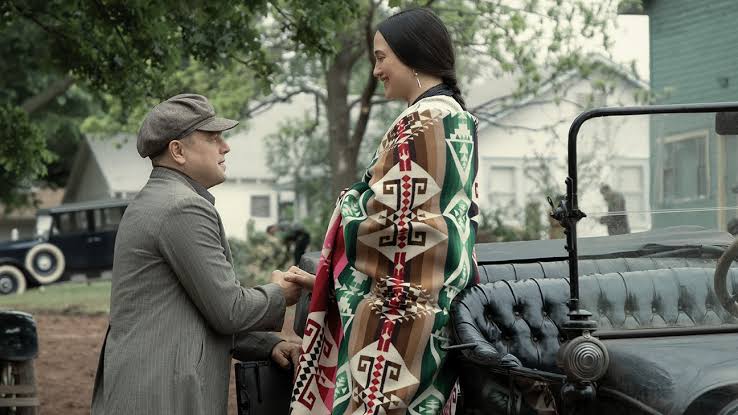
Ernest discovers insulin for Mollie’s diabetes, ostensibly to help her stay healthy, and the film’s cruelest irony is letting us believe, even briefly, that this might be a genuine gesture of care before revealing exactly how twisted that gesture actually is. More and more it becomes clear King is manipulating Ernest to get the Osage money, killing them and clearly poisoning Mollie through her own insulin and Ernest is visibly conflicted and flawed throughout, which is precisely why DiCaprio’s performance works so well: this isn’t a monster, it’s a coward. The film’s runtime does begin to wear on you in this stretch, and it’s the one place we’d push back on Scorsese’s choices, the momentum built by Mollie’s illness and the mounting horror could have hit just as hard with a tighter edit. Hale’s cruelty reaches its coldest point when Mollie, near death, tells him “you’re next,” because it exposes how far his violence has always been willing to go, including toward Ernest, the nephew he used as a tool. By the time Ernest is pressured not to testify and lies to Mollie again, the damage is already irreversible, and her leaving him lands as a deeper betrayal than any single murder because it is the final collapse of trust he helped destroy.
Based on David Grann’s 2017 nonfiction book, the film stays true to a story in which the Osage became extraordinarily wealthy after oil was discovered on their land, and that wealth made them targets for people around them willing to steal it back through corruption and murder. Scorsese’s crucial choice, after working directly with the Osage community, was to center the film on Ernest and especially Mollie Kyle, shifting it away from a pure FBI-investigation framework and toward the human cost of complicity rather than a procedural mystery to solve. De Niro plays a mafia-instructor type figure, refusing to believe he will ever lose control, and it’s a performance built entirely on quiet, rotting menace rather than any obvious villainy. Mollie embodies a natural and spiritual path forward, representing a hopeful future for the true American soul in stark contrast to Ernest, who is incapable of ever admitting his evils and that contrast is the entire thesis of the film distilled into two characters. Scorsese provides scrutiny to his own film even as he makes it, questioning the limits of his own voice on this material as a non-Indigenous artist, a self-awareness that elevates the film rather than undercutting it, and one of the more remarkable choices in his entire career.
Overall this is a fantastic Scorsese epic that meanders a bit around the two-hour mark, but is otherwise expertly crafted from beginning to end, a film whose ambition and patience are almost never matched by American cinema at this scale. Lily Gladstone’s performance as Mollie is the heart of the film and one of the great performances of the century, carrying the emotional weight of the entire runtime with remarkable restraint. DiCaprio’s Ernest is a masterclass in complicity, a performance that makes the evil he enables feel lived-in and human rather than cartoonish, which is exactly what makes it so unsettling. Scorsese’s willingness to interrogate his own position telling this story is one of the most mature choices a filmmaker of his stature has made in decades, and it gives the film a moral seriousness that matches its craft. At 95/100 from TwilightRoom, Killers of the Flower Moon stands as one of the defining American films of the decade and a genuinely essential entry in the Criterion Collection.
TwilightRoom Score: 95.5/100