Werner Herzog dedicates Bucking Fastard to David Lynch from its very first frames, and the entire film feels as though it is attempting
to fit somewhere between Lynch’s sensibility and Wes Anderson’s, ultimately winning me over as an avid fan of both but falling into the crack between the two. The comedy throughout is bluntly written and consistently well timed, anchored by a really cool pair of performances from sisters Kate Mara and Rooney Mara that drives most of the film’s intrigue and keeps you engaged even when the story itself is not going anywhere in particular. The film is composed beautifully, something
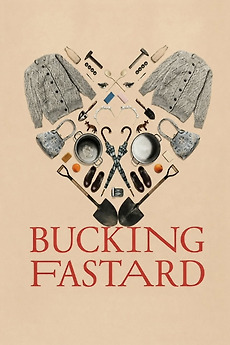
Werner Herzog highlighted himself in his in-person introduction at the film’s screening at AFI FEST, and the composition is wildly the best part of the picture, establishing both an environment and a beautiful mood underneath an otherwise quirky story. It is possibly Lynchian, a bit like Wes, and very good at the things Herzog has always been legendary for as a director, but it never quite finds its way to being a great film, settling for just being a good one. However, Bucking Fastard is a film that appeals directly to my prejudices in film, namely, its symmetrical and quirky nature, and never really has a clear destination. Perhaps watching the film with Werner Herzog in the room enhanced this experience, but I couldn’t help but love the charm of this film.
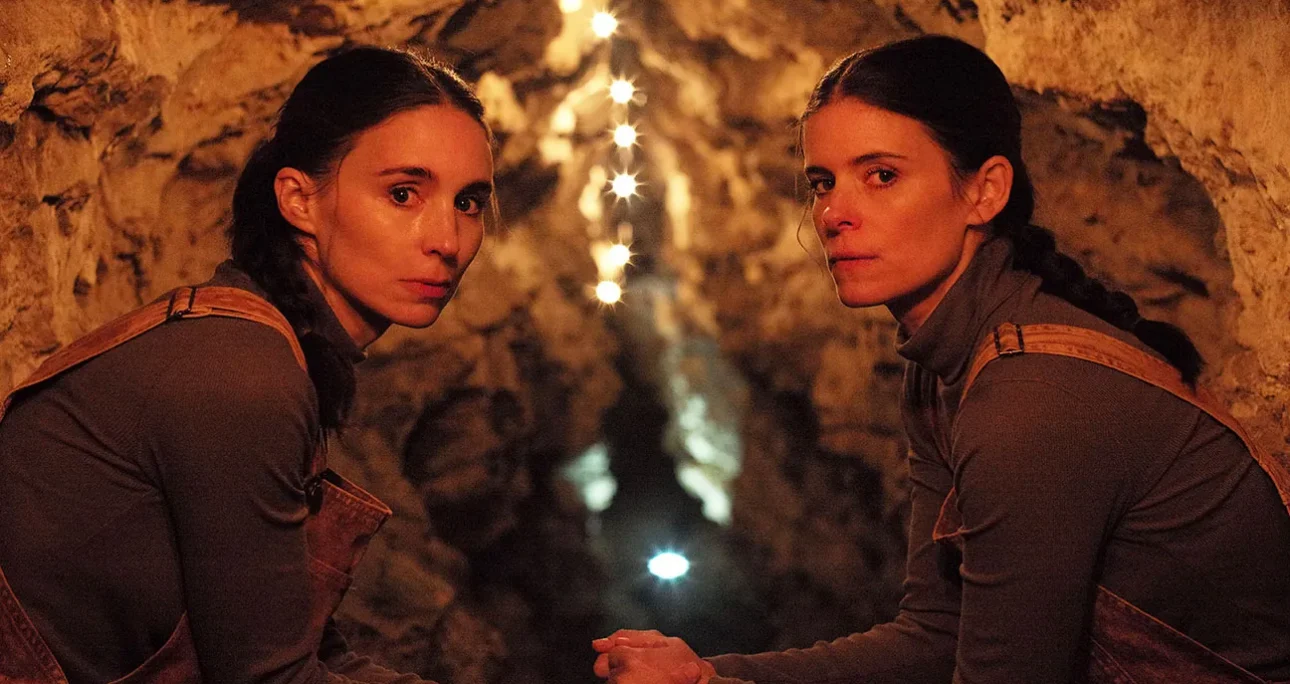
Bucking Fastard follows identical twins, loosely based on the real-life Freda and Greta Chaplin, who speak and move in complete unison, and the decision to play that synchronicity entirely straight rather than as a recurring gag is what gives the premise its genuine strangeness. Their fixation on a neighbor who is about to marry someone else sets the whole plot in motion, and Herzog treats that obsession with a flatness that makes it almost impossible to read as either comic or tragic, which is clearly the point. That fixation eventually leads to a restraining order and a move to Dublin, where the sisters struggle with city life and with the harassment that follows them there, and the film finds a surprising amount of warmth in how completely they rely on each other to survive it. From there, the story drifts out to their aunt’s farm and toward an obsession with a legendary tunnel running all the way to the Orkney Islands, at which point the film’s internal logic gives way entirely to something closer to a fable. Casting Kate and Rooney Mara as the twins is inspired and would be worth the ticket on its own, and the dual performance at the center is the single most compelling reason to stay with this film from beginning to end.
The setting is exactly what Herzog has always excelled at, with the camera framing the two women beautifully against the backdrop of the city, the caves and the countryside in a way almost nobody else working right now bothers to attempt. That environmental framing is where the film earns its very best moments, because Herzog understands landscape as a character better than any living filmmaker and uses it here to supply a weight the script never quite provides on its own. The composition conveys a distinct mindset, a sense of an entire worldview being expressed through where the camera chooses to sit rather than through anything the characters ever say out loud. The film also excels in its depiction of the sisters’ blunt, brutal actions, which land considerably harder precisely because of how calmly and beautifully they are photographed. The gap between how good this film looks and how little it ultimately resolves is the central frustration of the whole picture, because the craft on display here is unquestionably operating at the level of a great film.
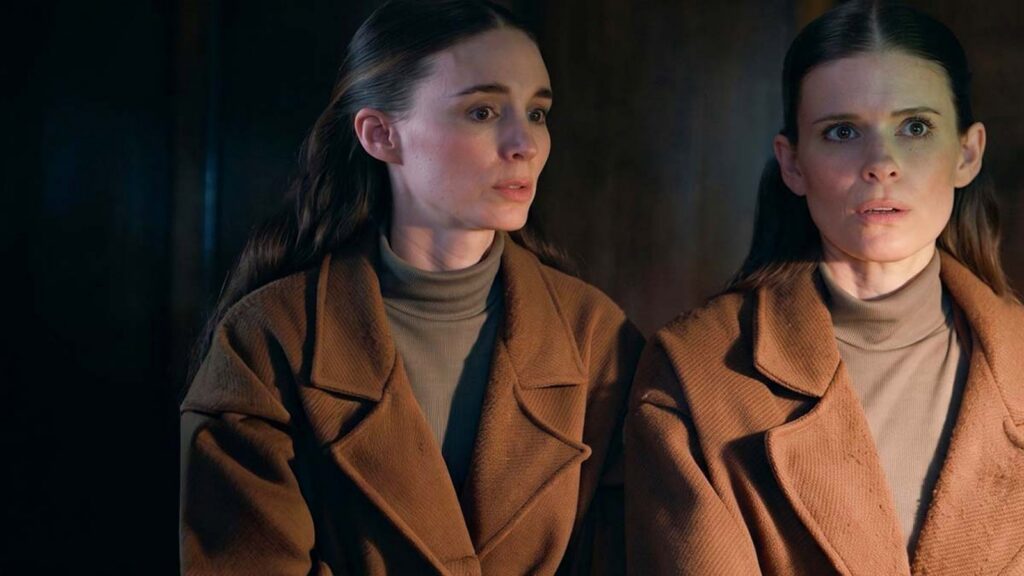
The sequence in which the twins are taught how to work together rather than simply in unison is the strongest single idea in the entire film, and it is something the movie drops when it really should not. That thread genuinely feels like a through line leading toward a final act capable of delivering something clear, and abandoning it leaves the ending circling a destination it never actually reaches. The film seems to have a direction at many individual moments but never ends up anywhere in particular, and while that may well be intentional, it never feels fully realized enough to succeed on its own terms. There is a version of this movie that follows the unison idea all the way through to its conclusion and becomes something considerably more coherent without sacrificing a single ounce of its strangeness. As it stands, the drift is the film’s defining quality, and whether you forgive it comes down almost entirely to how much patience you have for Herzog operating in a deliberately unresolved register, which I happen to have quite a lot of.
Herzog’s in-person introduction set the film up beautifully and genuinely reframed how the composition reads, which is both a testament to how well he speaks about his own work and a sign of just how much this film benefits from that context. Working with fiction this stylized places him somewhere between his own documentary instincts and a mannered formal approach he has never really attempted before, and that collision is exactly where the Lynch and Anderson comparisons come from. Everything he is legendary for is still entirely intact here, from the landscapes to the willingness to sit inside something deeply uncomfortable without flinching or apologizing for it. The problem is that the stylization occasionally pulls against those instincts rather than amplifying them, which is why the film never fully settles into a single coherent identity. Reactions out of Venice were split between sublime and ridiculous, and having now seen it, both readings are entirely defensible, which is more or less the definition of a film that did not quite complete its own thought.
Bucking Fastard is a good film with a great one clearly visible inside it, and the distance between those two comes down almost entirely to structure rather than craft, performance or ambition. The Mara sisters are excellent from start to finish, and their dual performance alone is reason enough to see the film, particularly for anyone who has followed either of their careers over the last decade. Herzog’s composition is the real achievement here, a reminder that even at this stage he frames a landscape better than filmmakers half his age could manage with triple the budget. The dedication to Lynch is sincere, and the influence is visible throughout, but the film needed to commit fully to one register rather than hovering permanently between two it never manages to reconcile. Earning 78/100 from TwilightRoom, Bucking Fastard is a beautifully composed and genuinely strange picture that never quite finds its destination, and one I could not help but love anyway.
TwilightRoom Score: 78.1/100