
Exit 8 arrives as a unique entry into the horror/video game adaptation space, built around a simple but compelling premise of repetition, anomalies, and escape.
The film blends this psychological tension with the video game logic that has made the IP so successful in the gaming community, placing its character the lost man in an underground train station hallway loop that forces observational and survival instincts to come into play.
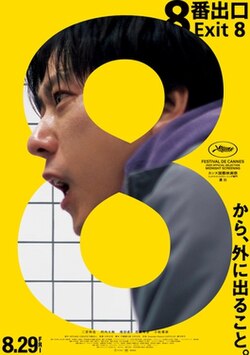
While marketed as horror, the film leans far more into drama and concept than traditional genre scares, with a couple jump scares, the film’s biggest twist is its lack of scary moments in favor of dramatic thought. Exit 8 succeeds more as a psychological, game-logic driven drama than a horror film, delivering a creative and emotionally grounded 95-minute experience that works because of its concept and performances, even if it loses momentum once the concept is fully laid out.
The story follows a man adrift who learns on a train that his ex‑girlfriend is now pregnant and unsure both about what she should do and about his willingness to commit, immediately establishing an emotional, personal conflict rooted in avoidance and responsibility. He becomes trapped in an underground train station hallway loop, where he must identify different anomalies in the hallway in order to progress up to floor 8, and escape. This structure mirrors the video game mechanics to a tee, forcing the charter and audience to engage, learn, and progress through repetition. As the loop continues, the film ties his survival to personal growth and acceptance of having a son, with the presence of a young boy being central to the final act, pushing him to reflect on past life indecisions, fatherhood, and how to value his own existence. Despite being labeled as a horror film, the plot contains very few traditional horror elements, aside from a few themes and a very creepy smiling man that plays a much more innocent and emotional role in the film that one would expect. Then tension is driven more by psychological discomfort and pattern recognition than fear. It’s a decision-making type of hour that is very unorthodox and perhaps is not that scary but is still an interesting watch. The anomaly-spotting mechanic is directly pulled from the logic of the theme and I think that concept pulls away from the horror narrative more, as it doesn’t feel quite real enough, creating a unique identity in the plot that may also misalign expectations for audiences going in expecting a conventional experience.
The core premise is extremely strong and arguably the film’s best asset: it’s especially engaging in the early sequences, and the addition of the Walking Man section and the anomaly reveals throughout are particularly effective, offering creative and unsettling variations within the looped idea. However, once the rules are set up and the twists are laid out the film begins to lose some of its tension, and drag quite a bit, the plot becomes more laid out and predictable, reducing intrigue that made the first half so compelling and straight to the fun.
Exit 8 feels more like a proof of concept for a video game than a fully-realized cinematic narrative at times, which to me may be the biggest component in hindering the rating of the film. The loop structure, anomaly detection, and progression system all translate naturally to gameplay mechanics, as a result the film often feels like something you’d rather play after its screening than rewatch. The logic and concept are great. I am just not sure the film elevated beyond an ad at many moments, aside from some key acting performances. This doesn’t make the film inherently unsuccessful, but it does limit its impact as a film compared to what it might achieve in a more familiar medium.

The acting in the film carries a surprising amount of emotional weight given the film’s minimal setting and structure. Performances feel grounded and believable, helping anchor the positive aspects of the film, for the more abstract concept. The emotional pull comes not from spectacle but from subtle reactions and internal conflict; even with its small cast, the film successfully builds a genuine sense of human connection and stakes. In addition, at 95-minutes the film maintains a relatively tight runtime that does a good job keeping the simple concept engaging throughout. However, the repetitive nature of the loop begins to wear down its effectiveness once the concept is fully explored and fleshed out. The loss of mystery in the second half is where the acting performances really have to step up, working to carry the film to greater heights.
Beneath the surface-level concept, the film ultimately talks about human growth, responsibility, and self reflection, the protagonist’s journey mirrors his internal struggles with becoming a father and confronting his own life choice. This emotional layer adds substance to the film and does a solid job of elevating it beyond a very low-rated adaption genre that has been such a let down in the past few years.
Exit 8 stands out for its originality, blending psychological storytelling with a video game-inspired structure in a way that feels fresh. While it may not fully deliver as a horror film per se, it succeeds much more as a conceptual drama with real emotional grounding. It’s a film that works in the moment and leaves an impression, even if its replay value is limited, ultimately serving as a strong and creative entry in the evolving video game adaptation genre and earning a 72/100 from the TwilightRoom.
Twilight Room Score: 72.1/100