There are very few films that feel this intentionally cold and emotionally distant right from the jump, as this week’s Criterion Tuesday review, Birth, immediately locks you into a tone that is
as controlled as it is unsettling, without needing to rely on anything flashy to grab attention. What stands out the most about this Nicole Kidman-starring odd film, is how confident it is in its restraint, choosing to move at a slow, almost suffocating pace
that forces you to sit with every moment rather than escape it, in all its discomfort. It operates in that odd middle ground of uneasiness where nothing is fully explained and nothing is over exaggerated, creating a kind of quiet tension that builds purely through atmosphere and emotional weight. Jonathan Glazer’s Birth thrives on its insane concept and restraint, using its slow pacing, minimalism, and eerie tonal control to create a deeply unsettling experience that explores grief, loss, and vulnerability without ever giving the audience an easy way out.
The 2004 film directed by Jonathan Glazer, best known for his most recent success in The Zone of Interest, follows Anna a widow in New York who is beginning to move on with her life and preparing to remarry when a ten-year-old boy named Sean approaches her and claims that he is her dead husband reincarnated. At first, this claim is clearly dismissed by everyone around her including Anna, but the boy’s persistence and his knowledge of intimate details about her past relationship begin to wear down her certainty and create desperate doubt. As Anna allows the boy to stay close to her, the situation escalates, with her fiancé becoming increasingly aggressive toward the boy and her family growing more concerned about her behavior around this supposed miracle. The narrative ultimately reveals that the boy’s knowledge comes from letters Anna had written to her deceased husband, shifting the situation from something possibly supernatural and miraculous yet unsettling to something manipulative and deeply uncomfortable and odd.
Nicole Kidman’s performance is built entirely on restraint, showing Anna’s grief as something internal that slowly takes control of her, rather than something openly expressed. The boy playing little Sean as well, is what makes the film so unsettling and oddly real, because of how deeply trained and calm he is, delivering everything with a level of certainty and confidence that never feels like the normal child he is. As the supporting characters act as a grounded presence, constantly pushing back against Anna’s belief and blind delusion, especially her fiancé, they make her situation feel even more stark and alarming as the film progresses. The supporting characters play a key role in surrounding Kidman’s performance, making it as unsettling as it is present.
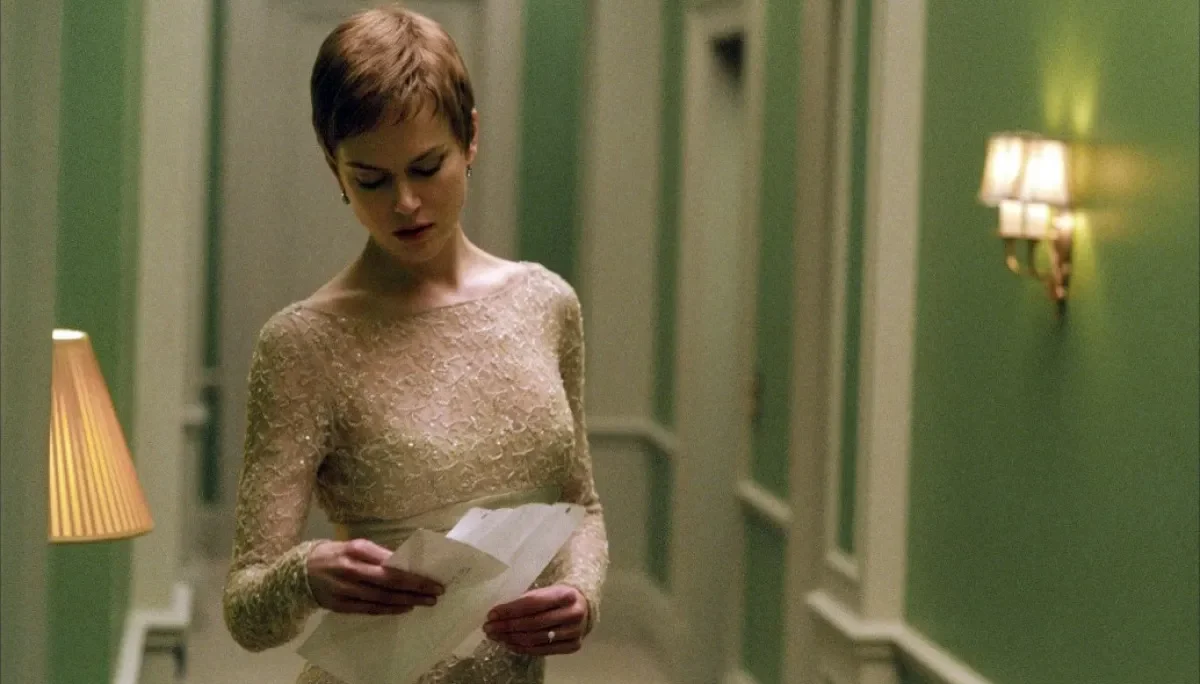
The dialogue as well is final but precise, leaving long pauses that force the audience to focus on what is not being said rather than what is, and how Anna is dealing with this massive dark miracle. Conversations between Anna and the boy are especially tone setting, because they feel calm on the surface, level and at times oddly intimate, varying underlying tension that builds with every expanding exchange. The writing never over-explains anything, allowing the audience to question the situation in the same way the characters are, isolating Anna not just from the rest of the film but from the audience as well. The reveal about the letters works because it doesn’t feel like a twist for added shock but something that quietly redefines and conforms everything being laid, it’s so believable and likely what the audience expected but for Anna is soul-crushing and life-altering.
The structure and pacing of Birth is what truly defines the experience, operating at a slow, almost hypnotic rhythm that never feels rushed or traditionally constructed. The film allows scenes to linger far longer than expected, forcing the audience to sit in the discomfort of each interaction rather than cutting away once things become uneasy. This deliberate pacing mirrors Anna’s own emotional descent, as what begins as curiosity slowly turns into obsession, and eventually something far more unsettling. There is no reliance on major plot twists or dramatic spikes in action, instead the film builds entirely through accumulation, where every small moment adds weight and tension. That approach will not work for everyone, but for those willing to meet it at its pace, it becomes one of the film’s most effective tools, making the entire experience feel suffocating in the best way possible.
Thematically, Birth is almost entirely centered on grief and the ways it can distort perception, pushing someone toward belief in something they would otherwise reject. The idea of reincarnation is not treated as a supernatural concept to be proven, but rather as a reflection of Anna’s inability to let go, representing the emotional vulnerability that comes with loss. The film subtly reinforces this through its imagery and tone, suggesting blurred lines between reality and projection, especially in the way spaces feel isolated and detached. There is also a strong undercurrent of loneliness that runs throughout the film, showing how isolation can make someone more susceptible to manipulation, even when that manipulation feels obvious from the outside. It’s less about whether something is real, and more about why someone needs it to be real.
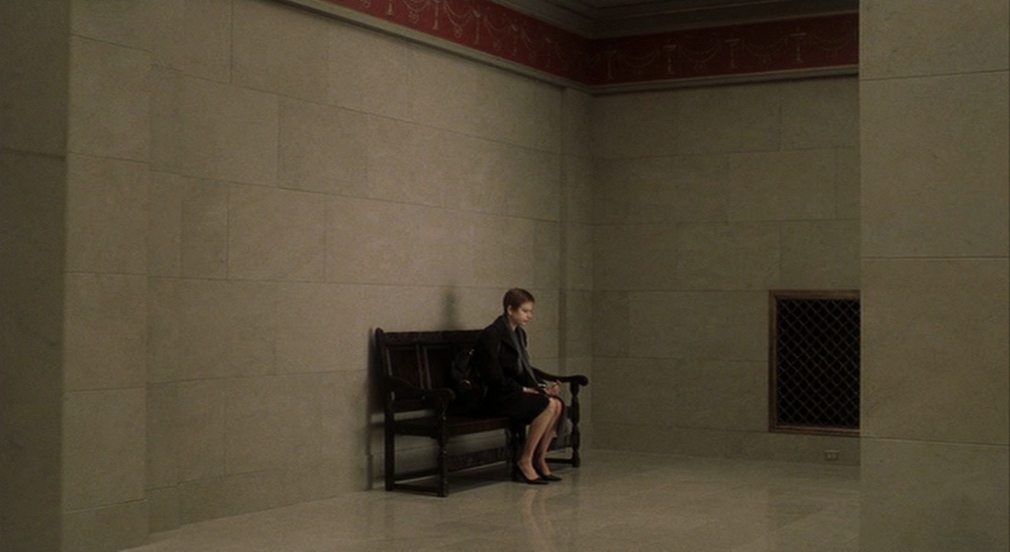
The tone and atmosphere remain incredibly consistent from start to finish, maintaining a cold, distant feeling that never fully lets the audience settle. The muted color palette, combined with the quiet and controlled environments, creates a world that feels emotionally empty, almost lifeless, which perfectly reflects Anna’s internal state. There is a constant sense of unease, not because anything overtly shocking is happening, but because everything feels slightly off at all times. The film never breaks this tone, which is what makes it so effective, because it commits fully to that sense of discomfort without ever trying to relieve it. As the story progresses, that atmosphere becomes increasingly suffocating, trapping both Anna and the audience in the same emotional space.
What ultimately pushes the film into something far more memorable is its willingness to fully lean into discomfort and taboo territory, particularly in the relationship between Anna and the young boy. The film never tries to justify or soften the nature of that connection, instead presenting it in a way that forces the audience to confront how unsettling it really is. There is a clear intentionality in how far the film is willing to go, understanding that the discomfort is not a flaw, but the entire point of the experience. It challenges emotional boundaries, asking how far someone is willing to go when they are desperate to believe in something, and that question lingers throughout. It’s that commitment to staying in that uncomfortable space that separates Birth from other films dealing with similar themes, making it feel far more daring and lasting.
The reveal about the letters shifts the film from something ambiguous into something more grounded and disturbing at the same time; it’s a fascinating angle from Glazer, who has never shied away from this exact feeling. Instead of validating Anna’s belief, it exposes how vulnerable she has been and will be in her life after loss. The final sequence acts as this harrowing breaking point where everything she has been holding onto collapses emotionally, not resolving things cleanly but leaving a lingering sense of discomfort the film clearly tries to achieve.
Birth is a film that relies entirely on tone, performance, and emotional tension rather than traditional storytelling, a Glazer staple. Its slow pacing and minimalism make it a challenging watch, but also what makes it stand out and likely why it sits in the Criterion Collection. The film succeeds in portraying grief as something that can lead to irrational and uncomfortable places, ultimately making it a film that certainly stays with you because of how unsettling and controlled the entire experience feels, earning it an uncomfortable 77/100 from the TwilightRoom, and that makes me look at that AMC ad with a different outlook from now on.
TwilightRoom Score: 77.3/100