Finnegan’s Foursome is Paramount’s Tribeca Film Festival entry, premiering later this month as a seemingly simple golf-centered family dramedy built
around one memorial trip taken by two fathers and their children after the death of their father and grandfather. The story follows four members of the Finnegan family as they travel to spread their late patriarch’s ashes, competing through multiple rounds of golf on courses tied to their shared past. What begins as a fairly
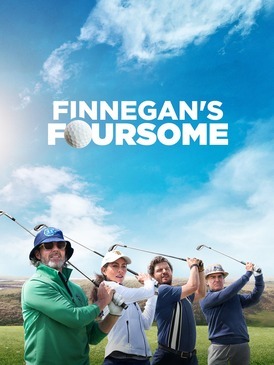
straightforward sports comedy slowly shifts toward emotional family bonding, unresolved rivalry between the fathers, and the daughter learning more about their family history throughout the trip. The film keeps an extremely grounded and straightforward structure with no real stakes throughout almost the entire runtime, focusing heavily on golf competition, sports conversations, and family interactions rather than larger dramatic storytelling swings. Finnegan’s Foursome occasionally lands some charm in its emotional themes and laid‑back golf setting, but weaker comedy, clunky late‑film dialogue, and an overly safe screenplay keep it from truly standing out.
Much of the movie revolves around the foursome traveling between golf courses while competing against one another in a series of friendly, but increasingly competitive rounds. The actual golf structure remains very straightforward throughout the film, heavily emphasizing the mechanics of the sport, the individual shots, and competition at the courses themselves. The road trip aspect gives the film some very light momentum that does lack a bit of emotion as the group slowly begins bonding more naturally while reflecting on the life of their late father and grandfather. The rivalry between the two fathers slowly becomes one of the more entertaining parts of the story once it begins taking over larger portions of the second and third acts. Even though the golf competition itself is watchable and entertaining enough, the film struggles to generate real tension, since the matches rarely feel exciting or unpredictable and tend to play out the same way every time.
One of the film’s biggest weaknesses is its muted comedy, which often feels basic and oddly unnatural, especially in the group’s back‑and‑forth dialogue. Many of the emotional heart‑to‑hearts and sports‑focused exchanges sound forced, which in turn makes several performances feel weaker than they probably would with a stronger script. The movie consistently feels like it is waiting for some larger narrative spark or emotional kickstart that unfortunately never fully arrives during most of the first half. Comedy moments rarely land with enough energy or creativity to elevate the material, especially for a film that is marketed partially as a comedy drama. The screenplay remains so safe and straightforward that many scenes simply blend together without enough dramatic conflict, emotional intensity, or memorable comedic payoff.

The film’s strongest element is its emotional core, as it leans into grief, fatherhood, and family bonding, tracing how Marie, Freddy, Teddy, and Frankie gradually come to understand one another, and their grandfather, more deeply over the course of the trip. While the emotional material has the best potential, the film rarely pushes enough emotionally to fully capitalize on the family drama at the center of the story. Several scenes involving the family reflecting on their father and grandfather feel like they needed stronger performances, sharper dialogue, or more emotional vulnerability to truly resonate. The film often feels caught between wanting to remain a relaxing sports film and wanting to become a deeper emotional family drama without ever fully committing to either direction. Even with those issues, there is still a light charm to the group dynamic once the foursome finally begins to bond more naturally during the later golf rounds and the final stretch of the trip.
The final golf round becomes easily the strongest portion of the film once the competition finally tightens between the group and the family dynamics begins feeling more emotionally connected. The foursome finally starts bonding properly during the closing stretch as the golf competition becomes closer in score and the rivalry between the fathers settles into a more emotional resolution. Unfortunately, the decision involving the eventual winners of the tournament feels somewhat strange narratively and lacks enough buildup or stakes to ever steady the audience. The film likely would have benefited from more of a variety and unpredictability within the golf competition itself, which could have made this fun, bantering family rivalry more engaging overall. The final scenes, in which the family buys and establishes a golf course in memory of their late father and grandfather, bring the film to a gently heartfelt close despite its broader shortcomings.
Ultimately, Finnegan’s Foursome works as a very simple, straightforward sports family drama that occasionally finds charm through its emotional themes and relaxing golf-centered atmosphere. The film works best when it leans into the sweet family bonding and easygoing competitive banter, rather than its weaker comedic beats or forced emotional speeches, elements that might have landed better with more nuanced writing. While the golf sequences themselves are fun at times, the film never fully elevates the competition or sports filmmaking to a particularly revolutionary or memorable level for viewers. Much stronger emotional writing, sharper comedy, and more dynamic character conflict could have transformed the film into a much more impactful family sports drama. Even with its flaws, Finnegan’s Foursome is a light, easy watch that will likely appeal most to golf fans or anyone in the mood for a calm, straightforward family sports story, earning a 60/100 from the TwilightRoom.
TwilightRoom Score: 60.1/100