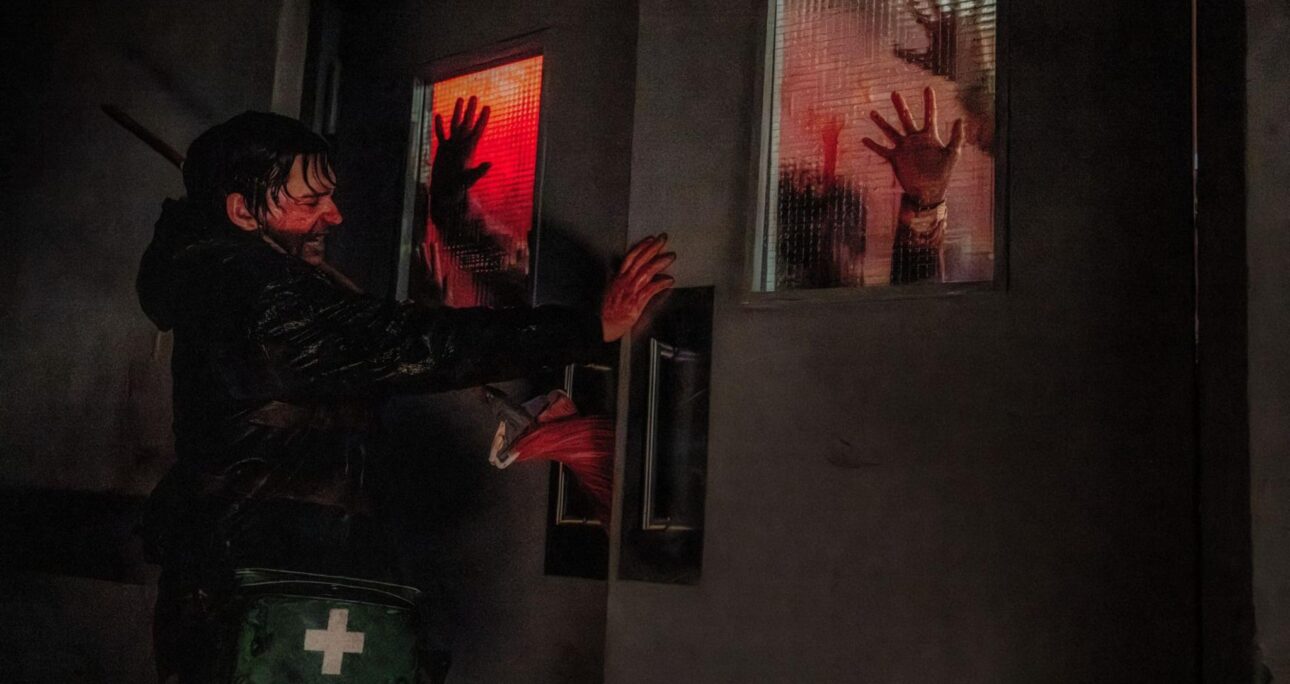
Zach Cregger’s new film Resident Evil stands as his best horror project yet, managing to blend his signature comedy, organic jump scares, and a wild, consistent ride better than
he ever has before, which genuinely speaks volumes given that his first two films are both amazing horror flicks in their own right. The new video game adaptation film refuses to adapt a normal Resident Evil storyline and instead focuses entirely on emulating what it actually feels like to play the beloved games, making Cregger’s angle on adaptation one of the most distinctive and brilliant takes on the horror
video game niche ever produced. Austin Abrams is finally awarded a main role in this film and is fantastic all the way through, as it’s clear he has a genuinely great working relationship with Cregger after Weapons, delivering one of the hardest solo horror performances of the past few years, as he is even more outstanding this time as the driving force and solo lead. The 90-minute runtime is exactly right for the film, giving everything a quick, fun, horrifying-in-the-best-way vibe that never once overstays its welcome and runs consistently forward from the opening frames to the final shot. Resident Evil may not change the narrative on Cregger’s anticipation being better than his endings, but it is the director at his most complex, taking his established horror roots and folding them into a major IP adaptation with a really well-executed blend of style, personality, and genuine homage.
Bryan spends his nights delivering packages from hospital to hospital before being given one more high-priority delivery that leads him out of town through the snowy forest toward a nearby city, a setup that establishes the film’s isolation and snowy setting immediately. After hitting an odd woman with his car on the road, Bryan enters a slew of increasingly creepy situations that slowly reveal some sort of adaptable creature taking over human bodies, escalating with real patience rather than tipping its hand too early. This discovery places him in a genuine do-or-die situation surrounding the delivery itself, which is way more important than it first implies, a premise simple enough to never get in the way of the horror but structured enough to keep the film constantly moving linearly forward. Running underneath it all, literally and figuratively, is Bryan, who must make a mad dash to a nearby lab building while contemplating the news that his girlfriend is pregnant, giving the character an emotional weight the film returns to at exactly the right moments but doesn’t dwell on too much. Building the entire film around this single courier on a single night is a dangerous decision, but it’s also what allows Cregger to maintain such relentless momentum, never cutting away to a wider plot that would slow the pressure down.
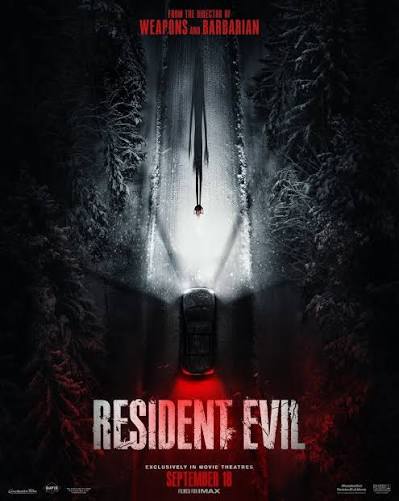
Cregger has always been a director with strong instincts for tension, but Resident Evil is the first time his visual language feels as sharp as his comedic timing, and the decision to set the entire thing during a heavy snowfall is the single smartest choice he makes. The snow does an enormous amount of work here, softening the edges of every frame until the forest becomes a genuine void, and it turns even the simplest shot of a road into something that feels like it’s closing in. The imagery delivers at every turn, but the red glow of Bryan’s car lights bleeding into that white backdrop is the image that sticks, a simple contrast that Cregger keeps returning to until it starts carrying real dread on its own. Later, when the spotlights cut through the falling snow with Bryan caught somewhere underneath them, the effect lands with a force that most modern horror films can’t manufacture even with far more elaborate setups. It’s Cregger at his most complex, taking his horror roots and his comedic sensibility and folding both into a style that feels considered rather than borrowed.
The real stroke of genius is that Cregger has no interest in adapting a Resident Evil story, and instead builds a film around what it actually feels like to sit down and play one. Every beat is structured like a run through a game you’ve played before, the scarcity, the doubling back, the sense that every room you enter has already decided what it’s going to do to you, and it works because Cregger trusts the audience to recognize the rhythm without ever naming it. That angle makes this one of the most unique and genuinely brilliant takes on the horror video game adaptation, a niche that has spent two decades trying to translate plot when the thing worth translating was always the feeling. The adaptable creature that moves between human bodies is the clearest bit of homage, but even there Cregger uses it structurally rather than as fan service, letting it function as the reason Bryan can never stop moving. It’s a blend of style, personality, and homage that feels executed rather than assembled, and it should be the template every studio looks at the next time they option a game.
The film’s one real problem is character logic, and it arrives almost exactly when the story needs its characters to be at their sharpest. Decisions in the final stretch come off much dumber than anything the previous hour had prepared you for, and after a film built so carefully on momentum and competence, watching people behave like they’ve wandered in from a lesser movie pulls you out of it in a way that’s hard to shake off immediately. It’s frustrating precisely because the rest of the film earns so much goodwill, and the lapse feels less like a deliberate choice than a script hitting the point where it needed bodies in specific rooms. Cregger does recover, and his biggest plot decision of the film is bold enough that it largely wins back the ground he’d lost, but the seam is visible. It may not fully change the narrative around Cregger’s endings never quite matching his setups, though this is the closest he’s come to closing that gap.
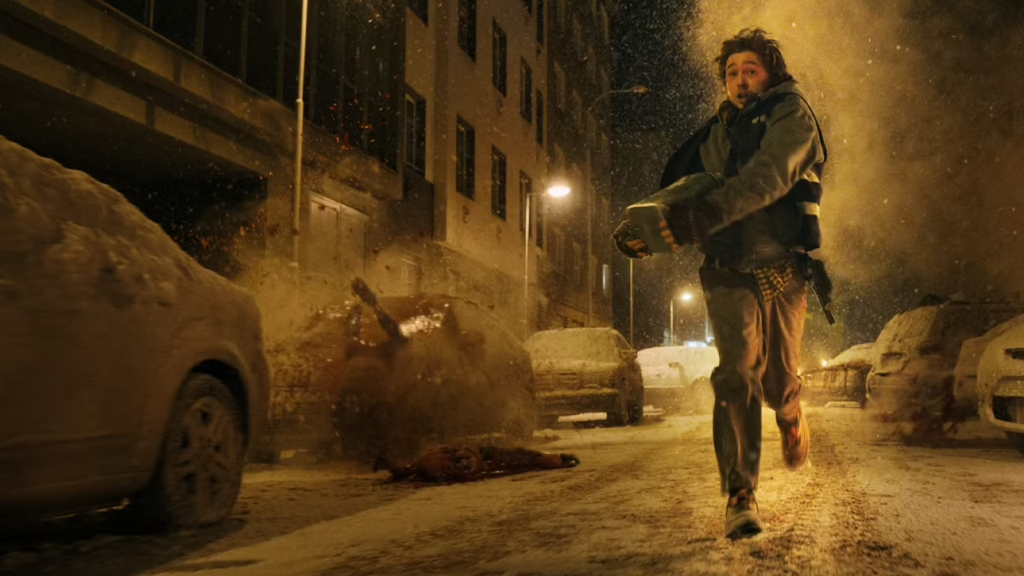
Resident Evil is, even with its flaws, Zach Cregger’s best film to date, blending comedy, organic scares, and relentless momentum more confidently than either Barbarian or Weapons managed. Austin Abrams carries the entire film as its only real lead, delivering outstanding work that confirms his partnership with Cregger as one of the more exciting in modern horror. The snowy setting, the red headlights, and the streetlight running sequences give this film a visual identity most video game adaptations never even attempt. The shaky character logic in the film’s final act is the one clear flaw, briefly pulling the audience out before Cregger’s biggest plot swing reels you back in. The film is a genuinely well-executed blend of style, personality, and homage, as it represents the clearest proof yet that the right director can make a video game adaptation feel like real filmmaking, earning an 85/100 from TwilightRoom.
TwilightRoom Score: 85.9/100