While The Weight may have been a bit overshadowed by some other films released around the same time, the film is a genuinely satisfying prison thriller that understands its
own strengths completely, leaning into atmosphere, performance, and conversation rather than chasing reinvention it never needed in the first place. Ethan Hawke stars in one of his most controlled recent works as Samuel Murphy, playing a man so muted by the loss and separation from his family that his stillness becomes the emotional center of everything around him, it’s a performance built almost entirely out of restraint. Alongside him, Russell Crowe’s Warden
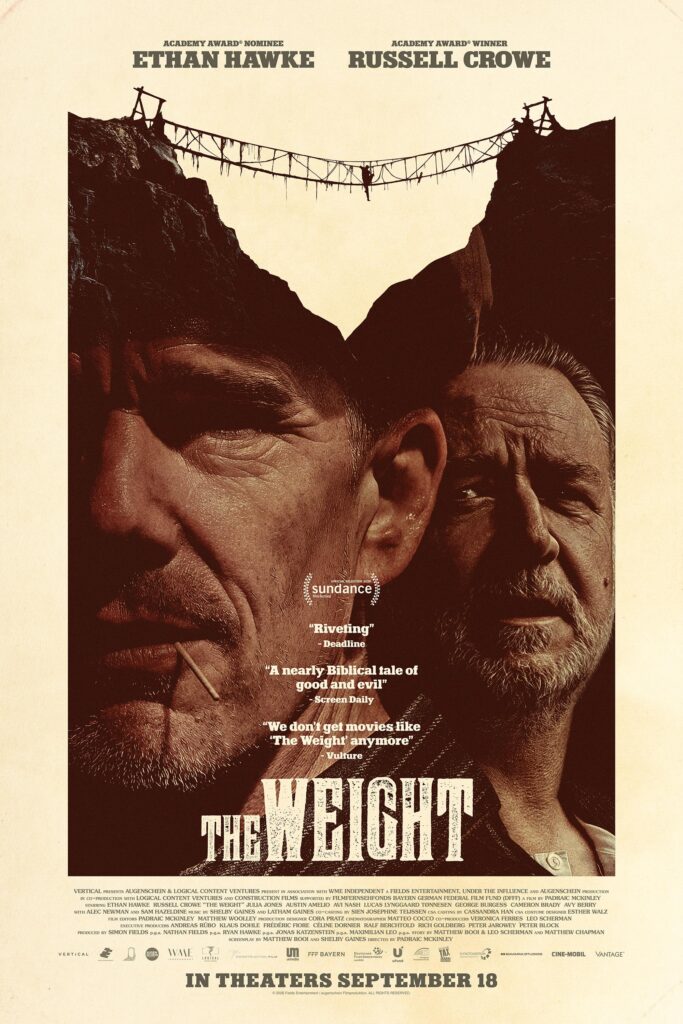
Clancy is exactly the kind of role Crowe has spent a career perfecting, a man whose friendliness is never quite separable from his leverage, and the film is at its sharpest when it refuses to tell you which one he’s running, and what Murphy and his ragtag accumulated family will do about it. The most rewarding choice here is how much the film leans on conversation over thriller mechanics, building its tension out of what these men and women say to each other on a grueling journey rather than out of the danger waiting during and at the end of it. The Weight has a structure that may be familiar, but it is effortlessly confident, handsomely made, and consistently entertaining in a way that makes the familiar feel like a foundation rather than a limitation.
We get glimpses of Murphy before he lands in jail, brief enough that they function less as backstory than as a reminder of what has already been stripped from him, and the film trusts you to sit with that absence long before it bothers explaining it. The premise properly begins when Warden Clancy pitches a group of prisoners on a job that buys their freedom outright, smuggling gold out of a mine dangerous enough that the offer reads as an admission he doesn’t expect most of them back. That gives the film a pressure it never releases, freedom dangling on one end and a mine that has already done the math on the other, and it’s to the script’s credit that the promise of release never softens the threat. What makes the setup sing is Clancy slowly working his way closer to Murphy, and Murphy, closed off from nearly everyone around him, being willing to help and willing to be friendly with the man holding his sentence in his hands. It’s a framework you’ve seen a dozen times, but The Weight treats it as a character engine rather than a plot one, and that reframing is what gives everything after it room to breathe.
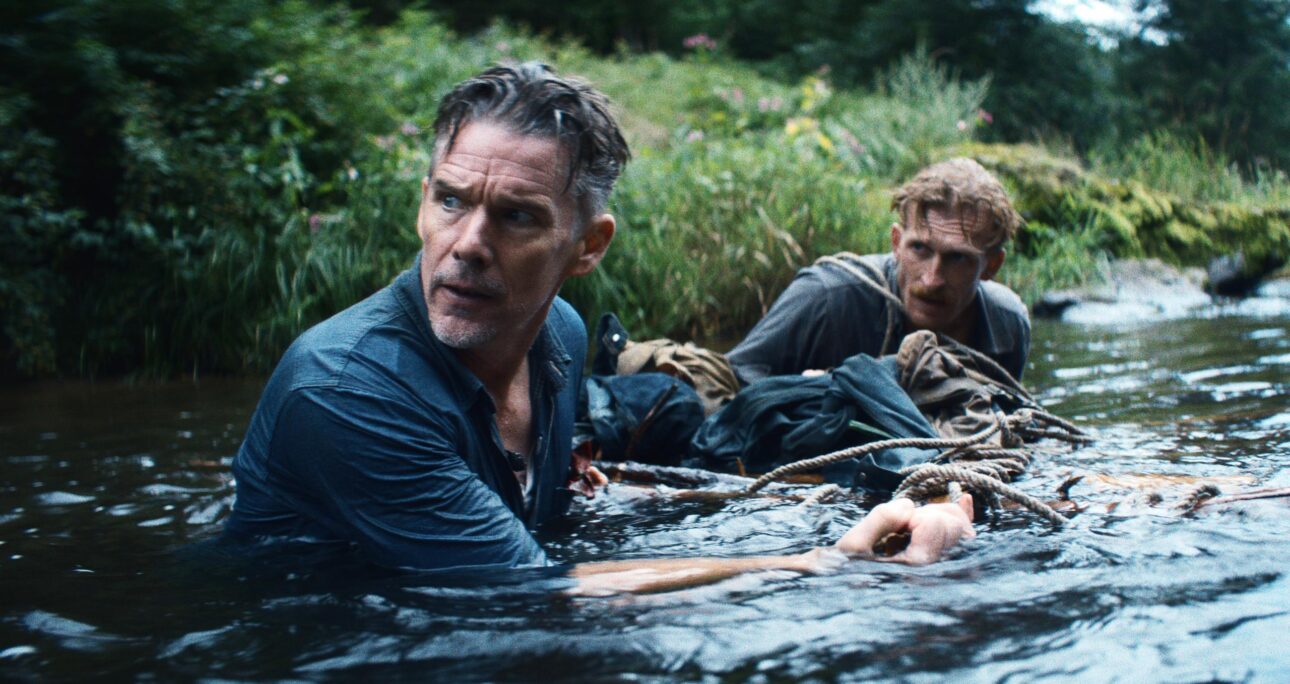
The technical work here is the clearest evidence that The Weight is operating above its logline, and the cinematography in particular is consistently excellent, finding shots through the forest that are harrowing and gorgeous in the same frame. The score follows suit and never overplays its hand, sitting underneath those sequences to reinforce what the images are already saying rather than announcing the tension on their behalf, which is a restraint a lot of films in this register don’t bother with. The real standouts are a handful of blended horizon-to-photo transitions, editing flourishes that arrive without warning and add something genuinely unique to a film that would otherwise be cool but conventional in how it looks. Those cuts do a remarkable amount of heavy lifting, hinting at a more formally adventurous movie living somewhere inside this one, and they’re the moments that stick weeks later when the plot beats have started to blur. Taken together, the craft is the strongest argument for the film, confident enough to elevate material that reads on paper as entirely familiar into something that feels considered and genuinely alive.
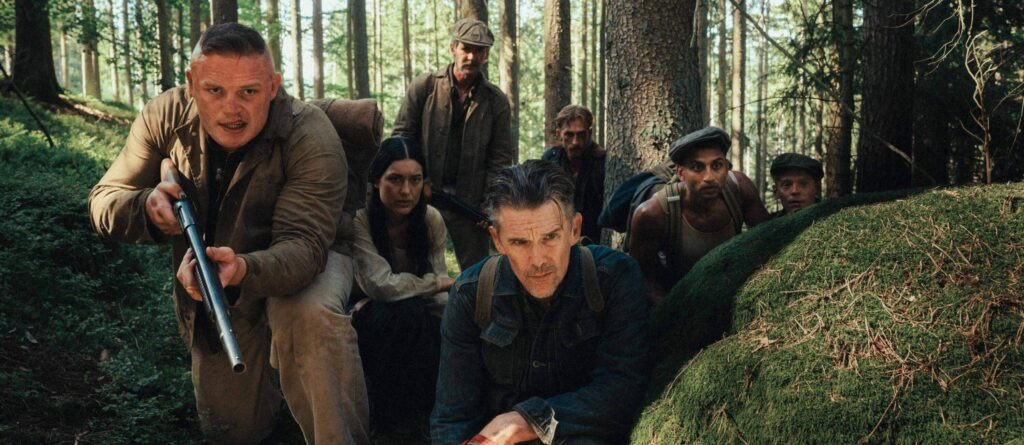
Building the film around conversation instead of escalating thriller beats is the boldest swing here and easily the best one, letting these people talk their way through the mission while the film builds far more toward those scenes than toward any set piece. The conversations turn existential as the walk gets longer and the terrain gets worse, and they land because the script has already established that everyone here has nothing left to protect and no reason to perform for anyone else. Murphy anchors all of it, mostly listening and mostly absorbing, and Hawke plays that passivity as something much closer to grief than stoicism, which gives the group a real center to orbit. What emerges is an honest connection between people who started as strangers assigned to the same death sentence, and the film sells it completely without ever stopping to point out that it’s happening. That connection is what makes the final stretch work, because when they confront Clancy they do it together, and all that patience with dialogue turns out to have been the entire point.
The film builds slowly through the existential conversation and the grind of the mission into a final act of defiance and a car chase as Murphy runs toward his freedom, and the escalation feels earned rather than obligatory. The chase is more conventional than anything preceding it, but it’s staged with enough energy and clarity that it works as the release valve the previous stretch had been quietly tightening. Ending back on Clancy’s doorstep with a beer waiting for him is the single best image in the film, a beat that quietly reframes everything about how these two men have been circling one another for the entire runtime. The group getting their papers signed together, having gone in as strangers and come out as something closer to a family, is a resolution the film actually built toward rather than simply handed over. Murphy moving on to find his daughter gives him the happy ending he’d been so desperate for, and the film is sincere enough about that desperation that the tidiness reads as generosity instead of a cop-out.
The Weight, overall, is a well-made, well-acted prison thriller that is far more interested in the crew of the mission’s growth than the actual thrilling mission itself, and that instinct is exactly what makes it work. Ethan Hawke gives the film its emotional spine as Murphy, and Russell Crowe’s Clancy provides a fantastic and complex opposition, applying the ambiguous pressure that keeps every promise of freedom feeling conditional right until the final scene. The cinematography, the score, and especially those horizon-blend transitions give the film a craft ceiling well above what its logline would suggest, and the structure, while familiar with an ending that feels softer, is handled with enough conviction to never feel like the film took any shortcuts. The Weight is entertaining, genuinely handsome, and proof that a well-worn premise in confident hands still has plenty left in it, earning an 80/100 from TwilightRoom.
TwilightRoom Score: 80.1/100