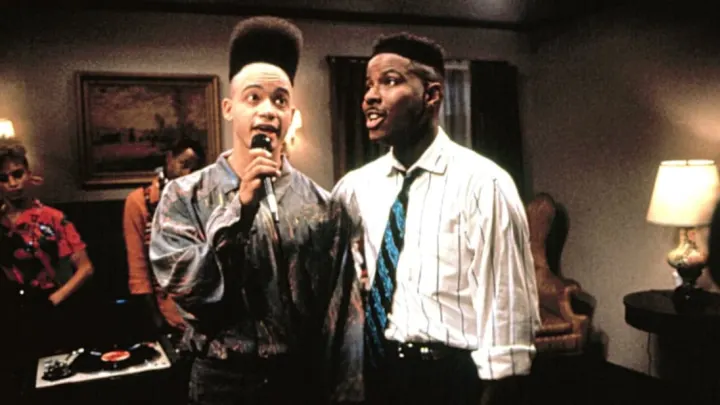
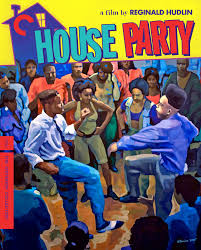
House Party is this week’s Criterion Tuesday review and its director Reginald Hudlin presents it as a coming-of-age comedy rooted in the late 80s, early 90s Black youth culture, blending humor, music, and everyday life.
The film operates in a style that was shocking for its genre, as it represents both entertainment and a cultural snapshot, capturing a specific community and moment through its setting, characters, and soundtrack. While the film in totality is uneven in its
execution. It stands out for its originality and influence within the comedy and hip-hop film space, truly doing something that had never been done before, and inspiring so much to come, after it. House Party is an energetic and culturally significant hip-hop comedy that succeeds in capturing a specific community and era through its style, music, and characters, even if its humor is toned-down and the structure is slightly inconsistent throughout.
The film follows the conveniently named Kid, a high school student navigating everyday life after getting into trouble and trying to avoid consequences at school and at home. After a fight at school and pressure from his father, the story shifts toward a central event: a party hosted by his equally cool named friend Play. The setup is straightforward and effective, grounding the film in relatable stakes while building anticipation for the party itself and the aftermath. The simplicity of the story allows the film to focus more on character interactions, culture, and atmosphere rather than a complex plot. As the narrative unfolds in a largely episodic structure, the audience moves between school, home, party, and jail without a tightly constructed arc built around them. Rather than building toward a singular dramatic climax, the film prioritizes moments and interactions over traditional storytelling progression highlighting what the director was really trying to achieve here and the significance that earned the film a spot in the collection. Unfortunately, this loose structure can get to feel cofused at times, particularly when certain plot threads don’t fully develop all the way through or conclude. However, it is clear the the structure and narrative reflect the film’s emphasis on experience and environment for a type of vibe that hadn’t been brought to screen often enough in this genre.
The film’s direction captures a grounded sense of community, using real environments with obviously ironic characters to create an authentic but comedic feel. At the same time, the same components incorporate stylized moments, particularly through the music and dance sequences, that elevate the energy of the film and play a large role in defining what the film has come to be known for. The balance between a realism feel and performance-driven fun spectacles gives the film a unique tone, whose stylistic approach defines the film’s identity within both comedy and hip-hop cinema.
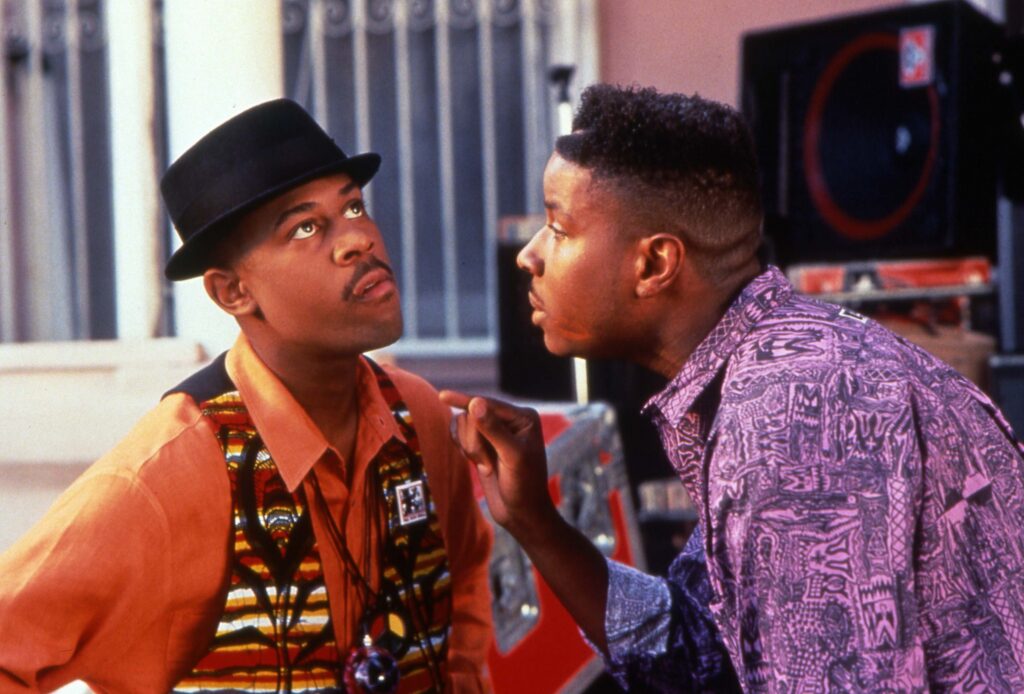
Kid and Play bring a natural chemistry that anchors the film, making their friendship feel genuine, hilarious, and perhaps the most engaging portion of the plot. The film’s supporting characters, including the two girls they run around with in Sydney and Sharane, do a solid job of adding personality and humor to the mix, even if they don’t really feel deeply developed and are clearly used for the advancement of our two main boys. The performances feel very loose and authentic, and in this case exactly what they need to be contributing to the film’s lived-in quality. While not heavily layered, the characters are memorable due to their presence and wacky energy that exude from the film. In addition the film’s comedy plays a huge role in that same energy, but does vary in effectiveness with many moments landing while others feel underwritten, aged or lacking any comedic impact. Much of the humor comes from situational setups and interactions with our two clumsy, stumble-through-life main characters, rather than sharp well-thought-through witty dialogue. At times, the lack of quick-witted wiring creates gaps where comedic momentum and thus narrative momentum slows. Despite the noted inconsistency the tone remains light, fun and accessible, an easy watch that maintains an overall appeal to the film.
The film’s structure is less about building toward a singular narrative goal and more about capturing a series of moments that define the experience of the night. The pacing moves steadily, but without the traditional buildup and payoff found in more structured stories. This can make the film feel uneven at times, particularly when scenes don’t clearly lead into one another. However, this approach also reinforces the film’s focus on atmosphere and experience, allowing it to maintain its energy without being confined to a rigid structure.
House Party stands as an important film within its genre, particularly for how it blends music, comedy, and youth culture into a cohesive experience, and is the reason for its inclusion in the Criterion Collection. Its influence can be seen in later films that attempt to capture a similar tone and energy but expand on the comedic aspects, even if few fully replicate its balance of authenticity and entertainment. While it isn’t perfect in its execution, its originality and cultural presence give it a lasting impact that goes beyond its flaws.
House Party succeeds as an entertaining and memorable film that captures a specific moment through its characters, music, and atmosphere. Its energy and authenticity carry it through its weaker moments, making it consistently engaging even when the structure and humor are uneven. While it may not reach a higher level in terms of narrative or technical precision, it remains effective because it understands exactly what it is trying to be. In the end, it stands as a foundational comedy that prioritizes vibe, chemistry, and experience over perfection, earning it a 76/100 from the TwilightRoom.
TwilightRoom Score: 76.2/100