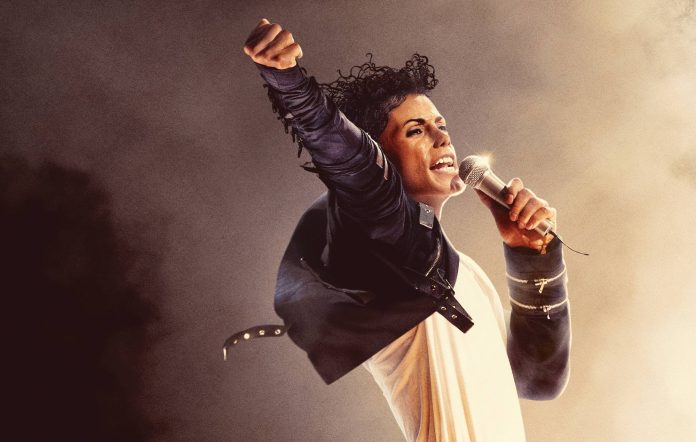
With all the trailers, the information about how the story was going to be told, and the rumor that this is only a part one, going into Michael, the Michael Jackson biopic, I was shaped by lower expectations than a film about the biggest star in history
should have been shaped. It was until I was sitting in the theater realizing the catalog of music I was about to watch and seeing a young fan not even born during the star’s life that I was reminded of the cultural weight the film carries and the standard this film
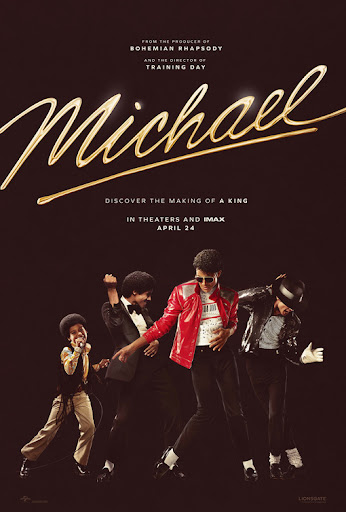
needs to meet, this film is going to make so much money. However, the decision to split this story into two parts, with an Avenger’s-style type “Michael will return” was a giant misstep and comical to say the least, creating a sense that this film is just incomplete, trying to drag on, or just trying to make the most amount of money possible, the aspect was disheartening. Michael, is a film carried almost entirely by an inspired and studied Jaafar Jackson performance and the strength of its music performance set pieces. However, it is heavily weighed down by lazy writing, weak narrative structure, and an inability to fully capture the true complexity of its huge subject, leaving it feeling like a blast at some moments, but incomplete and phoned-in at many others, and ultimately underwhelming.
The film’s story structure feels disjointed, to put it plainly, and underdeveloped with major moments like family disputes coming across as a surface-level telling of Michael’s relationship with his brothers and father, and really needed to be much more emotionally grounded to have an impact. Dialogue throughout the film often feels like it was lazily thrown together to get this film out, it’s uninspired, especially in scenes that should carry significant weight in shaping MJ’s character and relationships, trying to surround a performance and not a fully realized film. The writing leans heavily on a simplified, overly positive portrayal, sidestepping complexity and a fuller account of Michael’s story instead of confronting the more difficult realities of his story. As a result, the narrative lacks cohesion, and is the clear worst part of the film, feeling more like a collection of moments that have an occasional great scene, rather than the fully realized epic story that a character of this stature deserves from its filmmaker. Further, because of the almost blindly positive tone of Michael there is a clear disconnect where it never really feels honest, opting for a much safer route. If it isn’t about Michael separating from his dad, it rarely appears on screen unless it’s framed as a good memory. Emotional beats in a film like this should land at least as powerfully as the performances and dancing, because that’s part of who Michael Jackson was. Instead, they fall flat due to the lack of depth and the film’s reluctance to explore real conflict, offering a thinner version of the man than he actually was. The film’s writing and tone simply feel incomplete, avoiding the complexity needed to make its story as monumental as it had the opportunity to be.
Fortunately, on the opposite side of the spectrum, there are clear and shocking surprises and positives about the film, with Jaafar Jackson’s debut performance being spectacular. He delivers a role that captures his Uncle’s physicality, voice and mannerisms in an incredibly convincing and honorable way that truly does justice to the artists. His dancing and movement in accordance with film and videos on Michael are absolutely stellar, often elevating scenes that lack narrative and emotional strength. While there is clearly room for growth, his presence alone brings an authenticity and emotion to the role that the film otherwise wouldn’t have; he’s ultimately what makes it worth watching. It’s a highlight of how strong this film could have been with more focused storytelling and a tighter writing structure, an amazing performance trapped inside a mediocre movie.
Surrounding Jaafar, the experienced actors in the supporting cast deliver solid performances, but they’re given far less to work with, often relegated to quieter, more problematically structured scenes. Most scenes fail to develop these characters beyond their basic roles in Michael’s story, or in Colman Domingo’s case just feel like they are missing that extra level of impact desperately needed. The cast, although huge and experienced, with solid performances from actors like Miles Teller who are sparing but solid, are just underutilized, despite their potential to elevate the narrative surrounded by the weaker scenes Jaafar delivers, when his feet are still and his voice is dimmed.
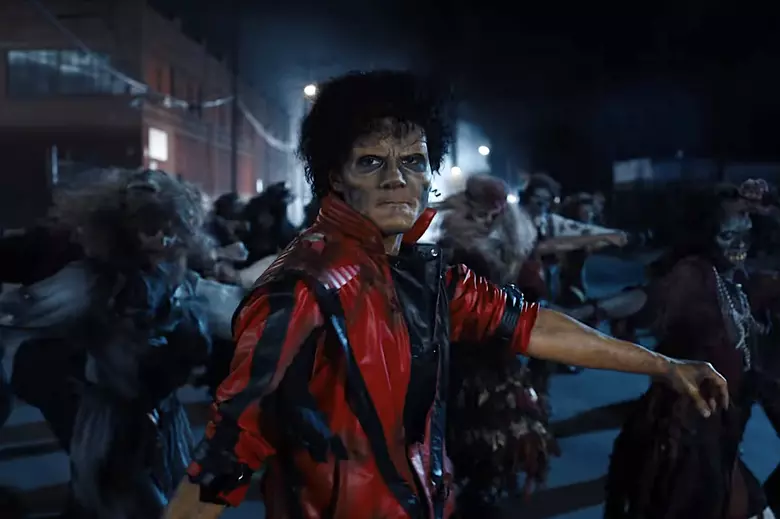
The concert sequences are, once again, the film’s most effective and entertaining moments, showcasing the power of Michael’s music at its peak. Having access to the greatest music catalogue of all time, left them with little to no room to fail a giant concert scene with Jaafar, making these performances, especially “BAD”, end up feeling more emotionally resonant and engaging than the rest of the movie combined. These sequences really provide a glimpse again into what the film could have been, spectacular performances and portrayal, that simply wasn’t matched by the energy and execution throughout. It’s a stark contrast that shows the strength that gives the film a higher rating here, than most of the outlets tearing it down, but also exposes the weakness surrounding the narrative that shows why the film certainly doesn’t reach the high praise of other outlets, landing it squarely in the middle.
The decision to split the film into two parts is one of its biggest flaws and is especially tough to swallow for me, because this installment feels incomplete rather than intentionally structured. The pacing suffers badly as a result, leaving the film unable to build toward a satisfying narrative arc; the so‑called climax is simply where the movie stops, leaving me feeling like I needed more and somehow still got too much. The filmmakers would have been better off making a three-hour film, cutting the repetitive, dragging scenes that never engage with the darker parts of Michael’s life, and committing to an entertaining sweep of his biggest career moments; it still might not have been deep, but it would at least be more entertaining and more complete than this. It just feels like a cash grab the way it was structured and Jafaar Jackson, this music, and the biggest pop star in the world don’t deserve this type of lazy money-making style of film production.
Ultimately, this review has been rather negative but Michael is surrounded by highlights, particularly in performance and music but ultimately fails to come together as a cohesive film. Jaafar Jackson’s portrayal proves that there is real potential in the project and possibly even an Oscar nomination in his future, even if this installment does not fully realize it. The film will likely succeed commercially and appeal to fans as entertainment, especially those who love his illustrious career, but as a complete cinematic experience, and for me as a critic, it falls short on far too many fronts. In the end, it feels less like a definitive portrayal and more like a missed opportunity that was quite fun at moments, but relies too heavily on what it represents rather than what it achieves, earning it a 68/100 from the TwilightRoom.
Twilight Room Score: 68.4/100