Mother Mary presents itself as a bold, artistic character study centered on a massive pop star reconnecting with her past through a deeply personal, emotional lens, told through the eyes of a pretentious
metaphor. The premise follows Anne Hathaway’s Mother Mary figure as she returns to visit her estranged ex–best friend and dress designer, Sam, after a disastrous onstage accident, setting up a story rooted in apology, memory, guilt, and redemption.
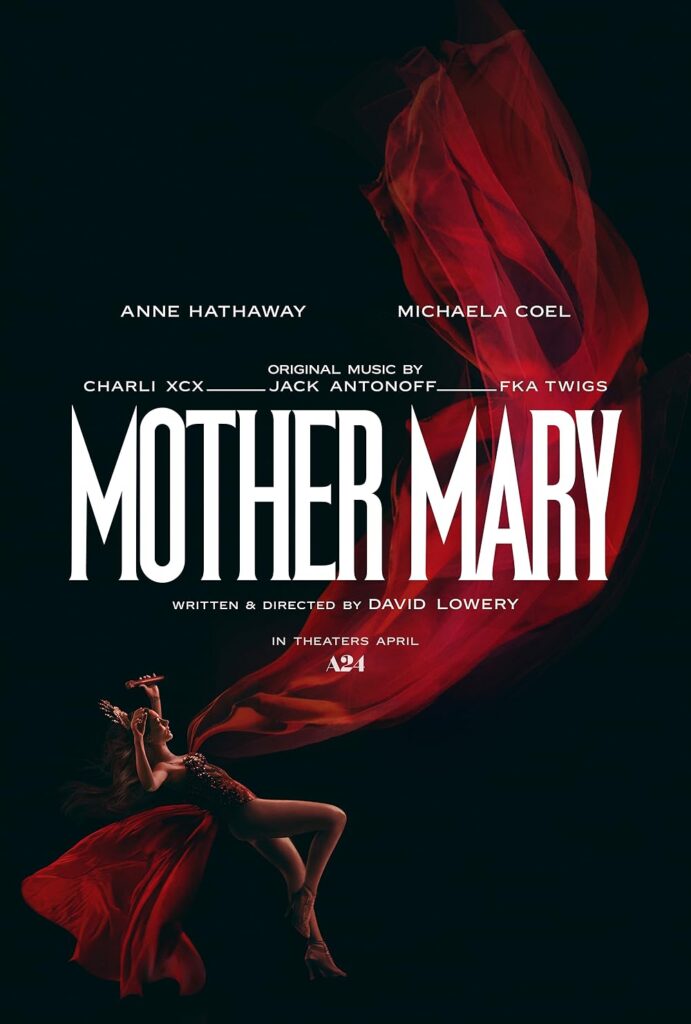
It’s a film about creative identity positioning itself as something much more than a traditional narrative, a typical complex horror A24 production, bending elements of a ghost story, metaphorical commentary, and psychological exploration as the two intimately resist their fractured friendship. Mother Mary is ambitious but ultimately pretentious and poorly executed, as it hides behind its abstract visuals and performance moments, failing to deliver emotional depth or a clear narrative pay-off for its quiet start, despite strong ideas and an isolated standout sequence.
The film’s structure is heavily divided, with the first hour focused on slow, dialogue-driven reflection and reconciliation between the two main characters, and the back 50-minutes shifting into abstract metaphor-heavy horror storytelling. Much of the runtime is spent reminiscing about what went wrong in their relationship as Mary leaves Sam out-to-dry after becoming more famous, but without enough clarity or depth to make it compelling enough to warrant the long start. The transition into a more surreal, expressionistic style in the second half feels better but still disconnected, rather than a natural evolution of the story, it feels abrupt. Instead of building toward a cohesive narrative, or really excelling on visuals Mother Mary feels like it is constantly searching for meaning, without ever fully landing on one, despite the filmmaker thinking they did.
The first hour of the film is tedious, with extremely slow pacing and heavy reliance on dialogue that Michaela Coel delivers, that comes off really pretentious over-the-top and simply not effective, it lacks engagement. The writing comes across as overly acted, trying to make the characters sound deep without actually offering meaningful insight or genuine emotion. Conversations feel drawn out and repetitive, just going in circles of preppy bickering, making the early portion of the film difficult to stay invested in for the horror pay off to come. The self-serious tone sets the film back from the start, long before it reaches its more visually ambitious and conceptual moments.
Anne Hathaway and Michaela Coel are clearly committed to their roles, bringing every bit of energy and effort they can to characters who are neither supported by the script nor given a satisfying payoff. The performances often feel over the top and exaggerated, disconnected from the emotional core the film desperately tries to establish. The lack of strong writing prevents either actor from delivering a truly impactful or grounded, or even horrific in the good way, performance. As a result, what should be emotionally powerful dual character work instead comes across as vague and underdeveloped. Their central relationship, Mother Mary and Sam, is meant to be an emotional backbone of the film, but it lacks sufficient development. The film does not provide enough context or backstory in their interactions or flashbacks to justify the weight of their conflict or reconciliation. Without a clear understanding of their past, the emotional stakes feel unearned and distant, and the horror is never as horrific as the film’s very premise and characters promise it to be. This ultimately leads to a lack of payoff, as the horror is supposed to be the punchline, no full explanation into their relationship makes the pay-off cancel itself.
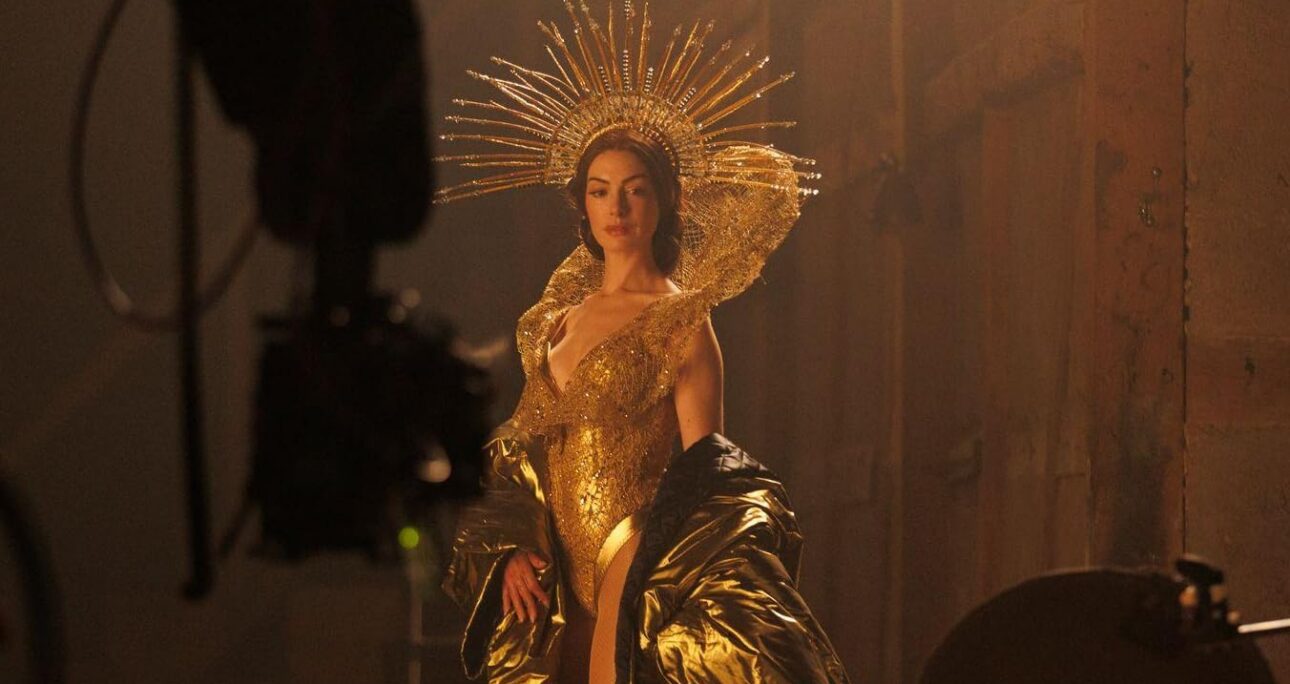
There are moments where the film becomes visually striking, particularly in stylized sequences that lean into metaphor and artistic imagery. A standout example is the stage sequence involving the red circle and ghost, which is visually stunning in its set piece and conceptually interesting, its best scene of the film by a large margin. This moment and some others having to do with this final red dress, showcase the film’s potential, offering glimpses of a more cohesive and impactful artistic vision. However, each of the two or three sequences that really rock are isolated highlights rather than constant elements throughout the film.
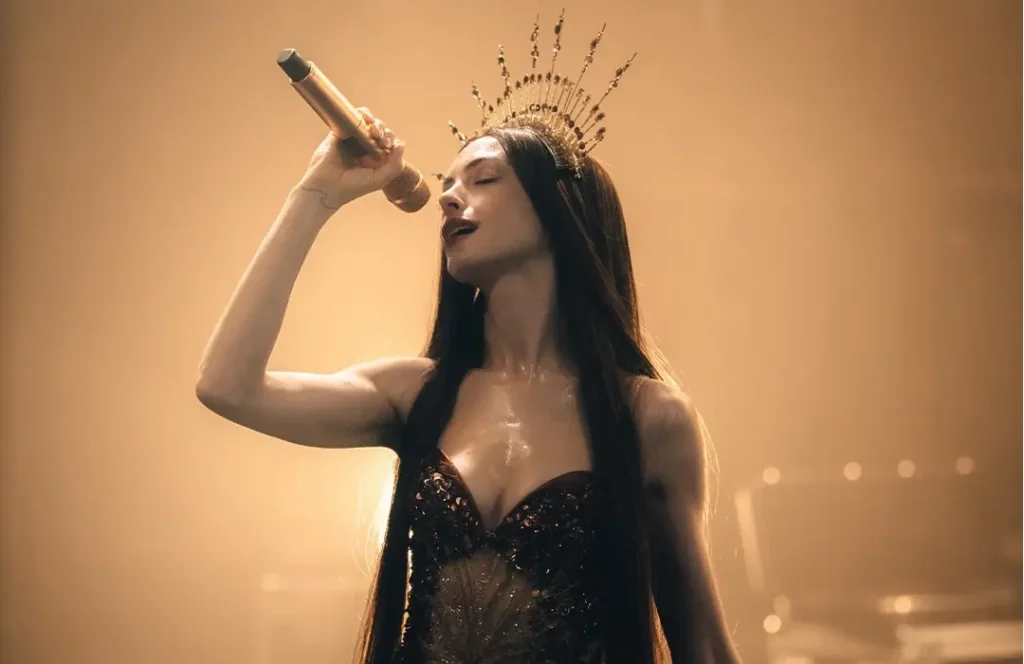
What the film really tries to do best and what the marketing suggests is the point here is the heavy lean into metaphor, particularly in the second half where the narrative becomes much more abstract with its ghost story, and symbolism of the creation of Mother Mary’s red dress. Scenes such as the black–background milk bath sequences and Sam’s ghostly dream attempt to convey deeper meaning but instead come across as awkward or unintentionally humorous. This use of symbolism doesn’t feel foundational, it feels forced, as if the film is trying far too hard to appear profound and horrific without grounding those ideas or providing enough context. The back half of the film shifts into the more surreal portion of the expressionistic style, blending a ghost story element with this metaphor. While this transition aims to deepen the narrative and get to what the marketing claims the film will get to. It instead creates a disconnect from the already fragile foundation established in the first half. The escalation feels uneven, as the film moves toward bigger ideas without properly developing the emotional groundwork needed to support them. It results in this huge set up for the second half that is visually more interesting but narratively just as weak.
The film builds toward an emotional reconciliation and artistic release, symbolized in Mary’s final performance dedicated to Sam, where scissors cut through her body to release her dress. However, this payoff, although good on the body horror front, does not hit the way it is supposed to. The attempt to tie everything together through abstract imagery and gorgeous style falls flat without a strong emotional base. However the finale of the film does one thing very right, they needed to make the final dress the best for Mother Mary after so much artistic design and to their credit they nail the final look as the best of the film. Ultimately the ending looks solid visually, but the film’s biggest flaw is highlighted here as well: a failure to connect its ambitious ideas with meaningful storytelling.
Mother Mary is a film filled with interesting ideas and occasional visual brilliance, but lacks the execution needed to bring them together into a solid film. Strong performances and isolated standout scenes cannot overcome the weak writing and lack of emotional depth in favor of pretentious actions and dialogue. In the end, it stands as a frustrating experience, one that aims for greatness but ultimately falls short, landing as mediocre at best, earning it a 52/100 from the TwilightRoom.
Twilight Room Score: 52.9/100