This week’s Throwback Thursday takes us to one of Studio Ghibli’s most quietly personal films, Porco Rosso, which turns out to be far more beautiful than we
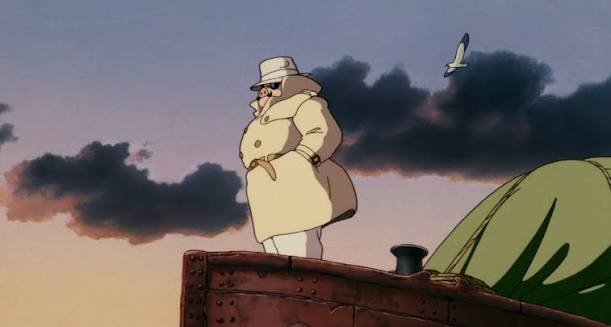
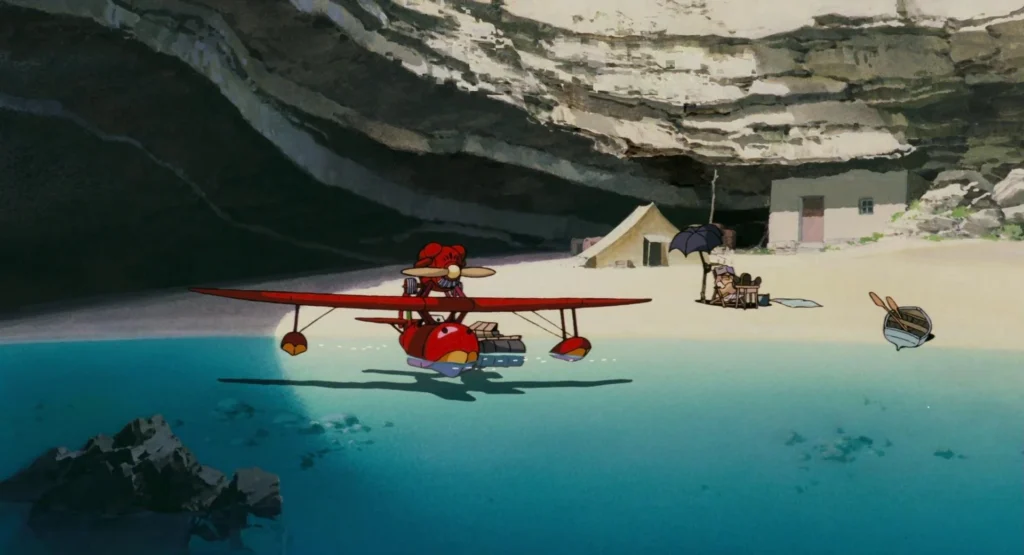
remembered, opening with beautifully saturated color as a pig takes flight out over the seas in his bright red plane. The ocean sunsets throughout are genuinely stunning, and the film’s commitment to that warm, sun-drenched Adriatic palette separates it visually from nearly everything else Miyazaki has ever made. The dialogue and story are both simple and well crafted,
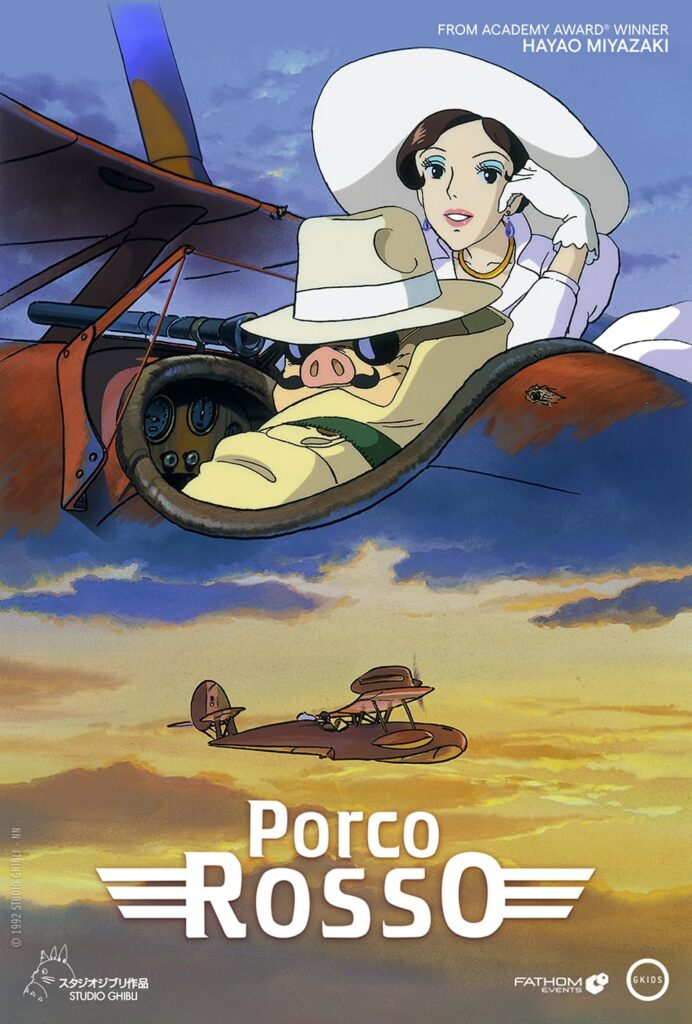
refusing to overcomplicate a premise that works precisely because of how clean and confident it is from start to finish. Miyazaki made this film for himself as a genuine passion project, and that self-directed quality is visible in every frame, giving it a private,almost personal feeling that the studio’s bigger titles don’t quite share. Porco Rosso stands as one of Studio Ghibli’s most underrated works, a film whose reception, viewership, and reputation continue improving year over year as more Western audiences finally discover just how unique and beautiful it really is.
The film opens with Porco saving a group of kids from the pirates of the seas as the reigning king of the skies above the Adriatic, considered a savior by some and an absolute pest by others. That immediate moral ambiguity is what makes him such a compelling lead, a hero who has deliberately positioned himself outside every institution and every allegiance around him. The next flying contest ensues as many of the nations surrounding the Adriatic try to one-up Porco Rosso with a new American ace brought in specifically to take his crown. Porco flies to Milan to get his plane fixed and finds a young girl passionate about planes whom he takes under his wing, giving the film its warmest and most quietly affecting relationship. He also begins to woo the beautiful Gina as he makes his return to the skies, with the two clearly holding a true love for each other that sits deliberately in the background of the main plot rather than driving it forward.
The saturated color work here is the film’s defining technical achievement, with the Adriatic skies and ocean sunsets creating a warmth that few animated films of any era have ever matched. Miyazaki’s flight sequences remain his most reliable strength as a filmmaker, and the aerial choreography throughout Porco Rosso is as fluid, legible, and exhilarating as anything in his entire filmography. The film’s simplicity is a genuine asset rather than any kind of limitation, with dialogue that never over-explains and a plot that trusts its own emotional undercurrents to do all the necessary work. Gina and Porco’s relationship functions almost entirely through implication, sitting quietly beneath the main story in a way that makes it considerably more affecting than a direct romance ever would have been. That restraint is characteristic of Miyazaki at his most personal, more interested in atmosphere and character than in narrative resolution or spectacle.
The final dogfight between Porco and the American ace begins just after we learn of Porco’s tragic backstory, which recontextualizes his self-imposed isolation entirely and gives the confrontation far more weight than a simple rivalry. That battle eventually devolves into a genuine boxing match, a deliberately absurd and deeply human turn that strips the spectacle away and leaves two men swinging at each other in the water. Porco still decides to remain alone even after everything that happens, refusing the resolution the film has quietly been offering him throughout its runtime. The ending opens Porco’s future entirely to interpretation, with Miyazaki refusing to confirm whether the curse ever lifts or whether he truly rejoins the world he deliberately withdrew from. That ambiguity is the film’s boldest choice, and it’s exactly what has kept people arguing about and returning to Porco Rosso for over three decades now.
Porco Rosso began as a short commissioned by Japan Airlines for in-flight entertainment, based on Miyazaki’s own manga Hikōtei Jidai, before he realized he had something genuinely special, and the scale began expanding dramatically beyond its original scope. The film is set in the 1930s Adriatic against the backdrop of Italian fascism and the shadow of World War I, following a veteran flying ace cursed to be a pig due to his deliberate withdrawal from the morally repugnant world he lives in. That makes Porco an unusually autobiographical character for Miyazaki, and the film was made for the director himself as a passion project rather than for any particular audience. The setting within fascist Italy is entirely purposeful, as Porco refuses to serve under the Air Force during Mussolini’s regime, and the meaning that fascism turns good men into beasts is clearly allegorical and fully intentional. It became the highest-grossing film in Japan in 1992, earning 2.713 billion yen and drawing 3 million viewers, though international reception was much slower and took several years to reach Western audiences, ultimately making it a quieter Ghibli crossover in America than some of the studio’s other greats.
Porco Rosso is far more visually beautiful than most people remember, with saturated color and stunning ocean sunsets that rank among the very best work Studio Ghibli has ever produced. Its simplicity in both dialogue and story is a strength rather than a shortcoming, letting the film’s atmosphere and character relationships carry weight the plot never needs to spell out directly. The fascist Italy setting and the curse-as-allegory reading give the film real political teeth underneath its adventure framing, making it one of Miyazaki’s most pointed and personal works. The ambiguous ending, leaving Porco’s future entirely open to interpretation, is exactly the right choice for a character defined above all by his refusal to rejoin the world around him. At 87/100, Porco Rosso remains one of Studio Ghibli’s most underrated films, and its reputation, viewership, and critical standing keep improving as more Western audiences find their way to this unique and beautiful piece of work.
Twilight Room Score: 87.3/100