Introduction
Matt Johnson has quietly built one of the most distinct filmographies in modern Canadian cinema, and he’s done it by operating in two almost entirely separate modes. There’s the guerrilla mockumentary era, spanning The Dirties and Operation Avalanche, films built on lies, trespassing, and improvisation, where Johnson cast himself as a version of himself and blurred the line between documentary and narrative until neither the audience nor the people on camera could tell what was real anymore, ending with some dark moments of comedy. Then there’s the biopic era, arriving with BlackBerry and continuing through this year’s Tony, films that trade guerrilla chaos for structure, budgets, and genuine star power while somehow retaining the same restless, handheld energy that defined his earliest work. Sitting directly between those two modes is Nirvanna the Band the Show the Movie, a feature-length expansion of his cult series that brings those old guerrilla instincts into a much bigger, more polished production without sanding down a single edge, and one that proved he could scale his sensibility without compromising it. Johnson’s newfound fame following BlackBerry’s record-breaking Canadian Screen Award sweep has put him firmly on the map, with A24 now backing his work and a career trajectory that suggests his most ambitious films are still ahead of him. Here is our full ranking of Matt Johnson’s filmography, from the film that got away with the most to the one that started it all.
5. The Dirties
73.7/100 - 2013
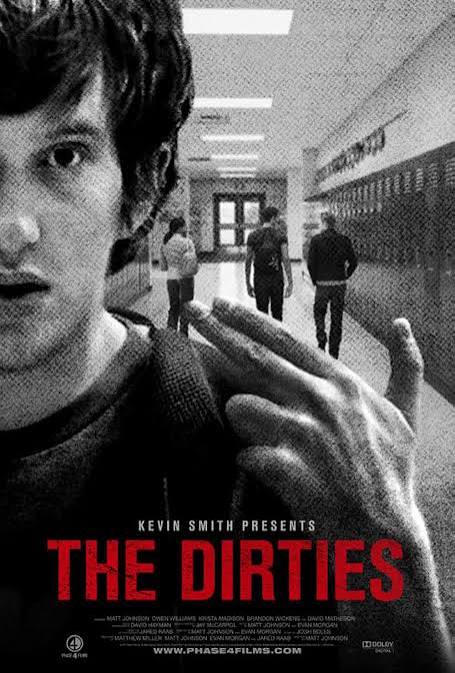

The Dirties follows two guys making a movie that becomes a comedic blend of narrative and documentary, representing the early voice of Matt Johnson before he’d figured out how to fully control it, and failing to fully blend the dark comedy with the lighter parts. The two set out to make a film about getting revenge on their bullies from school in the most extreme way possible, a project they title “The Dirties”, a premise that starts light and grows steadily more uncomfortable as it consumes them into doing the unthinkable. As they continue to bring their idea to life, things get progressively darker, with them suggesting an actual shooting of their bullies, and the whole thing feels like the bare bones of Johnson’s later movies. As the film starts coming together, the boys aren’t especially proud of what they’ve made, and the movie itself functions like an early concept sketch for what would become Operation Avalanche. The Dirties finishes on an extremely dark note, with a shooting that Matt actually goes through with inside the school as Owen, his partner, cowers in fear, taking the bit to its absolute maximum in a way that’s more admirable in ambition than execution, which is why it sits last on our list.
The Dirties was Johnson’s debut feature, winning the Grand Jury Prize at Slamdance in 2013 and marking him as a distinct new voice in Canadian independent film almost overnight. Kevin Smith championed the film heavily and released it through his own distribution label, giving a micro-budget Canadian debut a platform it never would have found on its own and putting Johnson’s name in front of an audience that had no reason to encounter it otherwise. Johnson established the entire template here that he would go on to use for the rest of his mockumentary era, casting himself under his own name and blending real footage with staged narrative until the seams between the two effectively disappear. The film’s approach to its subject matter drew significant discussion for how it handles school violence, with critics split between praising its uncomfortable honesty and questioning whether the ending fully earns the darkness it reaches for. It remains the essential origin point of everything Johnson has made since, Operation Avalanche, Nirvanna the Band the Show the Movie, and even BlackBerry all carry its DNA in different forms, which is precisely why a film this rough around the edges still matters as much as it does. It sits last on our list with a 72/100 from TwilightRoom.
4. Tony
84.0/100 - 2026


Tony comes in at number four on our list, mostly because of its quite dull first twenty minutes, as our young subject, Anthony Bourdain, fails to land his dream fellowship and acts as spoiled as can be, traveling to chase a girl who ends up with another man before landing drunk on the street with nothing but an awful attitude, a balance that Johnson struggles with a bit in the first act. It’s odd to see Johnson struggle to find intrigue across an opening stretch, with the film coming off dull in both look and story. If those first twenty minutes were just slightly more compelling, this would be an outstanding film and much higher on this list. Leo Woodall shows up once Tony reaches rock bottom and immediately changes the film into something much more intriguing, lighting up the entire film. It’s shocking how much better everything becomes the moment he’s introduced, a character who represents both the good and bad parts of Tony’s development going forward. Once Tony learns who he needs to be and who he needs to avoid becoming, and starts working independently under the head chef, the film truly hits its stride, with genuinely thoughtful philosophy and wonder threading through the back half. Tony sits fourth on our list but is still a really solid film, as Johnson finds his comedy in that same push-and-pull between innocence and corruption that defines Tony’s story on Cape Cod, a non-generic biopic that, by the end, had won us over endlessly, right through to the devastating moment Tony accidentally burns down the restaurant
Tony is an A24 release based on Bourdain’s memoir Kitchen Confidential, focusing entirely on the summer of 1975 that the nineteen-year-old Anthony spent working in a kitchen in Provincetown, Massachusetts, long before the books, the shows, or any of the fame that followed. Johnson co-wrote the film with Matthew Miller, Todd Bartels, and Lou Howe, and moved to Provincetown for two months while working on the script, having never even heard of the town before encountering it in Bourdain’s writing. Johnson has said he never intended to make a Bourdain film at all until he met Dominic Sessa, whose perspective on role models, pretending to be an adult, and lying convinced him there was a genuine movie buried in that particular stretch of Bourdain’s life. The kitchen scenes were shot in real misery, with the crew forced to kill the air conditioning every time cameras rolled while the stoves ran hot through the late June and early July heat, an authenticity that bleeds directly into the film’s back half. Bourdain’s estate representative Kimberly Witherspoon served as an executive producer on the project, and in one of the film’s loveliest touches, Bourdain’s real friend and colleague of more than twenty years, Eric Ripert, appears in a brief scene on the culinary school admissions panel. Tony struggled at the beginning but really found its footing, delivering yet another great Johnson biopic, with a fun Sessa performance earning an 84/100 from TwilightRoom.
3. BlackBerry
84.6/100 - 2023

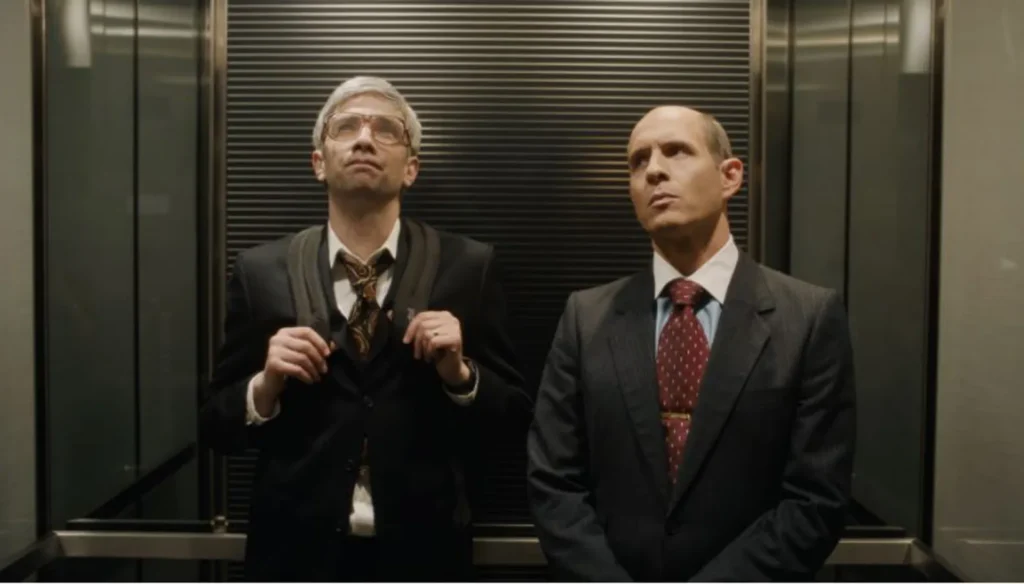
BlackBerry is likely Matt Johnson’s most solid work, and while audiences and critics alike are very high on this film, it feels a slight be less of an identity for Johnson, than a step into the mainstream, matching up with films of the time like Tetris and Air rather than finding its own footing. BlackBerry is a story of jealousy similar to The Social Network but just does not hit the same despite being a solid biopic that feels less generic than others as of late, missing the propulsive energy that makes the film’s rivalry as magnetic as it once did. It can fall into being Johnson’s most tedious work while also standing as his most well-written and thought-out, a strange contradiction that defines the whole experience. BlackBerry, even though was not the best biopic of the year of film it was released in, was still a great success, and a fun change of genre for Johnson that marked a turning point into the mainstream for the director.
BlackBerry was adapted from Jacquie McNish and Sean Silcoff’s book Losing the Signal: The Untold Story Behind the Extraordinary Rise and Spectacular Fall of BlackBerry, with Johnson co-writing the screenplay alongside his longtime producer and creative partner Matthew Miller. The film premiered in competition at the Berlinale in February 2023 and went on to win the Sloan Science on Screen Prize at SFFILM that same year, marking Johnson’s first real entry into the world of prestige international festival competition. Johnson kept his habit of appearing in his own films fully intact even at this scale, casting himself as RIM co-founder Doug Fregin alongside Jay Baruchel as Mike Lazaridis and Glenn Howerton as Jim Balsillie, the pairing that ultimately became the film’s beating heart. Jay McCarrol’s score leaned directly into the era by incorporating the actual sounds of ’90s technology, including dial-up modems, with the team playing demos live in the room while watching dailies to see how they landed against the footage. BlackBerry ultimately became the most awarded film in Canadian Screen Awards history with fourteen total wins, including Best Motion Picture, Best Direction for Johnson, Best Adapted Screenplay, and Best Actor for Baruchel, cementing Johnson’s transition from cult mockumentary provocateur into one of Canada’s most respected working filmmakers. It’s the step into the mainstream for Johnson that the world needed, providing his most polished work, but one of his least personal ones, which is why it sits here at three, behind his two biggest passion projects, earning an 84/100 from TwilightRoom.
2. Nirvanna the Band the Show the Movie
84.6/100 - 2025
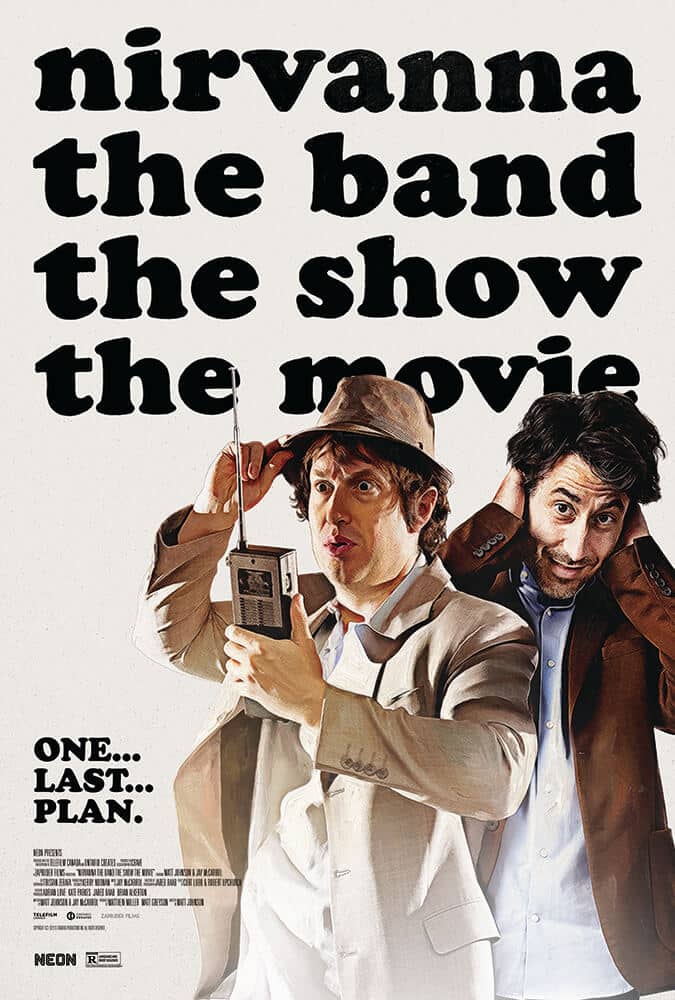
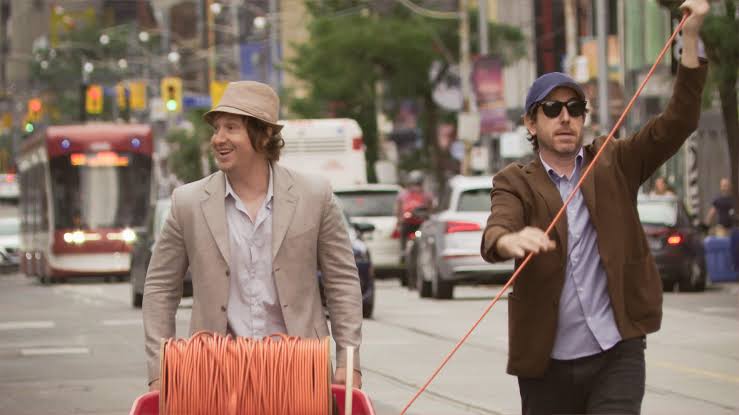
The film that lands second on our Matt Johnson ranking may just be the magnum opus of his career so far, and the film that defines the mix of both sides of his career, Nirvanna the Band the Show the Movie, is brilliant in every way, a multi-year journey that is endlessly funny and brings the old-school Johnson vibes into a completely new climate and newfound fame. Nirvanna is, yet again, such a fun and creative mockumentary-style comedy, blending time travel with blooming ideas, turning in exactly the type of independent comedy the film industry needed in 2025 and 2026, likely why it was such a big hit on the festival circuit and in limited theaters. What separates it most from modern comedies is its ability to provide unique writing, a coherent script that pays homage to its series while still finding new audiences, and its ability to be absolutely hilarious at every turn rather than in scattered bursts. Conceptually, it’s a comedy that tackles years of in-story preparation to create realistic time travel, and because it’s this complex, and thoroughly thought through and executed, it becomes even more heightened and appreciated, noticeably his sharpest entry in this style and a culmination of all his past work. Nirvanna the Band the Show the Movie is the rare case of an underrated cult show expanding into a feature-length film by its inspired director without skipping a beat, maintaining every ounce of charm while adding loads more intricacies that make it as accessible as possible.
Nirvanna the Band the Show the Movie premiered at SXSW in March 2025, where it won the Midnighter Audience Award, before finally receiving a theatrical release in Canada and the United States in February 2026, nearly a full year after that festival debut. The film was shot over roughly 200 days with a small crew in the exact same guerrilla style as the television series that spawned it, with many scenes filmed in public without permits and featuring genuinely improvised interactions with unsuspecting members of the public. Made on a $2 million budget, it went on to gross $4.4 million, a legitimate commercial success for a project of this scale and origin, and proof that Johnson’s sensibility could find an audience well beyond the show’s cult following. It then won Best Motion Picture at the 14th Canadian Screen Awards, a remarkable outcome for a mockumentary spun out of a low-budget web series and a clear signal of how far Johnson’s stock had risen following BlackBerry. Johnson and Jay McCarrol wrote the film together as a Back to the Future-inflected time travel story, sending their fictionalized selves back to 2008 in a project that had effectively been seventeen years in the making, closing the loop on a partnership that began long before either of them had any industry standing at all. The film was yet another example of the miracle that is Johnson’s filmmaking career, and perhaps his most successful film yet in terms of creative expression, if not box office, earning an 84/100 from TwilightRoom.
1. Operation Avalanche
85.0/100 - 2016
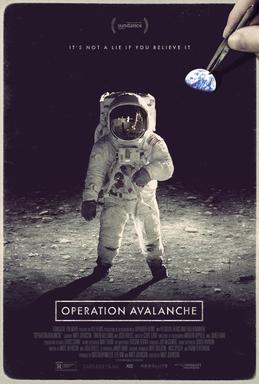

Coming in at number one on our list is a bit of an unorthodox pick for a Matt Johnson ranking, but one we will stand by wholeheartedly: Operation Avalanche, the throwback mockumentary starring the director himself, Johnson, yet again. We follow two idiot CIA agents hired to solve the space race, who end up finding that the real moon landing won’t happen and decide to produce a fake one themselves, delivering an incredibly funny comedic mockumentary right from the jump. As the two infiltrate NASA and begin to learn the moon landing simply won’t happen, their decision to create a fake landing to trick the world becomes the film’s best comedic engine, before the dark side of the bit sets in as they begin to be chased down. Matt sneaking onto Stanley Kubrick’s set to steal his ideas on how to make the fake footage look real marks the beginning of the bursting creativity that would come to surround all of Johnson’s comedy going forward, though it’s never quite as creative again. As things progress, everything goes horribly wrong, like in most of Johnson’s comedy films, with the government now after them and Matt, now a loose end, running for his life alongside his cameraman, the film’s tone shifting hard without ever losing its comedic footing. All of that dark ending that struggles to work in The Dirties does work here in much better balance: the moment where Matt finds his partner Owen dead lands as a genuinely serious beat amid all the comedy surrounding it, the exact tonal balance that wins me over every time, and has made Johnson so great at walking the line.
Operation Avalanche premiered at Sundance in 2016 and was made by a crew that lied their way onto NASA property, posing as documentary filmmakers while recording real conversations with actual NASA officials that were later cut directly into the finished film. Johnson and his team pulled the same trick at Shepperton Studios, shooting on the very sound stages Kubrick used for 2001: A Space Odyssey without permission, in a production that ended up mirroring its own plot about filmmakers working clandestinely inside institutions that would never have said yes. The team shot much of it on Blackmagic Pocket Cinema Cameras before running a self-invented 1:1 Super 16mm conversion process, with Johnson describing the goal as a final print that looked like it was shot in the 1960s, buried in the ground, and dug back up in 2015. That obsession with conspiracy runs deeper than the film itself: the production company’s name, Zapruder Films, comes directly from Johnson’s lifelong fascination with the genre, with JFK cited as a top-three film for everyone who works there, likely why this film feels so full of passion, even more than usual for Johnson. The director has also noted that the movie leans heavily on recent updates to fair use law regarding artistic appropriation, stating flatly that Operation Avalanche could not have been made legally twenty years earlier, which only adds to the sense that this is a film that got away with something. In both its research and its delivery, the film was monumental, my personal first introduction to the creative director and actor, earning an 85/100 from TwilightRoom and the top spot on our ranking of his filmography.