Wild Style is one of those films whose importance vastly outweighs its quality, a movie that essentially invented an entire cinematic lane while never quite figuring
out how to be a compelling film on its own terms. Charlie Ahearn’s picture is so thoroughly embedded in hip hop and graffiti culture that it functions as a document first and a narrative second, which is both the reason it still matters in 2026 and the reason it’s a genuine slog in stretches. Casting actual participants in the culture rather than actors
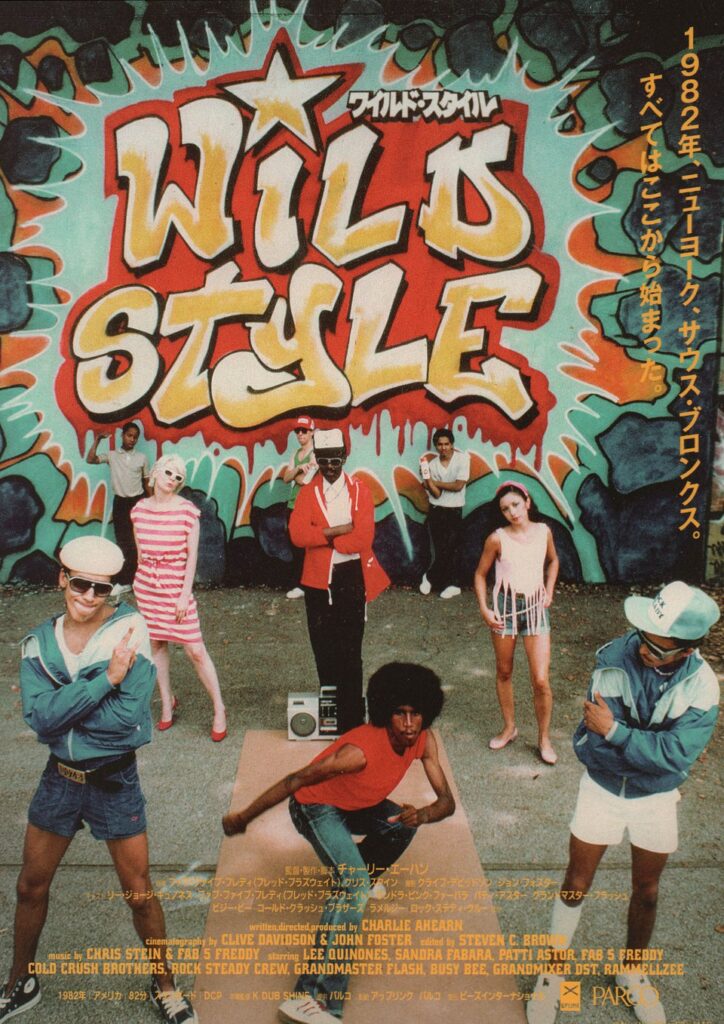
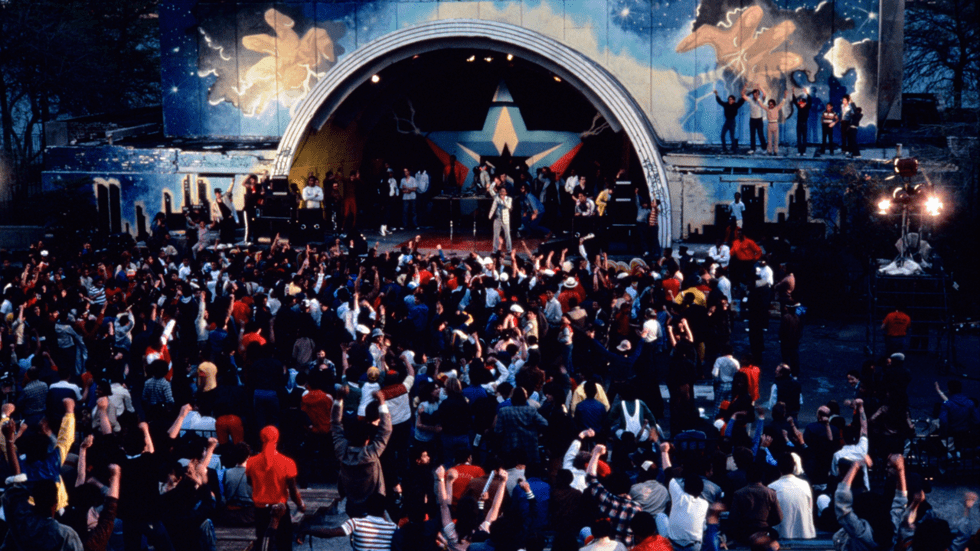
gives it a heightened realism no professional production could have faked, though it also means the acting is shaky enough to pull you out of scenes that needed you locked in. The hip hop and art inspiration is littered throughout, from the overlay jump cuts to conversations that feel captured rather than written, and those moments are where the film is genuinely alive. Wild Style ultimately it plays more like a glorified hip hop concert with graffiti elements woven in than a story worth following, which is a real limitation on something this historically significant.
The most interesting idea in Wild Style is one it keeps walking away from, which is what happens when an underground artist gets discovered by people who want to own a piece of his authenticity. Zoro is a famous graffiti writer whose work opens the film, and Ahearn is smart enough to let his identity stay the central question rather than explaining him to us up front. Around him the film builds a cycle of culture, moving through the ordinary rhythms of the day and into hip hop at night while Zoro does his work in the dark, and that structure ends up being the closest thing to a narrative engine the movie has. Things shift once some of the richer folks in the art world find out who he is and start asking him to produce work for high pay because of his skill, and that tension should have carried the entire film. Instead the plot keeps drifting back toward performance and party sequences, and the storyline gets a bit confused at moments because it never fully commits to the conflict it set up.
The film’s best instincts are documentary ones, and Ahearn is at his strongest when he stops trying to construct scenes and simply lets the camera observe. Wild Style exists because of a conversation between Fred Brathwaite, better known as Fab 5 Freddy, and Ahearn about capturing hip hop culture in a single film, specifically the four pillars of graffiti, DJing, MCing, and breakdancing, and what they landed on was a South Bronx documentary-style execution of that concept. The overlay jump cuts and the loose, unforced conversations give the film a texture no studio production of the era could have approximated, and that texture is genuinely why it endures. Fab 5 Freddy and Chris Stein of Blondie built the famous score, which became an origin point for a staggering number of classic hip hop albums in the years that followed and might be the single most influential thing the film produced. Where the craft falters is in the connective tissue, because Ahearn never develops a visual or narrative grammar strong enough to hold all this material together into something cohesive.
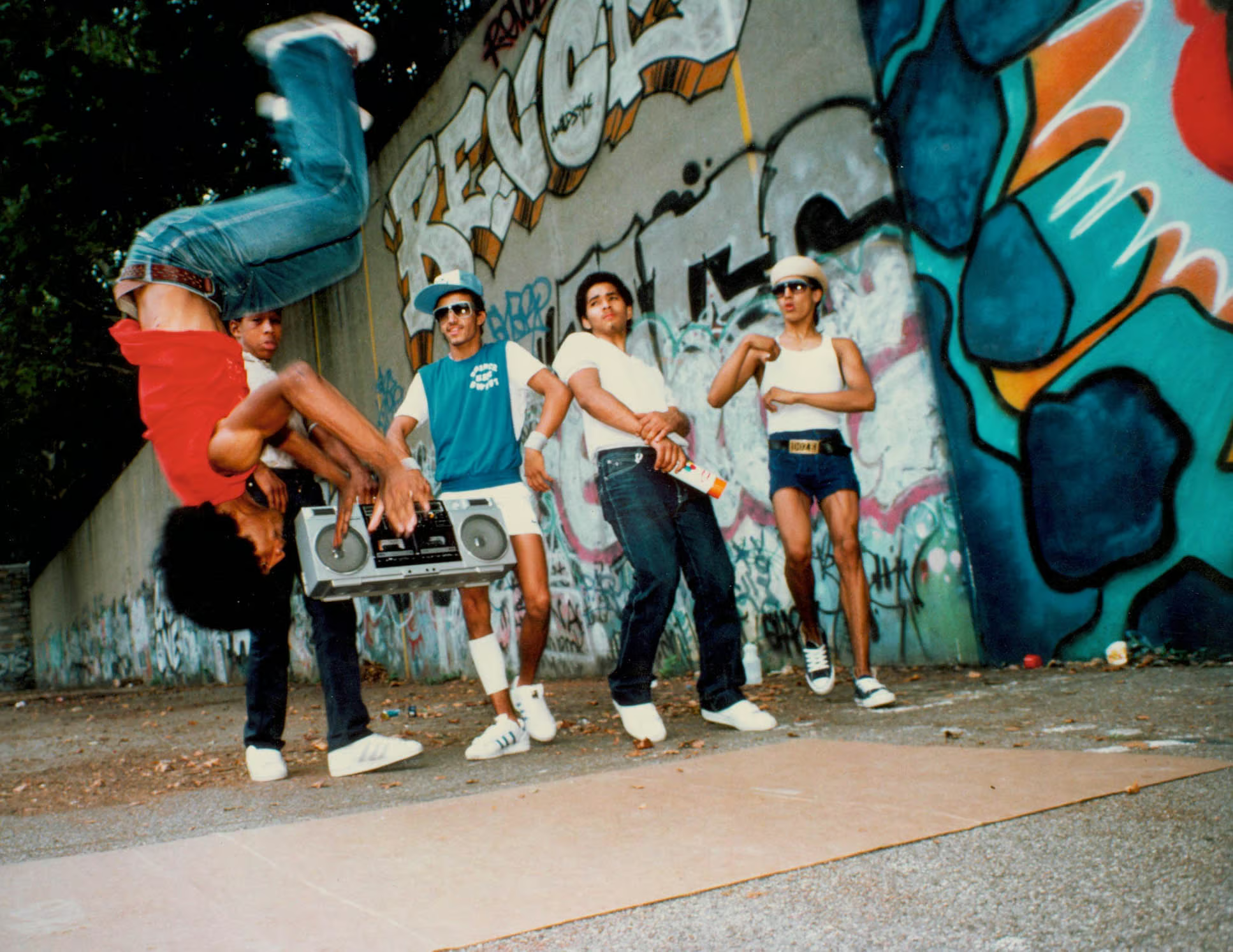
Casting actual participants in the culture instead of actors is the single most consequential choice in the film, and everything good and bad about Wild Style flows out of it. Graffiti writer Lee Quiñones plays Zoro, Lady Pink plays Rose, and Fab 5 Freddy appears as Phade alongside a number of real music culture groups, which means the audience is watching people who genuinely built this world rather than performers imitating it. The realism that produces is heightened in a way no amount of research or rehearsal could manufacture, and the graffiti sequences in particular carry an authority that’s simply impossible to fake. The trade-off is shaky acting throughout, with line readings that land flat and scenes that stall out because nobody on screen is equipped to carry dramatic weight. It’s a defensible trade and probably the right one given what Ahearn was trying to preserve, but it does mean the film asks a lot of patience from anyone approaching it as a movie first.
Whatever its shortcomings as a narrative, Wild Style’s cultural footprint is enormous and almost impossible to overstate. The title refers to a graffiti technique pioneered by Tracy 168, a lettering style where letters overlap and stylize until they become nearly impossible to read, using illegibility itself as the art form, and a large amount of effort went into the film’s title and design to represent that writing style perfectly. It sold out screenings in Times Square for nearly a month, a remarkable feat for an independent film with no stars and no studio behind it, and once it caught international attention at Cannes it genuinely helped push hip hop global at a moment when almost nothing else was doing that work. It’s regularly labeled one of the most influential hip hop films ever made alongside 8 Mile, Hamilton, and Beat Street’s Krush Groove, and it’s widely heralded as the first true hip hop film. That’s a legacy earned honestly, built on what Ahearn chose to preserve rather than what he managed to dramatize.
Wild Style is a film of enormous cultural consequence and fairly modest cinematic achievement, and any honest look at it has to hold both of those things at once. Ahearn’s documentary instincts and his decision to cast real participants preserved something irreplaceable, and the Fab 5 Freddy and Chris Stein score alone would justify the film’s existence. The lack of a cohesive narrative remains its defining weakness, leaving it feeling more like a glorified concert with graffiti elements than a story you’re invested in following. Its legacy is undeniable, from those sold-out Times Square runs to Cannes to helping carry hip hop across the world, and the title of first true hip hop film is one it came by honestly. Wild Style is essential viewing for what it captured and a frustrating watch for everything it never bothered to build around it, earning a 67/100 from The TwilightRoom.
TwilightRoom Score: 67.1/100