This Tuesday’s Throwback Thursday review is the 2022 A24 tragedy hit, Aftersun.
Shot primarily through the view of a camcorder device with still shots, landscape views, and film grain aesthetic that provides the audience with the feeling of watching an old tape back as though it was a memory from all of our pasts. This camera work is intentional from director Charlotte Wells as the film is putting us in the perspective of a woman looking back on her recordings from the last vacation trip she has with her dad, in a desperate attempt to understand where her seemingly perfect father took a dive into the deep end of mental trauma, depression, and eventual suicide. It’s an extremely in depth and metaphorical exploration of the existential fragility that lies beneath so many ordinary moments of people’s lives when they are surrounded by the people they love. It’s a masterpiece performance by Paul Mescal who plays Father Calum to his daughter Sophie, played by Frankie Corio; as he navigates this intense mental battle he has begun to wave the white flag too and making sure his daughter has a fun moment to remember. Aftersun is a masterclass in subtle filmmaking and creative camera work, using the idea of memories, absence and ordinary atmosphere to quietly devastate an audience and comment on mental health.
The film balances two polar opposites of what it means to live as we see a coming of age plot developing as Sophie grows through her experiences with the older kids on the trip and with her father, as Calum is left with this darkness weighing him down both physically by the shots of the film and mentally by his clear empty expressions. Scenes like diving into the pool with friends for Sophie are contrasted with Calum’s dives into the ocean alone highlight the willingness and hope that Sophie is able to find a life that her father never could. It is one of the largest contrasts of adulthood vs childhood in a film ever, that really only can be made through the reconstructive style film Aftersun is, it’s like a puzzle with a fourth of the pieces missing. As the film progresses and the metaphors of death grow more and more glaring, we begin to see Sophie as an adult celebrating her birthday, surrounded by light blasting rave scenes representing a fleeting memory; alluding to the idea that Aftersun is not a film about what occurred but more about how Sophie now begins to understand how and why it occurred.
Mescal’s Oscar nominated character Calum is the clear standout performance of the film, as it is more real than any character created throughout the 2020s so far, it’s striking. The character’s comments about the sky ‘not meaning anything’ are examples of the masterfully written existential undertones of his dialogue. He delivers this complex performance that presents itself as so ordinary, as a father, but so harrowing; as the depression portrayed is very present in so many lives, and lingers far after the vacation of the film ends. Callum’s final words, “I love you very much, never forget that” for Sophie before his quiet but loud final scene of a goodbye is the culmination of his performance; it’s the perfect collaboration of Mescal’s ability to play this tragic male figure and a director that is committed making something creative and real. The Character, up until the moment he walks into the rave as a metaphor for death. is well made as a loving father, present for his daughter, yet unreachable to the world as he slowly fades away.
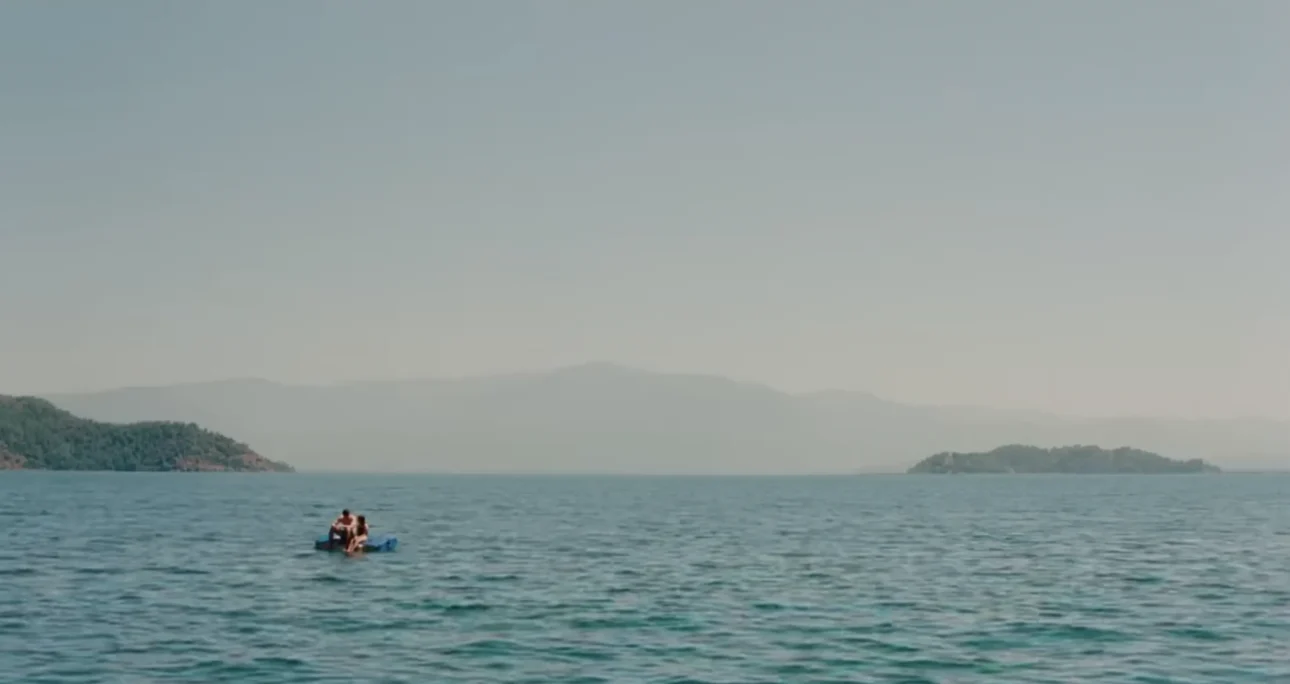
The visual language and editing of the film is perhaps the most creative and strongest part of the film. With moments like the VHS presented as the film playing on the TV of the hotel room for both the audience and the characters is a truly immersive and creative way to tell the story as ordinary as possible. Additionally using reflection, from water or the TV to make the audience switch from a perspective viewing to more of an onlooker as to the relationship of daughter and father is one of the most creative ways of storytelling we have seen in the past decade. Well’s ability to use a rave’s lighting, blue color scheme and tint and shots of the blue ocean to contrast the characters, combine to make up 101 minutes of a nonstop unique film extracting the exact image and emotion she wants the audience to feel, is truly remarkable. It’s this memory glitching, grainy film and landscape that resembles emotional distance that turns an entire film into the emotions that the story is trying to bring out of the audience.
One of the most quietly devastating aspects of Aftersun is how it achieves extreme emotion without ever raising its voice. There are no dramatic confrontations, no explosive breakdowns, no forced monologues explaining Calum’s internal war. Instead, the pain lingers in the silence between words, in the long pauses, in the empty stares that stretch just a second too long. Sophie enjoying a night out dancing with older kids while Calum watches old footage alone in the dim glow of the hotel room TV becomes more crushing than any overt tragedy could ever be. The now iconic dance scene set to “Under Pressure” operates as both a bonding moment and a quiet goodbye, a father giving his daughter one final pure core memory before he slips further away. It’s filmmaking that trusts the audience to feel rather than be told what to feel, and that trust is what makes it hurt so much more.
As the film moves toward its final sequence, the fragmented rave imagery becomes more aggressive, more blinding, almost overwhelming, as if memory itself is breaking apart. The adult Sophie trying to reconstruct her father from camcorder footage mirrors the audience’s own attempt to piece together who Calum really was. And then comes the final image: Calum walking away through the airport doors and into the flashing rave lights, swallowed by darkness and sound. It is a metaphor for death, for absence, for the finality of goodbye, yet it is presented without melodrama. The film never confirms, never explains, never overstates, it simply lets the weight of what we now understand settle over us. It’s not a narrative payoff in the traditional sense, but an emotional realization that arrives all at once.
In the end, Aftersun is not just a film about a vacation, or even about a father and daughter, despite its contrast of storytelling, it is about memory as both salvation and torment. It’s about how we reconstruct the past in an attempt to make sense of loss. Through its meticulous camera work, haunting blue hues, reflective surfaces, and Paul Mescal’s astonishingly restrained performance, Charlotte Wells crafts one of the most personal and quietly shattering films of the decade. It’s subtle, it’s patient, and it demands emotional honesty from its audience. Few films manage to linger the way Aftersun does, embedding itself into your own memories long after the credits roll. A modern tragedy told with restraint and precision, and more than worthy of its place among the best films of the 2020s, earning it a 95/100 from TwilightRoom.
Twilight Room Score: 95.5/100