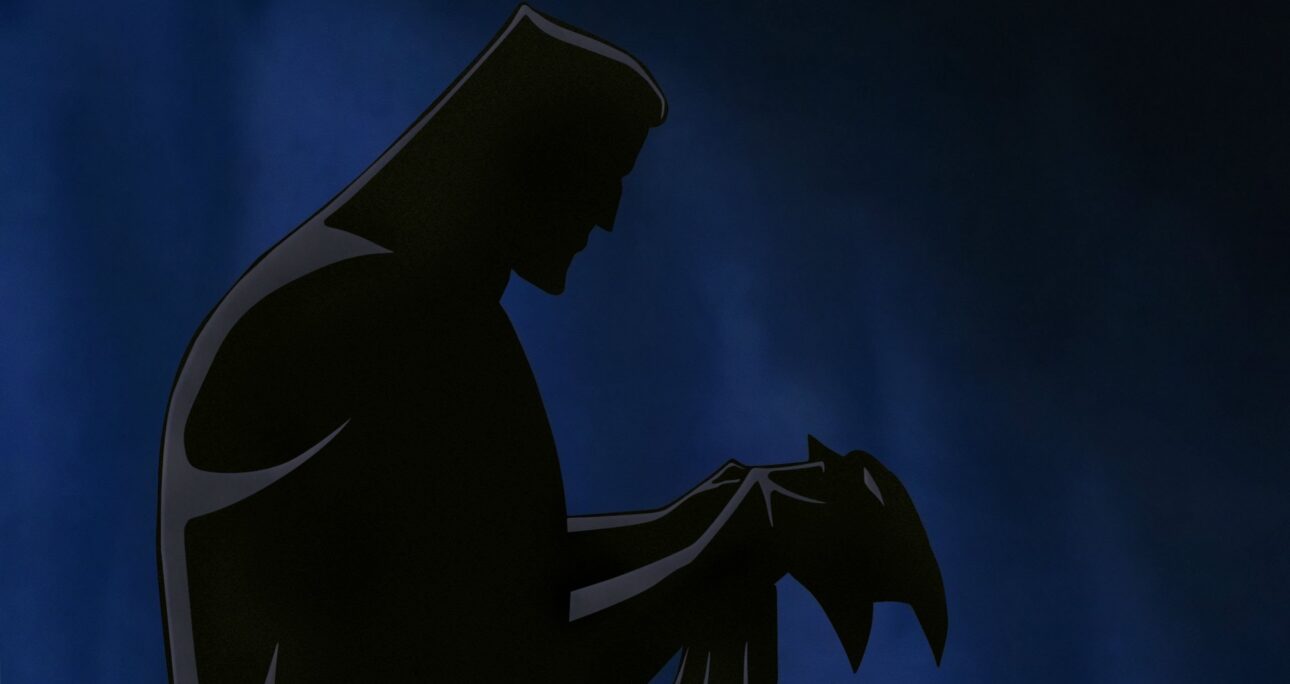
This week’s Throwback Thursday fits the theme of the new Caped Crusader release with Batman: Mask of the Phantasm, which takes the art deco style of Batman: The
Animated Series and carries it beautifully into a feature-length film. The Phantasm’s first appearance is a genuinely horror-esque scene that immediately signals heavier stakes and stronger emotional weight than the series. This new figure carries a striking resemblance to Batman himself, with a completely separate

moral code, a design choice that plants an early misery the film takes real pleasure in unraveling. The art style is especially cool and memorable here, with a level of detail the show itself was rarely able to deliver, and Andrea Beaumont adds one of the most complex Batman characters ever, as well as one of the most important women in Bruce Wayne’s life. That gives the film an emotional through line and tragic love story the series never had room for, while the balance between Batman and Bruce is handled with unusual care, making his choice between the two identities feel weightier than almost anything else the character has been given. Batman: Mask of the Phantasm was a commercial flop, but that is far from the end of the story: it stands as one of the finest Batman films ever made. A smaller animated film, it has gone on to compete with, and often surpass, some of the biggest and best superhero films ever released.
The film almost immediately drops us into a flashback of Andrea and Bruce’s past to provide context before she returns to Gotham, and it’s the right structural choice, letting the emotional stakes of her reappearance land immediately. The flashback also marks the moment Bruce first begins his life as a vigilante, tying his Batman origin directly to the woman now walking back into his present in a way that makes the two threads inseparable. Even inside that flashback, the film doesn’t let up on tension, delivering another horror-tinged chase courtesy of the Phantasm that keeps the past and present threats feeling connected. Arthur Reeves, who is connected to present-day Andrea, pursues Batman for the Phantasm’s crimes, and casting him as the story’s dogged accuser gives the film a clear antagonist figure even before the Phantasm’s true identity is confirmed. He worked for Andrea’s father when Bruce and Andrea were together, and the film smartly seeds real jealousy in him from that old arrangement, giving his pursuit of Batman a personal edge rather than a purely procedural one.

Alfred has never been better than he is in this rendition, and the film leans on him at exactly the right moments to ground Bruce’s emotional turmoil without ever tipping the story into melodrama. The film’s use of shadow on Batman is genuinely awesome, with his cape design and overall aura executed about as well as the character has ever looked on screen, animated or otherwise. The time-bouncing structure between past and present is seamless throughout, never once losing the audience even as the film cuts back and forth to build its central mystery piece by piece. The production is ripped directly from the 1930s, blending art deco and gothic touches with clear influence from the Max Fleischer Superman cartoons of the 1940s and pushing the visual darkness right up to the format’s limit. That commitment gives the film a genuine film-noir texture, separating it visually from nearly everything else in the character’s animated history. It’s that dark detective feel that makes this rendition stand so far above most animated adaptations.
Halfway through the film, the Joker appears in classic fashion, revealed to have been visited by Salvatore Valestra, and his entrance immediately raises the stakes of a mystery that had, until this point, belonged entirely to the Phantasm and Arthur’s manhunt. The Phantasm’s design remains great throughout this stretch, attacking Valestra directly, though the Joker gets to him first, adding a clever wrinkle to a plot that could have played its hand far more simply. The authorities chase Batman instead of the Phantasm, even though neither of them committed the crimes in question, a frustration Andrea voices herself and one that deepens the sense of injustice driving the film’s back half. Bruce clearly still loves Andrea and is visibly tormented by the pull between his life as Batman and the life he could have had with her, a conflict the film never resolves easily or lets him off the hook for. When Arthur and the Joker finally meet, the film reveals its real twist: before he ever became a costumed villain, the Joker was the one who killed Andrea’s father. That revelation confirms Andrea herself is the Phantasm, hunting the men responsible for his death before finally turning to the Joker as her last, far more formidable target.

Bruce saves Andrea from the Joker, and the two finally confront each other directly, clashing over their fundamentally different views on killing in one of the film’s most pointed and devastating emotional scenes. The Joker is ultimately stopped, but the victory comes at a real cost, as Bruce and Andrea are forced to separate again despite everything that has just passed between them. That final separation lands as one of Batman’s biggest heartbreaks on screen, animated or otherwise, and the film earns that weight through the flashback structure it has so carefully built across its runtime. Kevin Conroy and Mark Hamill reprise their Batman and Joker from the series here, and their performances remain the definitive versions of both characters decades later. Dana Delany’s take on Andrea Beaumont carries one of the most emotional Batman love tragedies ever put on screen, and she rises fully to the occasion, closing out one of the character’s most complex arcs with real grace in a role that has never really been attempted again in quite the same way.
Mask of the Phantasm was originally ordered by Warner Bros. as a direct-to-video release, but Batman: The Animated Series’ first season did so well that the film received a full theatrical rollout instead, produced in just eight months with audiences barely aware it was coming out. On a $6 million budget, it grossed $5.8 million theatrically, a commercial failure at the time that built its reputation almost entirely on home video, where it slowly found the audience it deserved. The film remained the only animated Batman film to receive a theatrical release until 2016, a striking gap that only underscored how ahead of its time it truly was. Time ranked it among the top 10 superhero movies ever made in 2011, and its reputation has only grown since, with many now calling it the best Batman film outright or placing it alongside the character’s finest adaptations. A small-budget project standing shoulder to shoulder with some of the biggest films ever released, Batman: Mask of the Phantasm remains a landmark of animated superhero storytelling and a fantastic throwback watch, with beautiful art deco imagery, earning a 90/100 from TwilightRoom.
TwilightRoom Score: 90.8/100