Behemoth! is a really fantastic film built around a great Pedro Pascal performance, one that is far more reflective and internal
than anything the marketing around this picture suggested, and it may be the most misunderstood gem of the year. Tony Gilroy tells a non-linear story, one that never holds your hand, about a cellist moving through his life by way of his music, his flings and his dysfunctional family, carried by a monotone attitude that feels directly connected to the art he is so good at. The opening is not exactly the most cohesive
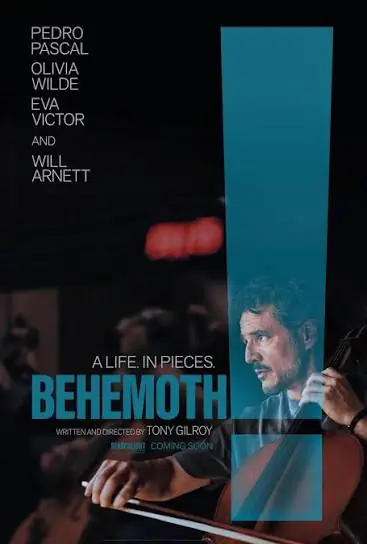
start to a film and is likely why the mixed Behemoth! reviews are pouring in. Still, the film is surrounded by nine classical composers baking music into its score, its plot and its soul, and any orchestral-music lover will be pulled in immediately and repeatedly by the music’s changing tones. The film’s final act takes what had been a good movie with some illuminating moments and turns it into a minor masterpiece of the 2020s, with laugh-out-loud beats that fit just outside the general plot and an ending that, at least to us, carries real emotional weight that far surpasses a simple reveal or musical session. Behemoth! is Gilroy writing and directing at his most polarizing, but also his most creative, crafting a character that fits well with the strengths of Pascal as an actor. It also confirms that the slow build of Andor was not a one-off but a sign of sharpened instincts and complex storytelling that really pays off in this quiet and divisive Oscar contender.
Behemoth! follows Alex, a classically trained cellist, through a deliberately fractured structure that moves between his youth as a prodigy inside a musical family and his adult life recording film scores out west after walking away from a Chicago orchestra. His journey is told almost entirely through the music itself and through the people orbiting him, with the relationships and the recording sessions serving as the markers of time rather than anything resembling conventional plot progression. The tough conversations are where the film does its heaviest work, and Gilroy writes them with the same precision he brings to political material, letting people talk around what they actually mean for long, uncomfortable stretches before anything gets said outright. The flat, muted quality Pascal brings to Alex is the key to the entire thing, because the flatness of his daily life is exactly what makes the expressiveness of his playing register as the only place this man is ever fully present. The late-film funeral is the hinge: the reveal there supplies the context the first half of the film has been quietly withholding, retroactively reorganizing everything you have sat through up to that point into something considerably sadder.
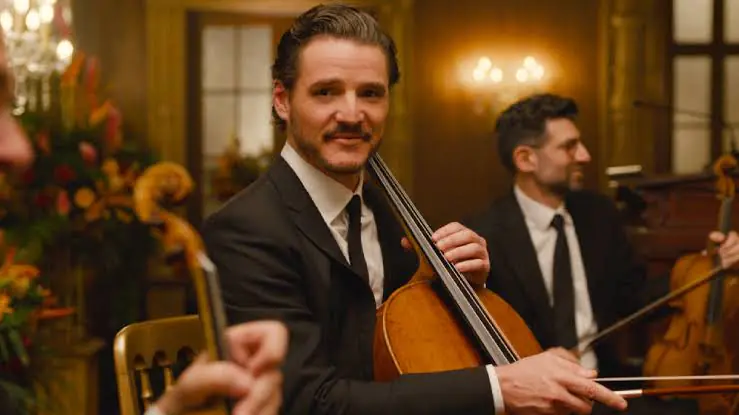
Pascal is inward in this role and spends the first half of the film letting the character come into focus gradually rather than announcing who Alex is in the opening frames, which is the opposite of what he has been asked to do in almost everything else over the last five years. It is the most restrained work of his career and a deliberate rejection of the charisma that made him one of the biggest names in the business, a risk that pays off completely once you understand what the film is actually doing with him. The physicality of the cello work is convincing enough that it never pulls you out of the picture, and the way he holds himself while playing is doing real characterization that the dialogue doesn’t have to handle. His muted affect outside the music could easily have read as a limitation in a lesser performance, but here it reads as the mark of a man who has poured everything he has into a single channel and has nothing left over for anybody standing in front of him. By the time the final act arrives, every quiet choice he made across the first ninety minutes has gradually become load-bearing, which is the clearest possible evidence of how carefully this performance was constructed from the ground up.
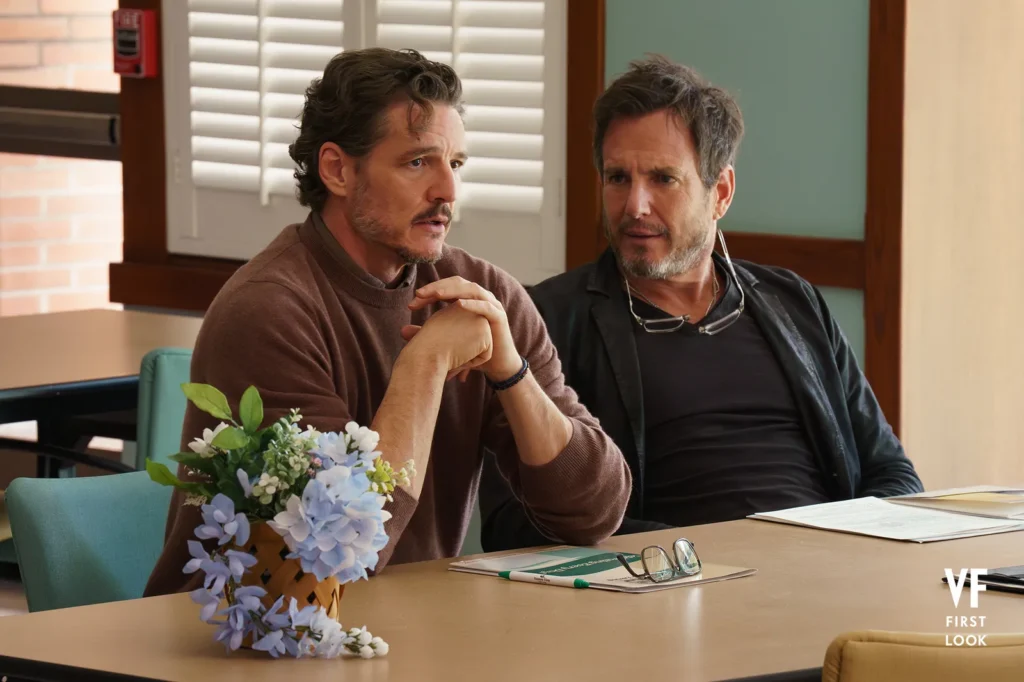
The surrounding score and music are done beautifully, with classical composers feeding into a single piece that keeps building across the entire runtime rather than functioning as accompaniment to anything happening on screen. For the most part, the film allows the audience to work out the timeline on their own, which is genuinely refreshing in an era where we get hand-held through structure constantly and where ambiguity is usually sanded off in the edit. That trust is the defining formal decision here and the reason the shifting timeline lands as an invitation rather than as a puzzle box demanding to be solved before the credits. The composition on screen matches the composition on the soundtrack, with Gilroy framing the performance sequences as the visual peaks of the film and deliberately letting the quieter material sit lower against them. The classical music is woven into the plot rather than laid over the top of it, which is why it works narratively and emotionally at once instead of simply sounding expensive.
Will Arnett and Olivia Wilde are both very funny and extremely well timed here, operating in material that runs alongside the main story but stays connected enough that it never feels like a separate film has been spliced in. That looseness is a genuine risk, and it occasionally shows in the opening stretch, but the comic relief gives the picture a rhythm it would have badly lacked had it stayed locked inside Alex’s interiority for two hours. The final act is where every thread converges, delivering laugh-out-loud moments and an emotional ending simultaneously without either one undercutting the other. The reveal at the funeral is the best writing in the film, paying off not only the story but the entire shape of a life, and it carries far more weight than a simple twist or a final performance would have. Watching the opening again with that reveal in mind turns its incoherence into something clearly deliberate, which is exactly what a film built this way has to earn.
Behemoth! rewards patience and then rewards a second viewing considerably more, because almost nothing in the first half reads the same way once you know where all of it is going. Pascal’s performance is the best dramatic work he has ever done and the clearest proof that he is far more than the leading-man presence he has been cast as since The Mandalorian. Gilroy’s willingness to tell a story about an artist without ever stopping to explain the art is the smartest decision in the film and the thing that separates it from every musician-adjacent drama of the last decade. The rough opening is a real flaw, and it is almost certainly why the reactions out of AFI FEST have come in as mixed as they have, but the destination more than justifies the route taken to reach it. Earning an 86/100 from TwilightRoom, Behemoth! is a sweeping tribute to the power of music and quite possibly the most misunderstood film of the year, carried by a Pedro Pascal performance that reframes what he is capable of.
TwilightRoom Score: 86.7/100