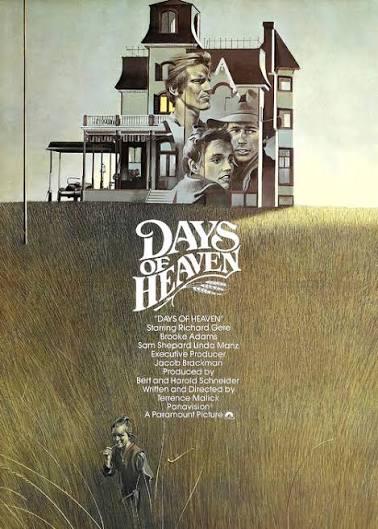
This Week’s Criterion Tuesday turns in as one of the best we have ever covered as Days Of Heaven represents the film where Terrence Malick’s cinematic identity snapped
into focus, and looking back across his filmography now its impossible to see it as anything other than the clear definition of what his style would become. The film immediately sets a beautifully shot Toine with some of the best shot images of trains and travel in the Midwest we have ever seen, every scene like a beautiful painting, genuinely jaw dropping from its opening minutes onward. What makes the film remarkable is how completely Malick discovers the film through its setting rather than through his script, letting the cause of material making dictate the shape of the story in a way almost no American
director was attempting in 1978. Malick’s masterpiece feels uniquely reflective and Western almost to a fault, as its gorgeous visuals and the atmosphere surrounding this group living life simply don’t produce the traditional narrative most audiences are looking for. Days Of Heaven is a romance film that parallels the romance between Malick and the Midwest, photography, and the art of film, as the film’s most beautiful characteristic and the reason it keeps a certain kind of viewer at a distance.
The story Malick builds here is deceptively small, a love that survives everything except the arrangement the two people inside it agreed to. Bill and Abby are traveling the Texas Panhandle after a mishap in Chicago, and they must deal with the pain of loving each other while Abby marries another man to get through their struggle, with Richard Gere and Brooke Adams playing two lovers pretending to be siblings in a deception that carries them straight into the landholding Texas frontier fields. As the two grow apart through the marriage that separates them, Bill begins to accept defeat on a romance that is clearly still very much present, blaming himself as suspicion on the land slowly hardens into knowledge. The whole middle stretch of the film lives in that space where the two are in love but apart, close enough to see each other every day and forbidden from acting on any of it. Malick is far more interested in the ache of that arrangement than in the mechanics of how it comes undone, which is exactly why the film registers as a mood rather than a plot.
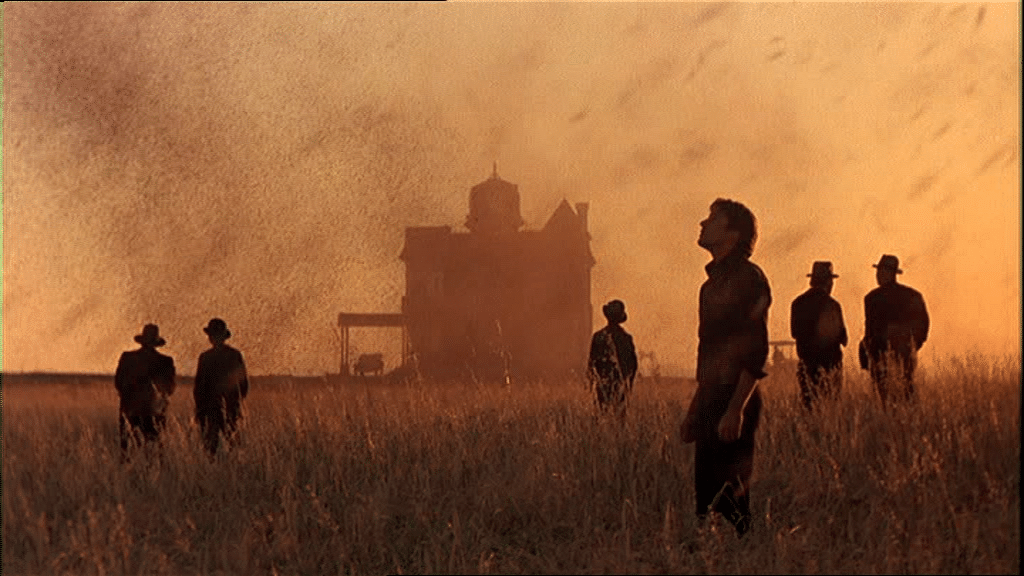
Every shot of this film feels like a magnificent Texas landscape painting that may never be matched, and that isn’t hyperbole so much as the plain fact of what’s on screen. Leading to that color bled shot of the house on the prairie, the film is well known for showcasing Malick’s affinity for the camera, and the location shoots and real wildlife build an eerie yet wilderness style that genuinely draws you into it. It’s one of the most gorgeously shot films ever made, inspired by the passion of some of the best filmmakers ever to work in the medium, and it came directly out of the combination of Néstor Almendros’ passion for photography and Malick’s own knowledge of art. Influenced by paintings, it borrows styles like Vermeer while referencing Wyeth, Hopper, and a long list of other American artists, which is why every frame feels composed rather than simply captured. That marriage of a photographer’s eye and a painter’s reference library is what produces images no budget could replicate.
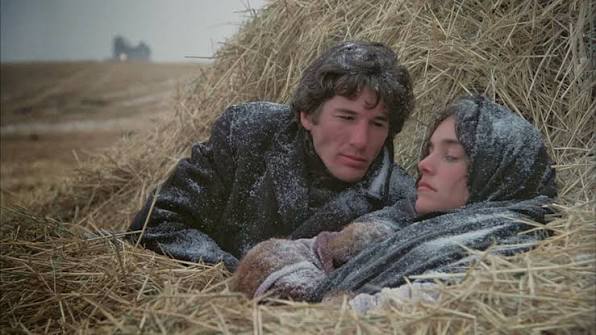
The sequence with the endless swarms of insects in the field, the house sitting there as the backdrop, leading into the final act, may truly be one of the best natural shots of all time. It’s the moment where Malick’s entire method justifies itself, because nothing about it could have been storyboarded or scripted, and it arrives with a force that flattens everything around it. Abby’s husband and Bill have a confrontation that ends ugly, leading the two of them to run off together, and the film shifts from pastoral drift into something much closer to outright tragedy. They live a peaceful traveling life until the police track them down and hunt Bill, shooting him dead in the river in front of Abby, which Malick stages with the same unhurried beauty he gave the wheat fields. His films are always constantly in motion, and this one ends up switched from hopeful into something else entirely without ever raising its voice about it.
Malick went to school at AFI alongside Paul Schrader and David Lynch, and he practically forced his first feature through with investors on Badlands, which tells you everything about how much conviction this career demanded from the very start. That film, and even more so Days of Heaven, provided a completely new and unique look at New American Cinema at a moment when the movement had already begun to calcify around a handful of familiar shapes. He discovered this film through its setting, letting the cause of material making drive the process, and his writing remained crucial to all of it, just not in the same way his scripts had been before. The film is ultimately held together through its editing, a drastic and deeply unconventional assembly that located the movie inside the footage rather than following any plan laid out beforehand. Looking back now, every element of the Malick signature is already present and fully formed here, which is a remarkable thing to say about a second feature.
Days of Heaven is one of the most beautiful films ever made and the clearest statement of purpose in Terrence Malick’s entire body of work, a movie whose every instinct would go on to define a career. The photography Néstor Almendros built out of Vermeer, Wyeth, Hopper, and a deep well of American painting produces images that genuinely may never be matched, and the insect sequence in the field remains one of the great pieces of natural photography ever committed to film. Richard Gere and Brooke Adams give it a human center as two people in love and kept apart by their own deception, with Bill’s slow acceptance of a defeat he keeps blaming himself for landing as quietly devastating as anything in the era. The refusal to deliver a traditional narrative is the one real barrier between this film and universal appeal, and it is reflective and Western almost to a fault, asking you to surrender to a mood rather than follow a story. Earning a 96.2/100 from the TwilightRoom, Days of Heaven is a magnificent landscape painting of a film and one of the defining works of New American Cinema.
TwilightRoom Score: 96.2/100