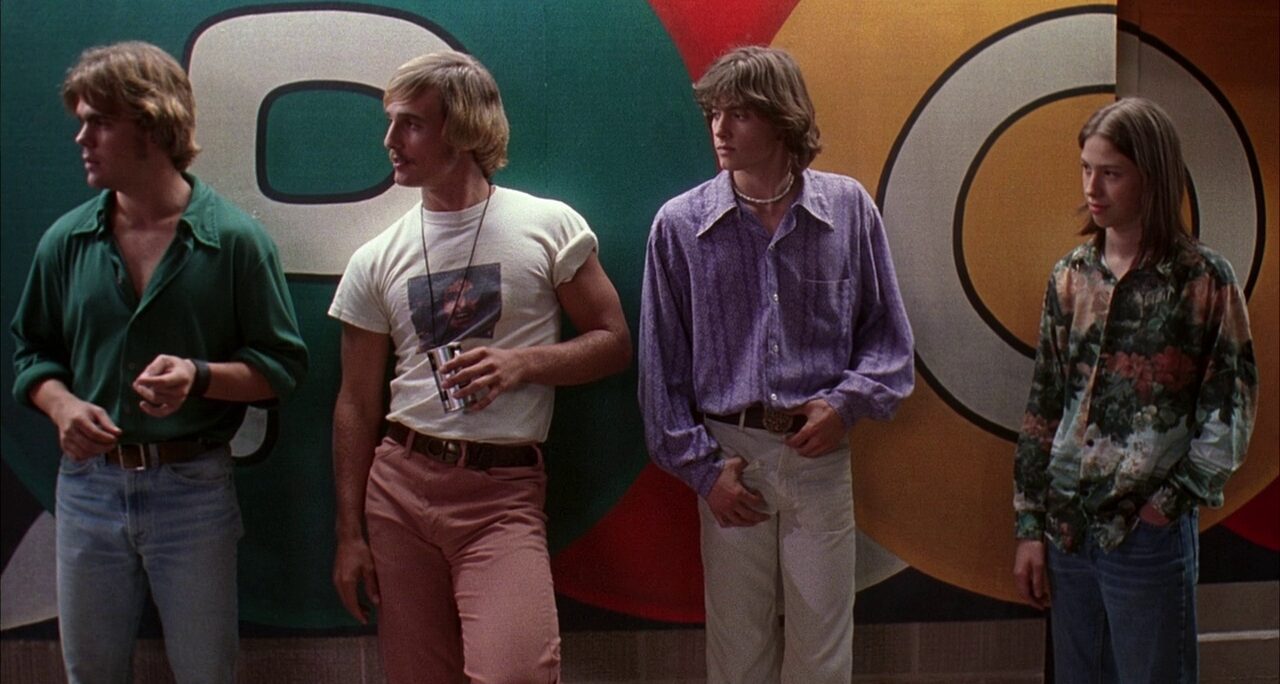
Dazed and Confused is the best time-capsule film ever made, a movie whose entire ambition is to drop you inside one specific day in 1970s East Texas and let you live there
for a hundred minutes rather than tell you a story about it. Richard Linklater built the whole thing directly out of his own memories of growing up in that time and place, and he has been explicit that he was attempting the deliberate inverse of a John Hughes high school film. That means there is no dramatic narrative engine anywhere in this picture, because inhabiting a world and a moment is the entire point.
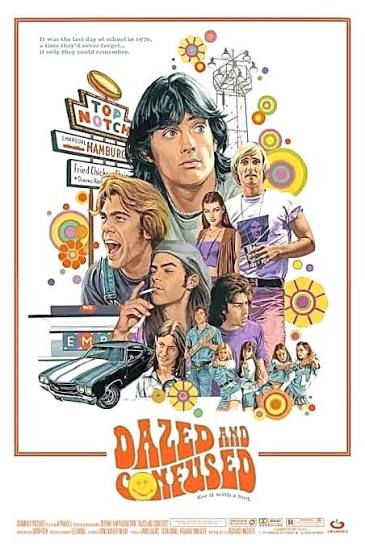
What makes it work, and what nobody has managed to replicate in the thirty-plus years since, is that the stakes stay constantly chill and nostalgic without ever curdling into the sentimentality that sinks most films working in this register. That’s because Linklater never once asks you to feel something about the past that the characters are not already feeling about their present. The way he handles this many characters at once is Altmanesque in the best possible sense, giving every person on screen enough room to register as a complete human being without ever letting the film buckle under the sheer number of them. It’s a feat of control that the movie’s relaxed surface makes look effortless. If this Dazed and Confused review has a thesis, it’s that the film is a definitive statement of Linklater’s gift and the starting point for one of the great mainstream directing careers of the last three decades, an identity-finding masterpiece that gets better every single time I come back to it.
The premise here is about as simple as a premise can be: a group of high schoolers arriving at the end of the school year in the 1970s and looking ahead to the festivities waiting for them that night. That’s the entire plot summary, and all the plot summary this film is ever going to need. What Linklater does with it is bounce constantly between the future seniors and the future freshmen, the latter about to be absorbed into a high school hierarchy they will spend the next year climbing. That split gives the day a shape without ever imposing an actual story on top of it. Hazing and initiation rituals run rampant through the whole picture, and the film treats them as the genuine social architecture of 1970s school culture rather than as a problem to be identified and solved by the final reel. It’s a kind of honesty most films about adolescence never even attempt. Nobody in this movie is working toward a goal, and the refusal to supply one is precisely what separates it from every teen film that came before or after it, because the day is not building toward anything except itself. As night arrives, the whole thing opens up rather than narrowing, and that structural inversion is what’s most responsible for why this feels like being seventeen instead of like watching somebody else be seventeen.
Casting director Don Phillips is the unsung star of this production, scouting unknown actors across the entire state of Texas and assembling one of the greatest ensembles ever put into a single film. Jason London, Wiley Wiggins, Parker Posey, Ben Affleck, Adam Goldberg, Joey Lauren Adams, Milla Jovovich and Anthony Rapp all pass through this thing, a list that reads now like an entire decade of American film arriving at once through one Texas high school parking lot. Matthew McConaughey drops into the film as night falls and immediately elevates an already stacked cast to another level entirely. The performance was so good that he earned a substantially larger role than the one he was originally hired for, and his entrance remains one of the great arrivals in American movies. What holds the ensemble together is that nobody here is written as a type, so even characters on screen for three minutes total carry the unmistakable sense of having a whole life running just outside the frame. The authenticity of these performances is the single biggest reason the film has aged the way it has, because none of this ever plays as actors performing a period; it plays as people who simply live there and always have.
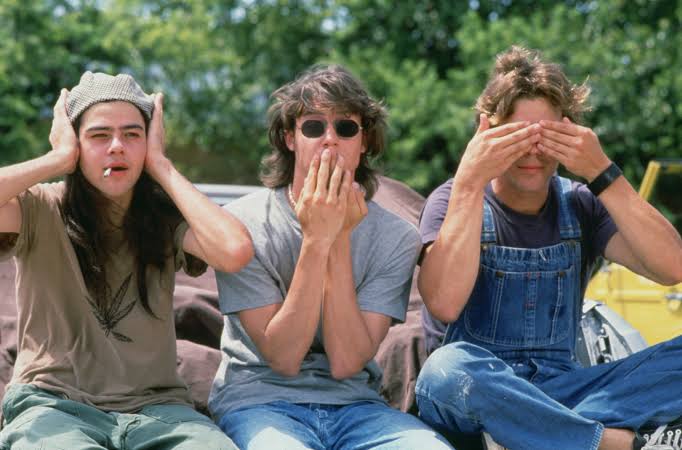
The 1970s rock soundtrack is central to this film rather than decorative, and Linklater’s insistence on getting the music he wanted shaped both the budget and the entire identity of the finished picture. Securing Led Zeppelin was the decision that let him use both the rock and roll he needed and the title itself, which comes from one of their songs. The music ends up doing as much world-building here as the production design or the costuming ever does. The texture of the thing is perfectly authentic from top to bottom, from the cars and the clothes down to the way conversations start and stop without ever resolving. The film earns every bit of its nostalgia by trusting the audience enough to never explain itself. Linklater’s camera stays patient and observational throughout, drifting between groups rather than attaching itself to a protagonist, and that formal choice is what drives the Altman comparisons that have followed this movie since its release. The final thirty minutes are exceptional. The party at the water tower commences and then relocates to the football field for the fifty-yard-line stretch that closes everything out, and the whole run stands as the strongest coming-of-age sequence of its entire era.
Dazed and Confused was Linklater’s first studio film, greenlit entirely on the strength of the independent success he had found with Slacker. That success gave him a level of access he would spend the whole production protecting. The film grew directly out of his memories of East Texas in the 1970s, and he has been consistently open about conceiving it as a deliberate reversal of the Hughes model rather than as another entry in it. That explains nearly every structural decision in the film. It was largely missed in theaters on release and only found its real audience on video, growing steadily through the 1990s and into the 2000s in one of the more dramatic reception turnarounds of the decade. That slow build is how it eventually arrived at the praise it deserves. It is now widely recognized as the best time-capsule film ever made and one of the defining American pictures of its generation. Linklater later made a spiritual sequel in Everybody Wants Some!!, a terrific companion piece that only underlines how specific and unrepeatable the original was.
Dazed and Confused is the rare film whose complete absence of plot is its single greatest structural strength and the reason it earned its place in the Criterion Collection in the first place, because Linklater understood something most filmmakers never figure out: a day you actually remember is never shaped like a story. Its ensemble is the most impressive collection of young talent ever assembled for one picture, and Don Phillips deserves as much credit for this film’s legacy as anyone who worked behind the camera on it. McConaughey’s arrival remains one of the great entrances in American film, a performance that launched an entire career and raised the ceiling of the movie around it within the span of a few scenes. The closing stretch, running from the water tower out to the fifty-yard line, is as good as coming-of-age filmmaking has ever gotten and is the sequence that elevates this from a great hangout movie into a genuine masterpiece. Earning a 96/100 from TwilightRoom, Dazed and Confused is Richard Linklater’s definitive statement and the best time-capsule film ever made, a movie that found its audience slowly and is never going to lose it.
TwilightRoom Score: 96.2/100