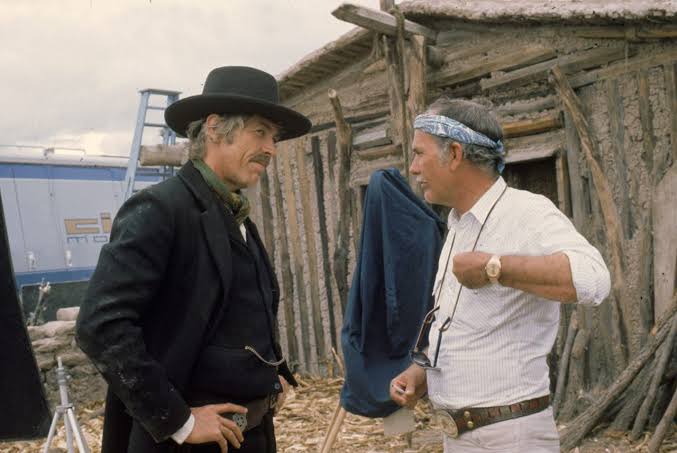
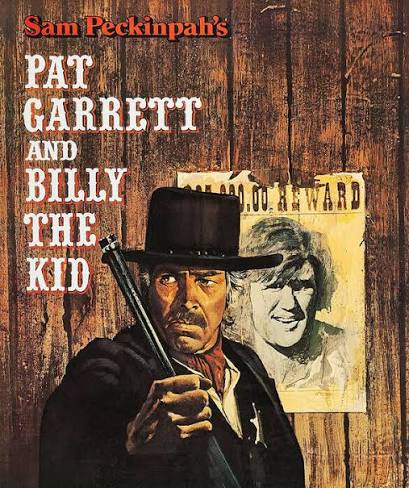
This week’s Criterion Tuesday review jumps into the western genre, specifically the classic 1970s vibes of Pat Garrett and Billy the Kid, as the film from its opening
moments exudes the nuanced western with its score, slow wilderness-style conversation, and the patient setting establishment all announcing exactly what kind of film it represents. Bob Dylan’s music sitting in the background here surrounding the direction of Sam Peckinpah really highlights the film’s central battle between maintaining a friendship and fighting for your own survival in the West, giving the entire
runtime an elegiac quality as two old friends are placed directly against each other by circumstances more important than their bond. The film exudes a rugged atmosphere throughout, with sets that feel organic and lived-in rather than fabricated for a production, and writing that fully embraces the slow burn with only the occasional showdown puncturing the runtime. It’s a film built almost entirely on its atmosphere and nuance, feeling different than many of the other westerns that came before it, as this total commitment is exactly why it lands as hard as it does decades later, refusing the momentum audiences of the era would have expected. Pat Garrett and Billy the Kid stands as one of the great yet unique westerns of its era and of all time, a brutal take on the genre that somehow finds real beauty in its nuance and struggle it so properly depicts.
Pat Garrett is hired by a group of wealthy men in New Mexico to bring down Billy the Kid, an old friend of his, a premise that establishes the film’s entire moral tension before a single shot is ever fired. That setup immediately frames the film less as a manhunt and more as the slow, inevitable collapse of a relationship neither man is fully willing to abandon, which is precisely what separates it from every other outlaw picture of its period. Peckinpah’s direction embraces the slow burn completely, letting long stretches of the film breathe with conversation and landscape rather than incident, trusting the audience to sit inside the dread of what’s obviously coming. The occasional showdown throughout the runtime punctuates that patience rather than defining it, keeping the film’s rhythm distinctly its own and making each burst of violence land considerably harder than it would in a faster picture. Everything builds steadily toward the confrontation both men have known was coming since the opening scene, which is exactly why the pacing never once feels like stalling.
The score is the film’s most immediately striking element, with Dylan’s music creating a genuine sense of mourning that no other western of the period comes anywhere close to matching. The sets feel organic rather than fabricated throughout, giving the film a dusty, worn-in texture that grounds every single scene in something real rather than something constructed for the camera. Peckinpah’s commitment to atmosphere over incident is total, and the film would collapse entirely without it, which makes the sustained execution across the full runtime all the more impressive. The slow wilderness-style conversations that make up much of the film are where the actual character work happens, revealing both Garrett and Billy through rhythm, silence, and posture rather than through any kind of exposition. That patience is what separates this from the more conventional westerns surrounding it, refusing the momentum the genre had always relied on in favor of something considerably more reflective and internal.
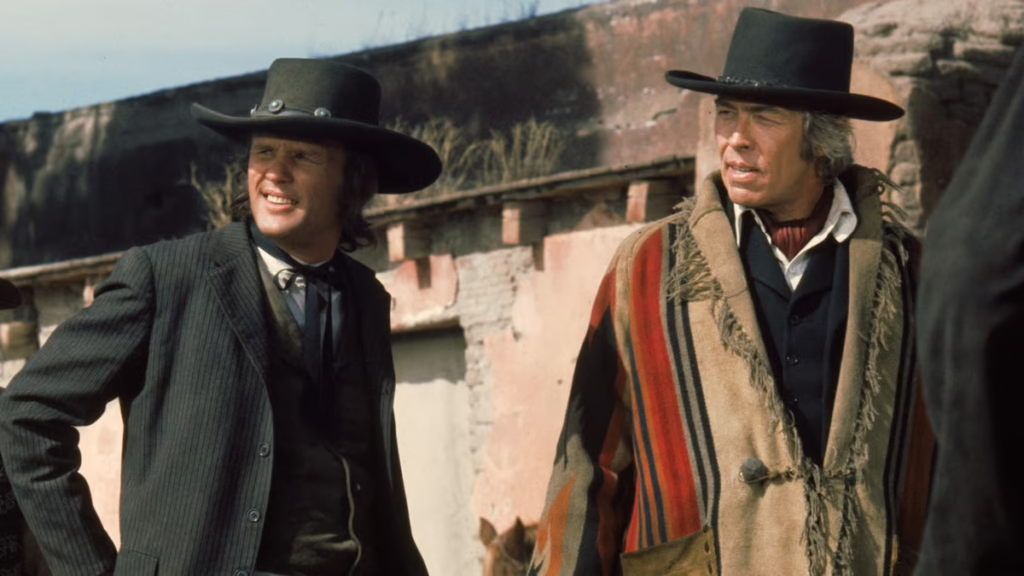
The final sequence unfolds through the night as Garrett and his men approach Billy while he’s in bed with a girl, a stretch that is perfectly scored and perfectly shot from beginning to end. That approach sequence is the film’s most technically accomplished passage, building genuine, mounting dread out of almost nothing but movement, darkness, and Dylan’s music underneath it all. Garrett shoots Billy dead, closing out the hunt the entire film has been slowly moving toward without ever rushing the moment or dressing it up as anything other than exactly what it is. He then shoots his own reflection in the mirror after killing his friend, an image that does more moral work in a single frame than any amount of dialogue could have possibly managed. That final shot is the whole film compressed down to one image, a man confronting precisely what surviving in the West has cost him and finding nothing left worth keeping.
Sam Peckinpah remains one of cinema’s biggest names within the western genre, but also one of the few directors who consistently used it to speak on self-inflicted destruction rather than heroism. His best westerns came in the 1960s and ’70s, precisely when the genre was beginning to go out of fashion, and he attacked the western from an angle of nuance it had never quite picked up before. The film is a brutal take on the West, forcing men to forget their bonds in a fight for themselves while somehow still highlighting the beauty buried inside that struggle. It’s based on two real men, with Garrett eventually becoming a U.S. Marshal and Texas Ranger known as the man who killed Henry McCarty, also known as William Bonney and Billy the Kid, who died at 21 as one of the most famous outlaws in American history. Garrett becomes the center of the film’s entire appeal as James Coburn delivers what stands as easily the best performance of his career, a man slowly hollowed out by the job he agreed to take.
Pat Garrett and Billy the Kid resembles Peckinpah operating at his most reflective he ever has, trading the kinetic violence he built his reputation on for something slower, sadder, and considerably more devastating. From Bob Dylan’s score creating an ethereal atmosphere to the film’s nuance building Billy the Kid’s reputation, the film is constantly elevated to something unique within western genre releases at a time when the genre was experiencing a bit of a dead zone otherwise. James Coburn’s Garrett revitalizes the lead performance as a rigid center to the film, a man being destroyed in real time by a job he took for money, delivering a career-best work in a role most actors would have played far more broadly and more catered to the Hollywood mainstream audiences. Pat Garrett and Billy the Kid is an incredibly unique entry into the Criterion Collection, a brutal, yet beautiful western about the true cost of survival, one of the most essential entries in the genre’s late periods, earning an 86/100 from TwilightRoom.
Twilightroom score: 86.2/100