Death on the Nile is this week’s Throwback Thursday, and is one of the best classic murder mysteries ever made: a film that strands a small group of suspects with
clear motives on a Nile river cruise, then lets Agatha Christie’s investigative formula play out with patience and precision. The film follows Linnet, a wealthy woman who invites her friend Jackie to join her, only for Jackie’s fiancé, Simon, to fall for Linnet instead, leading Simon and Linnet to marry and depart for a honeymoon in Egypt. The plot is a bit predictable, since Simon comes off as

suspicious almost from the film’s opening, but the mystery still finds plenty of room to surprise through its supporting cast and Poirot’s methodical investigation. Hercule Poirot arrives not too long after the central couple, setting the classic structure of the genre into motion as motives stack up among the surrounding guests. Death on the Nile works as an exceptionally well‑constructed slow build, using a clear, confident mystery structure that has gone on to inspire countless films and stories, Knives Out chief among them.
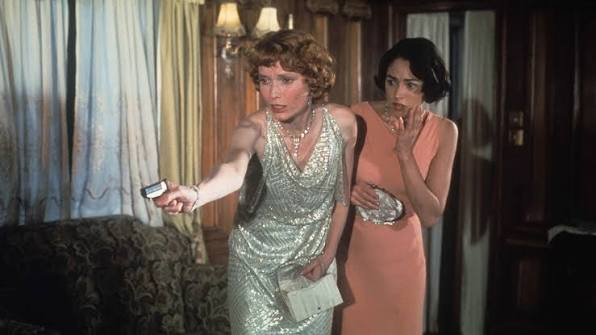
Linnet owns a mansion and invites her friend Jackie to stay, who in turn arranges for Linnet to hire her own husband, Simon, only for Simon and Linnet to marry instead and head off on a honeymoon to Egypt. This betrayal sets the classic mystery structure in motion, gathering a small circle of suspects with clear motives just as the newly married couple arrive, with Poirot following not too long after. Jackie follows the couple obsessively, immediately marking her as the first suspect, and Poirot directly urges her to let them be, but she makes her heartbreak unmistakable, and pointedly reveals that she has a gun in her bag. All parties eventually converge on a Nile river cruise, where the suspect pool widens: Bette Davis’s character is revealed to be a thief with a clear motive, and a maid whose hopes of marriage are blocked by Linnet gains a strong motive of her own. This setup efficiently stacks motive after motive onto the central cast before the murder even occurs, giving the back half of the film a wide and well-earned suspect list to work through.
As the couple quietly takes in the sights, a POV shot reveals an attempt on Linnet’s life, a genuinely fun and inventive use of camera angle, sound design, and the absence of score to build tension. This sequence becomes a standout example of visual storytelling in mystery cinema, its restraint and style clearly anticipating the kind of modern whodunits that would follow, with Knives Out a particularly clear descendant. Linnet is ultimately shot and killed at night, roughly an hour into the film, an unorthodox choice that devotes half the runtime solely to building toward her death. Poirot then reveals that Jackie could not have physically committed the murder, meaning the killer must be another member of the group entirely, widening the mystery just as it seems to be narrowing. After the death, Poirot lays out each character’s potential motive before he fully investigates the case, giving the audience a clear map of suspects before the real detective work begins.
The investigating duo turns to Simon for possible answers, with Jackie’s supposed innocence mentioned suspiciously often throughout their questioning, a detail that subtly signals where the larger plot is heading. The mystery is exceptionally well constructed, particularly once a cobra appears in Poirot’s room as an attempt on his life just as he begins closing in on the case. While investigating, Poirot presses every guest and moves closer and closer to the truth, focusing heavily on Bette Davis’s character, who has stolen her own pearl necklace on the night of the murder. After the maid’s mother is killed, Poirot calls everyone together for a classic mystery‑genre reveal, a climactic device that has clearly gone on to inspire countless films since. This investigative stretch builds methodically toward the truth, giving each suspect their moment under scrutiny before the larger conspiracy comes into focus.

The plot between Simon and Jackie is heavily telegraphed throughout via dialogue emphasis and repetition, and ultimately revealed as the truth behind how Linnet was killed. Once exposed, it becomes clear that the two shot themselves as part of the plan, staging their own injuries to deflect suspicion and bring the mystery to a dramatically staged close. This twist rewards attentive viewers who picked up on the suspicious framing around Simon from the film’s earliest scenes, even if the broader reveal itself isn’t especially surprising. It also neatly ties together every motive introduced earlier in the film, clarifying that the supporting suspects’ secrets, while genuine, ultimately sit apart from the central murder plot. This methodical unveiling exemplifies the genre at its best, relying on a slow accumulation of clues rather than any single twist to drive the mystery’s resolution.
Death on the Nile ultimately serves as a great example of what it means to be a classic mystery precisely because of its patient, well-built structure, taking half the film to arrive at its central murder and using that time efficiently. The film’s willingness to stack motive after motive across its supporting cast gives the investigation real depth, even when the central twist proves somewhat predictable. Poirot’s methodical, confident investigation remains the backbone of the entire experience, anchoring a sprawling cast of suspects with a clear and satisfying through-line. Its influence on the genre is hard to overstate, with its structure and reveal style echoing clearly in modern mystery films that followed. As a result, Death on the Nile endures as a genre staple: both a showcase for Christie’s intricate plotting and a blueprint for the murder mystery films that came after it. Overall, Death on the Nile is one of the most influential and purely enjoyable throwbacks we’ve covered, holding up better than nearly every other mystery of its decade and earning an 84/100 from the TwilightRoom.
TwilightRoom Score: 84.1/100