This week’s Criterion Tuesday is Charles Vidor’s 1946 mixed-reviewed Gilda, and what we find most compelling here is not the plot itself but how thoroughly the film
serves as a showcase for Rita Hayworth, whose introduction as the title character is absurdly beautiful and immediately makes her the star of the show in every sense of the word. Glenn Ford plays the film’s other main character, and while he’s fantastic in his own right, as he is in many roles that play to his strengths, this
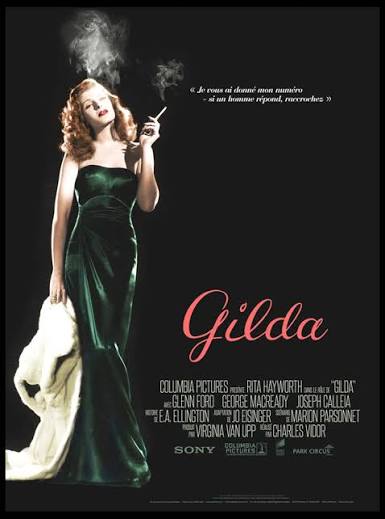
remains Hayworth’s film through and through. Ford wisely never battles her for the spotlight, even as his character keeps trying to win her heart. The story itself feels a bit ordinary, a fairly standard love triangle that clearly takes inspiration from films like Casablanca in both setting and narrative, even as it’s dressed in noir trappings. But the film gets away with that thinness because of the atmosphere and star power layered over it. The use of light and shadow between Mr. Munson and Johnny, and especially around Gilda, is genuinely inventive. Even its more conventional Hollywood plot turns are rendered with a visual sophistication that lifts them above the ordinary. Gilda succeeds far more on presence and craft than on narrative ambition, offering a classic ’40s noir atmosphere that earns its Criterion place by framing Rita Hayworth perhaps better than any other film ever did.
The film stars Glenn Ford as Johnny Farrell, a gambler in Buenos Aires who cheats his way into money and is pulled into the orbit of Mr. Munson, the manager of a casino who ends up hiring him after he almost wipes him clean. The setup feels again like a classic old story from the 40s that brings intrigue with that distinct vibe of the era, grounding the film in a familiar noir register before Gilda herself ever appears on screen. But once Gilda, played by Rita Hayworth, enters the film, everything changes. She immediately steals the show, framed in absurdly beautiful fashion, and every scene from then on demands her presence and the audience’s full attention. Gilda, now married to Munson, clearly shares a hidden past with Farrell, and the tension is immediate the moment they see each other, carrying the middle stretch of the film through a web of concealment even as much of the surrounding plot remains fairly standard. Gilda and Johnny are revealed to have once been in love, though how they each ended up in Argentina, and in Munson’s orbit, has yet to be fully explained, keeping just enough mystery alive to lend intrigue to an otherwise ordinary story.
Gilda continues to draw the attention of men at the casino with her beauty and vocal charm, and Farrell, who spends so much time with her, is clearly affected each time. His jealousy grows even as he’s ostensibly working for his former lover’s new husband. Meanwhile, Munson and Johnny grow increasingly close, and it becomes clear that they are both in love with Gilda. That dynamic is what has made the film memorable for more than half a century: not a simple rivalry, but two men bound together by the same obsession, which the audience is pulled into as well. Munson grows increasingly suspicious of the obvious bond between the two men, and this is where the film’s noir instincts are at their sharpest, letting suspicion simmer instead of erupting all at once. When Johnny takes Gilda for a dance, Munson is busy dealing with threats to the casino and his business, which only adds fuel to the tension and escalates the love triangle without tipping into melodrama. The later threat of Johnny being held at gunpoint by men trying to bring down Munson gives the film’s back half real stakes beyond the romantic tension it had been missing.
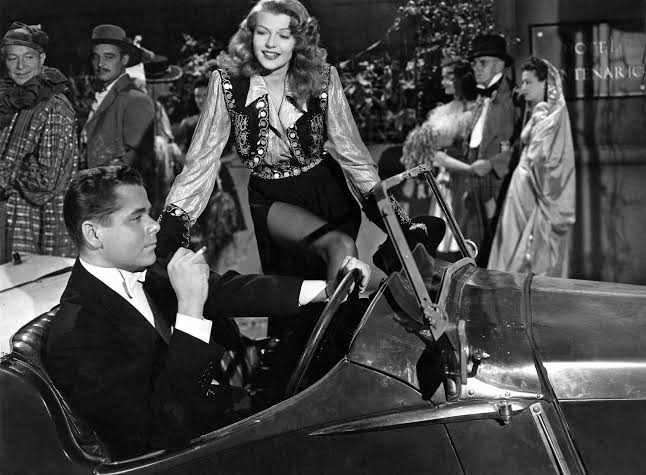
The use of light and shadow throughout Gilda is especially striking in the scenes between Munson and Johnny, where the film visually reinforces their power dynamic. Munson is kept in the dark both literally, through shadow, and narratively, even as the story itself remains relatively straightforward. Vidor’s best strength as a director is his lighting and his fluidity, especially in the way he works with actors rather than studio heads or producers to get the most out of performances, and that is where this film shines brightest. Cinematographer Rudolph Maté knew exactly how to position and light Hayworth, how to frame her face, and how to capture the charisma she exudes, building the film’s visual identity almost entirely around making her the center of every composition. So while the story feels a bit ordinary, the direction and cinematography constantly elevate it and justify its place in the collection, making it far better than a lesser film with the same script might have been. Even at its most conventional, the film maintains a mood that is violent, sexual, and chaotic, with a noir atmosphere that Vidor sustains far more effectively than the plot itself would suggest on paper.
Gilda functions as a pawn between two men trapped by desire, men who love her, use her, and mistreat her in equal measure; the film is fairly unflinching about the cruelty embedded in that dynamic. Although it offers what seems like a happy ending, it does what many films of the period do, delivering a conclusion that feels uneasy rather than romantic once you sit with what the two men have put her through. This ambiguity is one of the film’s most interesting qualities in retrospect, resisting a clean resolution even as the surface plot wraps up conventionally. Hayworth had mostly found her place in musicals before this, and Gilda uses her talents in a more distinctive way, allowing her to carry dramatic and emotional weight rather than just the performance numbers she was best known for. The film was a small hit at the time, especially for Hayworth’s career, but U.S. critics were mixed. French critics, who saw it months later, later reappraised it significantly, recognizing the tension between spectacle and unease that makes it worth revisiting now and helps explain its Criterion treatment.
Gilda endures primarily as a showcase for Rita Hayworth, whose performance and presence carry a film whose plot, on its own, would likely be forgotten. Glenn Ford does solid work as Johnny, offering unglamorous support and never asking for more spotlight than the material gives him, which is exactly the right choice given who he’s sharing the screen with. Johnny’s voiceover is notably never resolved, and his full thoughts are never revealed, an odd but fitting touch for a film built more on mood than clarity. Vidor and Maté’s command of light, shadow, and star framing remains the film’s most impressive achievement, turning an otherwise ordinary noir story into something genuinely memorable to look at. Gilda is an essential entry for anyone interested in the classic Hollywood star power, even if its narrative ambitions never quite match the force of its central performance, earning a 78/100 from TwilightRoom.
TwilightRoom Score: 78.2/100