Hokum is the biggest film I missed at SXSW this year and was patiently anticipating its wide theatrical release, and was pleasantly surprised and spooked to all hell at the same time.
The newest Damien McCarthy project presents as a quiet, atmospheric psychological horror that immediately separates itself from more conventional genre entries through its commitment to a nuanced scary tone, ambiguity, and
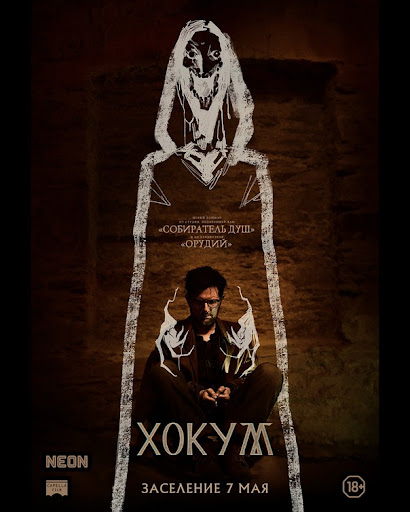
slow-building unease from all sorts of angles. What begins as a story from author Ohm Bowman attempting to finish his novel quickly shifts into the film’s true core: following the Adam Scott-led journey to a remote Irish Inn, bringing with him a sense of freshly exposed trauma and emotional instability that defines the film. Hokum wastes no time establishing its unsettling presence, using isolation, silence, and a clear affinity to negative space in horror to create a setting that feels off long before anything explicitly horrific happens. Early conversations surrounding witches, death, and the Inn’s past surrounding Bowman’s family, Hokum begins layering its central ideas, positioning the narrative somewhere between psychological breakdown, a real killer-thriller, and a paranormal horror. Hokum is a slow-burning psychological horror with a clear feel for how to scare, that blends supernatural elements with themes of guilt, trauma, and death all around, delivering a deeply atmospheric and unsettling experience that thrives on tension and concept, solidifying it as the best horror film of the year so far, and a top 2026 release.
The story follows Ohm Bowman, referred to by his last name mostly, isolating his angry and blunt self in the Inn to finish writing his book, or make a serious life decision, using the classic “outsider enters a haunted space” framework to build tension gradually. The narrative unfolds in a fragmented and intentionally disorienting way, blending present events with memory, hallucination, and supernatural interference that attacks the audience from all sides. Rather than relying on a clear big bad, the film embraces the audience’s wonder, often leaving the viewer questioning what truly happens in scenes as they are revealed. That slow‑burn structure was proven in Oddity by McCarthy and feels more refined here, showing just how well he can organize a narrative for a psychological thriller with real‑world stakes involved.
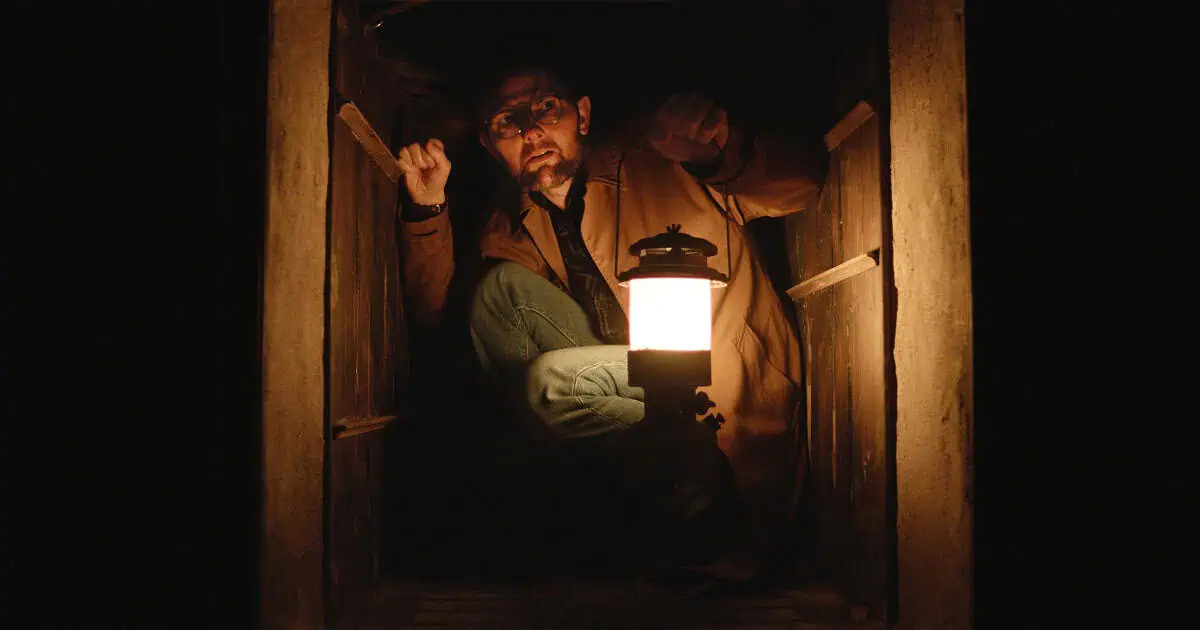
Adam Scott delivers a strong central performance that the film crucially hinges on, portraying Bowman as emotionally fractured, increasingly unstable, and ultimately revealed as a suicidal, broken man. Bowman’s trauma lies specifically in his mother’s death, and, as we later learn, his own involvement in it, becoming central to the lingering presence he effectively brings into the inn from the outside. It’s quite ironic that Adam Scott has found so much success in an elevator on Severance, and that his next big role puts him in another elevator, horrified, a quite funny touch in an otherwise deeply disturbing late‑night watch. Fiona, the inn’s bartender, functions both as Bowman’s grounded lifeline and as the mysterious disappearance that pivots the film from ominous internal conflict to something more outwardly threatening, while Jerry, the mysterious moonshine‑holding stranger in the woods, embodies the familiar red‑herring trope: he looks like the killer, but turns out to be unexpectedly gentle, underscoring how often the film leans on well‑worn genre beats even as it finds fresher ways to distinguish itself elsewhere. Supporting characters lead by a crazed and calm Mal, the concierge, are good but definitely a backdrop for Bowman himself that clearly leads this film for the entire runtime.
Hokum’s thematic core is where the film really separates itself from a lot of modern horror, as it becomes less about what is physically happening and more about what is psychologically weighing down every character involved. Death is everywhere in this film, not just as a concept but as a lingering presence that follows Bowman into the inn, into conversations, and eventually into every decision he makes. The film constantly plays with guilt, specifically Bowman’s, turning his past into something that feels just as dangerous as any supernatural force the film introduces. What makes this work so well is how McCarthy never fully commits to one lane, as the witch elements, the idea of a real killer, and Bowman’s mental deterioration all exist at the same time, forcing the audience to sit in that discomfort and figure out where the true horror lies. It becomes a film about consequence just as much as fear, where every reveal adds another layer to Bowman’s already fractured state, making the horror feel earned rather than manufactured.

From a directing standpoint, Hokum thrives on restraint and confidence in its atmosphere, something that has become a calling card for McCarthy at this point. The use of negative space is easily one of the film’s strongest technical elements, with shots lingering just long enough to make you question what you’re seeing or not seeing at all. The Ireland setting is used to its fullest, a cold, isolated stretch of countryside that feels detached from reality, as if Bowman has wandered into a place that exists slightly outside of time. Sequences like the elevator scene or Bowman exploring the inn alone stand out because of how simple they are, yet how effective they become through sound design and stillness. This isn’t a film that relies on jump scares to get its reaction, but does include a couple of them, more so it builds dread through silence and anticipation, which makes the few moments of direct horror hit that much harder.
The pacing is definitely one of the more divisive elements of Hokum, but for the most part it works in the film’s favor. It takes its time building the world, and Bowman’s mental state, allowing the audience to fully sit in the discomfort before anything major is revealed. The first half is incredibly effective in setting tone and intrigue, but the middle portion does begin to slow down a bit too much, repeating certain beats of ambiguity without always pushing the story forward. That said, the tension never fully drops, it just shifts into a more internal kind of unease. By the time the film begins ramping toward its final act, the slow pacing ends up paying off, as everything starts to connect and the weight of what’s been building finally begins to hit.
Fiona’s disappearance serves as the film’s key turning point, pivoting the story from Bowman’s suicide attempt to his halting recovery and, eventually, his obsessive search for the missing woman. It’s a slow psychological descent that gradually shifts into something more externally driven, centered on a character who is already clearly coming apart from the inside. The discovery of Fiona’s dead body, hidden in the honeymoon suite, ushers in a far more concrete kind of horror, abruptly fusing the film’s supernatural dread with a tangible threat, just before it erupts into full‑on terror as a witch begins to stalk Bowman who is now trapped inside the suite by the real killer Mal. Bowman’s realization that his past actions, accidentally shooting his mom when he was little, is directly tied to this haunting presence he feels, reframing the narrative entirely and taking what some thought was going to be the scare and turning into something much more creepy. The introduction of Mal, the witch, and the creepy figure from Bowman’s childhood at the same time is an insane twist and beginning to the final act. The escalation works best when it blends all these elements together, creating a layered tension where the audience has no idea what will drive the horror in the next scene—a crossbow cutting through the frame, a creepy bunny figure that spooked people to all hell, or the witch suddenly appearing in the film’s negative space.
The final act of Hokum is where everything finally collapses into itself in the best and most overwhelming way possible, taking all of the psychological tension, supernatural presence, and real-world horror and throwing it together into one chaotic but controlled ending. Bowman is no longer just reacting to what’s happening around him, he is fully immersed in it, trapped inside the inn and a chalk circle as well as his own past at the same time, where every scare feels like a consequence of something he has done rather than just a random horror beat. The suite and basement sequences become the film’s strongest stretch, using tight spaces and that same negative space McCarthy has been building the entire runtime to create some of the most effective and terrifying moments of the film. What makes this final act hit harder than most is how it fully commits to the idea that the horror has always been internal, with the reveal of Bowman’s past tying everything together into something much more unsettling than a simple witch story. It’s messy at times, and not every beat clicks logically as Bowman really should have tried harder to break down the door before committing to a slow ride in a creepy dolly with a corpse, but emotionally and tonally it absolutely lands, delivering a final stretch that’s creepy, chaotic, and leaves a lasting impact long after it ends.
Hokum stands out as the best horror film of the year so far, driven by its commitment to tone, atmosphere, and psychological storytelling. Adam Scott’s performance is the backbone of the film, keeping the narrative grounded even as it becomes more chaotic and abstract. While the film does occasionally struggle with its lack of real logic, its ambition, complexity, and commitment to the horror outweigh those issues. Ultimately, Hokum is bold, unsettling, and memorable, solidifying at the top of the ranks for 2026 and earning an 84/100 from the TwilightRoom.
TwilightRoom Score: 84.8/100