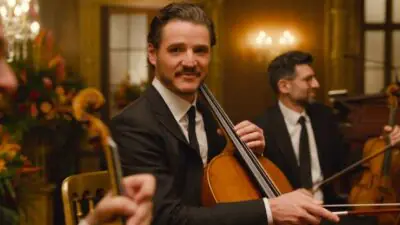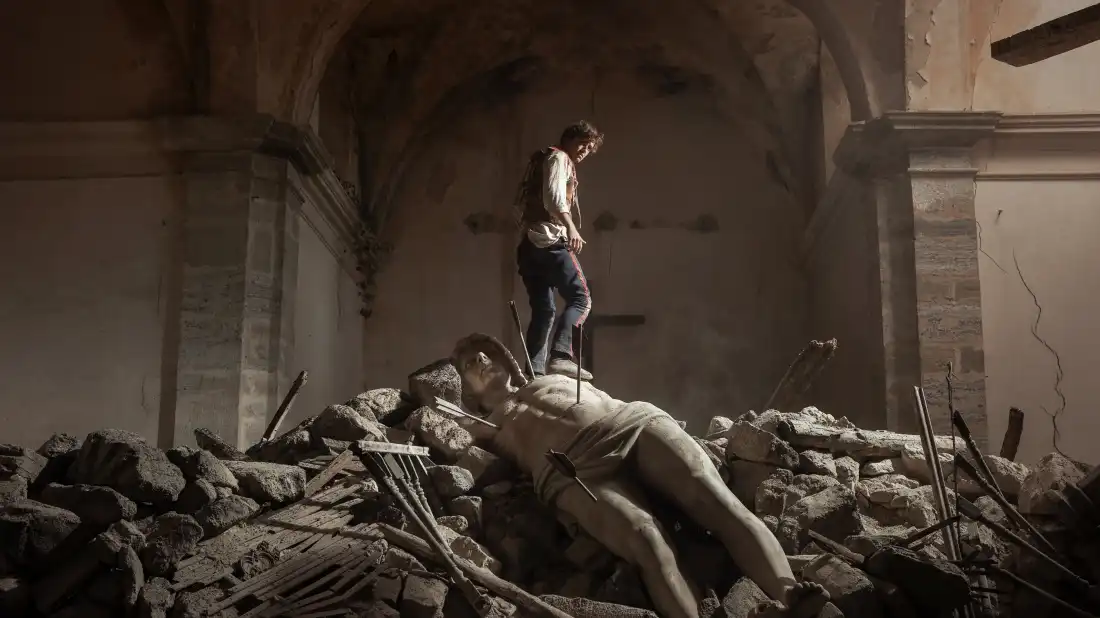
La Bola Negra is a true epic in every direction at once, from the booming score, to the sweeping camerawork, to the full narrative
managing three storylines. It blends them seamlessly to deliver a top-5 entry of the year and a momentous film for queer and Spanish cinema. The film immediately establishes the type of experience this 160-minute story will entail with one of the greatest ambushes of innocence an opening sequence has had this century, then moves into identifying how each story will tackle queer identity on a scale as grand as there is in cinema. Each of the three stories is built around this concept and further allows the subject to escalate as we move through

time, running from suggestion, to hidden identity in a town that refuses to accept them, to the present day when the complexities only continue to grow. Javier Calvo and Javier Ambrossi took best director at Cannes for their play within a play, wartime saga that pursues reality and nuance at every moment. It was well deserved, as the film delivers what no other this year could: one of the best-shot films ever made combined with a tantalizing, crucial story that never once loses its audience. La Bola Negra is a beautiful queer Spanish epic unlike anything before it, and the ambition on display is complemented by the intricacy needed to place it among the greats of the genre.
The film splits across 1932, 1937 and 2017, following three gay men whose lives turn out to be connected in ways the first half deliberately withholds from its audience until the exact moment it needs to. The two older stories are the ones that shine most on their own, particularly Sebastián’s thread and the wartime Spain material, which carry a weight and an immediacy the modern story initially struggles to match in either intrigue or importance. That gap is the one real question the early going raises, because for a long stretch it is genuinely unclear why the 2017 timeline is here at all, and the patience required to sit with that uncertainty is considerable. The title itself comes from Federico García Lorca’s unfinished novel, built around the blackballing of a young gay man rejected from a social club in Granada. Lorca wrote only four pages before he was murdered in 1936. Taking a fragment that small and constructing a 160-minute saga on top of it is an enormous swing, and the fact that the film never feels like it is padding out a footnote is the first sign of how carefully the whole thing was crafted.
The film is shot perfectly, moving between play-like scenes staged in precise, static frames, tracking shots that recall French New Wave cinema and POV work that feels uniquely modern and artsy without ever reading as a gimmick. It is shot better than any narrative feature I have seen since The Brutalist, and Gris Jordana’s 35mm photography is the single most impressive technical element in a film absolutely loaded with them. The natural light is used magnificently throughout, with street lamps and real Spanish settings illuminating entire scenes and every source feeling chosen rather than simply available. Cigarette flames, fireworks and flares light the late-night activity of the soldiers through the middle section, and all of it is intentional, genuinely beautiful and never merely decorative. Raül Refree’s score and the sound design play a gigantic part in driving the whole thing forward, screaming epic scale across some sequences while carrying grace and subtlety through others.
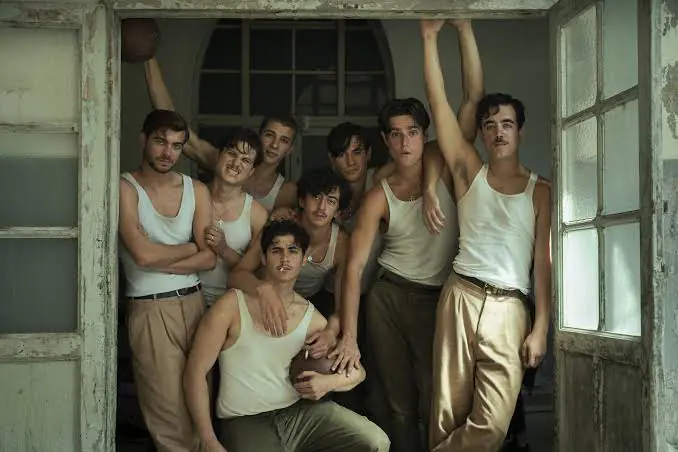
Spoiler warning: The following section discusses major plot reveals in La Bola Negra.
The second half is where the stories converge, as the film reveals that the play-like shots exist because the La Bola Negra section is itself a play, written by a famous writer who was gay and, in that era, could never say so publicly. That writer’s lover turns out to be Sebastián’s prisoner from the wartime story, and as Sebastián and the prisoner fall in love and finally admit what they feel to each other, Sebastián is told to find the play in Madrid and protect it. The modern timeline then reveals itself as the story of that man’s descendant, also a playwright, now tasked with staging the play after nearly a century. The structure makes complete sense in retrospect, and the 2017 thread that had been struggling to justify its own presence becomes the payoff the entire film was quietly building toward. It is the kind of reveal that reorganizes everything preceding it without ever feeling like a trick, because the connection between these men is thematic long before it becomes narrative.
Penélope Cruz anchors one of the film’s two standout sequences, delivering a complete reframe of Sebastián’s outlook on life in a scene that functions as the emotional hinge of the entire picture. Guitarricadelafuente carries an enormous amount of this film as Sebastián in his acting debut, and the restraint in that performance is precisely what allows Cruz’s scene to land with the force it does. The other standout is the final sequence, bouncing between the icy tundra, the wartime celebration in Madrid, the securing of La Bola Negra itself and the present day. That modern thread closes on the 2017 playwright finding solace in the man he loves with no repercussions waiting for him, which is the film’s central argument delivered without a single word of explanation. Cutting between all four of those at once could very easily have collapsed into chaos, and instead it becomes the most emotionally overwhelming stretch of film I have seen this year.
La Bola Negra is an epic built on a four-page fragment, and the audacity of that alone would be worth discussing even if the finished film were half as accomplished as it actually is. Its escalation of queer identity across nearly a century is the smartest structural decision in the picture, because the progression from suggestion to survival to a freedom that still carries its own complexities does work no thesis statement ever could. The craft is unimpeachable throughout, from Jordana’s 35mm photography and the obsessive use of natural light to a score that knows exactly when to recede and let a room go quiet. Some critics have found it overblown, and I understand where that reaction comes from, because a film operating at this register has no interest whatsoever in playing it safe, but that total commitment is why it works as well as it does. Earning a 94/100 from TwilightRoom, La Bola Negra is a beautiful queer Spanish epic unlike anything before it, a top-5 film of the year and a genuine contender when the Oscars arrive.
TwilightRoom Score: 94.4/100