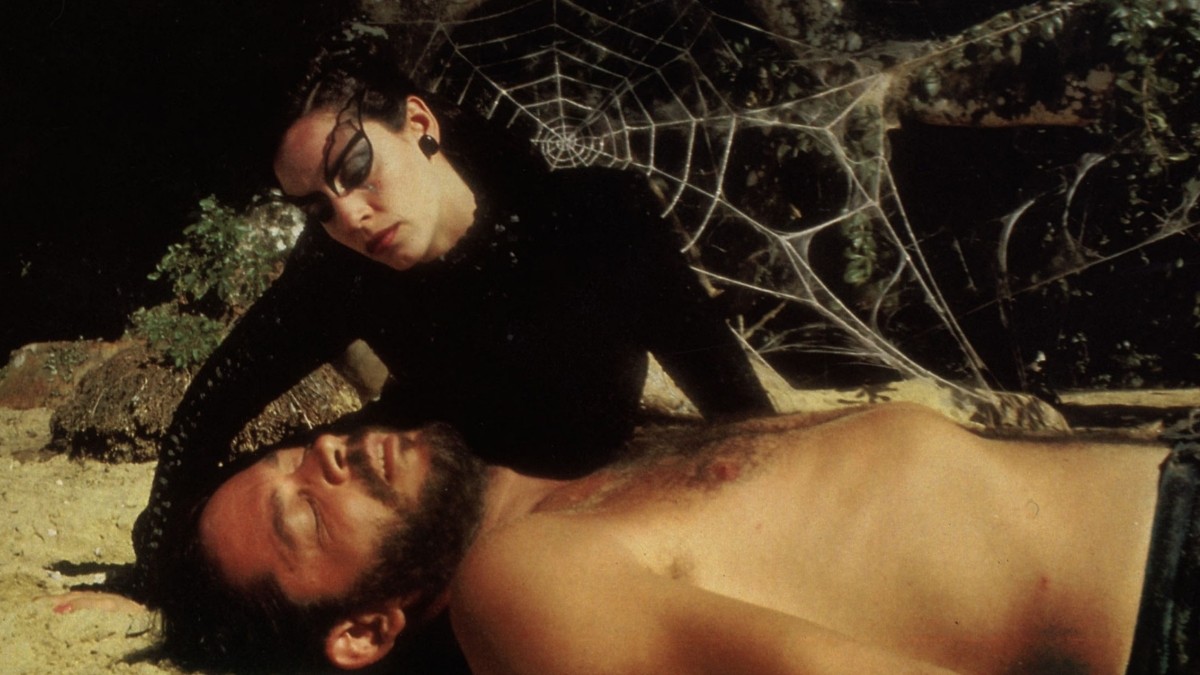
Kiss of the Spider Woman presents itself as a container prison drama, but quickly reveals itself to be something far more layered, making it this week’s Criterion Tuesday review.
The film is built by director Hector Babenco almost entirely through dialogue and performance, as his film stagespolitical ideology, escapism and human connection in a film that is necessary and confined within a single prison cell. What could feel limited in design instead becomes deeply complex, using
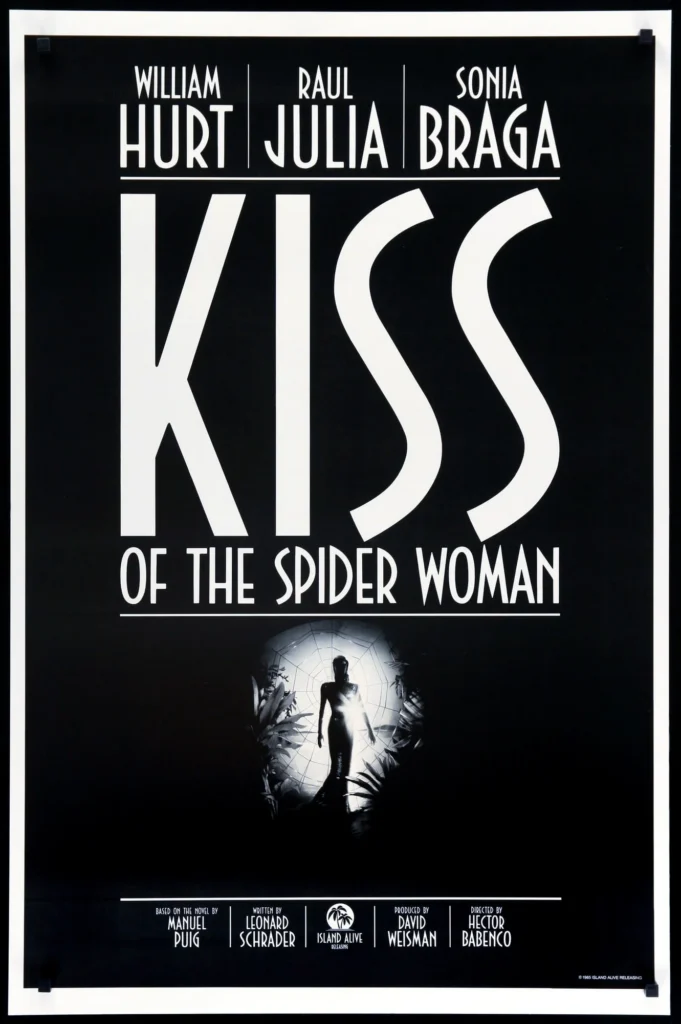
storytelling itself as both survival, resistance, and sexuality in an extremely unique historical way. Kiss of the Spider Woman is a deeply complex, dual performance-driven film that uses its confined setting and film-within-a-film type storytelling structure to explore political oppression, emotional vulnerability, and the power of escapism, even if its heavy reliance on dialogue can feel slow at times.
The film centers on two men sharing a prison cell who could hardly be more different when they first meet. Molina, a gay window dresser and flamboyant storyteller, contrasts sharply with Valentin, a straight, politically driven journalist and revolutionary, yet both men evolve into far more complex figures as the film progresses. Their dynamic immediately establishes tension between escapism and realism, fantasy and ideology as it builds its foundation on their conversations, allowing their relationship to evolve immensely over time. Molina tells this elaborate film story to Valentin as a way to cope with the brutality of prison life and an extremely troubled backstory, providing these imagined sequences become an inventive device for staging stories in different cinematic modes, periodically breaking open the confines of their one-room imprisonment. The contrast between the very black and white prison environment and the stylized, colored storytelling reinforces the importance of escapism in a film that is the opposite of that in design. These stories are not just mere distractions included in the plot, they are the backbone for the film and emotional tools that help both characters survive their predicaments.
Valentin initially tries his best to resist Molina’s extravagance and storytelling, viewing it as a distraction from the political reality he is fighting and facing. Yet, over time, he begins to soften, forming a bond that neither character fully knows how to express or describe for one another. Molina is treated very poorly by prison guards, while Valentin treats him with a level of respect that creates an emotional complexity that is later revealed. Their connection becomes much deeper than the twist that tries to pull them apart and it builds layers upon layers of guilt, dependence and unspoken care into their characters.
The film is set within this broader context of Latin American political repression of the time, that includes torture and systemic violence reflected inside and out of the prison walls. It is revealed about 40 minutes into the film that Molina is being used, and paid-off by the prison officials to extract information from Valentin in order to help suppress the resistance movement. The authorities arrange to have the prison food poisoned as a tool of manipulation and control, a tactic that leaves Valentin weakened and makes his sentence feel even more devastating. These elements ground the film in real felt political stakes, elevating it beyond a simple character study into something much more monumental and deserving of being in the Criterion Collection.
William Hurt delivers an Oscar-winning performance here that defines the film, his portrayal of Molina is emotional, layered, and deeply human, capturing both vulnerability and strength. It’s a performance that carries much of the film’s emotional weight, especially in quiet dialogue, moments that dominate the film’s runtime. The chemistry Hurt delivers with his costar as the two leads, is essential, making their evolving relationship believable and extremely impactful.
The film operates as both this fantasy melodrama format and a grounded prison narrative in a deeply unique composition. Its dual structure allows it to explore both the concept of emotional escape, and a harsh reality, simultaneously and seamlessly. The imagined stories by Molina do a great job contrasting with the bleakness of prison life, reinforcing the film’s central themes, as well as supporting the idea that a melodrama can still carry real historical and emotional weight behind its storyline.
The main thing holding this film back from a higher rating is primarily because although the film has a reliance on dialogue that creates depth, it can make it feel quite tedious at times, due to its static unmoving setting. Since much of the story unfolds in one location, it may limit engagement for some viewers. But despite this, the strength of the wiring and performances keep the film compelling and seems to cover this issue quite well for most of the film.
As Molina is released from prison, he is tasked with helping the authorities track Valentin’s revolutionary contacts, a real climax in the character’s decision. However, after forming such a strong bond with Valentin, Molina chooses not to reveal information, leading to his death and solidifying his arc as one of sacrifice and loyalty. The ending here reinforces just how powerful the two’s connection is and the depth of their relationship, as well as the cost of resistance.
Kiss of the Spider Woman is a film that thrives on its complexity, blending political commentary with emotional storytelling. Its reliance on dialogue and confined setting may not resonate with everyone, but its performances and theme make it a deeply impactful experience. The film ultimately succeeds as both a character study and a political statement, using intimacy and storytelling to explore some of the darkest and most human aspects of its world, earning it an 80/100 from TwilightRoom.
Twilight Room Score: 80.6/100