One of the most famously edgy comedy shows of all time makes its move to the film world for the first time in this week’s Throwback Thursday, and it does so in a
musical format that is about as unhinged a creative decision as anyone could have made in 1999. The film continues from the very start with laugh-out-loud comedy and crude jokes coming one after another, a movie designed from the ground up to push the absolute limits of crude language rather than tiptoe around them. What elevates it beyond shock value is that its central argument,
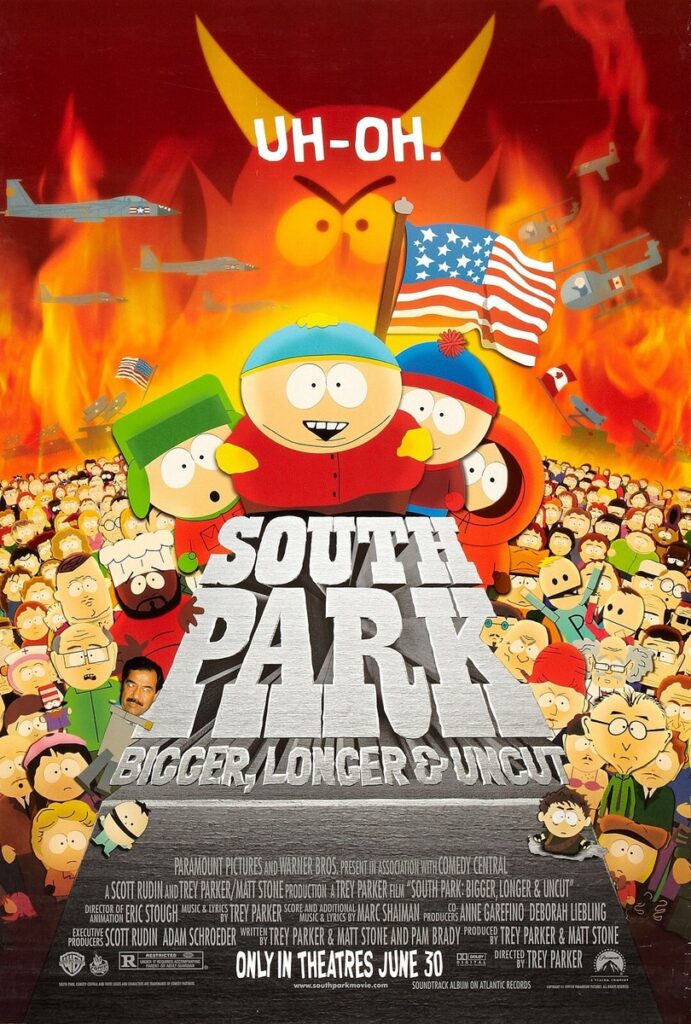
that American moral panic about vulgarity and foreign influence is far more dangerous to children than the vulgarity itself, is genuinely sharp and lands with the same force today as it did on release. The musical choice is the one element we’re still not entirely sold on, since the normal dialogue is much more effective and moments like Kenny’s death, a staple of the show, are simply funnier when played straight. Even so, this is one of the most formally sophisticated studio comedies of its era, a film whose critical legacy has only grown in the years since and now sits comfortably among the greatest animated films ever made.
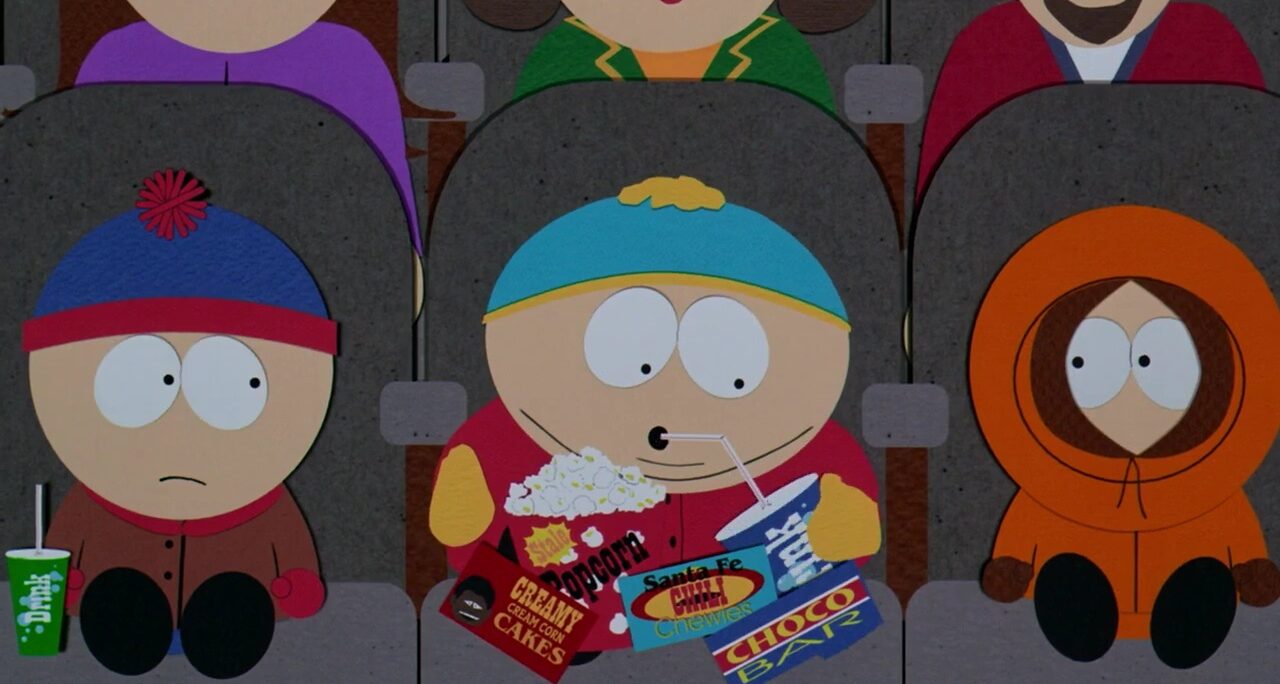
The film’s engine is the Canadian film Asses of Fire, which releases and immediately influences the children of South Park, corrupting their minds in a way the town finds absolutely devastating and turning Terrance and Phillip into the number one enemies of America. That escalation is the whole satirical thrust of the movie, watching a nation redirect its entire moral outrage toward two cartoon Canadians rather than examining anything about itself. After the boys get caught seeing the film a second time, Terrance and Phillip are arrested in a wild Conan O’Brien cameo that plays as one of the film’s better sight gags. The kids panic in the aftermath as Kenny finds his way to hell and meets Satan, opening up the second front of the story and giving the film a genuinely strange spiritual dimension underneath all the profanity. From there the film builds steadily toward Terrance and Phillip’s public execution, a premise that sounds absurd on paper and somehow becomes the most pointed thing in the entire movie.
The decision to make this a full-blown musical is a bit unhinged, and we’re still not sure it entirely works, since the show’s normal dialogue rhythm is significantly more effective at delivering its comedy than the songs are. That said, the film features twelve original songs by Trey Parker and Marc Shaiman, a genuine Broadway-caliber score that operates as a direct parody of the Disney Renaissance musicals dominating animation at the time, complete with explicit structural references to Les Misérables. Those songs are satirically brilliant in a way that disguises genuinely sophisticated musical construction underneath, which is exactly why “Blame Canada” ended up nominated for the Academy Award for Best Original Song and performed at the ceremony by Robin Williams to the visible discomfort of much of the room. The gap between how stupid the songs sound and how well-built they actually are is one of the film’s most impressive tricks. Even when the format works against the comedy, the ambition behind it is impossible to dismiss.
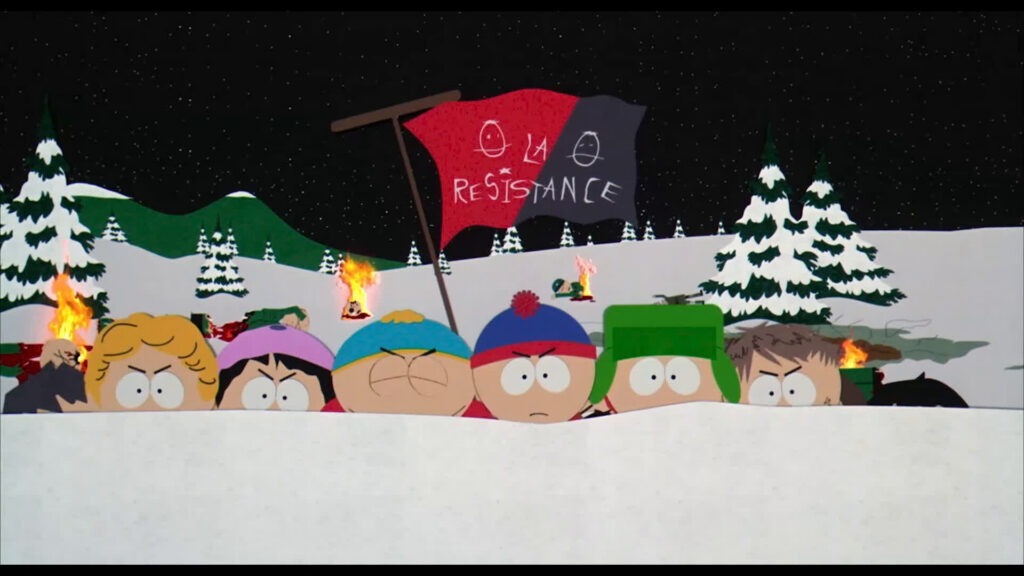
The film was released just two years after the series first broadcast, making it the fastest television-to-film adaptation in history at the time, and Parker and Stone’s primary condition for making it at all was that it had to be at least R-rated. That demand became a prolonged war, with the film returning from the MPAA with an NC-17 rating multiple times throughout production before finally securing its R just two weeks before release. What makes that battle so remarkable is that the satirical target of the film, censorship and moral panic, was being enacted in real time by the very institution the movie was mocking through its Parents Against Canadian Filmmakers subplot. The title itself, Bigger, Longer & Uncut, is an obscene joke aimed squarely at the MPAA’s own cuts, which tells you exactly how seriously Parker and Stone took the fight. That running conflict ended up being one of the most productive creative constraints in the film’s history, sharpening the satire rather than blunting it.
Made on a $21 million budget, the film grossed $83.1 million worldwide and became the highest-grossing R-rated animated film ever made, a record it held for seventeen years until Sausage Party surpassed it in 2016. That run demonstrated conclusively that adult animated content could sustain a mainstream theatrical release without compromising its edge to get there, a lesson the industry took a long time to actually internalize. South Park had debuted in August 1997 and within two seasons had become a genuine cultural phenomenon, generating enormous controversy, massive merchandise revenue, and a level of celebrity for its creators that neither had remotely anticipated. The film arrived at the exact peak of that first wave of South Park mania, giving Parker and Stone the leverage to make something far more ambitious and formally inventive than a feature-length episode. It’s now consistently cited alongside Shrek and The Simpsons Movie as definitive proof that television animation could translate to theatrical cinema without diluting what made it work in the first place.
South Park: Bigger, Longer & Uncut takes one of the edgiest comedy shows ever made and somehow turns it into a formally ambitious musical satire without softening a single thing about it in the process. The musical format remains the film’s most debatable choice, with the show’s normal dialogue rhythm proving more consistently effective than the songs, even as those songs reveal genuinely sophisticated construction underneath all the crudeness on the surface. The MPAA war that shaped the film ended up becoming the film’s own subject, with Parker and Stone’s fight for an R rating playing out in real time against a movie mercilessly satirizing exactly that kind of institutional panic, right down to a title built as an obscene joke at the ratings board’s expense. Its record as the highest-grossing R-rated animated film for seventeen years proved conclusively that adult animation could work theatrically without compromise, a lesson the industry has been slowly relearning ever since, and one that places this film alongside Shrek and The Simpsons Movie as proof television animation could make the jump intact. The film’s central argument, that American moral panic about vulgarity and foreign influence is far more dangerous to children than the vulgarity itself, lands just as hard today as it did in 1999, and its willingness to follow that argument all the way to genuinely dark and formally extreme conclusions while never once losing its comedic nerve remains one of the more remarkable achievements in the history of American comedy filmmaking, earning a 63/100 from TwilightRoom.
TwilightRoom Score: 63.4/100