It is safe to say nobody expected a new addition to the Stranger Things franchise this quickly after its main show ended so recently, but Stranger Things ’85
introduced a new animated format for the franchise, making its first real spinoff trying to maintain the tone and identity of Hawkins a mixed bag. The shift to an animation style and new voice actors is immediately a noticeable tone change, creating
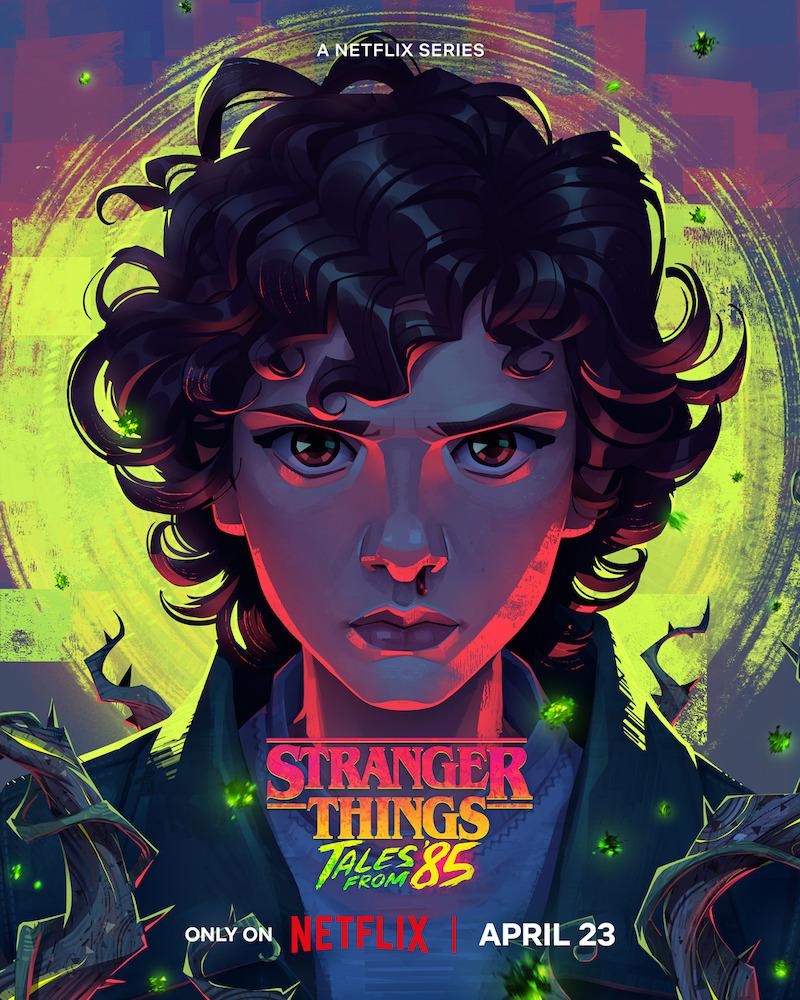
a fresh visual identity but also taking some time to adjust, especially with how the new style handled changing some of the characters underlying mannerisms when switching mediums. The story brings the group back into a snowy Hawkins setting, introducing a new monster threat tied to plant-like and hive-mind behavior that’s new, but still on-brand as the show takes place between season’s 2 & 3 of the main show. New characters are introduced amid criticism and concern about how they can possibly fit the franchise’s established timeline, concerns that are unfortunately proven right when they turn out to be more like plot devices than meaningful new additions. Stranger Things ’85 is a fun but uneven spinoff that captures the nostalgic spirit and core relationships of the franchise well, but should have been an episode or two shorter, more focused on character consistency, and originality, which ultimately leaves me feeling more like the show is more of a repurposed idea than a fully realized and necessary new chapter.
The narrative of Stranger Things ’85 follows a fairly simple and familiar structure, one that longtime fans of the series will recognize almost immediately as the group once again stumbles into a growing supernatural threat while balancing their everyday lives. The story begins with smaller discoveries, odd behavior, strange activity tied to the environment, before slowly expanding into a larger, more connected danger rooted in the pumpkin patch and the hive-mind creature beneath Hawkins. While this progression works in keeping the show accessible and easy to follow, it also feels noticeably safe, rarely stepping outside the formula that the original series perfected years ago. Because of this, the narrative often feels like it is going through the motions rather than building toward something unique, making it entertaining in the moment but lacking the complexity or originality that would justify its existence as a full spinoff rather than a contained side story.
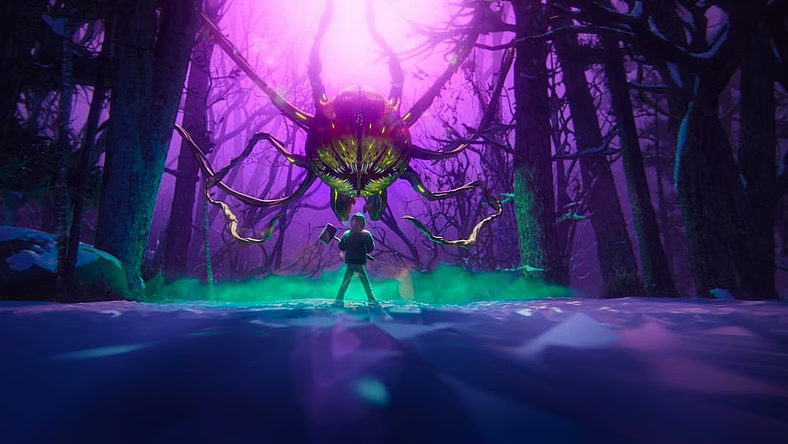
The most immediate and defining difference in Stranger Things ’85 is its transition into animation, a shift that allows for more visually creative and exaggerated sequences that in all honesty look fantastic, but also creates a tonal adjustment that is not always seamless. The animation style works best when it leans into action and spectacle, particularly in sequences involving the pumpkin creatures or the larger hive-mind presence, where the freedom of the medium allows for more ambitious and stylized visuals than the live-action series could achieve. However, that same stylistic freedom becomes a drawback in more grounded, dialogue-heavy scenes, where the characters can feel slightly disconnected from their original portrayals, both in voice and mannerism. This creates a subtle, but consistent sense, that something is just slightly off, especially early on before the audience fully adjusts. Despite this, the show does manage to maintain a lighter, more playful version of the Stranger Things tone, leaning more into fun and nostalgia rather than horror, which works in its favor as a spinoff, but also reinforces the idea that it is operating at a lower emotional and thematic level than the main series.
The shows biggest strength and the main pull for the series as it rolls out to the general audience is its focus on Max and Lucas, one of the best couples in the series finally gets the development outside the core group dynamic and high stakes, that fans have always wanted. Their relationship is given so much more attention here and the two’s characters fit more seamlessly then a lot of the others in the change of mediums, providing a grounded, emotional thread that the show really benefits from. However, several of the core characters don’t get this treatment, as Dustin, Hopper, and Mike just feel slightly off in their tones and personalities compared to their original portrayals highlighting a glaring issue. Not every character got a good transfer here and it will bother fans, some more than others, but I am of the opinion that at least Lucas and Max, and the small bits of Steve and Nancy that we do get, were a couple of the examples of how this transition and spinoff should have gone for every character.
The introduction of a new monster is always a major factor in how successful a Stranger Things installment feels, and here the show leans into a plant-based, hive-mind creature tied directly to the rotting pumpkin patch & other plants first discovered earlier in the original series but this time in a snow- based setting using the animation as a creative advantage. It’s a concept that feels on-brand, especially given how the franchise has always built its threats around interconnected systems rather than singular villains, but at the same time it never quite reaches the level of uniqueness or fear that past creatures have delivered. The idea of one central consciousness controlling multiple objects and beings is interesting and allows for some creative sequences, especially visually in the animated format, but narratively it feels like a variation rather than an evolution. The use of Dungeons & Dragons to label the creature as the “Aboleth” continues one of the franchise’s most recognizable storytelling devices, grounding the supernatural in something the kids understand, but even that feels more like a familiar callback than a meaningful expansion of the mythology. It works, it’s entertaining, but it never fully separates itself from what we’ve already seen before.

As with most Stranger Things stories, there are specific episodes that stand out above the rest, and here Episode 5 is the clear highlight of the season, built around a heist led by Nancy to steal a photo revealing Eleven’s powers back from a reporter. It functions almost as a standalone mission, capturing that classic adventurous, slightly chaotic energy that made the original series so compelling in its early seasons. It feels like a throwback in the best way, balancing humor, tension, and character interaction in a way the rest of the show sometimes struggles to maintain. Outside of that, the structure becomes more uneven, with certain episodes leaning too heavily into slower character moments that don’t feel entirely necessary given how well-established these characters already are. When the show is focused and pushing the story forward, it works really well, but the stretches where it slows down only highlight the pacing issues that keep it from being consistently engaging across its full runtime.
One of the most noticeable flaws throughout Stranger Things ’85 is its inconsistency in pacing, as the show struggles to find a balance between its action-driven sequences and its slower, character-focused moments. The middle portion of the season, particularly Episodes 6 and 7, significantly slow down the overall momentum, focusing on development that feels redundant rather than necessary. These moments don’t add enough new insight into the characters to justify the time spent on them, especially when the central conflict is still building in the background. At the same time, the monster plot continues to progress, creating a disconnect between the urgency of the threat and the pacing of the narrative. This uneven flow makes the show feel slightly stretched, reinforcing the idea that it could have benefited from being shorter and more tightly constructed. When it works, it’s fun and engaging, but those dips in momentum are hard to ignore and ultimately prevent the show from reaching its full potential.
The discovery of the pumpkin patch and its connection to the spreading spores reframes the entire narrative, shifting the story from isolated, episode-by-episode incidents into a more unified and dangerous threat that feels worthy of the Stranger Things name. What initially presents itself as strange, contained activity, quickly evolves into something much larger, as the idea of the spores infecting and transforming the environment raises both the scale and urgency of the conflict. The group’s investigation underground, paired with Eleven’s increasingly overpowered confrontations with the creatures, marks a clear turning point in the season, bringing the characters back together while pushing them closer to the truth behind what is happening in Hawkins. Dustin’s subplot, while inconsistent at times, ultimately leads to one of the more important reveals of the season, discovering that Mrs. Baker is tied directly to the origin of the spores, though that reveal is complicated by the twist involving her connection to a former Hawkins Lab worker. Even if the execution is uneven, this escalation works conceptually, setting up a final stretch that leans into a human–creature hybrid conflict, which becomes one of the more compelling elements of the season’s back half.
The final act of Stranger Things ’85 leans heavily into spectacle, delivering some of the most visually impressive sequences of the series as the dreamlike, animated chaos of the hive-mind fully takes over Hawkins. The merge between the real world and the spreading influence of the spores allows the animation to reach its most creative highs, particularly in the design of the final creature and the large-scale battle that follows. The human element of the conflict, especially the connection to Hawkins Lab, gives the climax a stronger conceptual backbone, even if the emotional weight doesn’t always match the scale of what’s happening on screen. Eleven once again plays a central role in resolving the conflict, though her power level feels inconsistent compared to earlier iterations of the character, making some of the tension feel slightly manufactured. Despite this, the ending still lands on a nostalgic and somewhat satisfying note, with a final sequence that leans into the emotional core of the franchise, even if it doesn’t fully earn the payoff. It’s a strong visual conclusion that reinforces the strengths of the animated format, but also highlights the limitations of the story it was built around.
Stranger Things ’85 succeeds in capturing the fun, nostalgic energy of Hawkins while experimenting with a new format that had some bumps in the road but was overall really fun. Inconsistencies in character portrayal and pacing stand out like sore thumbs preventing the show from reaching the heights of the original series, making it a mixed bag of strong ideas and recycled concepts rather than something entirely new. Ultimately, it works as enjoyable supplementary content but doesn’t feel like a necessary addition to the franchise earning a 78/100 from the TwilightRoom.
Twilight Room Score: 78.9/100