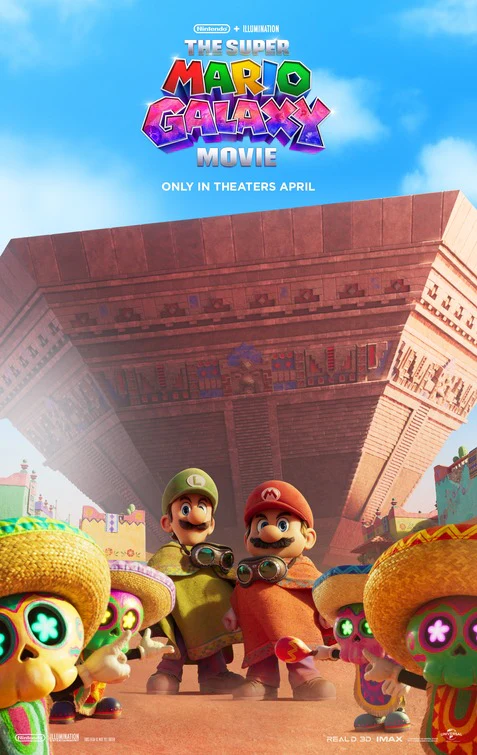
The Super Mario Galaxy Movie places itself in a more broad-scale debate among critics and fans while delivering the second large-scale animated blockbuster of the franchise, aimed at super fans and younger audiences’ appeal.
The filmmakers lean heavily into the spectacle of that high budget animation and all of the recognizable characters from the Nintendo games, making it cameo-heavy and fan service jam-packed. The film sparks the classic critics-versus-fans debate like
one movie a year typically does, raising the question as to whether a movie built purely for the entertainment of certain audiences should still be ripped apart and held to a deeper narrative standard than it achieves. The film succeeds as a visually impressive and energetic experience with a star- studded voice actor cast and funny moments, but struggles to really ever establish a real plot or elevate beyond that surface-level fun. Super Mario Galaxy is a visually exciting and occasionally fun animated blockbuster that delivers for avid fans and children, but lacks the narrative coherence and depth needed to elevate the film beyond what it was meant to be a high-budget brain-off entertainment piece.
The film reintroduces Mario, Luigi, and Peach back within a familiar rescue-driven structure saving Rosalina, with Bowser positioned as the central pulling-point between an antagonist with his son, and a redeemed character. This time, the narrative that already was coming off the heels of a do-way-too-much first film, escalates to the galaxy-spanning conflict, incorporating new characters like Yoshi and a wider range of Nintendo cameos, yet again doing way too much. While the larger scope suggests a more ambitious and cinematic story, it also introduces a level of character introduction the film struggles to manage much at all. What begins as a straightforward plumber’s rescue mission becomes increasingly overextended and crammed into far too little runtime, resulting in a narrative that clearly prioritizes scale and fan service over clarity.
The film continuously introduces new characters, worlds, and plot elements reminiscent of the many games and stories released by Nintendo over the years with many callbacks that range from cool to meaningless, and important to the film, to also meaningless. They never really give any of the new elements, Fox McCloud included, whose appearance was already spoiled in the trailer, enough time to develop or resonate with a broader audience. This consistent influx of ideas creates a sense of narrative overload, where individual moments blur together rather than build toward a cohesive progression. The film’s heavy reliance on these cameos to get the audience to point and smile really fragments the story into pieces, shifting the attention away from the central narrative at nearly every chance it gets. As a result, from a critical viewpoint, the film lacks a clear through-line, reinforcing its inability to move beyond a surface-level film with no real purpose.
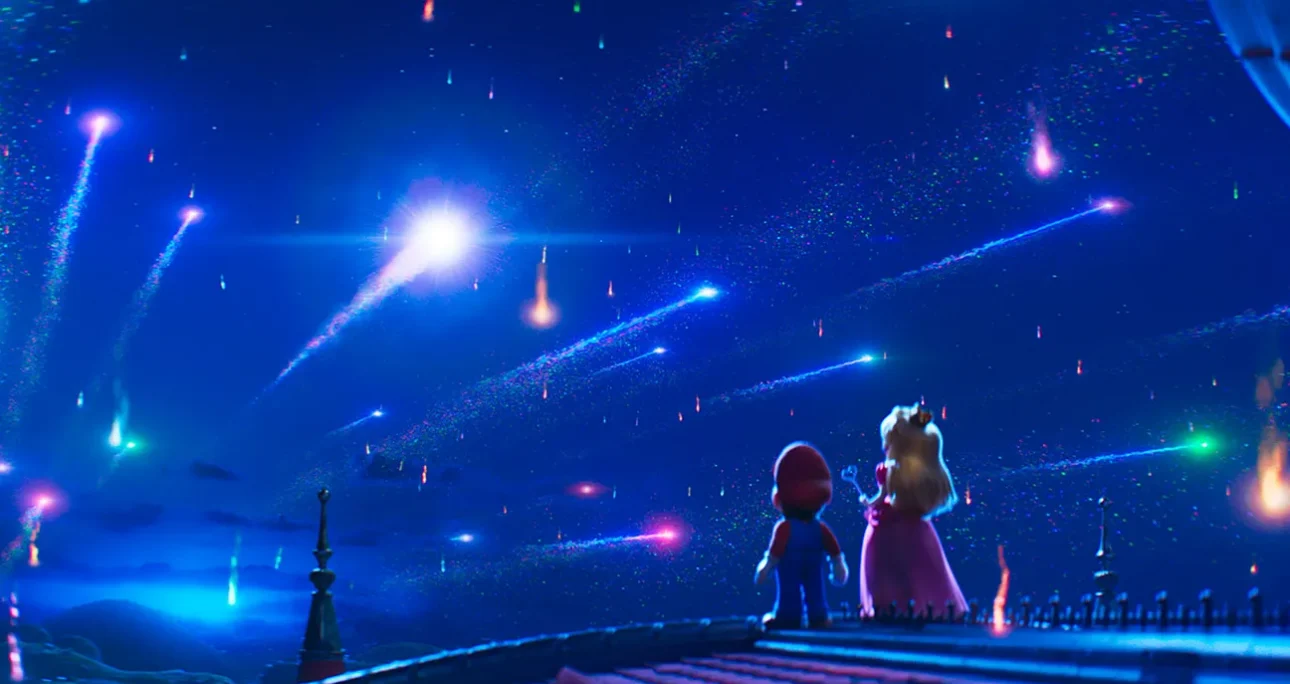
On the other end, the film’s strongest assist is its animation, which delivers a vibrant, colorful galaxy that consistently translates well to action and adventure alike. Each new setting is clearly crafted with a clear emphasis on movement and scale, and to be frank, a large amount of money, to create a sense of energy that is the highlight of the film. One of the nicest things to see is that if a film like this is going to get this big of a budget, at least it’s able to direct much of that money into making it look stunning. Action sequences are fluid and dynamic, often compensating for the lack of any narrative by maintaining a visual excitement the film otherwise won’t deliver. Ultimately, the spectacle becomes the primary source of engagement for mass audiences, really illuminating how much the film relies on its big budget visuals to win its audiences over.
The star studded cast does bring a sense of energy to their roles, with Charlie Day’s Luigi and funny- enough Donald Glover’s Yoshi standing out as particularly obvious examples of the actors having a blast in their role. Yoshi functions as a consistent fun new addition to the group, which was expected by most, really providing some of the film’s most memorable moments. Obviously, another casting highlight is Jack Black’s continued charisma as Bowser, who continues to be a smash hit in the role regardless of quality. Despite these individual actor strengths, the characters surrounding them remain largely static, lacking the development needed to create any meaningful emotional investment, and Chris Pratt continues to feel like one of the most misguided casting choices in recent blockbuster history.
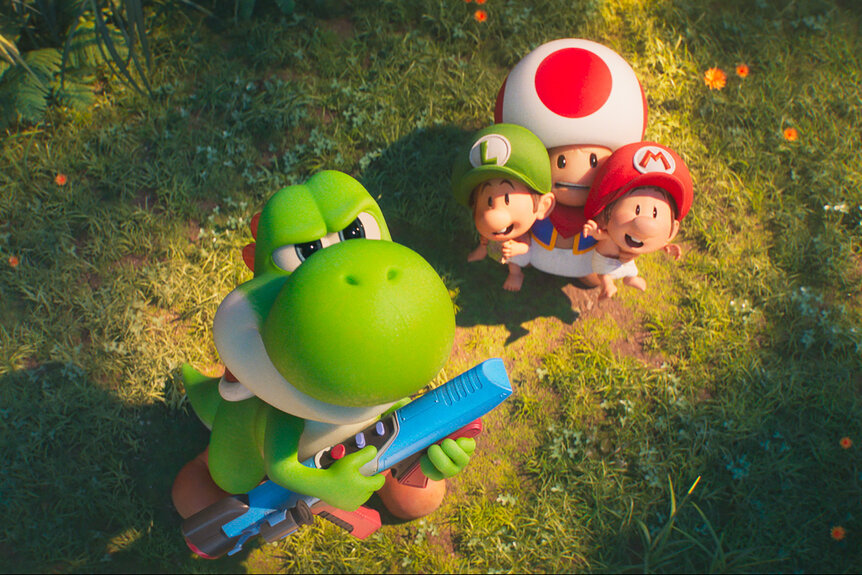
The film maintains a consistently light and energetic tone, never diving deep into any issue at all, aiming to keep audiences, likely disappointed adults or young children, engaged through humor and fast-paced sequences that aren’t very witty. Certain jokes do land effectively, mostly callbacks, and due to character dynamics or Yoshi’s physical comedy. But truly the comedy is largely inconsistent with many moments that feel interchangeable or lack impact. The unevenness prevents the film from establishing a strong purpose for being made and being very surface-level.
The dialogue is straightforward and accessible, clearly designed to appeal to a younger audience instead of a broader one. The simplicity here keeps the film easy and light and perhaps appealing to its chosen audience, however it limits the depth that I feel we can expect from animation. Examples like Studio Ghibli or even the new Hoppers movie have shown that a film can have meaning, and be for children, and it’s not too much to expect that. Conversation in this film serves only to transition between set pieces and cameos rather than to develop any real sense of stakes. It’s a really big letdown and has understandably become a talking point for the film, but it ultimately feels like something that simply needs to be improved upon if another movie is made.
As I alluded to, the film highlights the ongoing divide between audience enjoyment and critical evaluation, particularly for franchise-driven blockbusters. For avid fans and young viewers, the film delivers enough spectacle, humor, and familiarity to be satisfying. From a critical standpoint however, the lack of narrative cohesion and character depth makes the film a total flop and tough to get through. This duality allows the film to succeed in one context but fail in others, causing this clash of critics and fans. Its personally the job of a critic to turn their brain on when watching a film in order to find what works and what doesn’t, and that causes them to really not have much positive to say here, including me. Maybe that should influence your opinion, maybe it shouldn’t, you never truly know until you yourself watch the film, no need for hostility.
Super Mario Galaxy succeeds as an energetic and visually engaging animated blockbuster that delivers intermediate entertainment, and is likely going to make a lot of money. Its strong animation, recognizable, loved characters, and fast pacing make it accessible for its target audience. However, its lack of narrative focus, character development, and thematic depth prevents it from really becoming a meaningful movie. In the end, it stands as a film of contention that has some good aspects but is completely lacking in many others, earning it a 49/100 from the Twilight Room.
Twilight Room Score: 49.8/100