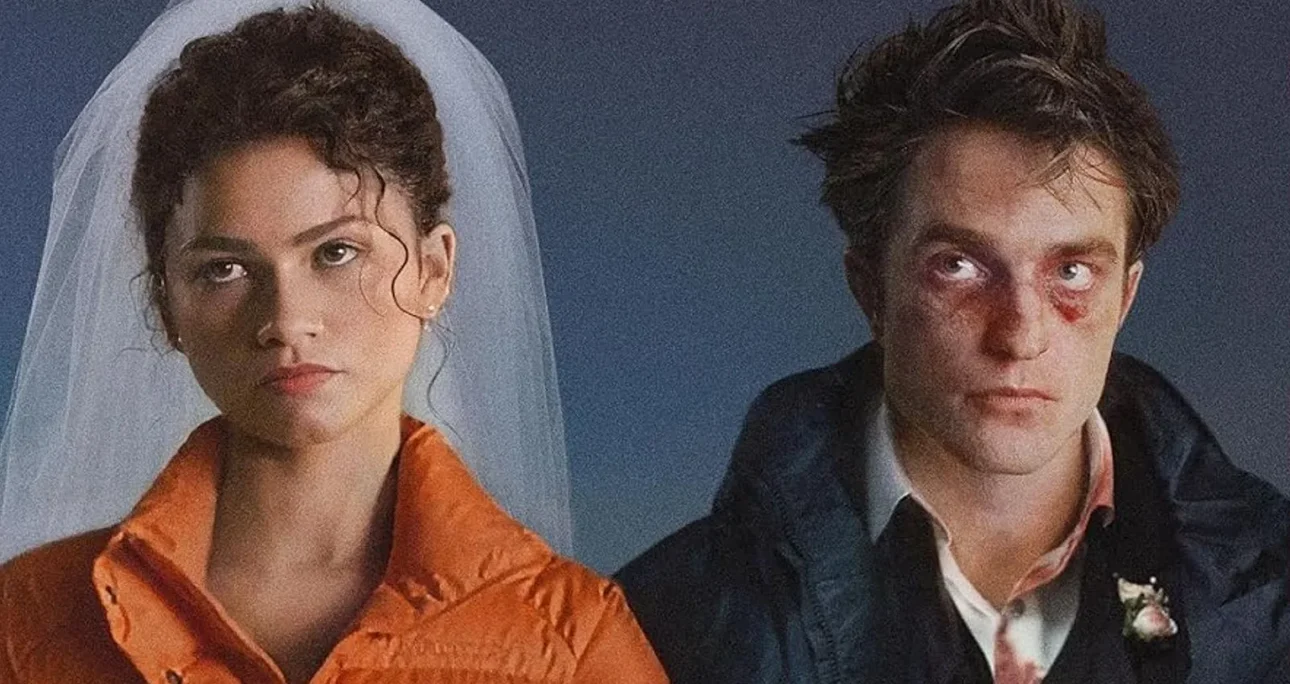
The Drama presents itself as the next suspicious A24 romance with an obvious dark side, and it quickly makes clear that its tone is more unsettling and packed with uncomfortable moments than the marketing suggests, making it arguably the most divisive film of the year so far.
The film centers on a relationship pushed to its emotional and physical limits just before the marriage, using a shocking drunk-thought revelation to destabilize the soon-to-be-weds, their friends, and the entire audience.
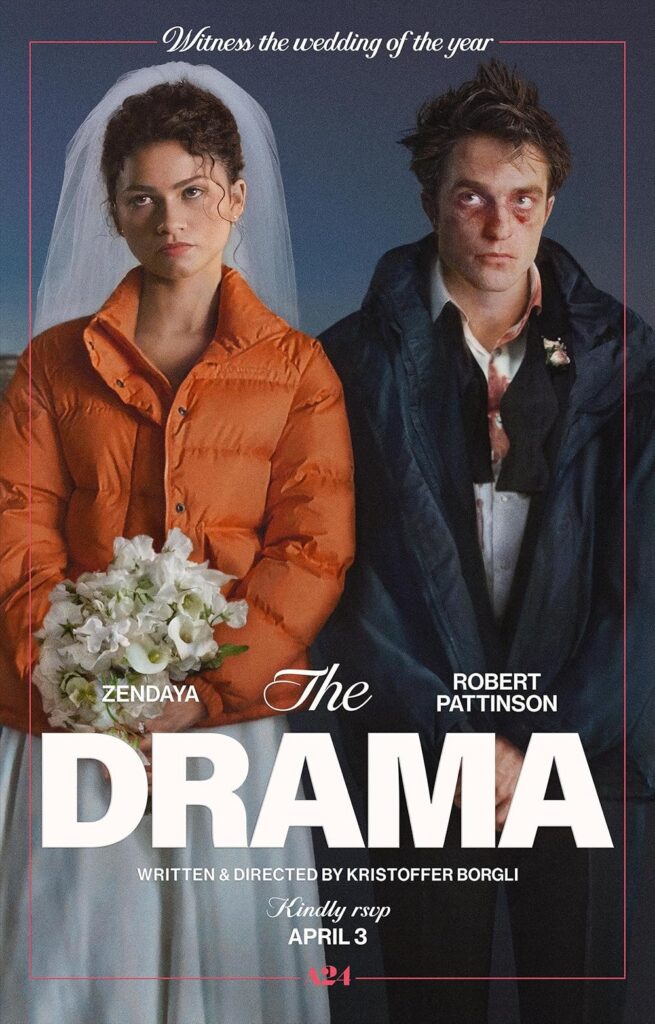
Its a rare experience to sit in a quiet theater and know that not only are you and everyone else thinking of what they should do, Robert Pattinson on screen is equally trying to figure it out with us. Rather than offering a familiar emotional arc with two big-name actors, the film commits to an uncomfortable viewing experience that challenges both stars and pushes audiences to reconsider how they interpret love, honesty, and the morality of feelings. Despite the film leading into a controversial past, the twist is navigated in an overly interesting way and that gives me such mixed feelings on how to rate the film. The Drama is an incredibly well-shot and performance driven dark romance that takes a bold and wildly uncomfortable premise and turns it into a psychologically engaging experience, even if its tone and structure make it a divisive and at times difficult- to-sit-with film.
Emma and Charlie played by Zendaya and Robert Pattinson are introduced as a couple preparing for their wedding, seemingly grounded in love and stability, with nothing seemingly going to go wrong. The film quickly disrupts this foundation through a major confession from Emma, fundamentally altering the dynamic of the film and the relationship between the two. The shift transforms the story from a standard romance into something far more tense and emotionally complex than expected, especially for an A24 release from the director of Dream Scenario. The setup established the central conflict effectively, making the film an unstable cut-the-air- with-a-knife environment that is pressure-full and will simply and calmly shoot all the way through.
The film builds its tension around the reaction post- confession surrounding whether Charlie can move past Emma’s past and what it means to their relationship, while Emma’s paranoia as to if her love still remains with her. Rather than ever resolving the issue or making a clear comment on something fairly controversial, the film lingers in it, in the uncertainty and discomfort it creates, producing this really odd but striking experience. The audience is forced into a position of questioning how they would react, creating a deeply personal engagement to the story especially as a born and raised American, you almost feel trapped in the situation. The emotional tension becomes the driving force of the film, replacing traditional plot progression around a controversial topic with a psychological conflict that makes intensity present in beautiful filmmaking.
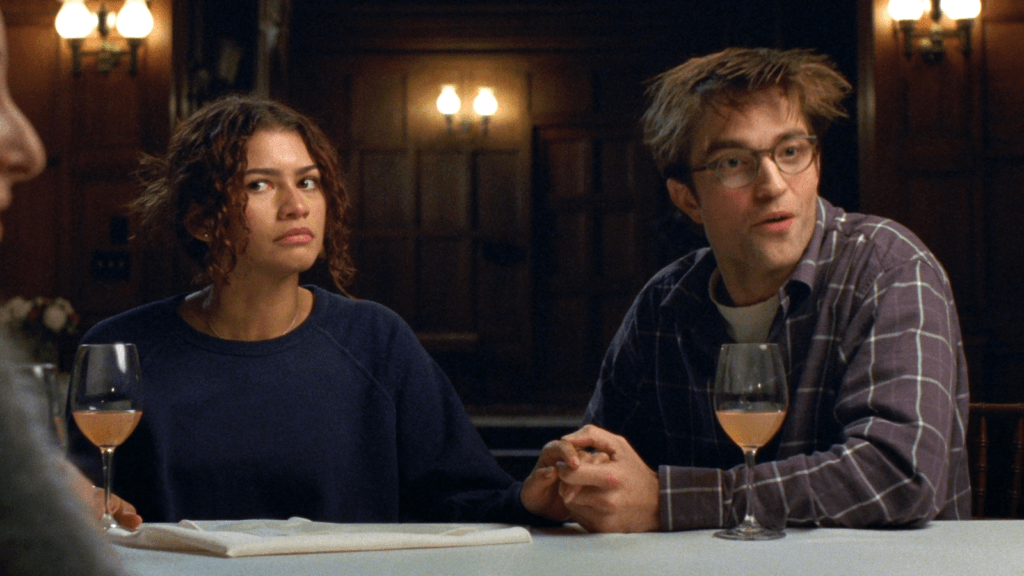
The film visually is stunning, with careful framing and camera work that emphasizes the simple character emotion and tension quietly through the film’s two movie stars. The way the camera captures Emma and Charlie adds layers that almost seem like wedding photo-level quality to their performances. Every shot is carefully constructed making even quiet moments loaded with tension, the direction enhances the discomfort of the narrative using visual language to keep everything uneasy, yet beautiful. The strong visual execution stands out as the leading impressive aspect of the film and makes it one of the most memorable releases of the year from a filmmaking perspective, yet.
Adding to that the gutsy performances from Zendaya and Pattinson are so central to the film’s success. They didn’t have to do a project like, this but really showed some range with intensity and nuance in their physical appearances and line delivery here. Their chemistry is perfect for what this film needs, and the combination of the camera making the two look absolutely stunning in each other’s eyes really does them justice. The film relies heavily on these two to make the film what it is and they consistently deliver throughout it all. Even Alana Haim’s performance is really well done, making her instantly hateable the moment the twist lands and her own secret is revealed without a hint of remorse.
The most divisive part of the film is how it is able to create a deliberately uneasy atmosphere, often leaving the audience unsure of how to feel in key moments, a conscious decision clearly. It blends dark comedy with emotional tension that is strategically timed to hit right at the moment where the audience has to deliberate whether or not they are even allowed to laugh at what’s happening despite the clear comedic moment. It’s like a sense of guilt and uncomfortableness that makes the viewer hesitant, a concept I am not fully sure I was happy with, but can really appreciate. The approach makes the film drastically memorable. Over the day it has taken me to write the review has caused me to improve its rating because of just how well it does what the director intended to do.
– SPOILERS SKIP THIS NEXT PARAGRAPH IF YOU CHOOSE –
The film avoids clearly condemning or justifying its central actions, after Emma admits in the film to planning, and almost carrying out a school shooting, when she was in middle school. By prioritizing reaction and contemplation over explanation and commentary, the film forces the audience to sit with the consequences, and to consider what they would do and how far they would let their love go rather than simply judging the idea of school shootings outright or treating them as material to exploit. There is clearly something that is going to upset some people about this film and understandably so, it’s a huge swing, that for the most part hit for me. The unconventional approach and use of the character Rachel as a harsh critic to the confession from Emma are really unique, and perhaps should be disclosed more before audiences flood theaters expecting something they are not going to receive. One of my biggest gripes with the film is this concept, people simply just don’t know it is an uncomfortable experience grappling a school shooting concept, and it really does a massively solid job handling it but should be disclosed to its viewers beforehand much more by A24.
The film settles into a noticeably slower middle stretch that stands in sharp contrast to the intensity of its opening and the weight of its closing moments. This section lingers in its discomfort, allowing conversations and silences to stretch in a way that forces the audience to sit with the emotional tension rather than move past it. At times, this pacing can feel drawn out, testing patience and making the film feel temporarily stalled. However, this lack of traditional progression ultimately works in the film’s favor at times as well, reinforcing its focus on internal conflict and psychological unease over plot-driven momentum. While uneven in its rhythm, the structure aligns with the film’s overall intent, using pacing as a tool to deepen its unsettling atmosphere.
The film’s final act leaves a strong and lasting impression, delivering a conclusion that feels both grounded and slightly disorienting. Rather than building toward a clear resolution, it embraces ambiguity, allowing the emotional weight of the story to linger without fully resolving it, a fresh start. This approach reinforces the film’s central themes, pushing the audience to reflect on the characters and their choices rather than offering definitive answers. The ending feels intentionally unresolved, capturing a sense of realism that aligns with the film’s tone. As a result, the conclusion is impactful not because it provides closure, but because it leaves the audience thinking long after the film has ended.
The Drama stands out as a bold and unconventional take on the dark romance genre driven by strong performances by its two stars and striking creative swings. Its willingness to embrace discomfort and ambiguity sets it apart from more traditional narratives. While its pacing and tone, and huge swing may not work for everyone, and doesn’t all the way work for me, they are central to what the film is trying to achieve. Ultimately, it’s well crafted and thought-provoking with skilled technical camera shots that succeed in being both emotionally engaging and deeply unsettling, earning it an 82/100 from the TwilightRoom.
TwilightRoom Score: 82.7/100