Testament is this week’s criterion Tuesday review and is one of the most calm and sombre horror adjacent films in the entire collection, a nuclear war drama that
transforms the safe space of the home into a battlefield of survival, a lullaby of despair told with almost unbearable restraint. Directed by Lynne Pittman, who started her career as a documentary filmmaker and went on to have a significant impact on female sexuality representation in Hollywood, the film carries clear traces of a documentary influence throughout, grounding its horror in an
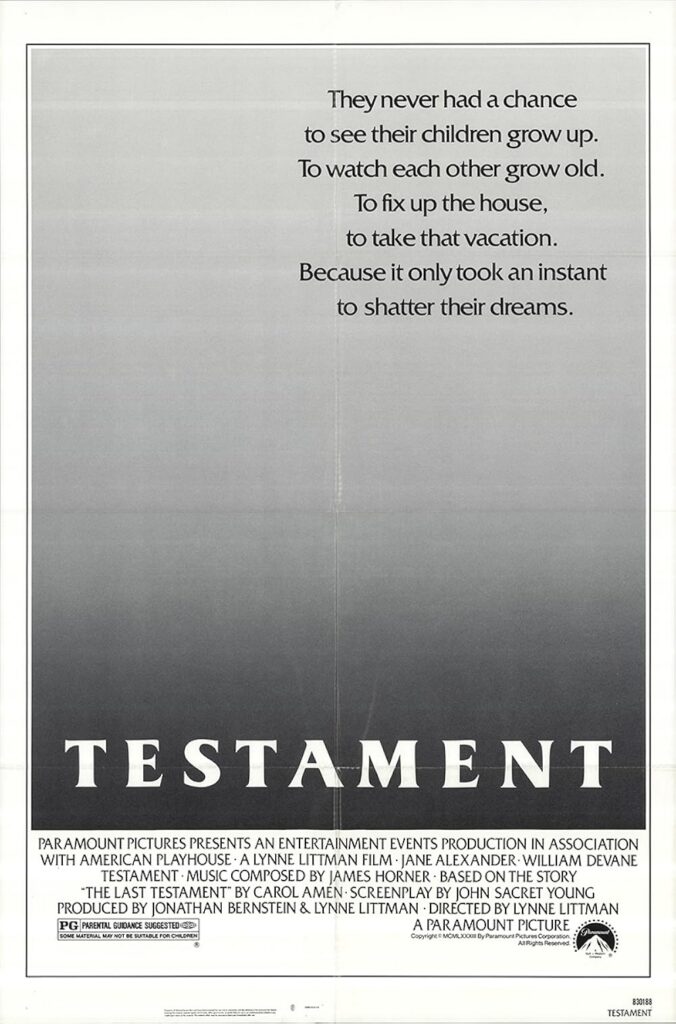
authenticity that feels less like fiction and more like a horrific new story. At a time when many different angles of nuclear war films were being made due to post-WWII philosophy and brewing Cold War fear, Testament stands apart by going as small as possible rather than as large, opposing the genre’s tendency to appeal to human heart through spectacle and instead offering a deeply restrained portrait of human collateral. It’s an incredibly simply shot film but extraordinarily tragic and harrowing, with Jane Alexander receiving high praise for her performance that is absolutely rightful, a quiet, devastating turn that anchors the entire film. Testament is one of the most realistic and quiet horror stars of post WWII philosophy, not because of what it shows but because of how thoroughly it refuses to look away from the ordinary human cost of catastrophe.
The film introduces us to the Weatherly family living a typical family neighborhood life, with its two main characters being married couple Carol Weatherly, played by Jane Alexander in perhaps her best role, and Tom Weatherly, played by William Devane. Their normal day as a typical American family is upended when a nuclear emergency is announced, pulling Tom away from Carol and the family in an instant and setting the scene for what becomes a deeply 90s-era film with a uniquely haunting heart. From that point forward, the film follows Carol and the townspeople as they grip together to try and survive, expecting little to no help from the outside, their community initially calm but passively hostile as the full weight of what’s happened begins to settle in. Carol must learn how to take responsibility for her family without her husband, a transformation that becomes the film’s emotional and thematic backbone, a story above all else about maternal determination in the face of definite death. The form in Testament lives in its unerring authenticity, a film based on a news story of nuclear fear that feels so real and so harrowing for its viewers that its hands as perhaps the most realistic horror story of its era.
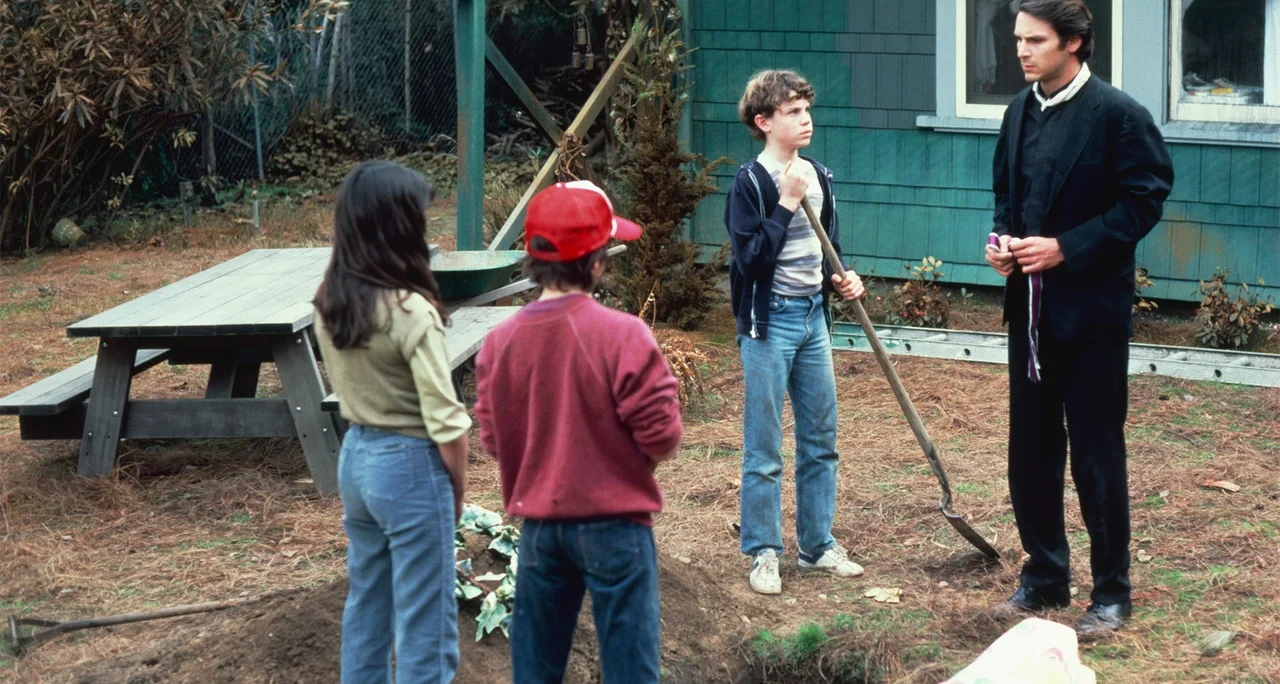
Brad Weatherly is brilliantly written and played, representing the innocence that surrounds the entire plot, a broken 80s coming-of-age story unfolding in the shadow of something no child should ever have to understand. The townspeople grouping together to survive, expecting nothing from the outside world, creates a portrait of community under maximum pressure, showing both the best and most passively hostile instincts of people facing something they have no framework for. Food and plates start to seem funny as radiation begins to affect their lives, blurring the line between paranoia and actual danger in a way the film never fully resolves, deliberately leaving the audience in the same uncertain position as the characters themselves. Moments like making a makeshift coffin or kids asking what sex is like knowing they won’t live long enough to learn are among the most devastating the film has to offer, small human details that carry an enormous and suffocating weight. The film believes they are the lucky ones, only to slowly reveal that this may be worse, as death begins to riddle the town from the effects of the blast, a quiet, creeping horror that the film renders with complete and devastating honesty.
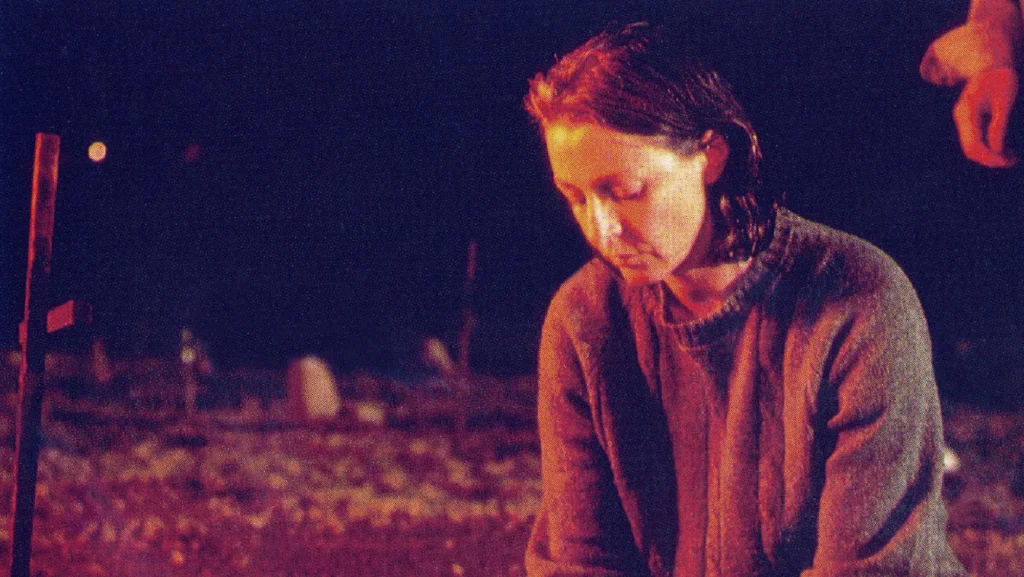
Testament is an incredibly simply shot film, and that simplicity is entirely intentional, with the documentary influence of Lynne Littman visible in every frame, prioritizing naturalism over cinematic spectacle at every turn. Using old vintage footage in the final act is beautiful, lending the film a peaceful, mourning quality that keeps the story emotionally neutral on the surface even as the darkness behind it becomes impossible to ignore. The extremely dark background of death sitting just beneath the peace of the film is what makes the visual approach so quietly effective, the contrast between the calm surface and what it’s covering being the place where the film’s real horror lives. Rather than showing destruction, Testament keeps its camera close to faces, rooms, and small domestic moments, transforming the safe space of the home into its own kind of battlefield without ever needing to leave it. This restraint is the film’s greatest visual achievement, and what separates it most clearly from every other nuclear war film being made around the same time, a portrait of human collateral rather than a portrait of catastrophe.
Testament opposes the horror genre’s tendency to appeal to fear and empathy through scale, going as small as possible and finding in that restraint a portrait of human collateral that hits far harder than anything large-scale spectacle could achieve. The film’s horror comes entirely from its authenticity, based on a real news story of nuclear fear and felt so real and so harrowing by its viewers that it became one of the most discussed and emotionally affecting films of its decade. The running theme above all others is maternal determination in the face of definite death, with Carol’s transformation from a typical suburban wife into a woman making impossible decisions carrying the film’s entire moral and emotional weight from start to finish. Many different nuclear war films were being made at the time due to post-WWII philosophy and Cold War anxiety, but Testament stands apart by refusing to be a film about war at all, becoming instead a film about what’s left behind after it and who is left to carry it. Jane Alexander’s performance is the vessel through which all of this lands, and the praise she has received for this role is absolutely rightful, a career-defining piece of work in a film that asks everything of its lead and receives it in full.
The film ends in a sad, memory-like video flashback that serves as one of the most quietly devastating conclusions on the collection, a final farewell that feels less like an ending and more like a long painful exhale. Testament is among the most calm and somber films Criterion has out, finding its horror not in what it shows but in what it refuses to dramatize, leaving the full weight of its tory entirely in the hands of the audience’s emotions. Lynn Littman’s documentary background give the film an extremely authentic feel that the nuclear war drama of its era could match in this particular way, grounding the horror in something that feels less like cinema and more like a record of something that actually happened. Jane Alexander’s performance ensures the film endures, a portrayal of maternal determination under impossible doomed circumstances that stands as one of the finest pieces of acting we have covered in awhile on this website. Testament is one of the most important and quietly devastating films in the criterion collection; it is ultimately a lullaby of despair that earns its place among the brand not through spectacle but through the simple, devastating truth of its restraint, earning a 78/100 from the TwilightRoom.
Twilight Room Score: 78.7/100