This Criterion Tuesday is one of Ridley Scott’s most unique, beloved, and influential films, Thelma & Louise, a personal favorite of TwilightRoom,
blending road trip storytelling, crime drama, feminist themes, western imagery, and a compelling character study into one of the defining American films of the 1990s. The film follows two close friends and polar opposites, Thelma and Louise, whose simple weekend getaway spirals into an outlaw journey where the journey matters more than the destination, after a violent incident completely alters the course of their lives. It is a film that

functions as much more than a traditional crime chase story, becoming a celebration of friendship, self-determination, personal liberation, and most importantly two women rejecting the limitations placed upon them by the world around them.Hans Zimmer’s outstanding score, beautiful desert cinematography, and the chemistry between Geena Davis and Susan Sarandon elevate what could have been a simple film into something far more emotional, memorable, and monumental. Thelma & Louise is one of our absolute favorite films of all time because of its character transformations, genre-defying western influences, and iconic ending, remaining one of the greatest female-led films ever made and arguably one of Ridley Scott’s masterpieces.
The film begins with Thelma and Louise setting out on a simple weekend getaway together away from their rather abusive relationships, immediately establishing their opposing personalities and their desire to briefly escape the frustrations of everyday life. Thelma is introduced as a kind but sheltered housewife trapped in an unhealthy marriage, while Louise is a more independent, hardened waitress who appears far more comfortable taking control of situations early on in the film. Their trip takes a devastating turn when a man attempts to rape Thelma outside of a roadside bar, leading Louise to pull a gun and ultimately kill the man after he refuses to back away, starting their run from the police. The moment becomes the major inflection point of the entire film, transforming what began as a fun road trip into an outlaw story where the women suddenly realize their lives can never simply return to normal. As they debate returning home or fleeing to Mexico, the film begins raising questions about justice, morality, and whether society would ever truly understand the circumstances that pushed them to this point, now free-wheeling their way through the open road.
As the journey progresses, the personalities of the two women slowly begin to reverse, with Louise becoming increasingly panicked and emotionally exhausted while Thelma gradually discovers her confidence, independence, and excitement in her newfound freedom, evolving more fully with each passing mile. The arrival of J.D., played by a young Brad Pitt, initially brings charm and romance to the story before further chaos unfolds when he steals the money Louise desperately needed to escape, deepening the two women’s reliance on each other and no one else. In one of the film’s most satisfying turning points, Thelma robs a convenience store to recover their losses, the experience giving both women an unexpected rush and accelerating their transformation into full-fledged outlaws. The film repeatedly emphasizes that the road itself changes both women, stripping away their old constraints and allowing them to discover freer versions of themselves that existed all along. By the middle of the film, Thelma and Louise have fully aligned as partners on the run, functioning like a female Bonnie and Clyde as they increasingly embrace this outlaw sense of self-determination.
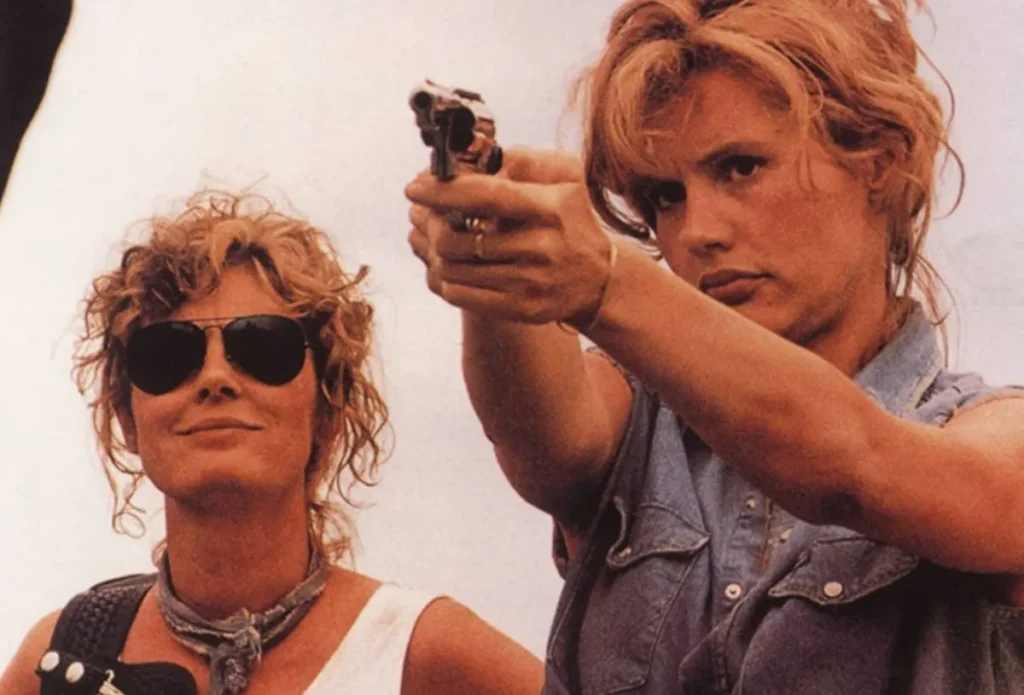
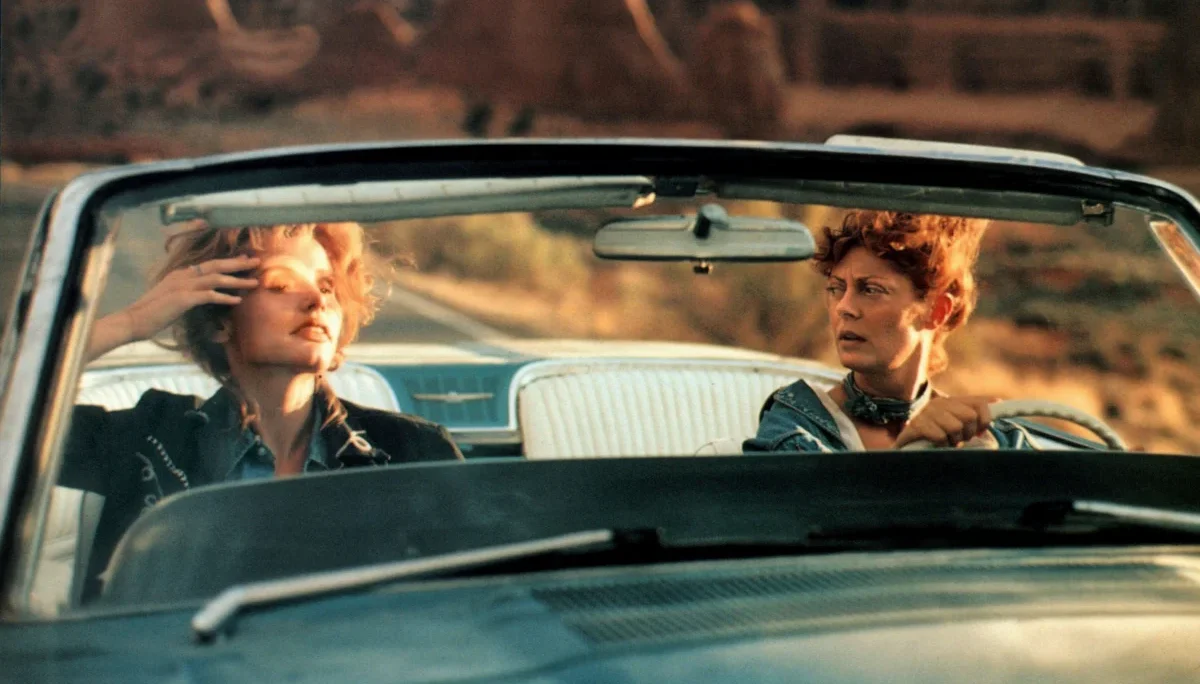
Ridley Scott has made many great films but this may be his best, as he beautifully photographs the American landscape, using massive desert vistas, sunsets, highways, and open spaces to make the environment itself feel like an extension of the women’s emotional liberation. Several images become instantly iconic, particularly the overhead shots of the Thunderbird driving through the desert and the windshield compositions of both women wearing sunglasses together. This is further elevated by Hans Zimmer’s outstanding score, which incorporates a western and cowboy-themed influence that transforms the film into something resembling a modern western far more than a traditional crime drama. The film consistently associates freedom and self-determination with movement and open landscapes, contrasting the liberating road with the restrictive homes and relationships the women left behind. The western aesthetic ultimately reinforces the film’s larger themes, presenting Thelma and Louise not simply as fugitives but as mythological figures riding toward a new understanding of themselves and the world around them.
The film functions simultaneously as a road movie, a crime story, and an exploration of female friendship, illustrating how two very different women eventually meet in the middle of their personal transformations. Thelma evolves from a sexually repressed and dangerously immature housewife into someone capable of making her own decisions and embracing independence for the first time in her life. Louise gradually reveals the emotional burdens and trauma that have shaped her worldview, making her toughness increasingly tragic and sympathetic as the journey continues. Throughout the film, the men in the women’s lives are frequently shown as restrictive, controlling, or incapable of fully understanding them, reinforcing the movie’s larger themes of liberation and self determination. The emotional core of Thelma & Louise ultimately rests in the relationship between the two women as their friendship becomes more meaningful and powerful than every other relationship surrounding them.
The final high-speed chase and decision to drive the Thunderbird off the cliff together delivers one of the most iconic and emotionally powerful endings in American cinema. The image of the car suspended in midair transforms the two women into legends, freezing them forever in a moment of freedom rather than allowing them to return to lives they no longer recognize. The ending perfectly embraces the film’s western influences, presenting Thelma and Louise as outlaws who choose agency and self-determination over surrender. Through its performances, cinematography, score, and character writing, the film becomes far more than a road trip crime story, instead standing as a timeless statement on friendship, liberation, and identity. Thelma & Louise remains one of Ridley Scott’s finest achievements, a defining film of the 1990s, and in the eyes of TwilightRoom, the greatest female-led film ever made, earning a 98/100.
TwilightRoom Score: 98.2/100