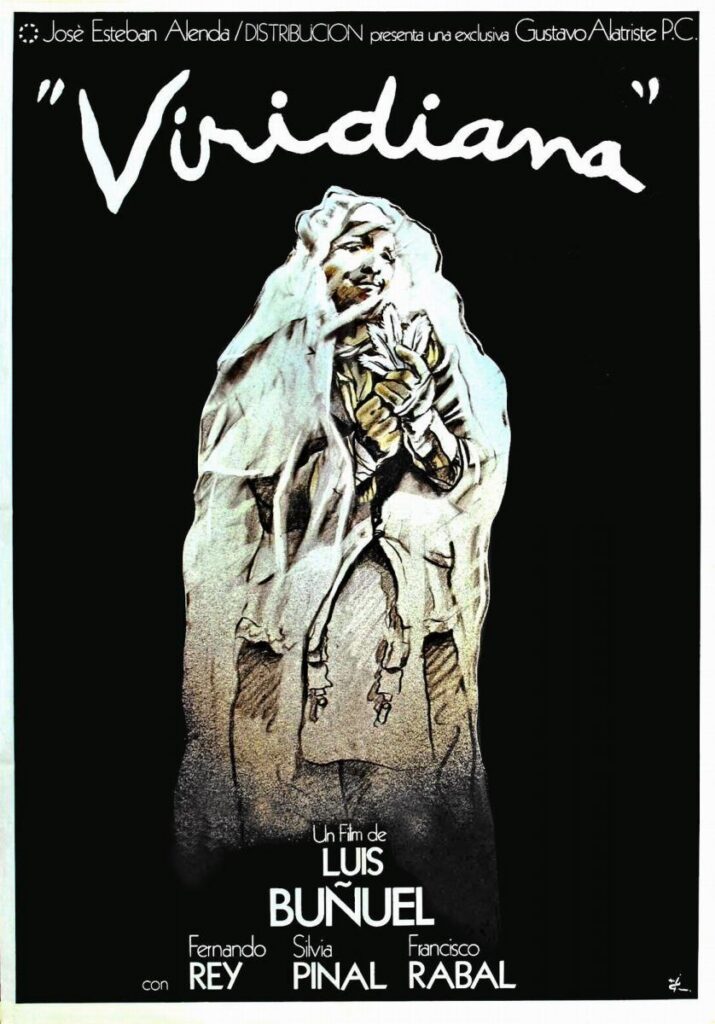
This week’s Criterion Tuesday spotlights Luis Buñuel, one of cinema’s most controversial filmmakers, and a key figure of the surrealist movement, as his film
Viridiana stands as one of his clearest masterpieces—a work that uses a young nun’s failed attempt at charity to dismantle Catholic idealism piece by piece, in a way destined to provoke ongoing discourse. The film’s history is as provocative as its content: made in Spain during Francisco Franco’s regime, despite Buñuel being a known dissident, it somehow emerged as the most explosive
and controversial work of his entire career. As successful as any director in Spain during 1929 and 1930, Buñuel’s path led him out of the country during the Civil War—first to the United States and then to Mexico by 1946—where he continued to build his career, largely unrecognized outside the region until Viridiana changed that. The film’s infamous Last Supper imagery sparked outrage from both the Church and the Spanish government, a controversy intensified by the stark fact that Viridiana won the Palme d’Or while simultaneously being banned in its own country and condemned by Pope John XXIII, all within the same brief window of time. Viridiana brings this contradiction to the forefront, defining its viewing experience: a film banned at home and celebrated abroad, created by a director whose career unfolded between protest and exile, and it is exactly this tension that makes Viridiana a worthy entry in the collection and well worth revisiting.
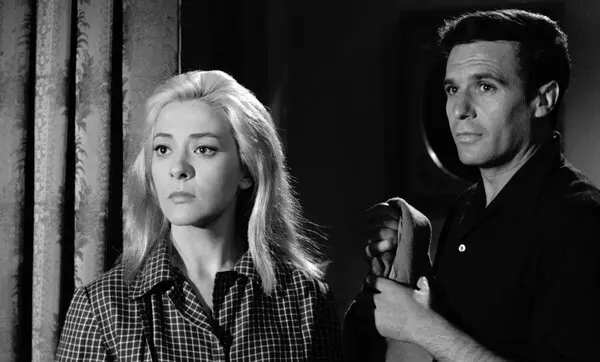
The film follows a young nun, Viridiana, sent to visit her uncle Don Jaime, a trip that quickly turns unsettling once he becomes obsessed with her because of her striking resemblance to his dead wife. What begins as a simple family visit spirals into a deeply provocative and severe plot, with Jaime having her try on his late wife’s wedding dress and drugging her; though he ultimately does not go through with the assault, the damage is irrevocable. Jaime takes his own life out of guilt, an act that completely upends Viridiana’s path and transforms her from a charitable nun into a traumatized figure carrying the weight of his death. Jaime’s son Jorge arrives and flips the film on its head, taking over the estate soon after and joining Viridiana in housing the poor, even as she remains visibly tormented, still processing the guilt tied to her uncle. Jorge, by contrast, is practical and far less emotional than Viridiana, directing the estate toward order and productivity rather than any deeper reckoning with what has happened—a contrast that becomes central to the film’s highly controversial and much‑discussed second half.
The film splits cleanly into two parts: the first centered on an elderly man’s hopeless love and eventual suicide, the second on a woman’s attempt to rescue a small portion of the world’s most unfortunate people. The first half underscores that one can feel guilt—and even live with it—without ever actually incurring guilt in any technical or formal sense, planting the idea that Viridiana’s torment is more self‑imposed than earned. The second half follows her attempts to actually do something about that guilt, using charity as a way of correcting what she could not control in the first half. Buñuel builds the film at a deliberately slow pace, demanding sustained attention that is most noticeable in this stretch, where the shift from personal tragedy to social experiment requires real patience to follow. This structural choice lets the film’s two halves comment directly on each other: the private guilt of part one becomes the public, social guilt Viridiana tries to resolve in part two, and neither half fully succeeds in granting her peace.
Once Jorge and Viridiana are away from the estate, the beggars they have taken in completely take over, indulging in food, possessions, and alcohol with no restraint. The event spirals into a grotesque restaging of the Last Supper, with the beggars posing at the table in a clear visual echo of the religious painting—a deliberate jab at the Church’s own model of charity that leaves little room for ambiguity. Buñuel reportedly claimed he never intended the film as outright blasphemy, despite staging his beggars directly in the image of one of Christianity’s most sacred scenes—a contradiction that is difficult to accept entirely at face value. When Viridiana and Jorge return, a man attempts to take advantage of her, only to be struck down by another beggar, a moment that undercuts any clean reading of the poor as either purely sympathetic or purely villainous. Rumors have long circulated that Buñuel’s beggars were not actors at all, a claim he denied, even as evidence reportedly suggests at least some partial truth, an idea fitting for a director so committed to blurring the line between staged provocation and genuine discomfort.
The lighting throughout the buildings is some of the most beautiful and eerie work in the film, standing in stark visual contrast to the warmth typically associated with the Catholic Church. Smaller scenes function as pointed commentary throughout, with one moment showing a man saving a dog being dragged by a cart, only for the film to reveal another dog suffering the same fate moments later, undercutting any easy sense of moral progress. The film’s title itself comes from “viridium,” Latin for a green place, a quiet nod to the idea of purity or renewal that the story spends its entire runtime dismantling. Buñuel’s skepticism toward grand gestures of progress runs through nearly every frame, suggesting that our attempts to fix human behavior through rational planning or moral conviction will always be undercut by the disruptive parts of human nature no society can fully contain. This tension between visual beauty and moral bleakness becomes the film’s defining aesthetic choice, using gorgeous composition to frame a deeply pessimistic argument about charity and faith.
By the film’s end, Viridiana chooses to abandon her strict religious path, opting instead to live her faith in a different, more earthly way—a decision that, despite everything, reads as an honest attempt at charity rather than a defeated retreat. Jorge remains suspicious of her throughout, openly questioning the sincerity of her motivations, and the film never fully resolves whether his skepticism or her conviction offers the more accurate read on her transformation. The story ultimately ends with Viridiana joining Jorge for a game of cards, a quiet gesture that suggests her renunciation of guilt and her acceptance of a different kind of life, symbolized by the burning of the wreath she has carried throughout. The ending reportedly underwent significant changes, as Buñuel’s original version had Viridiana enter a sexual relationship with Jorge, implying a ménage à trois, before the studio forced it to be rewritten and censored. Viridiana remains a defining work precisely because of how thoroughly it refuses to let religion resolve anything cleanly, cementing Buñuel’s reputation as a filmmaker willing to provoke the Church, his own government, and his audience all at once. The fact that it somehow won the Palme d’Or while being banned in Spain says everything about how divisive that provocation really was, earning it an 80/100 from the TwilightRoom as one of Buñuel’s best.
TwilightRoom Score: 80.7/100