Introduction
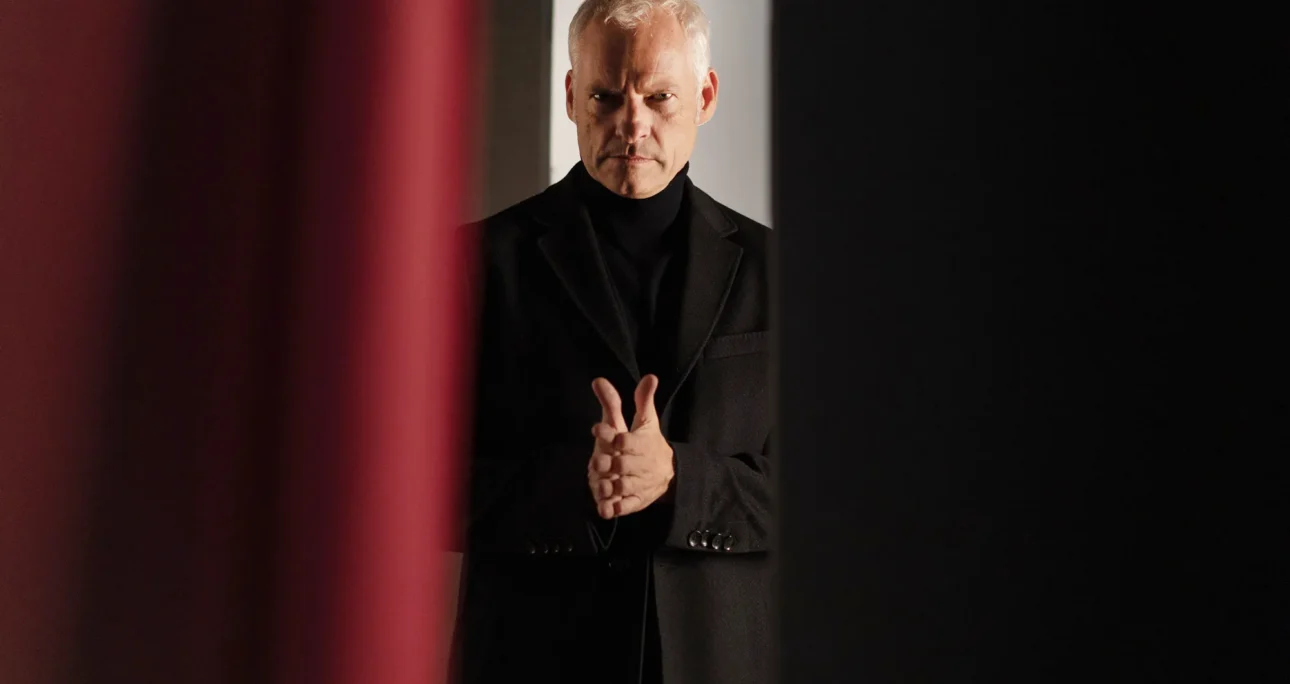
Martin McDonagh has built one of the most unmistakable filmographies in modern cinema, and he has done it by returning to the same two men in a place neither of them wants to be, over and over, in wildly different registers. There is the European chamber mode of In Bruges and The Banshees of Inisherin, films built on confinement, cruelty and conversation, where a hitman’s hotel room or a strip of Irish coastline becomes the whole world and every joke is a wall built around death, loneliness and the things these men cannot bring themselves to say out loud. Then there is the American mode of Seven Psychopaths and Three Billboards Outside Ebbing, Missouri, films that trade the claustrophobia for sprawl, ensembles and awards-season scale, with far more moving parts and a far looser grip on the gallows precision that made the first mode work. Sitting at the end of all of it is this year’s Wild Horse Nine, a CIA black comedy set on Easter Island before the 1973 Chilean coup that fuses both modes at once, carrying the reflective patience of Banshees and the death-obsessed conversational comedy of his debut into the most complete piece of writing he has produced. McDonagh arrived already a celebrated playwright with an Oscar for Six Shooter, has been nominated for Best Original Screenplay for every feature except one, and after John Malkovich’s Volpi Cup at Venice he is heading into another awards run with his best film in eighteen years. Here is our full ranking of Martin McDonagh’s filmography, from the masterpiece that started it all to the one that was still figuring out what he wanted to be.
5. Seven Psychopaths
77.9/100 - 2012
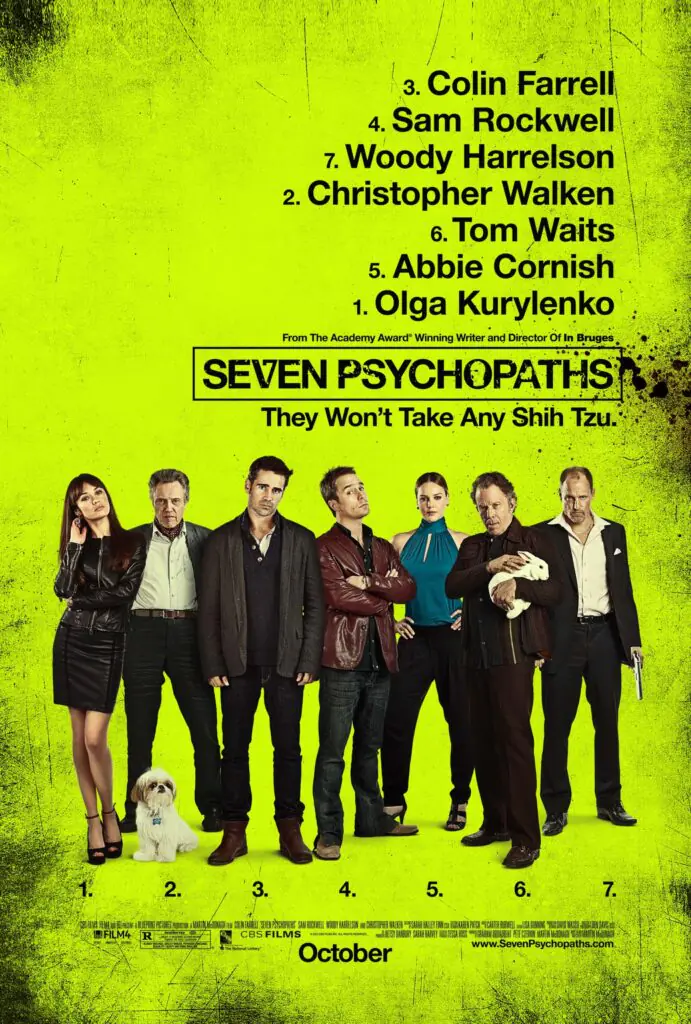
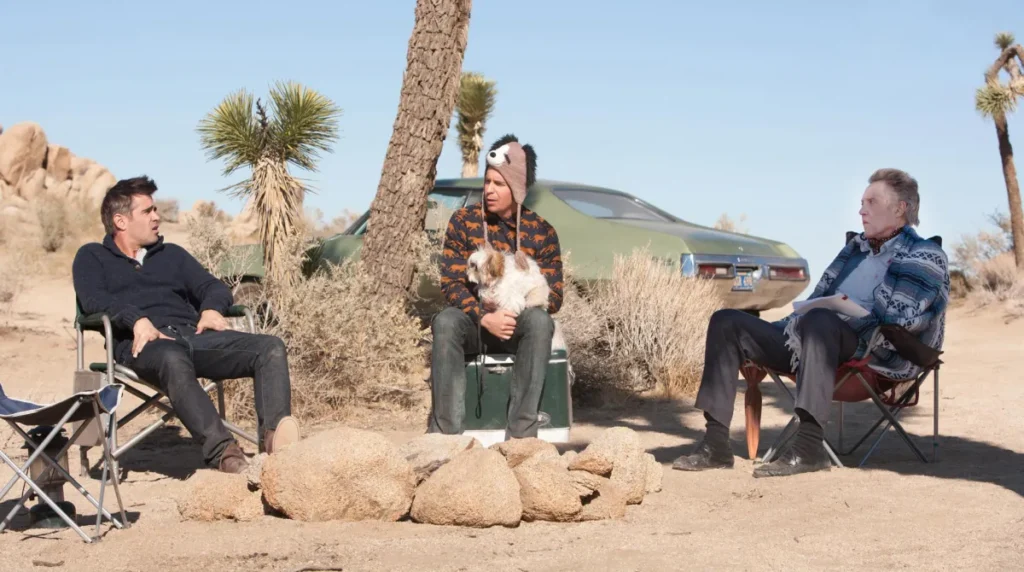
Seven Psychopaths arrives with a gigantically stacked cast and is unrelentingly chaotic for its entire runtime, a film that never once slows down long enough to let you get your footing, which is both the whole appeal and the whole reason it’s last on my ranking of McDonagh’s films. Colin Farrell’s performance here again shapes what McDonagh will go on to do across the rest of his career, giving us a main character stumbling through his own plot almost entirely clueless and roughly as lost as the audience is. It’s similar to but less refined than his character in In Bruges — tantalizing, unique and chaotic. The film follows a screenwriter trying to write a movie called Seven Psychopaths when he discovers that his best friend is one himself. The two of them get thrown into an underground Los Angeles crime scenario that starts mimicking the script the drunken writer cannot finish, a premise so self-devouring it is a miracle it holds itself together. Wild performances from Christopher Walken and Woody Harrelson apply a manic energy to the film that makes the whole thing feel more like a director finding his range and limitations than a finished product, though both also bring something no other film in the filmography comes close to matching. Seven Psychopaths is McDonagh at his most unhinged, a wild and unrelenting Los Angeles story that is nowhere near as reflective or as intelligent as the films that followed it, but still solid and a completely singular piece of work from a filmmaker figuring out where he wanted to move next.
Seven Psychopaths is McDonagh’s second feature and his first set in America, built around an alcoholic screenwriter in Los Angeles who has a title and absolutely nothing else to go with it, until a friend enacts a kidnapping scheme specifically to hand him some inspiration. Farrell plays the lead as Marty, a name McDonagh chose as a direct reference to himself, which turns the entire film into a portrait of a writer working out his own problems with writing in front of an audience that paid to watch him do it. Sam Rockwell, Christopher Walken, Woody Harrelson and Tom Waits all star alongside him in a cast loaded enough that it genuinely opened wider than In Bruges ever managed in theaters. Despite that, the film grossed only around $33 million and was largely overlooked, never finding the long second life that his debut eventually did. It also remains the only one of McDonagh’s films not nominated for the Best Original Screenplay Academy Award, which is a telling piece of trivia for a movie that is almost entirely about the act of screenwriting.
The most interesting thing about Seven Psychopaths in hindsight is how clearly it functions as a workshop, because every instinct McDonagh would later refine into Three Billboards Outside Ebbing, Missouri and The Banshees of Inisherin is already sitting right here in its loudest and least disciplined form. Walken is the one element that fully works on its own terms, playing a man who is simultaneously the calmest and the strangest person in every scene he occupies, and he gives the film the only real emotional ballast it has. The self-referential structure is where it overreaches, because a film that keeps announcing its own cleverness leaves itself very little room to actually be clever, and the back half runs out of ideas long before it runs out of psychopaths. Watching it now, after everything that followed, makes it better rather than worse, since the chaos reads less like sloppiness and more like a filmmaker throwing every impulse he had at the wall to find out which ones were worth keeping. It is a messy, loud, frequently very funny film that is essential for understanding Martin McDonagh and not quite essential on its own, earning a 78/100 from TwilightRoom and the final spot on my list.
4. Three Billboards Outside Ebbing Missouri
82.1/100 - 2017
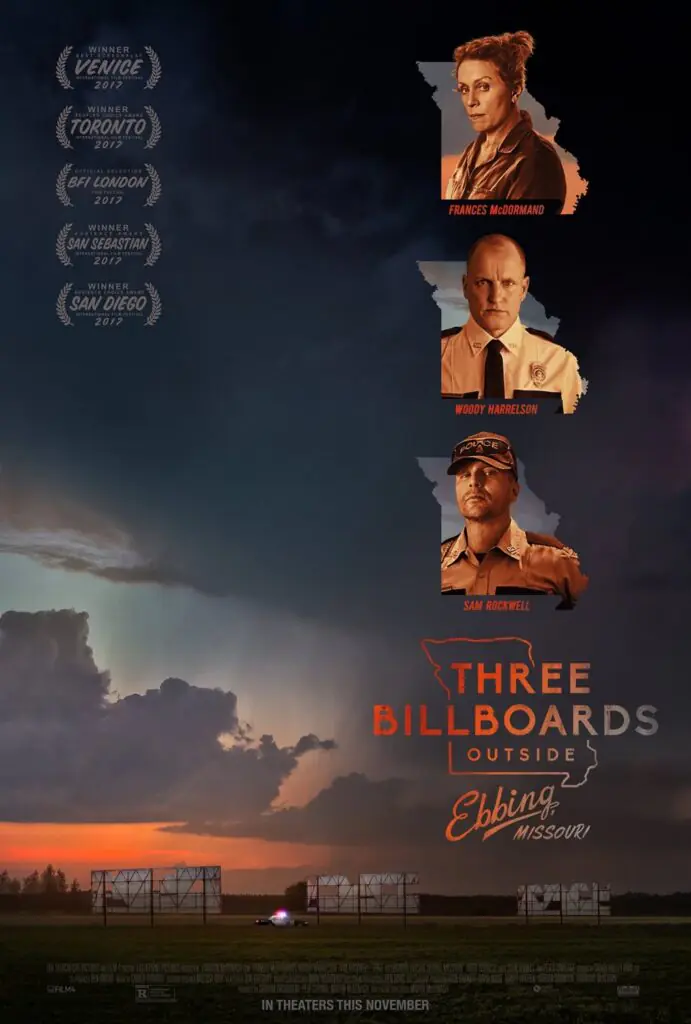
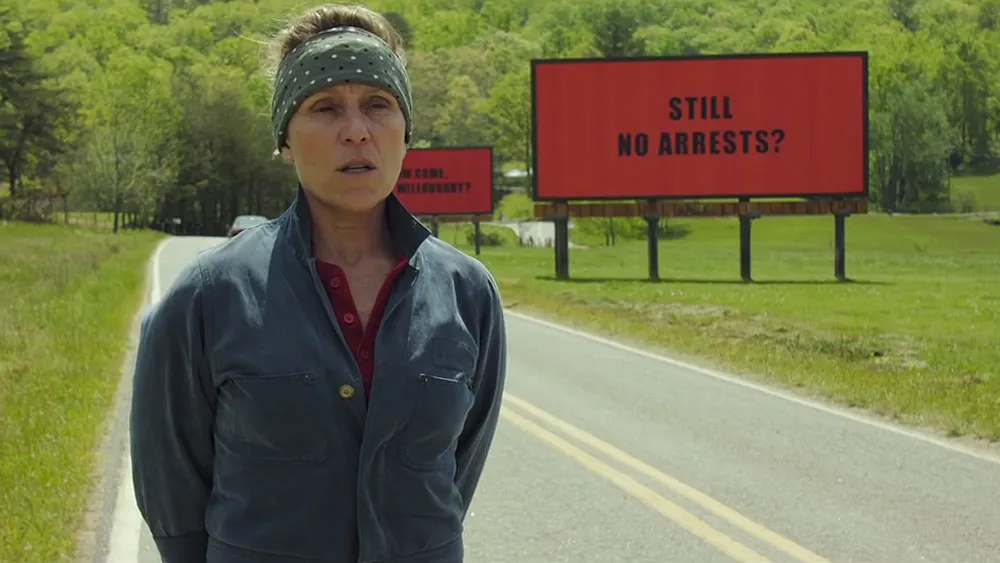
Three Billboards Outside Ebbing, Missouri is Martin McDonagh’s most ambitious film and also his most obviously calculated one, a crime mystery wrapped inside a western that spends its entire runtime reaching for something considerably larger than the fairly ordinary story sitting at the center of it. The western-style score from Carter Burwell, and the overall feel it creates, is the single best element in the film, giving what is fundamentally a small-town grief drama a sweep and a mythology it would never have earned by itself. Frances McDormand’s Mildred is the engine of the whole thing, and she is extraordinary in it, a woman who has converted her grief completely into aggression and whom the film is smart enough to never once ask us to like. The crime mystery plot is really well executed for most of the film, and the way the billboards themselves operate as both a provocation and a slowly souring public spectacle is the sharpest writing McDonagh has ever done in an American setting. There are some fantastic elements across this film, and it absolutely works overall, but it never floored me, landing exactly where I seem to land on every single McDonagh film.
The film came from McDonagh seeing real accusatory billboards about an unsolved crime while traveling through the American South around 1998, an image that stayed with him for roughly a decade before he finally settled on a grieving mother as the person who would have put them up. McDormand was the inspiration for Mildred and Sam Rockwell for Dixon from the very beginning, and she initially turned the part down, feeling she was too old for it, suggesting Mildred be rewritten as the murdered girl’s grandmother, before her husband Joel Coen pushed her to take it anyway. Principal photography ran just 33 days starting in May of 2016 in Sylva, North Carolina, with the billboards themselves built and planted in a pasture near Black Mountain, nowhere near the Missouri of the title. Made for somewhere between $12 million and $15 million, it grossed roughly $160 million worldwide, by a wide margin the biggest commercial result of McDonagh’s career. It premiered in competition at Venice before taking the People’s Choice Award at Toronto, then won Best Drama at the Golden Globes, five BAFTAs including Best Film, the SAG ensemble prize and two Academy Awards for McDormand and Rockwell out of seven nominations.
It grossed $52 million worldwide against a $20 million budget, second only to Three Billboards, and it is now widely seen as the culmination of his career to this point. What earns it that status is the scale of what he pulls off with almost nothing, turning a petty rift between two friends into a film about loneliness, mortality and the futility of grudges, with the Irish Civil War rumbling away across the water as a backdrop that never has to explain itself. This is also the clearest evidence that McDonagh is at his best when he restricts himself, because after the sprawl and the ensemble of his previous film he came back to two men, one island and a conversation that will not resolve, and produced something far deeper than anything he had attempted with more moving parts. Condon and Keoghan are both extraordinary in roles that could easily have been functional, and the fact that all four of its lead performances were nominated and none of them won is one of the stranger results of the last decade of awards. The Banshees of Inisherin is McDonagh’s most complete film and the one I expect to keep climbing on rewatches, earning an 89.2/100 from TwilightRoom and the second spot on my list.
3. The Banshees of Inisherin
89.2/100 - 2022
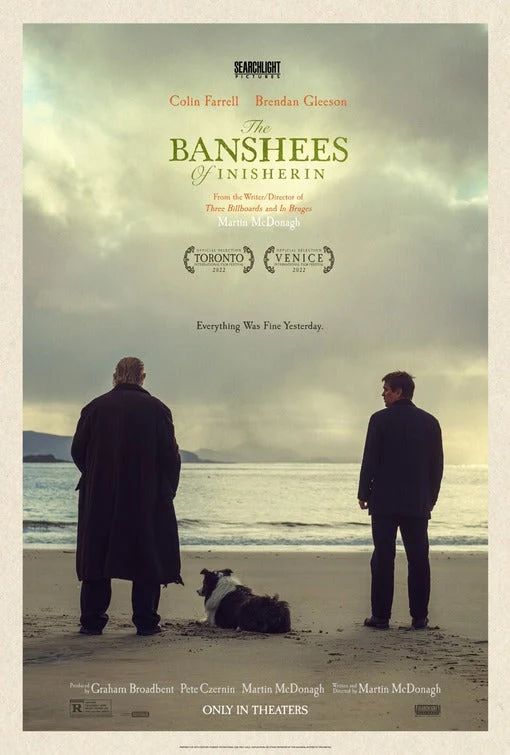
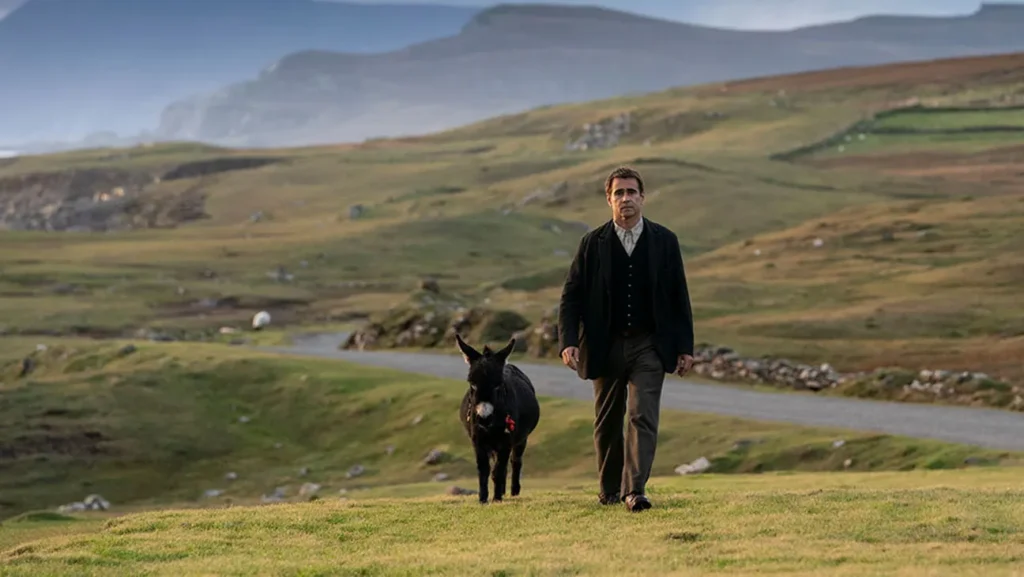
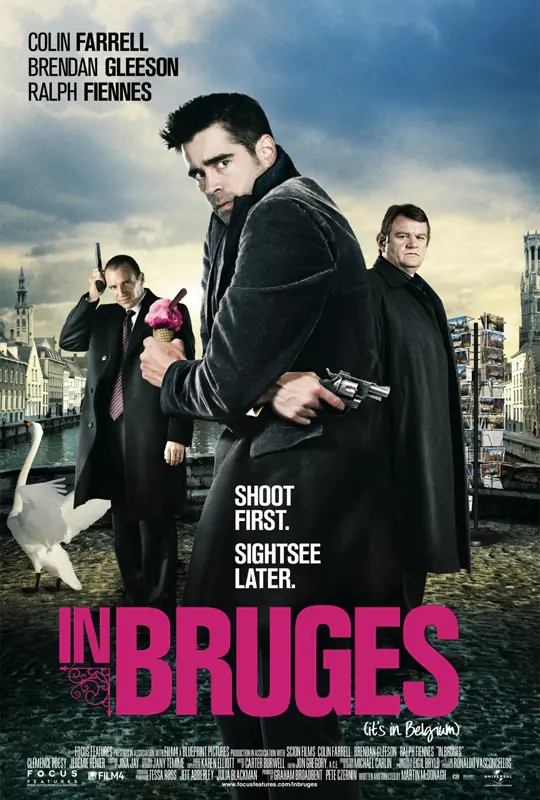
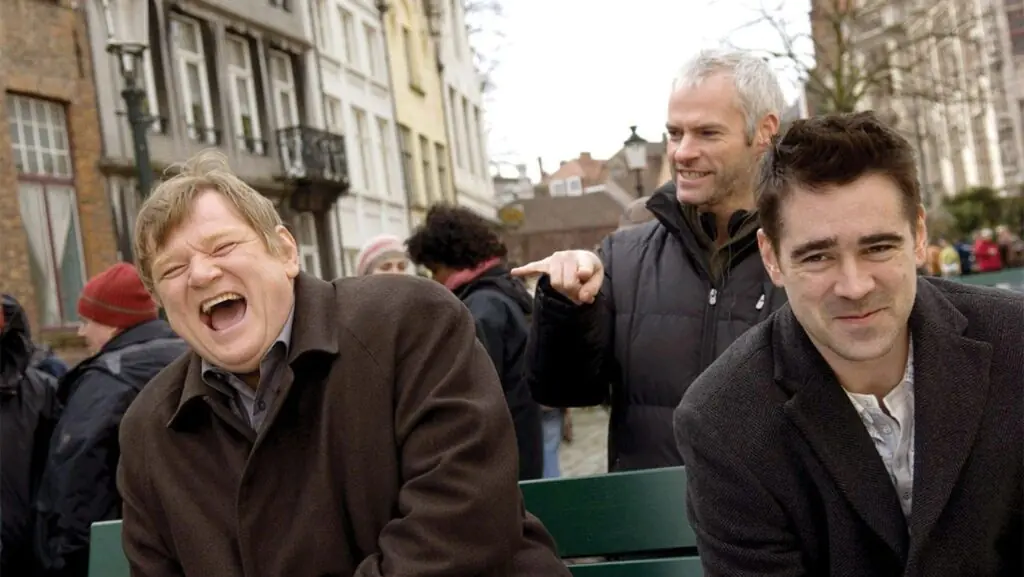
In Bruges is Martin McDonagh’s magnum opus and feature-film debut all in one, pairing Colin Farrell and Brendan Gleeson in what remains the best pairing either actor has been handed, only rivaled by Banshees. They play two hitmen stashed in Bruges, Belgium, ostensibly waiting on their next assignment, whose relationship gets flipped on its head. The film is centered almost entirely on Farrell’s Ray, a man desperate for validation, for love and for solace after a hit goes catastrophically wrong, and Farrell plays him as a quirky, awkward, chronically unserious brawler with every joke representing a wall built around the one thing he cannot bring himself to look at directly. Everything we see until the halfway point is framed inside Ray’s mind rather than observed from outside, which is what creates the film’s utterly unique style, a register where a hilarious bit about a family on a staircase and a man quietly planning his own death while being pursued by his greatest friend can occupy the same scene without either one undercutting the other. The film digs deep into loneliness and death, two topics McDonagh has tackled in every film he has made since but never quite nailed like he does here, using Gleeson’s Ken and the eventual appearance of a Ralph Fiennes character to really frame this Ray-centered story in one of the darkest comedic commentaries in film history. In Bruges is the best film Martin McDonagh has made so far in his career and one of the greatest British comedies of all time, a darkly comedic deep dive that is funnier and more depressing than anything else in its lane in the exactly correct way.
McDonagh came to this film already a celebrated Irish playwright rather than a filmmaker, having won the Academy Award for his short Six Shooter in 2006, and In Bruges, his feature debut, is one of the most assured anyone has made this century. The film grossed roughly $34.5 million, a number that gave very little indication of how deeply it would come to be loved, and it found its real audience in the years after its release rather than during it. The awards run was the turning point, as Colin Farrell won the Golden Globe for Best Actor and McDonagh took a BAFTA and an Academy Award nomination for his screenplay, an unexpectedly strong season for a dark comedy about two hitmen hiding out in a medieval Belgian tourist town. This is also the film that locked the mainstays of McDonagh’s entire filmography into place, assembling the company he has kept working with ever since in Farrell, Gleeson and composer Carter Burwell, who has scored every one of his features. It is now regularly ranked among the genre’s best and has been reappraised upward almost continuously since release.
The ending is the single element that separates this from everything else McDonagh has made, ambiguous in the way all of his endings are but carrying a sad, searching comment on death and loneliness that runs throughout all of his films and only ever feels fully crucial and fully centralized here. The sultry visuals and the tone are unlike anything else in his work, and McDonagh uses Bruges itself as a plot point better than most directors ever manage to use a setting, letting a city nobody in the film wants to be in become the entire reason the film works. That is what turns a typically good McDonagh picture into his masterpiece, because every other entry in this filmography has the dialogue and the cruelty and the gallows humor, and this is the only one where the place answers back. The Banshees of Inisherin and Three Billboards are both excellent films, and neither one comes close to striking this balance of hilarious and devastating inside the same ninety minutes, which is the whole argument for why it sits at the top. In Bruges is not only the best film Martin McDonagh has ever made but one of the best films of the 2000s outright, earning a 95/100 from TwilightRoom and the first spot on my list.
2. Wild Horse Nine
89.3/100 - 2026

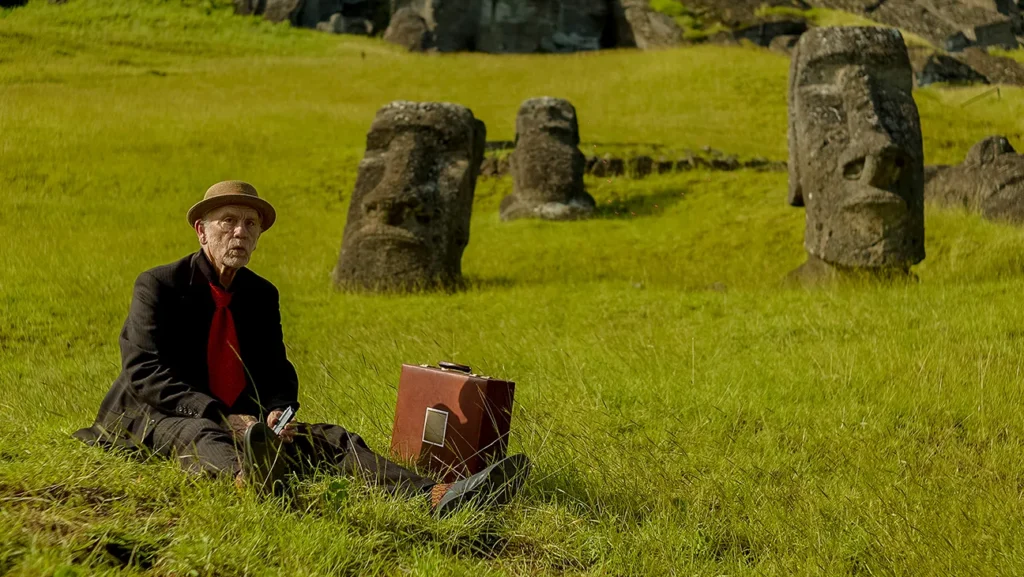
Wild Horse Nine boasts a fantastic screenplay and is the best film Martin McDonagh has made since In Bruges, combining the reflective patience of The Banshees of Inisherin with the conversational comedy writing about death that drove his debut into something of an identifiable style, a magnificent synthesis instead of another retread. The film positions John Malkovich as the Best Actor frontrunner, giving his best performance in years and tricking the audience into underestimating his intelligence through his delivery and his circumstance, while Sam Rockwell plays off him better than he has in any McDonagh film before, the kind of double act that only happens when a writer-director knows exactly who he is writing for and how to orchestrate them. It’s shot beautifully on film and establishes its buddy-cop banter from the jump in a way that fits the quirky register audiences have come to expect, even if some opening stretches don’t quite convince you yet that the film is headed where it ultimately goes. Malkovich takes this film to new heights, and when the conspiracy theory of it all arises and the film really clues you in to the slow-burn comedic crime thriller that never once lets go of its inescapable end, it delivers some of the strongest stretches of any film released this year, tying up loose ends with precision. Wild Horse Nine is an exquisite entry in one of the most singular and defiant filmographies in current cinema, a reminder that McDonagh is at his best when he places two men at drastically different points in their lives, in a place neither of them wants to be, and lets his writing take over.
McDonagh wrote and directed the film with Ben Davis behind the camera and Carter Burwell on score, both longtime collaborators, which is why it looks and sounds so close to Banshees while the dialogue sits much nearer to his first two features. Set in Santiago and on Easter Island in the weeks before the 1973 Chilean coup, it is the first film he has made outside Europe or the United States, and that backdrop gives his work a political weight it has never carried before. It premiered in main competition at the 83rd Venice Film Festival in September 2026, where Malkovich took the Volpi Cup for Best Actor and McDonagh competed for the Golden Lion. From there it played Telluride for its North American premiere and the Perlak sidebar at San Sebastián before Searchlight opened it in the UK and US on November 6. Steve Buscemi, Tom Waits and Parker Posey round out a supporting cast built exactly the way McDonagh has always built his ensembles, with recognizable faces doing a tremendous amount in very little screen time.
This is the culmination McDonagh has spent eighteen years building toward, and the proof is that it never once feels like it is choosing between the modes he has worked in before. The horse itself is the best image in his entire filmography, returned to repeatedly without explanation and used at the end to speak about Chris’s death far more effectively than any line of dialogue could have. The final conversation between Chris and Lee, both of them finally trusting each other at the exact moment there is nothing left to gain from it, is among the strongest writing of his career and a downbeat western note he has never struck before. Where Three Billboards tried too many things at once and Seven Psychopaths tried everything, here is a filmmaker who knows precisely which three or four things he wants and lands all of them, wasting nothing. It’s a slow, funny, genuinely sad film and the best thing McDonagh has made since his debut, earning an 88/100 from TwilightRoom and the second spot on my list.
1. In Bruges
95.0/100 - 2008
The Dirties follows two guys making a movie that becomes a comedic blend of narrative and documentary, representing the early voice of Matt Johnson before he’d figured out how to fully control it, and failing to fully blend the dark comedy with the lighter parts. The two set out to make a film about getting revenge on their bullies from school in the most extreme way possible, a project they title “The Dirties”, a premise that starts light and grows steadily more uncomfortable as it consumes them into doing the unthinkable. As they continue to bring their idea to life, things get progressively darker, with them suggesting an actual shooting of their bullies, and the whole thing feels like the bare bones of Johnson’s later movies. As the film starts coming together, the boys aren’t especially proud of what they’ve made, and the movie itself functions like an early concept sketch for what would become Operation Avalanche. The Dirties finishes on an extremely dark note, with a shooting that Matt actually goes through with inside the school as Owen, his partner, cowers in fear, taking the bit to its absolute maximum in a way that’s more admirable in ambition than execution, which is why it sits last on our list.
The Dirties was Johnson’s debut feature, winning the Grand Jury Prize at Slamdance in 2013 and marking him as a distinct new voice in Canadian independent film almost overnight. Kevin Smith championed the film heavily and released it through his own distribution label, giving a micro-budget Canadian debut a platform it never would have found on its own and putting Johnson’s name in front of an audience that had no reason to encounter it otherwise. Johnson established the entire template here that he would go on to use for the rest of his mockumentary era, casting himself under his own name and blending real footage with staged narrative until the seams between the two effectively disappear. The film’s approach to its subject matter drew significant discussion for how it handles school violence, with critics split between praising its uncomfortable honesty and questioning whether the ending fully earns the darkness it reaches for. It remains the essential origin point of everything Johnson has made since, Operation Avalanche, Nirvanna the Band the Show the Movie, and even BlackBerry all carry its DNA in different forms, which is precisely why a film this rough around the edges still matters as much as it does. It sits last on our list with a 72/100 from TwilightRoom.