Bluebeard is not a good film, and it is also exactly the kind of film this column exists for, a gaudy, tonally confused 1972 curiosity that
is far more interesting to sit with than most competent movies from the same year. Watched on the Kino Lorber 4K release, which is genuinely the best thing that has ever happened to this picture, the film makes it immediately clear that whatever Edward Dmytryk was reaching for here, the visuals got much closer to it than the script ever did. The premise of a man with an altered beard, now dyed an unmistakable blue, keeping a house full of mysteries and meeting a blonde American woman named Anne announces itself instantly, and
the score and dialogue telegraph the sinister business well before anyone onscreen catches on. There is a real Hollywood B-movie feel running through the whole thing, a sense of enormous money being spent on something that still moves like a programmer. It is more throwback-worthy than it is nuanced, and that is honestly the correct way to approach it.
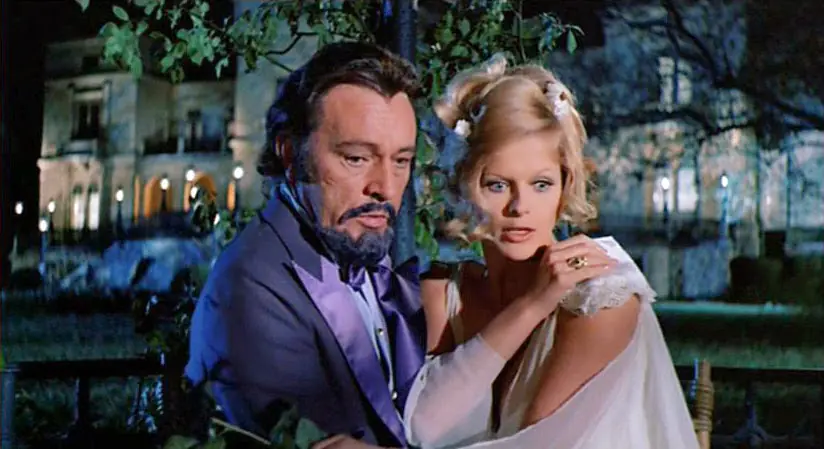
Richard Burton plays Baron Kurt von Sepper, a World War I German flying ace who marries and then murders a string of wives, with the story unfolding largely in flashback as he recounts each of them. The film opens with the courtship of Anne, the seventh bride, and the structure works because the audience knows roughly what is coming while she does not, turning every pleasant domestic scene into a countdown. Deeper into the picture, the storyline becomes genuinely more sinister once Magdalena enters his life and settles into his orbit, eventually working to help Anne piece together what has been happening in the house. The flashback structure is the smartest thing in the screenplay, giving the film an excuse to be an anthology of grotesque vignettes rather than a single sustained story it would not have had the discipline to tell. It also means the pacing lurches constantly, and the gap between the best and worst segments is enormous.
The film’s single best quality is its use of extremely saturated color, which the 4K transfer finally lets viewers see properly, and it is the reason this is worth a watch at all. Every frame is pushed toward deep reds, cold blues and golds that have no business being in a film this cheap-feeling at the script level, and the result is a picture that looks far more expensive than it behaves. The set design works hand in hand with that palette, building a castle interior that feels genuinely oppressive and ornate rather than like a dressed soundstage, and it sets a tone the rest of the movie never quite earns. That contrast is the whole experience of watching Bluebeard, because the visual craft is consistently operating two or three levels above the storytelling. For a film that is otherwise a bit dull, the look is doing almost all of the heavy lifting, and it very nearly succeeds.
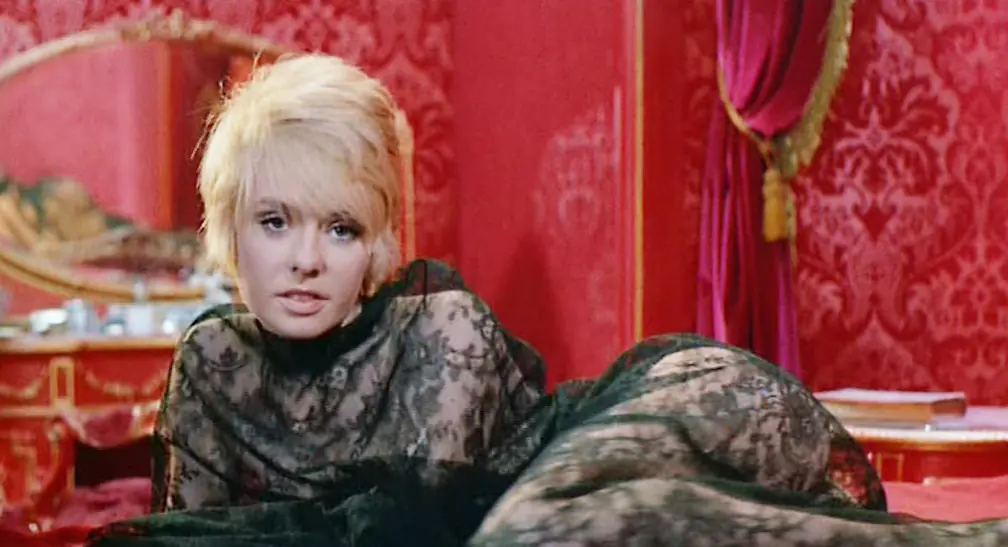
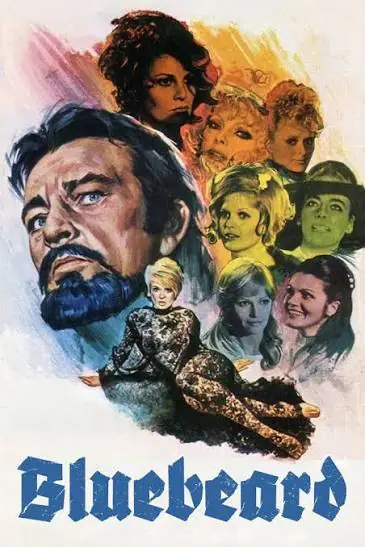
Burton is fully committed here in a way the film does not deserve, playing von Sepper with a seriousness that occasionally tips the whole thing into something almost unsettling before the next scene undercuts it. The accent is the problem everyone points to, and they are right, because it wanders from Welsh to German and back again within single conversations, which makes it very hard to stay inside any scene he dominates. The cast of wives is stacked with Raquel Welch, Virna Lisi, Nathalie Delon, Karin Schubert and Sybil Danning, and the film treats most of them as set dressing for a death sequence rather than as characters, which is both the point and the limitation. Joey Heatherton gets the most to do as Anne and holds the frame reasonably well against Burton, though the writing keeps her reactive almost to the end. The mannequin corpses are as unconvincing as their reputation suggests and puncture the atmosphere every single time the film cuts to one.
Dmytryk wrote and directed this erotic horror take on the old folktale as a European co-production between Italian, French and West German companies, produced by Ilya Salkind and shot in Budapest in early 1972. Burton had been one of the biggest stars in the world through Cleopatra and Who’s Afraid of Virginia Woolf?, but by this point he was taking nearly any paycheck role while struggling publicly with alcoholism, and Dmytryk later described the Budapest shoot as a trying experience because of it. Elizabeth Taylor celebrated her fortieth birthday there during production. Dmytryk himself was a genuine Hollywood veteran with Murder, My Sweet, The Caine Mutiny and The Young Lions behind him, and one of the Hollywood Ten blacklisted during the McCarthy era. By the early seventies, he had been reduced to exploitation-adjacent work in Europe. Both men said at the time that the film was just a lark made for entertainment, which is a defense that collapses entirely around the violent sequence in which von Sepper leads an anti-Jewish pogrom, a scene critics correctly identified as being in appalling taste for a picture pitched that way. It opened at the Pantages in Hollywood in August of 1972 to unkind reviews, and reports of animal mistreatment during filming, including a real boar shot during a hunting sequence, have only darkened its reputation since.
Bluebeard sits just before the run of The Klansman, Exorcist II and The Medusa Touch that is widely treated as the bottom of Burton’s film career, and it is regularly cited as a milestone in that decline, which is a heavy thing for a movie this silly to be carrying. It rarely gets revived, and it remains a fixture of lists of the strangest films of the early 1970s, where some viewers call it an epic disaster and others find it weirdly watchable, and honestly both reactions are defensible within the same viewing. Burton’s commitment and the opulent production values are its saving graces, and the Kino Lorber restoration makes the strongest possible case for the second of those. This is not a film to recommend on quality; it is one to recommend on texture, on the specific pleasure of watching serious people make something this lurid with real money behind them. It is a lavish, tonally incoherent, frequently dull curiosity with one of the best pops of color of the era, earning a 62/100 from TwilightRoom.
TwilightRoom Score: 62.3/100